Bushra Griffith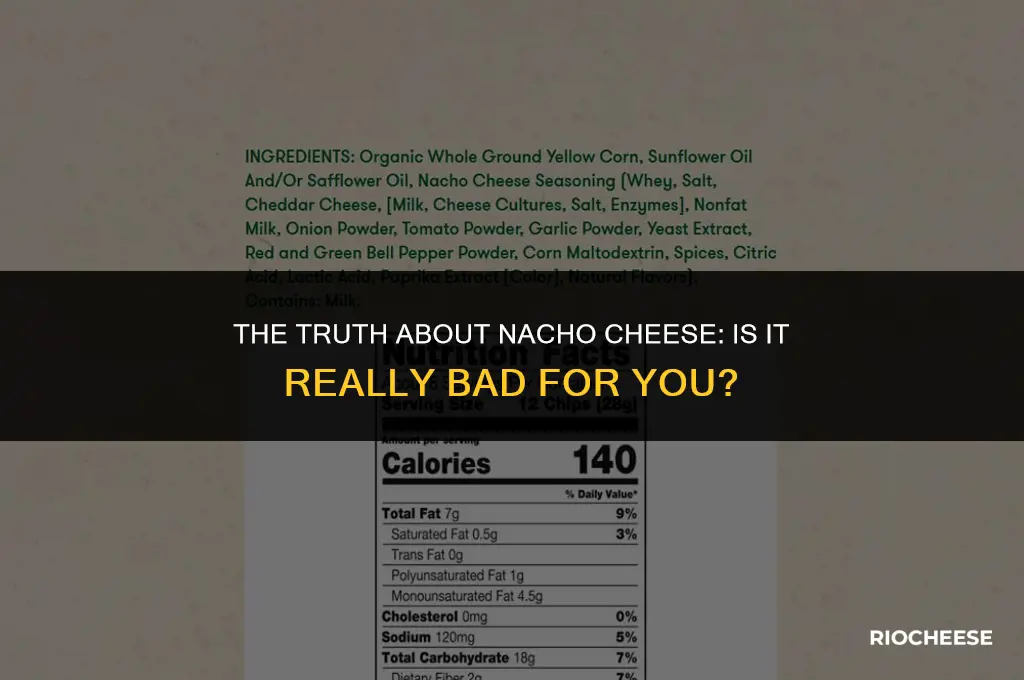
Nacho cheese, a popular snack often enjoyed at parties, movie nights, and sporting events, has become a subject of nutritional scrutiny. While it's undeniably delicious, the question of whether nacho cheese is bad for you is a complex one. This creamy, melted cheese sauce is typically high in calories, saturated fat, and sodium, which can contribute to health issues such as obesity, heart disease, and high blood pressure when consumed in excess. Additionally, many commercial nacho cheese products contain artificial ingredients and preservatives that some health experts recommend avoiding. However, it's also important to consider that nacho cheese can be part of a balanced diet when consumed in moderation and paired with healthier options like whole-grain tortilla chips and fresh vegetables. In this article, we'll delve into the nutritional facts, potential health risks, and ways to enjoy nacho cheese in a more health-conscious manner.
Explore related products



What You'll Learn
- Nutritional Content: Nachos cheese nutritional facts, including calories, fat, sodium, and protein content
- Health Impact: Potential health risks associated with consuming nacho cheese, such as weight gain and heart issues
- Ingredients: Common ingredients in nacho cheese sauce and their individual health implications
- Moderation: Guidelines on how to enjoy nacho cheese in moderation as part of a balanced diet
- Alternatives: Healthier alternatives to traditional nacho cheese, including homemade recipes and plant-based options

Nutritional Content: Nachos cheese nutritional facts, including calories, fat, sodium, and protein content
Analyzing the nutritional content of nacho cheese reveals some concerning facts. A typical serving of nacho cheese sauce (about 1/4 cup or 60 grams) contains approximately 100-150 calories, with a significant portion of these calories coming from fat. In fact, nacho cheese sauce is high in saturated fat, which can contribute to increased cholesterol levels and heart disease risk when consumed in excess. Additionally, the sodium content in nacho cheese sauce is quite high, often exceeding 200-300 milligrams per serving, which can be problematic for those with high blood pressure or on a sodium-restricted diet.
On the positive side, nacho cheese sauce does contain some protein, usually around 2-3 grams per serving. However, this amount is relatively small compared to the calorie and fat content. Furthermore, the protein in nacho cheese sauce is often of low quality, as it is typically made from processed cheese and milk products.
It's also worth noting that the nutritional content of nacho cheese sauce can vary depending on the brand and ingredients used. Some versions may be lower in calories, fat, or sodium, while others may be higher. It's important to check the nutrition label and ingredient list to make informed choices.
In conclusion, while nacho cheese sauce can be a tasty addition to snacks and meals, its high calorie, fat, and sodium content make it a less-than-ideal choice for those looking to maintain a healthy diet. Consuming nacho cheese sauce in moderation and balancing it with healthier options can help mitigate its potential negative health effects.
The Shelf Life Saga: Does Babybel Cheese Go Bad?
You may want to see also
Explore related products


Health Impact: Potential health risks associated with consuming nacho cheese, such as weight gain and heart issues
Consuming nacho cheese regularly can lead to several health issues, primarily due to its high calorie, fat, and sodium content. One of the most significant risks is weight gain. A typical serving of nacho cheese can contain anywhere from 300 to 500 calories, depending on the portion size and ingredients used. This high calorie count can contribute to weight gain if consumed frequently without being balanced by physical activity. Additionally, nacho cheese is often high in saturated fats, which can increase LDL (bad) cholesterol levels and contribute to heart disease.
Another health concern associated with nacho cheese is its sodium content. Processed cheese products, which are commonly used in nacho cheese, tend to be high in sodium. Excessive sodium intake can lead to high blood pressure, which is a major risk factor for heart disease and stroke. Furthermore, the combination of high fat and sodium content in nacho cheese can exacerbate inflammation in the body, potentially leading to chronic health conditions such as type 2 diabetes and certain types of cancer.
It is also important to consider the additives and preservatives found in many commercial nacho cheese products. These substances can have adverse effects on health, particularly when consumed in large quantities over time. For example, some additives have been linked to hyperactivity in children, while others may contribute to the development of allergies or intolerances.
To mitigate these health risks, it is advisable to consume nacho cheese in moderation and to opt for healthier alternatives when possible. For instance, using a smaller portion size, choosing a lower-fat cheese option, or making nacho cheese at home with fresh ingredients can help reduce the calorie, fat, and sodium content. Additionally, incorporating more fruits, vegetables, whole grains, and lean proteins into one's diet can help balance out the less healthy aspects of consuming nacho cheese occasionally.
In conclusion, while nacho cheese can be a tasty treat, it is essential to be aware of its potential health risks and to consume it responsibly as part of a balanced diet. By making informed choices and practicing moderation, individuals can enjoy nacho cheese without significantly compromising their health.
The Ultimate Guide to Checking Cheese Freshness: Tips and Tricks
You may want to see also
Explore related products


Ingredients: Common ingredients in nacho cheese sauce and their individual health implications
Nacho cheese sauce is a popular condiment often enjoyed with tortilla chips, but its ingredients can have various health implications. One of the primary ingredients in nacho cheese sauce is cheese, which is high in saturated fat and calories. Consuming excessive amounts of saturated fat can lead to increased cholesterol levels and a higher risk of heart disease. Additionally, cheese is often processed, which can further increase its sodium content.
Another common ingredient in nacho cheese sauce is milk or cream, which adds to the calorie and fat content. Milk and cream can also contain added sugars, which can contribute to weight gain and other health issues if consumed in excess. Some nacho cheese sauces may also include processed meats, such as chorizo or ground beef, which are high in saturated fat and sodium.
Spices and seasonings, such as cumin, chili powder, and garlic, are often used to flavor nacho cheese sauce. While these ingredients can add flavor without adding significant calories or fat, some people may be sensitive to certain spices, which can cause digestive issues or allergic reactions.
Preservatives and thickeners, such as xanthan gum or carrageenan, may also be present in nacho cheese sauce. These ingredients can help extend the shelf life of the product and improve its texture, but some studies have suggested that they may have negative effects on gut health.
Overall, while nacho cheese sauce can be a tasty addition to snacks and meals, it is important to be mindful of its ingredients and their potential health implications. Consuming nacho cheese sauce in moderation and choosing healthier alternatives, such as homemade sauces made with whole ingredients, can help minimize its impact on overall health.
Unraveling the Truth: Are Enzymes in Cheese Harmful to Your Health?
You may want to see also
Explore related products


Moderation: Guidelines on how to enjoy nacho cheese in moderation as part of a balanced diet
To enjoy nacho cheese in moderation, it's essential to understand what constitutes a balanced diet and how nacho cheese fits into it. A balanced diet includes a variety of foods from all food groups in the right proportions. Nacho cheese, being high in calories, fat, and sodium, should be consumed sparingly. Here are some guidelines to help you enjoy nacho cheese without overindulging:
- Portion Control: Limit your serving size to about 1/4 to 1/2 cup of nacho cheese. This will help you manage your calorie intake and prevent excessive consumption of unhealthy fats and sodium.
- Frequency: Enjoy nacho cheese as an occasional treat rather than a regular part of your diet. Aim to have it no more than once or twice a week. This will allow you to savor the flavor without making it a habit that could lead to weight gain or other health issues.
- Pairing: When you do have nacho cheese, pair it with healthier options to balance out the meal. For example, you can have it with whole-grain tortilla chips or raw vegetables like carrots, celery, or bell peppers. This will increase the fiber content of your snack and provide essential nutrients.
- Homemade Alternatives: Consider making your own nacho cheese sauce at home using healthier ingredients. You can use low-fat cheese, Greek yogurt, or even a plant-based cheese alternative. This will give you control over the ingredients and allow you to reduce the amount of sodium and unhealthy fats.
- Mindful Eating: Pay attention to your hunger and fullness cues when eating nacho cheese. Eat slowly and savor each bite. This will help you recognize when you're satisfied and prevent overeating.
By following these guidelines, you can enjoy nacho cheese in moderation as part of a balanced diet. Remember, the key is to be mindful of your portion sizes, frequency of consumption, and the overall balance of your diet.
The Truth About Easy Cheese: Is It Really Bad for You?
You may want to see also
Explore related products


Alternatives: Healthier alternatives to traditional nacho cheese, including homemade recipes and plant-based options
For those looking to enjoy the creamy, cheesy goodness of nacho cheese without the guilt, there are several healthier alternatives available. One option is to make your own nacho cheese sauce at home using real cheese, milk, and a roux made from whole wheat flour. This allows you to control the amount of fat and sodium in the sauce, and you can even add in some extra nutrients by incorporating vegetables like bell peppers or spinach.
Another alternative is to use plant-based cheese sauces, which are made from ingredients like cashews, nutritional yeast, and coconut milk. These sauces are typically lower in fat and calories than traditional nacho cheese, and they're also free from dairy, making them a great option for vegans or those with lactose intolerance.
If you're looking for a more convenient option, there are also pre-made healthier nacho cheese sauces available in stores. Look for brands that use real cheese and avoid artificial ingredients and preservatives. You can also try using a combination of Greek yogurt and shredded cheese for a protein-packed, lower-fat alternative.
When it comes to portion control, it's important to remember that even healthier alternatives should be consumed in moderation. A good rule of thumb is to limit your nacho cheese intake to about 1/4 cup per serving, and to pair it with plenty of vegetables or whole grain chips for added nutrients and fiber.
In conclusion, while traditional nacho cheese may be high in fat and sodium, there are plenty of healthier alternatives available that can satisfy your cravings without compromising your health goals. Whether you choose to make your own sauce at home or opt for a store-bought option, the key is to focus on whole, nutrient-dense ingredients and to enjoy your nacho cheese in moderation.
The Truth About Raclette Cheese: Does It Really Smell That Bad?
You may want to see also
Frequently asked questions
Yes, nacho cheese is typically high in calories due to its high fat and protein content. A single serving can range from 100 to 300 calories depending on the portion size and specific ingredients used.
Yes, nacho cheese is often high in sodium, which can contribute to high blood pressure and other health issues if consumed in excess. The sodium content can vary depending on the type of cheese and any added seasonings.
While nacho cheese does contain some nutrients like protein and calcium, it is not considered a highly nutritious food due to its high fat, sodium, and calorie content. It should be consumed in moderation as part of a balanced diet.
Nacho cheese can be part of a healthy diet if consumed in moderation and balanced with other nutrient-dense foods. It is important to pay attention to portion sizes and to choose healthier options when possible, such as using low-fat cheese or adding vegetables to the dish.