Frederic Melton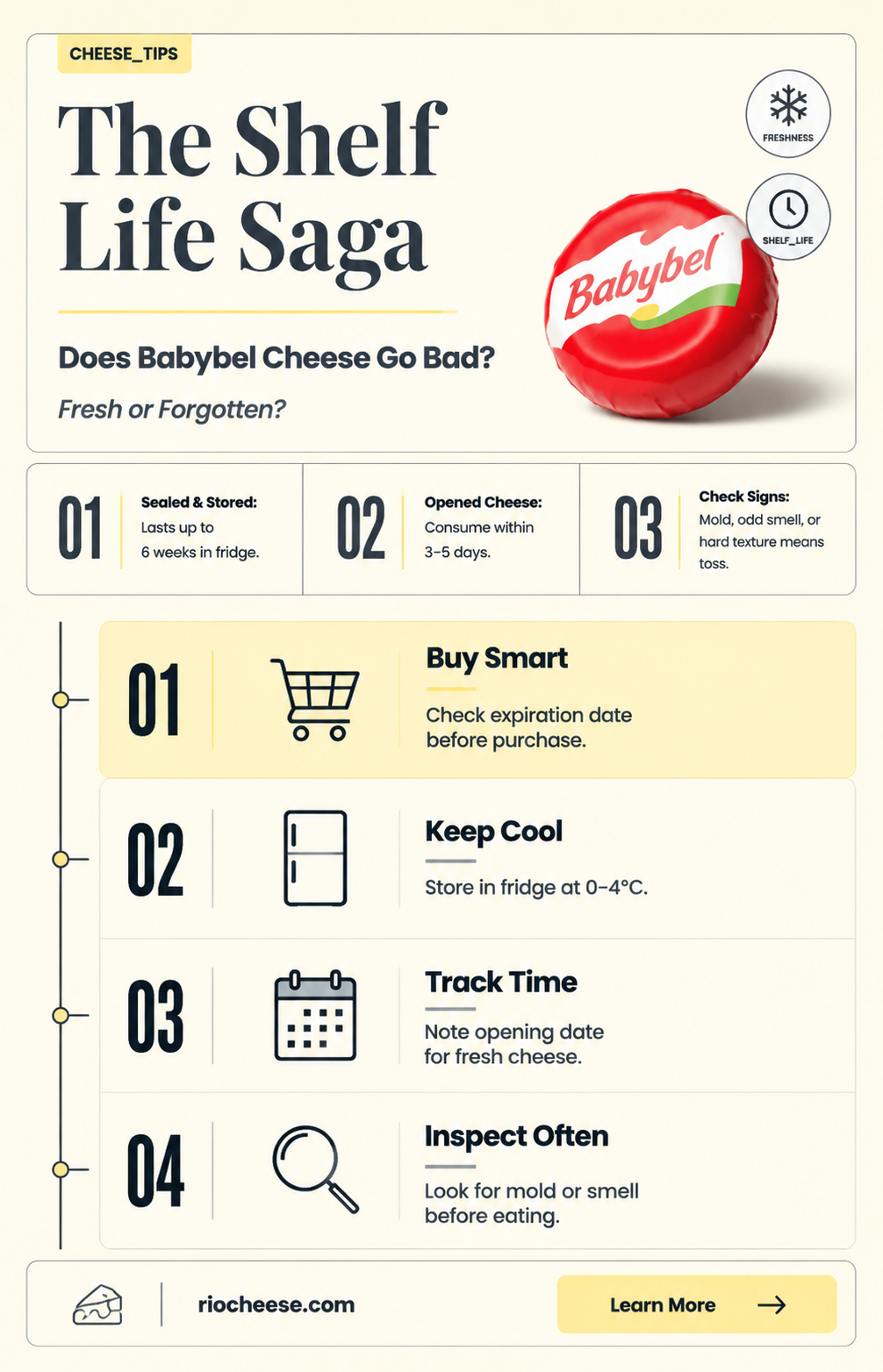
Babybel cheese, known for its distinctive red wax coating and creamy texture, is a popular snack cheese enjoyed by many. However, like all perishable food items, it does have a limited shelf life. Understanding how long Babybel cheese lasts and recognizing the signs of spoilage is crucial for ensuring food safety and quality. In this article, we'll delve into the factors that affect the shelf life of Babybel cheese, provide guidelines on proper storage, and discuss how to identify when it's no longer safe to consume.
Explore related products


What You'll Learn
- Storage Conditions: Proper storage methods to maintain Babybel cheese freshness and prevent spoilage
- Expiration Dates: Understanding the significance of expiration dates on Babybel cheese packaging
- Signs of Spoilage: Identifying visual and olfactory indicators that Babybel cheese has gone bad
- Health Risks: Potential health risks associated with consuming spoiled Babybel cheese
- Shelf Life: Typical shelf life of Babybel cheese when stored correctly

Storage Conditions: Proper storage methods to maintain Babybel cheese freshness and prevent spoilage
Proper storage is crucial to maintaining the freshness and quality of Babybel cheese. The ideal storage method involves keeping the cheese in its original red wax rind, which acts as a protective barrier against contaminants and helps retain moisture. If the cheese has been cut, it should be wrapped tightly in plastic wrap or aluminum foil to prevent air exposure, which can lead to drying out and spoilage.
Temperature plays a significant role in cheese storage. Babybel cheese should be stored in the refrigerator at a consistent temperature between 35°F and 45°F (1.6°C and 7.2°C). Fluctuations in temperature can cause the cheese to sweat, leading to mold growth. It's also important to store the cheese away from strong-smelling foods, as cheese can absorb odors easily.
Humidity is another key factor in maintaining cheese freshness. The ideal humidity level for storing Babybel cheese is between 60% and 70%. If the humidity is too low, the cheese can dry out, while if it's too high, it can become moldy. Using a cheese storage container or a crisper drawer in the refrigerator can help maintain the proper humidity level.
When storing Babybel cheese for an extended period, it's best to keep it in the coldest part of the refrigerator, usually the bottom shelf. This will help slow down the aging process and prevent the cheese from becoming too strong or developing off-flavors.
It's also important to note that Babybel cheese should not be frozen, as freezing can cause the cheese to become crumbly and lose its smooth texture. If you need to store the cheese for a longer period than recommended, it's best to consult the manufacturer's guidelines or seek advice from a cheese expert.
By following these proper storage methods, you can help maintain the freshness and quality of your Babybel cheese, ensuring that it remains a delicious and enjoyable snack for as long as possible.
The Impact of Cheese on Dental Health: Facts and Myths
You may want to see also
Explore related products


Expiration Dates: Understanding the significance of expiration dates on Babybel cheese packaging
Understanding the significance of expiration dates on Babybel cheese packaging is crucial for ensuring food safety and quality. The expiration date, often found on the bottom or side of the packaging, indicates the last date on which the cheese is guaranteed to be safe to eat and maintain its optimal taste and texture. After this date, the cheese may begin to spoil, leading to potential health risks and a decline in quality.
To properly interpret the expiration date on Babybel cheese, it's important to note that it is typically printed in a specific format, such as "DD MMM YYYY" or "MM/DD/YYYY". This format helps to avoid confusion and ensures that consumers can easily identify the date. Additionally, it's essential to store the cheese properly in the refrigerator at a temperature below 40°F (4°C) to maintain its freshness until the expiration date.
In some cases, Babybel cheese may have a "best before" date instead of an expiration date. This date indicates the period during which the cheese is expected to retain its optimal quality and flavor. While it is not a strict deadline for consumption, it is still advisable to consume the cheese before this date to enjoy its best taste and texture.
It's also worth noting that unopened Babybel cheese can typically be stored in the refrigerator for up to 4-6 weeks past the expiration date, as long as it has been stored properly. However, once opened, the cheese should be consumed within 1-2 weeks to prevent spoilage.
In conclusion, paying attention to the expiration dates on Babybel cheese packaging is essential for ensuring food safety and quality. By understanding the significance of these dates and storing the cheese properly, consumers can enjoy the best taste and texture while minimizing the risk of foodborne illness.
The Shelf Life of Gruyère: Does This Cheese Go Bad?
You may want to see also
Explore related products


Signs of Spoilage: Identifying visual and olfactory indicators that Babybel cheese has gone bad
Babybel cheese, known for its distinctive red wax coating and creamy texture, can indeed spoil over time. Identifying the signs of spoilage is crucial to ensure food safety and prevent the consumption of potentially harmful bacteria. Here are some key visual and olfactory indicators to help you determine if your Babybel cheese has gone bad:
Visual Indicators:
- Mold Growth: Check for any visible mold on the surface of the cheese. Mold can appear as small, fuzzy patches or spots and may be white, green, or black in color. If you notice any mold, it's a clear sign that the cheese has spoiled.
- Discoloration: Fresh Babybel cheese should have a uniform, creamy white color. If you observe any discoloration, such as yellowing or browning, it may indicate that the cheese is past its prime.
- Texture Changes: Gently press the cheese to check for any changes in texture. Spoiled cheese may become softer, mushier, or develop a slimy surface.
Olfactory Indicators:
- Unpleasant Odor: Smell the cheese to check for any off-odors. Spoiled cheese often emits a strong, unpleasant smell that may be sour, ammonia-like, or resemble the odor of spoiled milk.
- Loss of Aroma: Fresh Babybel cheese has a mild, slightly tangy aroma. If the cheese has lost its characteristic scent or smells bland, it may be a sign of spoilage.
To prevent spoilage, it's essential to store Babybel cheese properly. Keep it refrigerated at a temperature below 40°F (4°C) and consume it within a week of opening. If you notice any of the above signs of spoilage, it's best to discard the cheese to avoid potential health risks.
The Shelf Life of Individually Wrapped String Cheese: Facts and Myths
You may want to see also
Explore related products



Health Risks: Potential health risks associated with consuming spoiled Babybel cheese
Consuming spoiled Babybel cheese can pose several health risks. One of the primary concerns is the potential for foodborne illnesses caused by harmful bacteria that may grow on the cheese as it spoils. These bacteria can include Listeria monocytogenes, which can cause listeriosis, a serious infection that may lead to symptoms such as fever, muscle aches, and gastrointestinal issues. Additionally, spoiled cheese may harbor Salmonella bacteria, which can cause salmonellosis, resulting in diarrhea, vomiting, and abdominal cramps.
Another health risk associated with consuming spoiled Babybel cheese is the possibility of allergic reactions. As the cheese spoils, its composition changes, which can lead to the formation of new allergens or the amplification of existing ones. Individuals with cheese allergies or sensitivities may experience adverse reactions such as hives, swelling, or difficulty breathing after consuming spoiled cheese.
Furthermore, spoiled cheese may contain harmful molds that can produce mycotoxins, which are toxic compounds that can cause a range of health issues. Mycotoxins can lead to symptoms such as nausea, vomiting, and diarrhea, and in severe cases, they can cause organ damage or even death. It is essential to note that some molds can be visible on the surface of the cheese, while others may not be apparent, making it crucial to discard any cheese that shows signs of spoilage.
To minimize the risk of health issues associated with consuming spoiled Babybel cheese, it is important to store the cheese properly and check for signs of spoilage before consumption. Babybel cheese should be refrigerated at a temperature of 40°F (4°C) or below and consumed within a week of opening. If the cheese shows any signs of spoilage, such as an off odor, slimy texture, or mold growth, it should be discarded immediately.
In conclusion, consuming spoiled Babybel cheese can lead to various health risks, including foodborne illnesses, allergic reactions, and exposure to harmful molds and mycotoxins. Proper storage and timely consumption are crucial to minimizing these risks and ensuring the safety and quality of the cheese.
Decoding Velveeta's Shelf Life: Signs Your Cheese Has Gone Bad
You may want to see also
Explore related products




Shelf Life: Typical shelf life of Babybel cheese when stored correctly
Babybel cheese, known for its distinctive red wax coating and creamy texture, is a popular snack cheese that many consumers enjoy. However, like all perishable food items, it has a limited shelf life. When stored correctly, Babybel cheese typically lasts for about 4-6 weeks from the time of purchase. This timeframe can vary slightly depending on the specific production batch and storage conditions, but it provides a general guideline for consumers.
To maximize the shelf life of Babybel cheese, it's essential to store it in the refrigerator at a consistent temperature of 35-40°F (1.6-4.4°C). The cheese should be kept in its original packaging until ready to consume, as the wax coating helps to protect it from air and moisture exposure. Once opened, the cheese should be tightly wrapped in plastic wrap or aluminum foil and returned to the refrigerator promptly. It's also advisable to store the cheese away from strong-smelling foods, as it can absorb odors easily.
It's important to note that the shelf life of Babybel cheese can be affected by various factors, including the temperature and humidity levels of the refrigerator, the age of the cheese at the time of purchase, and how often the packaging is opened and closed. Consumers should always check the expiration date on the packaging before consuming the cheese and should discard any cheese that has passed its expiration date or shows signs of spoilage, such as mold, sliminess, or an off odor.
In summary, the typical shelf life of Babybel cheese when stored correctly is 4-6 weeks. By following proper storage guidelines, consumers can help to ensure that their Babybel cheese remains fresh and safe to consume for as long as possible.
The Shelf Life of Cheese Sticks: A Comprehensive Guide
You may want to see also
Frequently asked questions
Yes, Babybel cheese can go bad. Like all dairy products, it has a limited shelf life and can spoil if not stored properly.
Signs that Babybel cheese has gone bad include an off smell, mold growth, or a slimy texture. If the cheese has any of these characteristics, it's best to discard it.
To prevent Babybel cheese from going bad, store it in the refrigerator in its original packaging or in an airtight container. It's best to consume it within a week of opening.
Yes, you can freeze Babybel cheese to extend its shelf life. Wrap it tightly in plastic wrap or aluminum foil and place it in a freezer-safe bag. It can be stored in the freezer for up to 3 months.
Eating Babybel cheese that has gone bad can lead to foodborne illness. Symptoms may include nausea, vomiting, diarrhea, and stomach cramps. It's important to always check the cheese for signs of spoilage before consuming it.