 Bushra Griffith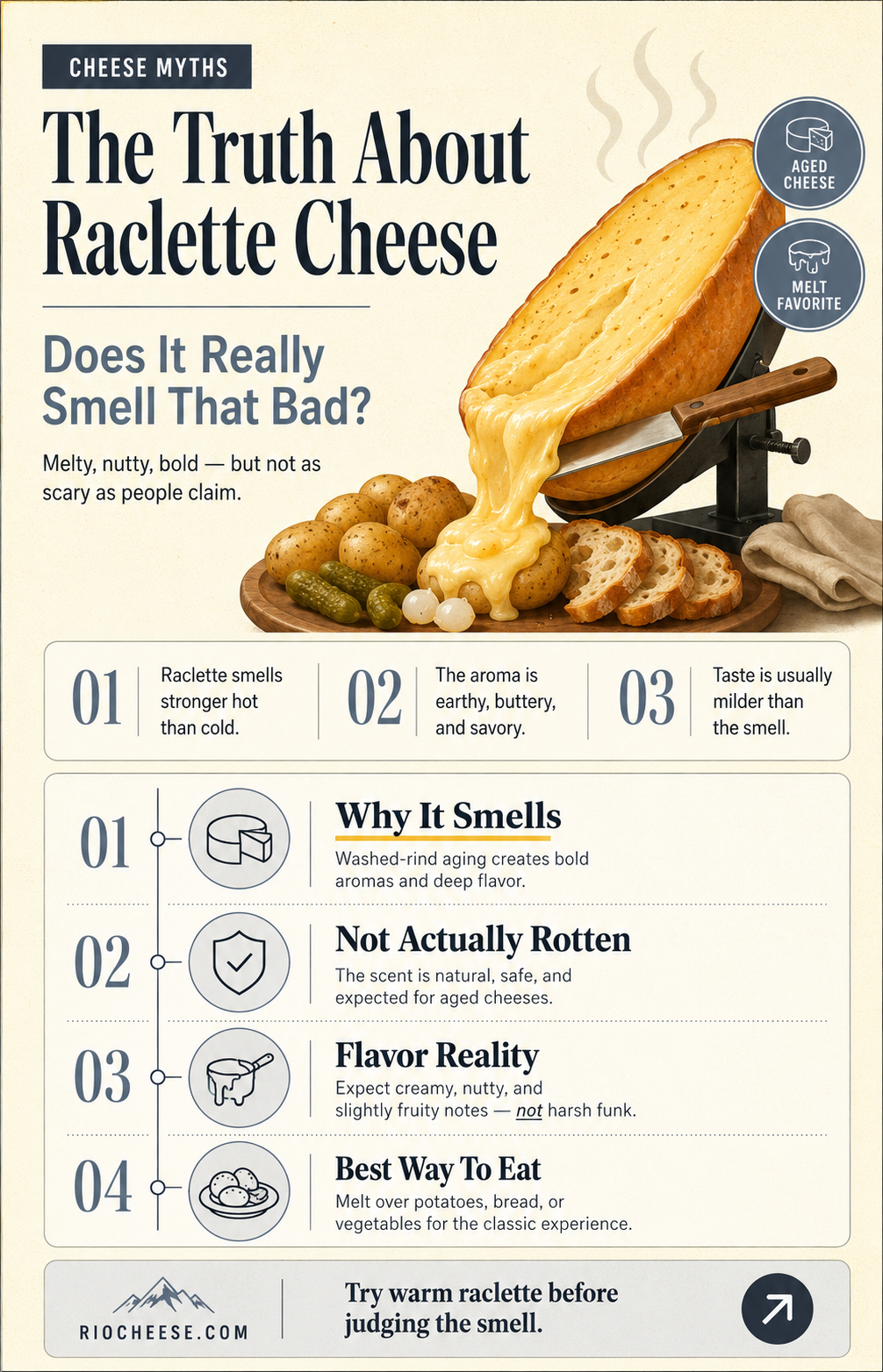
Raclette cheese, known for its distinctive aroma, often sparks debates about its smell. Some enthusiasts appreciate its strong, pungent scent, which is a hallmark of aged cheeses, while others may find it overpowering or unpleasant. The smell of raclette cheese is a result of the aging process, during which bacteria and enzymes break down the proteins and fats in the cheese, producing compounds that contribute to its robust odor. This characteristic smell is an integral part of the raclette experience, enhancing its flavor profile when melted and enjoyed with various accompaniments.
Explore related products




What You'll Learn
- Odor Profile: Raclette cheese's smell is often described as pungent, earthy, and slightly nutty
- Aging Process: The aging process of raclette cheese contributes to its strong odor, developing over time
- Comparison to Other Cheeses: Raclette's smell is stronger than many other cheeses, like cheddar or mozzarella
- Culinary Uses: Despite its strong smell, raclette is popular for its excellent melting qualities and rich flavor
- Personal Preferences: Some people find the smell of raclette cheese unpleasant, while others enjoy its robust aroma

Odor Profile: Raclette cheese's smell is often described as pungent, earthy, and slightly nutty
The odor profile of raclette cheese is a complex and distinctive characteristic that sets it apart from other cheese varieties. Often described as pungent, earthy, and slightly nutty, the smell of raclette cheese can be quite polarizing. Some enthusiasts find the aroma enticing and indicative of the cheese's rich flavor, while others may find it overpowering or unpleasant.
The pungency of raclette cheese is primarily due to the presence of volatile sulfur compounds, which are produced during the fermentation process. These compounds can give off a strong, sharp odor that is reminiscent of garlic or onions. The earthy notes in the cheese's smell are likely a result of the natural rinds that develop during aging, which can harbor various microorganisms that contribute to the cheese's unique aroma.
The slightly nutty aspect of raclette cheese's odor profile is often attributed to the presence of certain fatty acids and esters. These compounds can impart a subtle, nutty flavor that complements the cheese's overall taste. However, the intensity of this nutty aroma can vary depending on the specific variety of raclette cheese and the aging process.
It's important to note that the smell of raclette cheese can be influenced by various factors, including the milk source, the aging environment, and the specific bacteria and molds used in the cheese-making process. As a result, the odor profile of raclette cheese can vary significantly from one producer to another.
For those who are new to raclette cheese, it's advisable to approach the aroma with an open mind. While the smell may be off-putting at first, it is often a sign of the cheese's authenticity and quality. Taking the time to appreciate the complex odor profile can enhance the overall tasting experience and help to develop a deeper understanding of this unique cheese variety.
Unraveling the Mystery: Why Does Swiss Cheese Taste Bad?
You may want to see also
Explore related products


Aging Process: The aging process of raclette cheese contributes to its strong odor, developing over time
The aging process of raclette cheese is a critical factor in the development of its distinctive strong odor. As the cheese matures, various chemical reactions occur that transform its flavor and aroma profile. One of the primary contributors to this odor is the breakdown of proteins into smaller compounds, such as ammonia and sulfur-containing molecules. These compounds are responsible for the pungent smell that is often associated with aged cheeses.
During the aging process, raclette cheese is typically stored in a controlled environment with high humidity and moderate temperatures. This allows the natural bacteria and enzymes present in the cheese to thrive and accelerate the breakdown of fats and proteins. The rind of the cheese, which is often washed with brine or wine, also plays a role in the development of the odor, as it can harbor additional bacteria and fungi that contribute to the cheese's aroma.
The length of the aging process can vary depending on the desired flavor and odor intensity. Raclette cheese is typically aged for at least three months, but some varieties can be aged for up to a year or more. As the cheese ages, its odor becomes stronger and more complex, with notes of earthiness, nuttiness, and sometimes a hint of fruitiness.
While the strong odor of raclette cheese may be off-putting to some, it is a sign of the cheese's quality and flavor development. The aging process not only enhances the cheese's aroma but also improves its texture and taste, making it a popular choice for those who appreciate bold and complex flavors.
In conclusion, the aging process of raclette cheese is a crucial element in the development of its strong odor. Through a combination of chemical reactions, bacterial activity, and careful storage conditions, the cheese transforms from a mild, fresh product into a pungent and flavorful delicacy. Understanding this process can help cheese enthusiasts appreciate the unique characteristics of raclette and other aged cheeses.
The Shelf Life of Individually Wrapped String Cheese: Facts and Myths
You may want to see also
Explore related products


Comparison to Other Cheeses: Raclette's smell is stronger than many other cheeses, like cheddar or mozzarella
Raclette cheese, known for its distinctive aroma, stands out in the cheese world for its strong smell, which is more pronounced than that of many other popular cheeses. When compared to cheddar or mozzarella, raclette's odor is noticeably more robust and pungent. This characteristic is due to the cheese's aging process and the specific bacteria used in its production, which contribute to its unique flavor profile and, consequently, its strong scent.
The intensity of raclette's smell can be off-putting to some, leading to the perception that it smells "bad." However, this judgment is subjective and varies greatly among individuals. Those who appreciate strong, flavorful cheeses may find raclette's aroma appealing and indicative of its rich taste. On the other hand, individuals who prefer milder cheeses might find the smell overpowering and unpleasant.
In culinary contexts, raclette's strong smell can be both an advantage and a disadvantage. When melted and served over potatoes or other dishes, the cheese's potent aroma can enhance the overall sensory experience, adding depth and complexity to the meal. However, its strong scent can also be overwhelming in certain settings, such as when served on a cheese platter alongside more delicate varieties.
Ultimately, whether raclette cheese smells "bad" is a matter of personal preference. Its strong odor is a defining characteristic that sets it apart from other cheeses and contributes to its unique identity in the world of dairy products. Those who enjoy bold flavors and aromas may appreciate raclette's distinctive scent, while others may find it less appealing.
Decoding Velveeta's Shelf Life: Signs Your Cheese Has Gone Bad
You may want to see also
Culinary Uses: Despite its strong smell, raclette is popular for its excellent melting qualities and rich flavor
Raclette cheese, known for its pungent aroma, is surprisingly revered in culinary circles for its exceptional melting properties and rich, complex flavor. This semi-soft cheese, originating from the Alpine regions of Switzerland and France, is traditionally made from cow's milk and aged for several months to develop its distinctive taste and texture. Despite its strong smell, which can be off-putting to some, raclette's popularity endures due to its versatility and unique characteristics.
One of the primary culinary uses of raclette is in the dish that shares its name. Raclette is typically served by melting it in a special grill or pan, then scraping the molten cheese onto potatoes, meats, or vegetables. The cheese's high fat content and smooth texture make it ideal for this preparation method, as it melts evenly and creates a luxurious, gooey layer over the accompanying ingredients. The strong flavor of raclette also makes it a popular choice for fondue, where it can be combined with other cheeses and ingredients to create a rich, savory dip.
In addition to its use in traditional dishes, raclette has found its way into modern cuisine as well. Chefs and home cooks alike appreciate its ability to add depth and complexity to a variety of recipes. Raclette can be used as a topping for burgers or sandwiches, melted into sauces or soups, or even incorporated into baked goods like quiches and gratins. Its bold flavor profile pairs well with robust ingredients like mushrooms, onions, and cured meats, making it a versatile ingredient for both casual and gourmet cooking.
Despite its strong smell, raclette's popularity in culinary applications is a testament to its unique qualities. The cheese's excellent melting properties and rich flavor make it a sought-after ingredient for those looking to add a touch of luxury and complexity to their dishes. Whether used in traditional recipes or innovative culinary creations, raclette continues to be a beloved cheese among food enthusiasts.
The Shelf Life Saga: Does Babybel Cheese Go Bad?
You may want to see also
Personal Preferences: Some people find the smell of raclette cheese unpleasant, while others enjoy its robust aroma
The perception of raclette cheese's aroma is highly subjective, with some individuals finding it pungent and off-putting, while others appreciate its strong, distinctive scent. This dichotomy in opinion can be attributed to the cheese's unique aging process and the bacteria cultures used, which contribute to its robust flavor profile. For those who enjoy raclette, the smell is an integral part of the experience, evoking the warmth and comfort of melted cheese. However, for those who find it unpleasant, the aroma can be overpowering and may detract from the overall enjoyment of the dish.
One possible explanation for the varying reactions to raclette's smell is the presence of volatile sulfur compounds, which are produced during the fermentation process. These compounds can give the cheese a sharp, tangy odor that some people find unappealing. Additionally, the type of milk used to make raclette, as well as the specific aging conditions, can influence the final aroma of the cheese. For instance, raclette made from cow's milk may have a different scent than that made from sheep's or goat's milk.
Personal preferences aside, the smell of raclette cheese can also be affected by how it is served. When melted, the cheese releases more of its aromatic compounds, which can intensify the smell. This is why some people may find the aroma more pronounced when raclette is served hot, as opposed to cold. Furthermore, the accompaniments served with raclette, such as potatoes, bread, or cured meats, can also impact the overall olfactory experience.
In conclusion, the perception of raclette cheese's smell is a complex interplay of personal taste, bacterial cultures, aging processes, and serving methods. While some may find the aroma unpleasant, others may appreciate its robust and distinctive character. Ultimately, the enjoyment of raclette cheese is a matter of individual preference, and those who find the smell off-putting may simply need to explore other cheese options that better suit their palate.
The Impact of Cheese on Dental Health: Facts and Myths
You may want to see also
Frequently asked questions
Yes, raclette cheese is known for its strong, pungent smell which is often described as similar to feet or ammonia.
The strong smell of raclette cheese is due to the bacteria used in the fermentation process, which produces compounds that have a potent odor.
While many cheeses have a distinct smell, raclette cheese is particularly noted for its strong and pungent odor, which can be more intense than other types of cheese.
Despite its strong smell, raclette cheese is often described as having a mild and slightly sweet flavor when melted, which is why it's popular for dishes like raclette and fondue.
To reduce the smell of raclette cheese when cooking, you can try using it in smaller quantities, melting it quickly over high heat, or adding other strong-flavored ingredients to mask the odor.
