Patrick Oconnell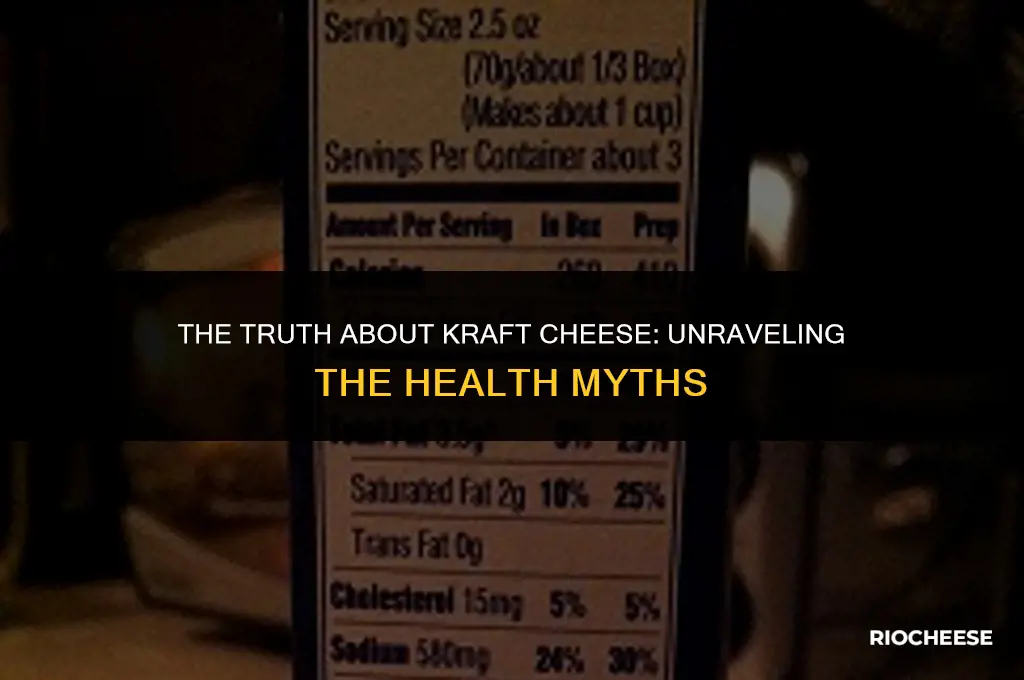
Kraft cheese, a popular brand of processed cheese, has been a staple in many households for decades. However, with increasing awareness about the importance of healthy eating, many people are beginning to question whether this convenient and tasty product is actually good for them. The answer to this question is not straightforward, as it depends on various factors such as consumption frequency, portion size, and individual dietary needs. While Kraft cheese does provide some nutritional benefits, including protein and calcium, it is also high in calories, saturated fat, and sodium. Moreover, processed cheeses like Kraft often contain additives and preservatives that may not be ideal for long-term health. Therefore, it is essential to consider these factors and make informed decisions about the role of Kraft cheese in a balanced diet.
Explore related products


What You'll Learn
- Nutritional Content: Kraft cheese's nutritional value, including calories, fat, and protein content
- Preservatives and Additives: The impact of artificial preservatives and additives found in Kraft cheese on health
- Sodium Content: The level of sodium in Kraft cheese and its potential effects on blood pressure and heart health
- Fat Composition: The types of fats present in Kraft cheese, including saturated and trans fats, and their health implications
- Comparison to Natural Cheese: How Kraft cheese compares to natural cheese options in terms of health benefits and drawbacks

Nutritional Content: Kraft cheese's nutritional value, including calories, fat, and protein content
Kraft cheese, a popular brand of processed cheese, has a nutritional profile that can be both beneficial and concerning depending on one's dietary needs and goals. A single slice of Kraft American cheese contains approximately 60 calories, 4.5 grams of fat, and 3 grams of protein. While the protein content can contribute to muscle repair and growth, the fat content, particularly the saturated fat, may be a concern for those monitoring their heart health.
In terms of vitamins and minerals, Kraft cheese is fortified with several nutrients, including vitamin A, vitamin D, and calcium. These additions can be beneficial, especially for individuals who may be deficient in these nutrients. However, it's important to note that processed cheeses like Kraft often contain higher levels of sodium and preservatives compared to natural cheeses, which can be detrimental to health if consumed in excess.
When considering the nutritional value of Kraft cheese, it's also essential to think about portion control. While a single slice may not be overly harmful, consuming multiple slices or incorporating it into high-calorie dishes can significantly increase one's caloric and fat intake. Therefore, moderation is key when including Kraft cheese in one's diet.
Moreover, for those following specific dietary restrictions, such as a ketogenic or low-carb diet, Kraft cheese can be a suitable option due to its low carbohydrate content. However, individuals with lactose intolerance or dairy allergies should avoid it, as it contains milk derivatives.
In conclusion, while Kraft cheese does offer some nutritional benefits, such as protein and fortified vitamins, its high fat and sodium content, along with the presence of preservatives, means it should be consumed in moderation as part of a balanced diet.
Is Your Provolone Past Its Prime? Signs to Check
You may want to see also
Explore related products


Preservatives and Additives: The impact of artificial preservatives and additives found in Kraft cheese on health
Artificial preservatives and additives are a common feature in many processed foods, including Kraft cheese. These substances are added to extend shelf life, enhance flavor, and improve texture. However, their impact on health is a subject of ongoing debate. Some studies suggest that certain preservatives and additives may contribute to health issues such as allergies, hyperactivity, and even cancer. On the other hand, regulatory bodies like the FDA maintain that these substances are safe for consumption in moderation.
One of the most controversial additives found in Kraft cheese is sodium nitrate, a preservative that helps prevent bacterial growth and maintains the cheese's color. While sodium nitrate is generally recognized as safe by the FDA, some research suggests that it may interact with other substances in the body to form harmful compounds. Additionally, Kraft cheese contains artificial flavors and colors, which some consumers prefer to avoid due to concerns about their potential health effects.
It's important to note that the health impact of preservatives and additives in Kraft cheese can vary depending on individual factors such as age, health status, and dietary habits. For example, children may be more susceptible to the effects of certain additives due to their developing bodies. Similarly, individuals with pre-existing health conditions may need to be more cautious about consuming foods with artificial preservatives and additives.
To minimize the potential health risks associated with preservatives and additives in Kraft cheese, consumers can take several steps. First, they can opt for natural or organic cheese alternatives that do not contain artificial preservatives or additives. Second, they can limit their consumption of processed foods in general, as these often contain a higher concentration of preservatives and additives. Finally, they can pay close attention to food labels and choose products with fewer and more natural ingredients.
In conclusion, while the impact of artificial preservatives and additives in Kraft cheese on health is a complex issue, there are steps that consumers can take to reduce their exposure to these substances. By being informed and making conscious choices, individuals can enjoy cheese and other processed foods in a way that minimizes potential health risks.
Unveiling the Nutritional Truth: Are Cheese Balls Really Bad for You?
You may want to see also
Explore related products


Sodium Content: The level of sodium in Kraft cheese and its potential effects on blood pressure and heart health
Sodium is a critical nutrient that plays a vital role in maintaining fluid balance and nerve function in the body. However, excessive sodium intake can lead to hypertension (high blood pressure), which is a significant risk factor for heart disease and stroke. Kraft cheese, like many processed cheeses, contains a considerable amount of sodium. According to the USDA, a single slice of Kraft American cheese contains approximately 310 milligrams of sodium, which is about 13% of the recommended daily intake for adults.
The high sodium content in Kraft cheese can be attributed to the processing methods used to create the cheese. Processed cheeses often undergo a series of steps, including pasteurization, homogenization, and the addition of preservatives and flavor enhancers, which can increase the sodium content. Additionally, Kraft cheese is often used in recipes and dishes that already contain high amounts of sodium, such as sandwiches, pizzas, and casseroles, further contributing to overall sodium intake.
For individuals with hypertension or those at risk of developing high blood pressure, it is essential to monitor and limit sodium intake. The American Heart Association recommends consuming no more than 2,300 milligrams of sodium per day, and ideally no more than 1,500 milligrams per day for most adults. Given the high sodium content of Kraft cheese, it may be necessary to reduce the frequency of consumption or opt for lower-sodium alternatives.
It is also important to note that the effects of sodium on blood pressure and heart health can vary among individuals. Some people may be more sensitive to the effects of sodium, while others may be able to tolerate higher levels without experiencing adverse effects. Factors such as age, race, and overall health status can influence sodium sensitivity. Therefore, it is crucial to consult with a healthcare professional to determine personal sodium intake recommendations.
In conclusion, while Kraft cheese can be a tasty and convenient addition to many meals, its high sodium content may pose risks to blood pressure and heart health, particularly for individuals with hypertension or those at risk of developing high blood pressure. By being mindful of sodium intake and making informed dietary choices, individuals can enjoy Kraft cheese in moderation while maintaining a healthy lifestyle.
Decoding Velveeta Shells and Cheese: Shelf Life Secrets Revealed
You may want to see also
Explore related products


Fat Composition: The types of fats present in Kraft cheese, including saturated and trans fats, and their health implications
Kraft cheese, like many processed cheeses, contains a blend of fats that contribute to its flavor, texture, and shelf life. However, the types of fats present can have varying health implications. Saturated fats, which are commonly found in animal products, are a significant component of Kraft cheese. While saturated fats are not inherently harmful in moderate amounts, excessive consumption has been linked to increased levels of LDL cholesterol, often referred to as "bad" cholesterol, which can contribute to heart disease.
In addition to saturated fats, Kraft cheese may also contain trans fats, which are created during the hydrogenation process used to solidify vegetable oils. Trans fats have been shown to have more detrimental health effects than saturated fats, as they can increase LDL cholesterol levels while also decreasing HDL cholesterol, or "good" cholesterol. This combination can significantly raise the risk of cardiovascular disease.
It's important to note that the fat composition of Kraft cheese can vary depending on the specific product and its ingredients. Some varieties may contain lower levels of saturated and trans fats, making them potentially healthier options. However, as a general rule, it's advisable to consume processed cheeses like Kraft in moderation as part of a balanced diet.
To put the fat content of Kraft cheese into perspective, a single slice of Kraft American cheese contains approximately 9 grams of fat, with about 3.5 grams being saturated fat and 0.5 grams being trans fat. While this may not seem excessive, it's essential to consider the cumulative effect of consuming such products regularly.
In conclusion, while Kraft cheese can be a tasty and convenient addition to meals, its fat composition should be taken into account when making dietary choices. Moderation and awareness of the types of fats present can help individuals make informed decisions about their consumption of processed cheeses and their overall health.
Unraveling the Truth: Are Enzymes in Cheese Harmful to Your Health?
You may want to see also
Explore related products



Comparison to Natural Cheese: How Kraft cheese compares to natural cheese options in terms of health benefits and drawbacks
Kraft cheese, a popular processed cheese product, often finds itself under scrutiny when compared to natural cheese options. One of the primary differences lies in the ingredient list. Natural cheeses are typically made from milk, salt, and enzymes, whereas Kraft cheese contains additional ingredients such as whey protein concentrate, sodium citrate, and artificial flavors. These additives can contribute to a longer shelf life and a more consistent texture, but they also raise concerns about the nutritional value and potential health impacts.
In terms of health benefits, natural cheeses generally offer a higher content of beneficial nutrients like calcium, protein, and vitamins A and B12. They also contain probiotics, which can support gut health. On the other hand, Kraft cheese, due to its processing, may have lower levels of these nutrients and lacks the probiotic benefits. However, it's important to note that both types of cheese can be high in saturated fat and sodium, which should be consumed in moderation as part of a balanced diet.
When it comes to drawbacks, processed cheeses like Kraft often contain higher levels of sodium and preservatives, which can be detrimental to health if consumed excessively. Some studies suggest that the additives in processed cheeses may contribute to increased inflammation and a higher risk of certain health conditions, such as heart disease and type 2 diabetes. Natural cheeses, while generally considered healthier, can still be high in calories and fat, and some varieties may contain high levels of sodium as well.
In conclusion, while Kraft cheese may offer convenience and a longer shelf life, natural cheese options generally provide more health benefits and fewer drawbacks. However, it's essential to consider the overall dietary context and consume both types of cheese in moderation as part of a balanced and varied diet.
The Shelf Life of Boursin Cheese: Does It Go Bad?
You may want to see also
Frequently asked questions
Yes, Kraft cheese can be high in calories. A single slice of Kraft Singles American cheese, for example, contains about 70 calories. It's important to consider portion sizes when incorporating it into your diet.
Yes, Kraft cheese products tend to be high in sodium. For instance, one slice of Kraft Singles American cheese has around 380mg of sodium, which is about 16% of the daily recommended value.
Kraft cheese does provide some nutritional benefits. It's a good source of protein and calcium. However, it's also high in saturated fat and sodium, so it should be consumed in moderation as part of a balanced diet.
Healthier alternatives to Kraft cheese include reduced-fat or part-skim mozzarella, feta, or goat cheese. These options tend to be lower in calories and saturated fat while still providing some nutritional benefits.
While Kraft cheese can be part of a weight loss diet, it's important to consume it in moderation due to its high calorie and fat content. Consider portion sizes and balance it with other nutrient-dense foods to meet your weight loss goals.