Andy Montoya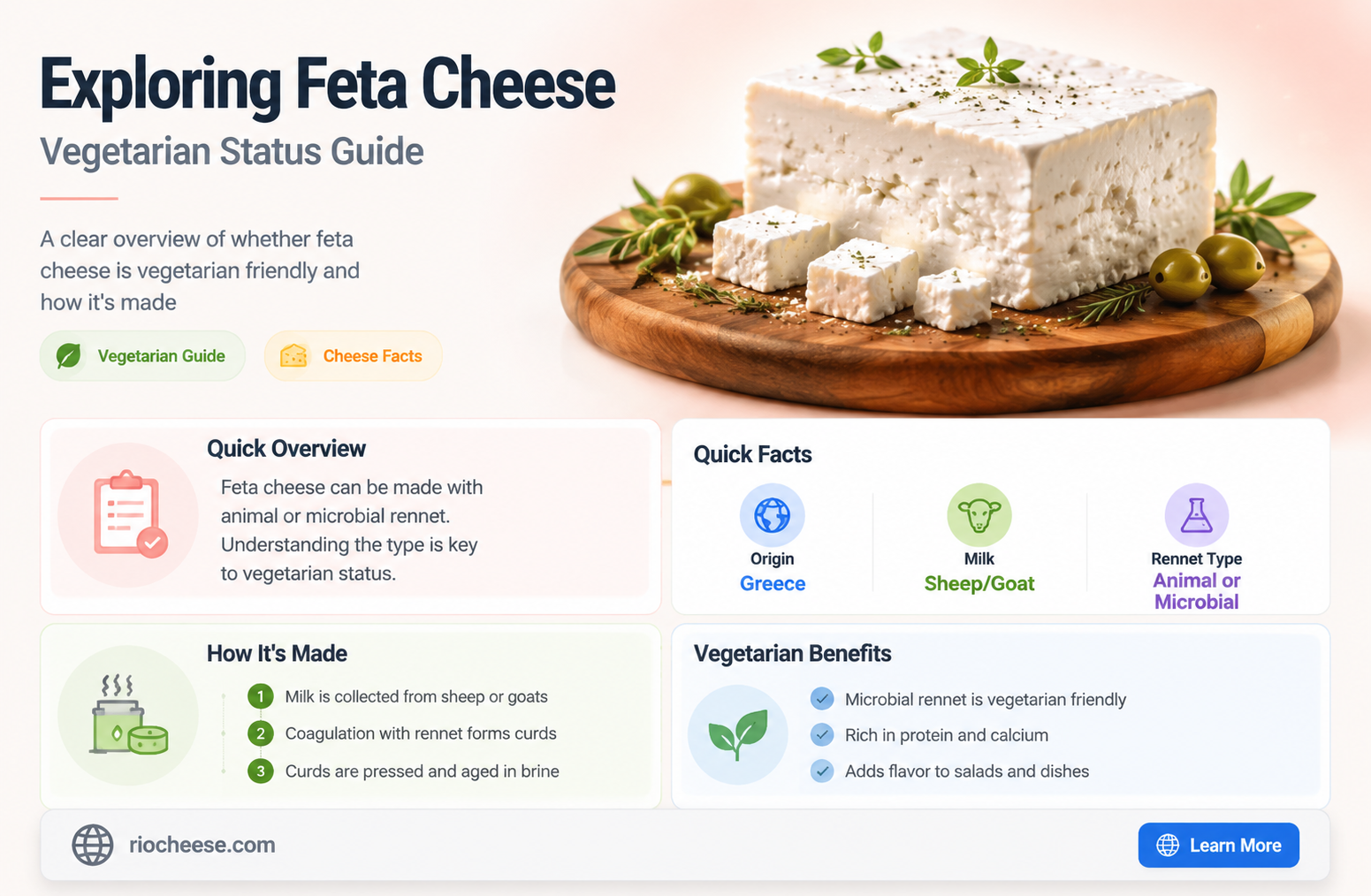
Feta cheese is a popular dairy product known for its crumbly texture and tangy flavor, often used in Mediterranean cuisine. It's made from sheep's or goat's milk, or a combination of both. The process of making feta cheese involves the use of rennet, an enzyme traditionally derived from the stomach lining of young ruminant animals. This raises questions about whether feta cheese is suitable for vegetarians.
Explore related products


What You'll Learn
- Definition of Vegetarianism: Understanding what constitutes vegetarian food and whether feta cheese fits this definition
- Feta Cheese Ingredients: Exploring the primary ingredients used in feta cheese production and their sources
- Animal Products in Cheese: Investigating if any animal-derived products are involved in the cheese-making process
- Vegetarian Alternatives: Discovering other cheese options that are explicitly vegetarian and how they differ from feta
- Cultural and Dietary Considerations: Examining how feta cheese consumption aligns with various dietary preferences and cultural practices

Definition of Vegetarianism: Understanding what constitutes vegetarian food and whether feta cheese fits this definition
Vegetarianism is a dietary practice that excludes the consumption of meat, poultry, and seafood. It is often adopted for ethical, environmental, or health reasons. However, there is sometimes confusion about what constitutes vegetarian food, particularly when it comes to products like feta cheese.
Feta cheese is a popular dairy product made from sheep's or goat's milk. It is commonly used in salads, sandwiches, and as a topping for various dishes. The question of whether feta cheese is vegetarian arises because some cheeses are made using animal rennet, an enzyme derived from the stomach lining of ruminant animals.
Fortunately, many brands of feta cheese are made using microbial or fungal rennet, which are vegetarian-friendly alternatives. These enzymes are derived from non-animal sources and are used to coagulate the milk in the cheese-making process. To determine if a particular brand of feta cheese is vegetarian, it is important to check the label or contact the manufacturer directly.
In addition to the rennet issue, some vegetarians may also be concerned about the potential presence of animal-derived ingredients in feta cheese, such as whey or casein. However, these ingredients are typically derived from milk, which is considered vegetarian.
In conclusion, while not all feta cheese is vegetarian, there are many vegetarian options available. By checking the label or contacting the manufacturer, vegetarians can enjoy feta cheese as part of their diet without compromising their principles.
Can Dogs Enjoy Feta Cheese? A Comprehensive Guide for Pet Owners
You may want to see also
Explore related products


Feta Cheese Ingredients: Exploring the primary ingredients used in feta cheese production and their sources
Feta cheese is a popular dairy product known for its crumbly texture and tangy flavor. The primary ingredients used in feta cheese production include milk, salt, and rennet. Milk is the main component, and it is typically sourced from sheep or goats, although cow's milk can also be used. The milk is pasteurized to kill any harmful bacteria and then cooled to a specific temperature for the addition of rennet. Rennet is an enzyme that helps to coagulate the milk, separating it into curds and whey. The curds are then cut into small pieces and stirred gently to release more whey. Salt is added to the curds to help draw out additional moisture and to enhance the flavor of the cheese.
The process of making feta cheese is relatively simple, but it requires careful attention to detail to ensure the best possible results. The milk must be of high quality and free from any contaminants, as this can affect the taste and texture of the final product. The rennet used in feta cheese production is typically derived from animal sources, such as the stomach lining of calves, which raises concerns for vegetarians. However, there are also vegetarian rennet alternatives available, which are derived from microbial or fungal sources. These alternatives allow vegetarians to enjoy feta cheese without compromising their dietary beliefs.
In addition to the primary ingredients, feta cheese may also contain other additives, such as calcium chloride, which helps to maintain the cheese's texture and prevent it from becoming too soft. Some feta cheeses are also aged in brine, which gives them a distinctive salty flavor. When shopping for feta cheese, it is important to check the ingredient list to ensure that it does not contain any animal-derived products if you are a vegetarian.
In conclusion, feta cheese is a delicious and versatile dairy product that can be enjoyed by vegetarians as long as it is made with vegetarian rennet. The primary ingredients used in feta cheese production are milk, salt, and rennet, and the process of making the cheese involves careful attention to detail to ensure the best possible results. By choosing feta cheese made with vegetarian rennet, vegetarians can enjoy the tangy flavor and crumbly texture of this popular cheese without compromising their dietary beliefs.
Exploring the Kosher Status of Feta Cheese: A Comprehensive Guide
You may want to see also
Explore related products


Animal Products in Cheese: Investigating if any animal-derived products are involved in the cheese-making process
Cheese enthusiasts and vegetarians alike often find themselves pondering the presence of animal-derived products in their favorite dairy delights. While many cheeses are ostensibly vegetarian, the cheese-making process can sometimes involve hidden animal products. Rennet, a complex enzyme used to coagulate milk, is traditionally derived from the stomach lining of calves. Although microbial and fungal rennet alternatives exist, some cheese producers still use animal-derived rennet, making certain cheeses non-vegetarian.
Investigating the cheese-making process reveals that the use of animal-derived rennet is not the only potential concern for vegetarians. Some cheeses are aged using animal-derived enzymes or contain other hidden animal products like gelatin or whey protein concentrate. Even seemingly vegetarian cheeses may be at risk of cross-contamination if produced in facilities that also process animal-derived ingredients.
Fortunately, there are resources available to help consumers navigate the complex world of cheese production. Vegetarian and vegan cheese databases, as well as certification programs like the Vegetarian Society's "Vegetarian" and "Vegan" labels, can provide valuable information about specific cheeses and their ingredients. Additionally, many artisanal cheese makers are transparent about their production processes and are willing to answer questions from concerned consumers.
For those who wish to avoid animal products entirely, there are a growing number of vegan cheese alternatives available. These plant-based cheeses are made using a variety of ingredients, such as nuts, seeds, and soy, and can offer a similar taste and texture to traditional dairy cheeses. While they may not be suitable for everyone, vegan cheeses provide a valuable option for those who wish to maintain a plant-based diet without sacrificing their love of cheese.
In conclusion, while the cheese-making process can sometimes involve animal-derived products, there are resources and alternatives available to help vegetarians and vegans make informed choices. By doing their research and seeking out transparent cheese producers, consumers can enjoy their favorite cheeses while staying true to their dietary preferences.
Exploring Dairy Alternatives: Is Feta Cheese Rennet-Free?
You may want to see also
Explore related products


Vegetarian Alternatives: Discovering other cheese options that are explicitly vegetarian and how they differ from feta
For those who follow a vegetarian diet but still wish to enjoy the rich flavors of cheese, there are several alternatives to feta that do not involve animal rennet. Vegetarian cheeses are made using microbial or fungal rennet, which are derived from non-animal sources. Some popular vegetarian cheese options include paneer, which is a fresh cheese common in Indian cuisine, and halloumi, a Cypriot cheese that is often grilled or fried.
Another option is to look for cheeses that are explicitly labeled as vegetarian. Many grocery stores now carry a range of vegetarian cheeses, including varieties that mimic the taste and texture of feta. These cheeses are typically made from cow's milk or goat's milk and are coagulated using vegetarian rennet.
When choosing vegetarian cheese alternatives, it's important to read the labels carefully to ensure that they do not contain any animal-derived ingredients. Some cheeses may be labeled as "vegetarian" but still contain enzymes derived from animal sources. Additionally, some vegetarian cheeses may have a different taste or texture than traditional feta, so it may be necessary to experiment with different brands and varieties to find the one that best suits your preferences.
In terms of nutritional value, vegetarian cheeses can be a good source of protein, calcium, and other essential nutrients. However, they may also be higher in fat and calories than some other vegetarian protein sources, so it's important to consume them in moderation as part of a balanced diet.
Overall, there are many delicious and nutritious vegetarian cheese options available for those who wish to avoid animal-derived ingredients. By exploring different varieties and brands, vegetarians can still enjoy the rich flavors of cheese without compromising their dietary preferences.
Exploring the Halal Status of Feta Cheese: A Comprehensive Guide
You may want to see also
Explore related products




Cultural and Dietary Considerations: Examining how feta cheese consumption aligns with various dietary preferences and cultural practices
Feta cheese, a staple in Greek cuisine, holds a unique place in various cultural and dietary practices around the world. Its consumption is not only a matter of taste but also of cultural significance and dietary compatibility. For instance, in Orthodox Christian traditions, feta cheese is often used in religious observances and festive meals, symbolizing hospitality and abundance.
From a dietary perspective, feta cheese is a versatile ingredient that can be incorporated into a wide range of dishes, from salads to pastries. It is a good source of protein, calcium, and vitamins, making it a popular choice among those seeking a nutritious diet. However, for individuals following a vegetarian diet, the suitability of feta cheese can be a point of contention. Traditional feta cheese is made using animal rennet, which is derived from the stomach lining of slaughtered animals, thus making it non-vegetarian.
In recent years, there has been a growing demand for vegetarian alternatives to traditional feta cheese. Many cheese manufacturers now produce feta cheese using microbial or fungal rennet, which are vegetarian-friendly options. These alternatives have made feta cheese more accessible to vegetarians and those who prefer plant-based diets.
Moreover, feta cheese's adaptability to various cuisines has led to its integration into diverse dietary practices. In Mediterranean diets, feta cheese is a key component, often paired with olives, tomatoes, and other fresh ingredients. Its tangy flavor and crumbly texture make it a favorite in both traditional and modern recipes.
In conclusion, feta cheese's cultural and dietary significance extends beyond its origins in Greek cuisine. Its versatility and nutritional value have made it a popular choice in various dietary practices, while its cultural symbolism continues to be celebrated in religious and festive traditions. As the demand for vegetarian and plant-based options grows, the availability of vegetarian feta cheese alternatives ensures that this beloved ingredient can be enjoyed by a wider audience.
Exploring the Gluten Content in Feta Cheese: A Comprehensive Guide
You may want to see also
Frequently asked questions
Yes, feta cheese is typically vegetarian. It is made from sheep's or goat's milk and does not involve the use of animal rennet, which is derived from the stomach lining of slaughtered animals.
Feta cheese originates from Greece. It has a long history dating back to ancient times and is traditionally made from sheep's milk or a mixture of sheep's and goat's milk.
Feta cheese is made by coagulating sheep's or goat's milk using a vegetarian rennet or a microbial coagulant. The curds are then cut into small pieces, salted, and left to drain in a cheesecloth. After draining, the cheese is typically aged in brine for several months to develop its characteristic flavor and texture.
Feta cheese is a good source of protein, calcium, and vitamins B12 and K2. It is also relatively low in calories and fat compared to other types of cheese. However, it is high in sodium due to the brining process.
No, vegans cannot consume feta cheese as it is made from animal milk. However, there are vegan alternatives available that are made from plant-based ingredients such as tofu or nuts.


![Traditional Feta Chunk has a rich, creamy texture and bold, tangy taste that elevates any dish. Inspired by Greek tradition, it’s made with fresh, simple ingredients for authentic flavor. Crumble it over salads, tuck it into wraps, or serve it on a cheeseboard—this versatile cheese adds a Mediterranean twist to your favorite foods. It’s a delicious way to bring depth and character to everyday meals or special recipes. [ 32 oz , 2 lb ]](https://m.media-amazon.com/images/I/51MZ2OhOE-L._AC_UL320_.jpg)