 Randy Chandler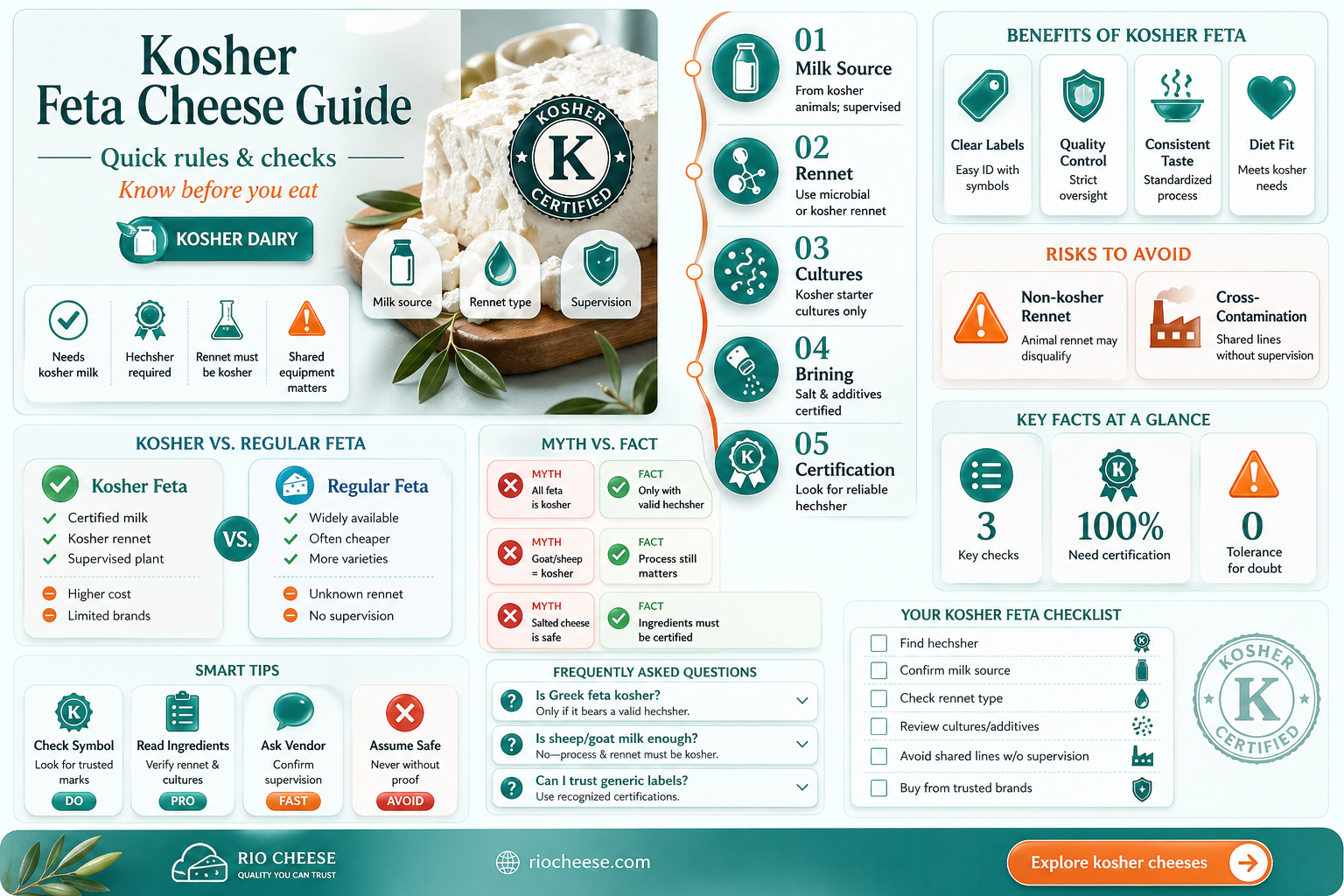
Feta cheese, a popular ingredient in Mediterranean cuisine, is often made from sheep's or goat's milk and is known for its crumbly texture and tangy flavor. When considering whether feta cheese is kosher, it's important to understand the dietary laws of kashrut, which govern what foods are permissible for consumption according to Jewish law. Kosher foods must meet specific criteria, including the type of animal, how it is slaughtered, and the absence of any non-kosher additives or cross-contamination. In the case of feta cheese, its kosher status depends on several factors, including the source of the milk, the enzymes used in the cheese-making process, and the presence of any non-kosher ingredients.
Explore related products


What You'll Learn
- Feta Cheese Ingredients: Exploring the components of feta cheese to determine if they meet kosher standards
- Kosher Certification: Discussing the importance of certification from recognized kosher authorities for feta cheese
- Production Process: Examining the methods used in feta cheese production to ensure they comply with kosher regulations
- Common Concerns: Addressing frequent issues related to the kosher status of feta cheese, such as animal rennet
- Brand Recommendations: Suggesting reputable brands that offer kosher-certified feta cheese options for consumers

Feta Cheese Ingredients: Exploring the components of feta cheese to determine if they meet kosher standards
Feta cheese is a popular ingredient in many cuisines, known for its tangy flavor and crumbly texture. To determine if feta cheese meets kosher standards, it's essential to examine its ingredients closely. Traditional feta cheese is made from sheep's or goat's milk, which is inherently kosher as long as the animals are slaughtered according to kosher guidelines. However, the process of cheese-making involves several steps and additives that must also be considered.
One critical aspect is the use of rennet, an enzyme used to curdle the milk. Rennet can be derived from animal sources, which would require kosher certification to ensure the animals were slaughtered properly. Alternatively, microbial or fungal rennet can be used, which are kosher without requiring any specific certification. It's important to check the label or contact the manufacturer to confirm the source of the rennet used in the feta cheese.
Another consideration is the presence of any non-kosher additives or preservatives. Some feta cheeses may contain ingredients like carrageenan, which is derived from seaweed and is not kosher. Additionally, the cheese may be aged in barrels that previously held non-kosher substances, which could contaminate the cheese. To ensure the feta cheese is kosher, it's crucial to verify that no such additives or cross-contamination has occurred.
In summary, while traditional feta cheese made from sheep's or goat's milk can be kosher, the specific ingredients and processes used in its production must be carefully examined. Checking the source of the rennet, avoiding non-kosher additives, and ensuring proper aging practices are all essential steps in determining if a particular brand of feta cheese meets kosher standards.
Explore related products


Kosher Certification: Discussing the importance of certification from recognized kosher authorities for feta cheese
Kosher certification plays a crucial role in ensuring that feta cheese adheres to the dietary laws of Judaism. This certification process involves a thorough examination of the cheese's ingredients, production methods, and equipment used to guarantee that no non-kosher substances or cross-contamination occur. Recognized kosher authorities, such as the Orthodox Union or Star-K, provide this certification, which is essential for observant Jews who follow kosher dietary restrictions.
The importance of kosher certification for feta cheese lies in its ability to provide consumers with confidence in the product's compliance with Jewish law. Without this certification, there is a risk that the cheese may contain ingredients or be produced in a manner that is not in line with kosher standards. For example, some feta cheeses may use animal rennet, which is derived from non-kosher animals, or be aged in barrels that previously held non-kosher products. Kosher certification helps to mitigate these risks and ensures that the cheese is suitable for consumption by those who follow kosher dietary practices.
In addition to providing assurance to consumers, kosher certification also has implications for the production and distribution of feta cheese. Manufacturers who seek kosher certification must adhere to strict guidelines and undergo regular inspections to maintain their certification status. This can lead to increased costs and logistical challenges, but it also opens up new markets and opportunities for growth. For example, kosher-certified feta cheese can be sold in kosher supermarkets and restaurants, and may also appeal to consumers who are interested in high-quality, ethically produced food products.
Overall, kosher certification is a critical aspect of ensuring that feta cheese is suitable for consumption by those who follow Jewish dietary laws. It provides consumers with confidence in the product's compliance with kosher standards, and also has implications for the production and distribution of the cheese. By understanding the importance of kosher certification, manufacturers and consumers can make informed decisions about the feta cheese they produce and purchase.
Explore related products


Production Process: Examining the methods used in feta cheese production to ensure they comply with kosher regulations
Feta cheese production involves several key steps that must be carefully monitored to ensure compliance with kosher regulations. The process begins with the selection of milk, which must be sourced from kosher animals and handled in a manner that prevents contamination with non-kosher substances. This includes using separate equipment for milking kosher and non-kosher animals, as well as ensuring that the milk is stored and transported in containers that have been properly cleaned and sanitized.
Once the milk has been collected, it is coagulated using a kosher rennet or microbial coagulant. The curds are then cut and drained, and the whey is removed. The curds are typically salted and mixed with herbs or spices, depending on the desired flavor profile. The mixture is then shaped into blocks or crumbled, and aged for a period of time to develop its characteristic flavor and texture.
Throughout the production process, it is essential to maintain strict adherence to kosher guidelines. This includes using only kosher utensils and equipment, and ensuring that all workers involved in the process are trained in kosher practices. Additionally, the production area must be kept clean and free of any non-kosher substances, and regular inspections must be conducted to ensure ongoing compliance.
One of the challenges in producing kosher feta cheese is the need to balance traditional production methods with modern kosher requirements. For example, some traditional feta cheese recipes call for the use of animal rennet, which is not kosher. In these cases, producers must find alternative coagulants that are both effective and compliant with kosher regulations.
Another challenge is the need to ensure that the cheese is properly aged and handled to prevent contamination. This can be particularly difficult in large-scale production facilities, where there is a greater risk of cross-contamination with non-kosher products. To address this issue, producers must implement strict sanitation protocols and use separate equipment for kosher and non-kosher products.
In conclusion, producing kosher feta cheese requires careful attention to detail and a deep understanding of both traditional production methods and modern kosher regulations. By following these guidelines and maintaining strict adherence to kosher practices, producers can create a high-quality, kosher feta cheese that meets the needs of consumers who follow kosher dietary laws.
Explore related products


Common Concerns: Addressing frequent issues related to the kosher status of feta cheese, such as animal rennet
One of the primary concerns regarding the kosher status of feta cheese is the use of animal rennet in its production. Rennet is an enzyme complex traditionally derived from the stomach lining of ruminant mammals, which is used to coagulate milk and separate curds from whey. For feta cheese to be considered kosher, the rennet used must be derived from kosher animals, and the animals must have been slaughtered according to kosher laws.
Many consumers are unaware that some feta cheese manufacturers use microbial or fungal rennet as an alternative to animal rennet, which is suitable for vegetarians and those concerned about the kosher status. However, even with these alternatives, there are still concerns about cross-contamination if the same equipment is used for both kosher and non-kosher products.
To address these concerns, kosher certification organizations often require manufacturers to use separate equipment and facilities for kosher and non-kosher products. Additionally, some manufacturers choose to use only kosher-certified rennet to ensure that their feta cheese meets the highest standards of kosher law.
It is important for consumers to check the labels of feta cheese products for kosher certification symbols and to research the manufacturer's practices regarding rennet sourcing and production methods. By doing so, they can make informed decisions about the kosher status of the feta cheese they purchase.
In conclusion, while the use of animal rennet is a common concern regarding the kosher status of feta cheese, there are alternatives available, and many manufacturers take steps to ensure that their products meet kosher standards. Consumers should be diligent in checking labels and researching manufacturers to ensure that they are purchasing kosher feta cheese that aligns with their dietary requirements and preferences.
Explore related products


Brand Recommendations: Suggesting reputable brands that offer kosher-certified feta cheese options for consumers
For consumers seeking kosher-certified feta cheese, several reputable brands stand out in the market. One such brand is Kosher Valley, which offers a range of dairy products, including feta cheese, that adhere to strict kosher standards. Their feta cheese is made from high-quality ingredients and is certified by the Orthodox Union, ensuring its compliance with kosher dietary laws.
Another notable brand is Tribune Dairy, known for its commitment to producing kosher dairy products. Their feta cheese is not only kosher-certified but also made from milk sourced from local farms, supporting sustainable and ethical dairy practices. Tribune Dairy's feta cheese is available in various sizes and packaging options, catering to different consumer needs.
Maple Glen Farms is a third reputable brand that offers kosher-certified feta cheese. This brand prides itself on using traditional cheese-making methods combined with modern technology to produce high-quality, flavorful feta cheese. Maple Glen Farms' feta cheese is certified kosher by the Star-K, a well-respected kosher certification agency.
When selecting a brand of kosher-certified feta cheese, consumers should look for the kosher certification symbol on the packaging, which indicates that the product meets the necessary standards. Additionally, consumers may want to consider factors such as the source of the milk, the cheese-making process, and the brand's reputation for quality and sustainability.
In conclusion, reputable brands like Kosher Valley, Tribune Dairy, and Maple Glen Farms offer consumers a variety of kosher-certified feta cheese options. By choosing these brands, consumers can enjoy high-quality, flavorful feta cheese while adhering to their dietary preferences and supporting ethical dairy practices.
Frequently asked questions
Feta cheese can be kosher, but it depends on the production process and the source of the milk. Kosher feta cheese must be made from milk sourced from kosher animals, typically cows or sheep, and the cheese-making process must adhere to kosher regulations, including the use of kosher rennet and adherence to specific preparation and aging requirements.
Feta cheese can be non-kosher if it is made from milk sourced from non-kosher animals, such as goats, or if the cheese-making process does not adhere to kosher regulations. Additionally, some feta cheeses may contain additives or be aged in barrels that previously held non-kosher products, which can also render the cheese non-kosher.
To determine if a specific brand of feta cheese is kosher, you should look for a kosher certification symbol on the packaging, such as the OU (Orthodox Union) symbol or the OK (Kosher Check) symbol. You can also contact the manufacturer directly to inquire about their kosher certification and production process.
Yes, there are several alternatives to feta cheese that are kosher, including kosher mozzarella, kosher cheddar, and kosher goat cheese. Additionally, there are many kosher dairy products that can be used in place of feta cheese in recipes, such as kosher cream cheese or kosher cottage cheese.
Kosher feta cheese can be used in a variety of dishes, including salads, sandwiches, and pasta dishes. It can also be used as a topping for pizzas or as a filling for stuffed vegetables or pastries. Additionally, kosher feta cheese can be crumbled over soups or used in dips and spreads.


