Andy Montoya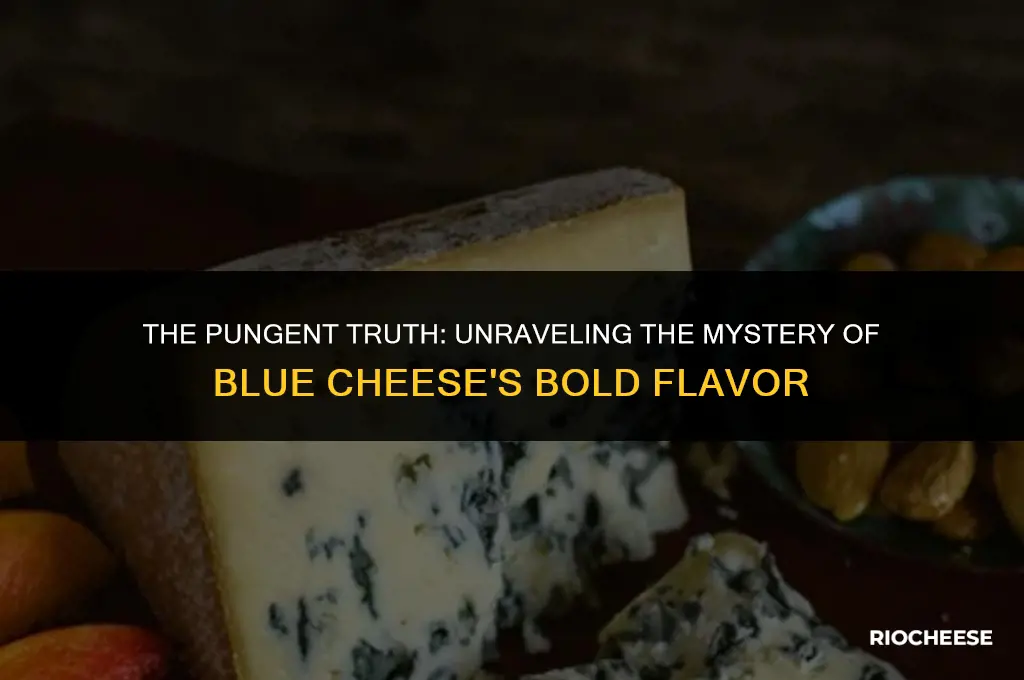
Blue cheese is known for its strong, pungent flavor, which can be quite polarizing. The distinctive taste of blue cheese comes from the mold cultures used in its production, specifically Penicillium roqueforti, Penicillium glaucum, or Penicillium mold. These molds produce enzymes that break down the cheese's fats and proteins, resulting in the creation of various compounds that contribute to its sharp, tangy, and sometimes spicy flavor profile. Additionally, the aging process of blue cheese, which can range from a few weeks to several months, allows these flavors to intensify. While some people appreciate the complex and bold taste of blue cheese, others find it overpowering and unpleasant. The perception of its flavor is highly subjective and can be influenced by factors such as personal taste preferences, cultural background, and exposure to different types of cheese.
What You'll Learn
- Strong Odor: Blue cheese's pungent smell can be off-putting, contributing to its perceived bad taste
- Mold Presence: The visible mold veins in blue cheese can be unappetizing, leading some to dislike its taste
- Acquired Taste: Blue cheese's unique flavor profile may require an acquired taste, which not everyone develops
- Fat Content: High fat content in blue cheese can make it feel heavy and rich, which some may find unpleasant
- Cultural Factors: Cultural preferences and exposure to different types of cheese can influence one's perception of blue cheese's taste

Strong Odor: Blue cheese's pungent smell can be off-putting, contributing to its perceived bad taste
The strong odor of blue cheese is a significant factor contributing to its perceived bad taste. This pungent smell is produced by the same mold that gives blue cheese its characteristic veins and flavor. The mold, Penicillium roqueforti, releases volatile organic compounds (VOCs) that are responsible for the intense aroma. These VOCs can be particularly off-putting to those who are not accustomed to the taste and smell of blue cheese.
One of the primary VOCs produced by P. roqueforti is called geosmin, which has a strong, earthy odor that some people describe as similar to the smell of moldy soil or dirty socks. Geosmin is a natural byproduct of the mold's metabolism and is present in varying concentrations in different types of blue cheese. The intensity of the odor can be influenced by factors such as the age of the cheese, the type of milk used, and the conditions under which the cheese was aged.
In addition to geosmin, other VOCs produced by the mold can contribute to the overall pungency of blue cheese. These compounds can evoke a range of sensory responses, from sharp and ammonia-like to sweet and fruity. The combination of these different odors can create a complex and overpowering aroma that is difficult for some people to tolerate.
The strong odor of blue cheese can also affect the perception of its taste. When we eat, our sense of taste is closely linked to our sense of smell. The brain combines the sensory information from both senses to create a unified perception of flavor. Therefore, the pungent smell of blue cheese can influence how we perceive its taste, making it seem more unpleasant or overpowering than it might actually be.
For those who are sensitive to strong odors, the smell of blue cheese can be a significant barrier to enjoying its unique flavor profile. However, for others, the pungent aroma is an integral part of the blue cheese experience, adding depth and complexity to its taste. Understanding the role of odor in the perception of blue cheese's flavor can help us appreciate the nuances of this polarizing food and perhaps even learn to enjoy it more.
Exploring Low FODMAP Options: Is Blue Cheese Dressing a Safe Choice?
You may want to see also
Mold Presence: The visible mold veins in blue cheese can be unappetizing, leading some to dislike its taste
The visible mold veins in blue cheese can be unappetizing, leading some to dislike its taste. This mold, known as Penicillium roqueforti, is intentionally introduced during the cheese-making process to create the characteristic blue veins and strong flavor. However, for those unfamiliar with or averse to mold, the sight of these veins can be off-putting, causing them to perceive the cheese as spoiled or unsafe to eat.
The mold in blue cheese is not harmful to humans and is, in fact, a key component of the cheese's unique taste and texture. The mold breaks down the fats and proteins in the cheese, producing compounds that contribute to its pungent aroma and sharp flavor. Despite this, the psychological barrier of consuming something with visible mold can be difficult for some people to overcome.
To address this issue, it's important to educate consumers about the cheese-making process and the role of mold in creating blue cheese. Understanding that the mold is a natural and necessary part of the cheese's development can help alleviate concerns about its safety and quality. Additionally, presenting blue cheese in a way that minimizes the visibility of the mold, such as grating or crumbling it, can make it more appealing to those who are hesitant to try it.
In conclusion, while the visible mold veins in blue cheese can be unappetizing to some, they are a crucial aspect of the cheese's flavor and texture. By educating consumers and presenting the cheese in a more appealing way, it's possible to overcome the psychological barriers that prevent some people from enjoying this unique and flavorful cheese.
Exploring the Richness of Roka Blue Cheese: A Gourmet's Delight
You may want to see also
Acquired Taste: Blue cheese's unique flavor profile may require an acquired taste, which not everyone develops
Blue cheese's distinctive flavor is a result of the mold Penicillium roqueforti, which is intentionally introduced during the cheese-making process. This mold imparts a sharp, pungent taste that is characteristic of blue cheeses. For many, this intense flavor can be off-putting at first, leading to the common perception that blue cheese tastes bad. However, the unique taste of blue cheese is not inherent to the cheese itself but rather a product of the mold's metabolic processes. As the mold breaks down the fats and proteins in the cheese, it releases compounds that contribute to the cheese's strong aroma and flavor.
The concept of an acquired taste is crucial in understanding why blue cheese may not appeal to everyone immediately. Acquired tastes are flavors that individuals learn to appreciate over time through repeated exposure. In the case of blue cheese, the initial reaction to its strong flavor can be negative, but as one continues to taste it, the palate can adapt, and the flavors can become more nuanced and enjoyable. This process of acquiring a taste for blue cheese is highly individual and can vary greatly from person to person.
Several factors can influence an individual's ability to acquire a taste for blue cheese. These include genetic predispositions, cultural background, and previous food experiences. For instance, individuals who have grown up in cultures where strong, pungent flavors are common may find it easier to appreciate blue cheese. Conversely, those who are accustomed to milder flavors may struggle to develop a liking for it. Additionally, the intensity of the blue cheese's flavor can vary depending on the type and age of the cheese, which can also impact one's ability to acquire a taste for it.
To develop an appreciation for blue cheese, it is recommended to start with milder varieties and gradually move on to stronger ones. Pairing blue cheese with complementary foods, such as fruits, nuts, or honey, can also help to balance its strong flavor and make it more palatable. Furthermore, understanding the cheese-making process and the role of the mold in creating its unique flavor can help to demystify blue cheese and make it more approachable for those who are hesitant to try it.
In conclusion, the perception that blue cheese tastes bad is often a result of its strong, pungent flavor, which can be an acquired taste. By gradually exposing oneself to different varieties of blue cheese and pairing it with complementary foods, individuals can learn to appreciate its unique flavor profile. Ultimately, the enjoyment of blue cheese is a matter of personal preference, and with time and exposure, many can come to appreciate its distinctive taste.
Discover the Best Spots to Buy Blue Cheese Stuffed Olives
You may want to see also
Fat Content: High fat content in blue cheese can make it feel heavy and rich, which some may find unpleasant
The high fat content in blue cheese is a significant factor that can make it feel heavy and rich, which some individuals may find unpleasant. This sensation is primarily due to the cheese's high levels of saturated fats, which can coat the palate and leave a lingering, greasy mouthfeel. For those who are not accustomed to such rich flavors, this can be off-putting and contribute to the perception that blue cheese tastes bad.
Moreover, the fat content can also affect the cheese's texture, making it softer and creamier. While some may enjoy this texture, others might find it too dense and overwhelming, especially when paired with other strong flavors. The combination of a heavy mouthfeel and an intense flavor profile can be a double-edged sword, appealing to some connoisseurs while deterring others.
It's also worth noting that the perception of taste is highly subjective and can be influenced by various factors, including cultural background, personal preferences, and past experiences with certain foods. For instance, individuals who have grown up consuming high-fat dairy products may be more likely to enjoy the rich taste of blue cheese, while those who are used to lighter, lower-fat options may find it too overpowering.
In addition, the way blue cheese is consumed can also impact the overall experience. When eaten in moderation as part of a balanced meal or paired with complementary flavors, such as sweet fruits or tangy sauces, the high fat content may be less noticeable and more enjoyable. However, when consumed in large quantities or on its own, the richness can become overwhelming and lead to a negative taste perception.
Ultimately, the high fat content in blue cheese is a key characteristic that contributes to its unique taste and texture. While it may not appeal to everyone, it is an essential aspect of what makes blue cheese distinct and beloved by many. Understanding this can help individuals appreciate the cheese's qualities and make informed decisions about how to enjoy it in a way that suits their personal preferences.
Exploring Mexico's Blue Cheese Alternatives: A Flavorful Journey
You may want to see also
Cultural Factors: Cultural preferences and exposure to different types of cheese can influence one's perception of blue cheese's taste
Cultural factors play a significant role in shaping our perception of blue cheese's taste. In regions where blue cheese is a traditional staple, such as parts of Europe, people tend to develop a palate for its strong, pungent flavor from a young age. This early exposure can lead to a lifelong appreciation for the cheese's unique characteristics. Conversely, in cultures where blue cheese is less common or not traditionally consumed, individuals may find its taste overpowering or unpleasant when first encountered.
For instance, in countries like Japan or India, where dairy consumption is relatively low and cheese varieties are limited, the introduction of blue cheese can be met with resistance. The mold's strong aroma and the cheese's sharp flavor profile can be jarring to those unaccustomed to it. On the other hand, in France or Italy, where cheese is an integral part of the culinary heritage and blue cheeses like Roquefort and Gorgonzola are celebrated, people are more likely to view blue cheese as a delicacy.
Moreover, cultural preferences for certain flavors and textures can influence how blue cheese is perceived. For example, in some cultures, spicy or fermented foods are highly valued, which might make the bold taste of blue cheese more appealing. In contrast, cultures that favor milder, more delicate flavors may find blue cheese too intense.
Exposure to different types of cheese can also impact one's perception of blue cheese. If an individual is familiar with a variety of cheeses, including soft, hard, and semi-hard types, they may be more open to the distinct qualities of blue cheese. However, someone who has only experienced a narrow range of cheeses might find blue cheese's flavor profile unfamiliar and off-putting.
In conclusion, cultural factors and exposure to diverse cheese varieties significantly influence our perception of blue cheese's taste. What may be considered a delicacy in one culture could be seen as unpalatable in another, highlighting the subjective nature of taste preferences.
Ken's Blue Cheese Dressing: Pasteurized or Not?
You may want to see also
Frequently asked questions
Blue cheese has a strong, pungent flavor due to the mold cultures used in its production. These molds create compounds that give blue cheese its distinctive taste and aroma, which can be off-putting to those who are not accustomed to it.
Yes, blue cheese is commonly used in salads and dressings because its bold flavor can complement and enhance the taste of other ingredients. The sharpness of blue cheese can balance out the sweetness of fruits or the bitterness of greens, making it a popular choice for adding depth to these dishes.
Absolutely, blue cheese can be paired with a variety of foods to make it more enjoyable for those who find its taste strong. It pairs well with sweet fruits like apples and pears, as well as with nuts, honey, and even chocolate. These pairings can help to balance out the intensity of the blue cheese and make it a more pleasant eating experience.