Randy Chandler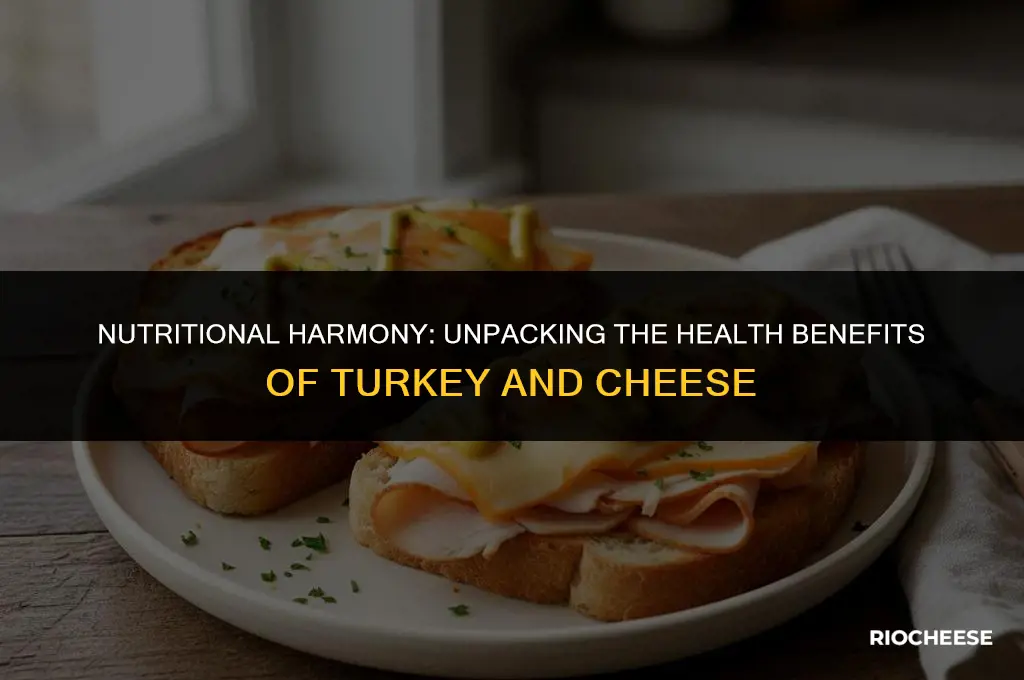
When considering the healthiness of turkey and cheese, it's important to look at the nutritional content of each food. Turkey is a lean protein source, low in fat and high in essential nutrients like vitamin B6 and selenium. Cheese, on the other hand, is high in fat and calories but also provides important nutrients such as calcium and protein. The healthiness of these foods can depend on the type and portion size consumed. For example, opting for low-fat turkey and reduced-fat cheese can make them part of a balanced diet. Additionally, pairing them with whole grains and vegetables can enhance their nutritional value.
Explore related products



What You'll Learn
- Nutritional benefits: Turkey and cheese provide protein, vitamins, and minerals essential for a balanced diet
- Calorie content: Both turkey and cheese can be high in calories, so portion control is important for weight management
- Fat content: Turkey breast is lean, but cheese can be high in saturated fat, which should be consumed in moderation
- Sodium levels: Processed turkey and some cheeses can be high in sodium, which may be a concern for those with high blood pressure
- Dietary restrictions: Some individuals may need to avoid turkey and cheese due to allergies, intolerances, or specific dietary preferences

Nutritional benefits: Turkey and cheese provide protein, vitamins, and minerals essential for a balanced diet
Turkey and cheese are both nutrient-dense foods that can contribute significantly to a balanced diet. Turkey is an excellent source of lean protein, which is essential for muscle growth and repair. It also contains important vitamins and minerals such as vitamin B6, vitamin B12, and selenium. These nutrients play crucial roles in energy metabolism, nervous system function, and antioxidant defense.
Cheese, on the other hand, is a rich source of calcium, which is vital for bone health. It also provides protein, vitamin A, vitamin B12, and riboflavin. Vitamin A is important for vision, immune function, and skin health, while riboflavin helps with energy production and cellular function.
When consumed in moderation, turkey and cheese can be part of a healthy diet. However, it's important to consider the types and amounts of cheese and turkey being consumed. For example, some cheeses can be high in saturated fat and sodium, which should be limited in a healthy diet. Similarly, turkey products can vary in nutritional quality, with some being high in sodium and preservatives.
To maximize the nutritional benefits of turkey and cheese, it's recommended to choose lean cuts of turkey and low-fat cheese options. Additionally, incorporating a variety of other nutrient-dense foods such as fruits, vegetables, whole grains, and healthy fats is essential for maintaining a balanced diet.
In summary, turkey and cheese can be healthy choices when consumed as part of a balanced diet. They provide essential nutrients that support various bodily functions, but it's important to be mindful of portion sizes and choose healthier options to minimize the intake of saturated fat and sodium.
Exploring the Nutritional Benefits of Violife Cheese: A Healthy Alternative?
You may want to see also
Explore related products


Calorie content: Both turkey and cheese can be high in calories, so portion control is important for weight management
Understanding the calorie content of foods is crucial for maintaining a balanced diet and managing weight effectively. Turkey and cheese, while nutritious, can be high in calories if consumed in large quantities. For instance, a 3-ounce serving of turkey breast contains approximately 140 calories, while an ounce of cheddar cheese can have around 115 calories. These values can quickly add up, especially when combined in a meal or snack.
Portion control is a key strategy to enjoy these foods without overindulging. One practical approach is to use smaller plates and utensils, which can help reduce the amount of food consumed without feeling deprived. Additionally, being mindful of serving sizes and using measuring tools can ensure that portions are kept in check. For example, using a food scale to weigh turkey slices or cheese can help adhere to recommended serving sizes.
Another effective method is to balance high-calorie foods with lower-calorie options. Incorporating plenty of vegetables, fruits, and whole grains into meals can provide a feeling of fullness while reducing overall calorie intake. This approach not only aids in weight management but also ensures a well-rounded diet rich in essential nutrients.
It's also important to consider the nutritional benefits of turkey and cheese when evaluating their place in a healthy diet. Turkey is a good source of lean protein, which is essential for muscle repair and growth. Cheese, on the other hand, provides calcium and vitamin D, which are important for bone health. By consuming these foods in moderation and as part of a balanced diet, individuals can enjoy their nutritional benefits without compromising their weight management goals.
In conclusion, while turkey and cheese can be high in calories, they can still be part of a healthy diet when consumed in moderation. By practicing portion control, balancing high-calorie foods with lower-calorie options, and being mindful of serving sizes, individuals can enjoy the nutritional benefits of these foods while maintaining a balanced diet and managing their weight effectively.
Exploring the Nutritional Benefits of Pecorino Romano Cheese
You may want to see also
Explore related products




Fat content: Turkey breast is lean, but cheese can be high in saturated fat, which should be consumed in moderation
Turkey breast is renowned for its lean protein content, making it a staple in many health-conscious diets. However, when paired with cheese, the fat content of the meal can increase significantly. Cheese, particularly varieties like cheddar and American, can be high in saturated fat, which has been linked to increased cholesterol levels and heart disease risk when consumed in excess. Therefore, while turkey and cheese can be part of a balanced diet, it's crucial to be mindful of portion sizes and the types of cheese chosen.
For those looking to reduce their saturated fat intake, opting for lower-fat cheese options such as part-skim mozzarella, reduced-fat cheddar, or feta can be beneficial. Additionally, using cheese as a flavor enhancer rather than a main component of the dish can help control the overall fat content. For example, sprinkling a small amount of grated cheese on top of a turkey sandwich or salad can add flavor without significantly increasing the calorie or fat count.
It's also important to consider the overall dietary pattern when evaluating the healthiness of turkey and cheese. A diet rich in fruits, vegetables, whole grains, and lean proteins, with moderate amounts of dairy and healthy fats, can support overall health and well-being. In this context, turkey and cheese can be a nutritious and satisfying option, provided they are consumed in moderation and balanced with other wholesome foods.
In summary, while turkey breast is a lean source of protein, the addition of cheese can increase the fat content of a meal. To maintain a healthy diet, it's essential to choose lower-fat cheese options, control portion sizes, and balance the meal with other nutrient-dense foods. By doing so, turkey and cheese can be a delicious and nutritious part of a well-rounded diet.
Nutritional Insights: Salami and Cheese - A Healthy Choice?
You may want to see also
Explore related products



Sodium levels: Processed turkey and some cheeses can be high in sodium, which may be a concern for those with high blood pressure
Processed turkey products, such as deli meats and sausages, often contain high levels of sodium as a preservative and flavor enhancer. This can be particularly concerning for individuals with hypertension, as excessive sodium intake is known to exacerbate high blood pressure. The American Heart Association recommends limiting daily sodium intake to less than 2,300 milligrams, and ideally no more than 1,500 milligrams for those with high blood pressure. A single serving of processed turkey can easily exceed these limits, making it a significant contributor to overall sodium consumption.
Similarly, some cheeses, especially those that are aged or processed, can also be high in sodium. For example, a one-ounce serving of cheddar cheese can contain up to 170 milligrams of sodium, while processed cheese products like cheese spreads and slices can have even higher levels. This sodium content can add up quickly, especially when cheese is consumed in addition to other high-sodium foods like processed meats.
To mitigate the impact of sodium on blood pressure, it is important for individuals to be mindful of their overall dietary sodium intake. This can be achieved by choosing fresh, unprocessed foods whenever possible, and by carefully reading food labels to identify high-sodium products. When consuming processed turkey and cheese, it is advisable to do so in moderation and to balance these foods with other low-sodium options. Additionally, incorporating more potassium-rich foods into the diet, such as fruits, vegetables, and whole grains, can help to counteract the effects of sodium and support healthy blood pressure levels.
In conclusion, while processed turkey and some cheeses can be high in sodium, they can still be part of a healthy diet when consumed in moderation and balanced with other low-sodium foods. By being aware of sodium content and making informed food choices, individuals can enjoy these foods while maintaining healthy blood pressure levels.
Exploring the Nutritional Benefits of Fontina Cheese
You may want to see also
Explore related products



Dietary restrictions: Some individuals may need to avoid turkey and cheese due to allergies, intolerances, or specific dietary preferences
For individuals with dietary restrictions, the question of whether turkey and cheese are healthy takes on a different dimension. Allergies, intolerances, and specific dietary preferences can necessitate the avoidance of these foods, regardless of their general health benefits. For example, those with lactose intolerance may struggle to digest the cheese, leading to gastrointestinal discomfort. Similarly, individuals with a turkey allergy may experience adverse reactions ranging from mild to severe.
It's crucial for those with such dietary restrictions to be aware of alternative protein and calcium sources. For instance, individuals avoiding turkey can opt for other lean proteins like chicken, fish, or plant-based options such as tofu and legumes. Those who cannot consume cheese can explore other calcium-rich foods like leafy greens, fortified plant milks, and dairy alternatives like almond or soy cheese.
Moreover, it's important to consider the context in which these dietary restrictions apply. For example, during holiday meals or social gatherings, individuals may need to communicate their dietary needs to hosts or caterers. This can help ensure that suitable alternatives are provided, allowing them to enjoy the occasion without compromising their health.
In some cases, dietary restrictions may also influence the nutritional adequacy of a diet. For instance, if an individual is avoiding both turkey and cheese, they may need to pay extra attention to their intake of essential nutrients like protein, calcium, and vitamin B12, which are commonly found in these foods. Consulting with a healthcare professional or a registered dietitian can be helpful in developing a balanced diet that meets all nutritional needs while accommodating dietary restrictions.
Ultimately, while turkey and cheese can be part of a healthy diet for many, they are not universally suitable. Understanding and respecting individual dietary restrictions is key to promoting inclusive and health-conscious eating habits.
Unveiling the Nutritional Truth: Are Cheese Curds a Healthy Snack?
You may want to see also
Frequently asked questions
Turkey and cheese can be part of a healthy diet when consumed in moderation. Turkey is a good source of lean protein, which is essential for muscle repair and growth. Cheese, on the other hand, provides calcium and other nutrients but can be high in saturated fat and calories. It's important to balance portion sizes and choose lower-fat cheese options to make this meal healthier.
Turkey is rich in protein, low in fat, and a good source of vitamins B6 and B12, selenium, and phosphorus. Cheese is a good source of calcium, protein, and vitamins A, B2, and B12. Together, they provide a balanced mix of macronutrients and micronutrients that can contribute to a healthy diet.
To make a turkey and cheese sandwich healthier, consider using whole-grain bread for added fiber, choosing a lower-fat cheese, and adding plenty of vegetables like lettuce, tomato, and cucumber for extra nutrients and fiber. You can also use a light spread of mustard or hummus instead of mayonnaise to reduce the calorie and fat content.
Eating turkey and cheese together can be a convenient and tasty way to get a balanced meal. However, if you're watching your calorie or fat intake, it might be better to eat them separately or in smaller portions. Pairing turkey with a side of vegetables or a salad can also help balance the meal and provide additional nutrients.
If you're looking for healthier alternatives to turkey and cheese, consider options like grilled chicken, tofu, or tempeh for protein sources. For cheese, you could try lower-fat varieties like part-skim mozzarella, reduced-fat cheddar, or feta. Additionally, incorporating more plant-based foods like beans, lentils, and a variety of vegetables can provide a nutritious and balanced diet.