Andy Montoya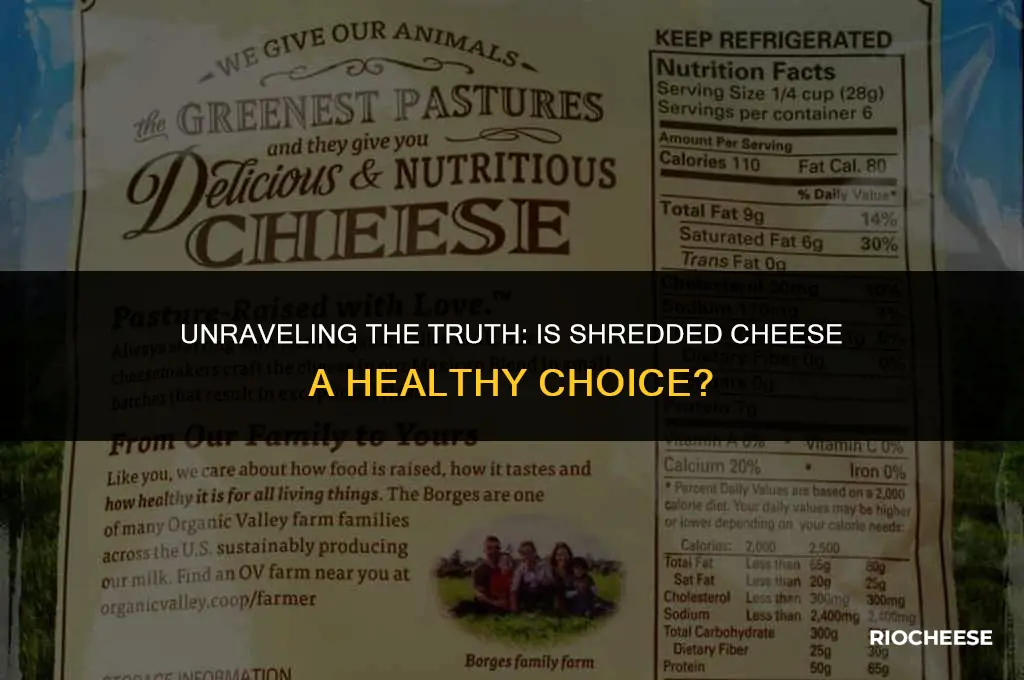
Shredded cheese is a popular ingredient in many dishes, but its nutritional value is often debated. While cheese can be a good source of protein, calcium, and vitamins, it is also high in saturated fat and calories. Shredded cheese, in particular, can be more problematic because it is often pre-shredded and may contain additives to prevent clumping. These additives can include cellulose powder, potato starch, or natamycin, which some people prefer to avoid. Additionally, shredded cheese can be more difficult to portion control, leading to overconsumption. So, is shredded cheese bad for you? The answer depends on your dietary needs and preferences. If you are watching your calorie or fat intake, shredded cheese may not be the best choice. However, if you consume it in moderation and choose a high-quality brand without unnecessary additives, it can be a part of a balanced diet.
Explore related products


![Sharp Cheddar Finely Shredded Cheese , This easy to melt cheese comes pre-shredded, so it sprinkles evenly over any dish to add gooey goodness. Layer this finely shredded cheese in casseroles, sprinkle it over salads, use it on homemade pizzas or to make ordinary pasta dishes extraordinary. Each bag of cheese is resealable to help lock in flavor. [ 16 oz , 1 pound ] 2pk](https://m.media-amazon.com/images/I/61t6kM4RMwL._AC_UL320_.jpg)
What You'll Learn
- Nutritional Content: Shredded cheese can be high in calories, fat, and sodium, but also provides protein and calcium
- Additives and Preservatives: Some shredded cheeses contain additives like cellulose powder and natamycin, which may have health implications
- Lactose Intolerance: Individuals with lactose intolerance may experience digestive issues when consuming shredded cheese
- Cholesterol Levels: Shredded cheese can contribute to high cholesterol levels due to its saturated fat content
- Portion Control: It's easy to overconsume shredded cheese, leading to excessive calorie and fat intake

Nutritional Content: Shredded cheese can be high in calories, fat, and sodium, but also provides protein and calcium
Shredded cheese, a staple in many households, offers a convenient way to add flavor and texture to a variety of dishes. However, its nutritional profile is often a subject of debate. While it is high in calories, fat, and sodium, it also provides essential nutrients like protein and calcium. Understanding the nutritional content of shredded cheese is crucial for making informed dietary choices.
One of the primary concerns with shredded cheese is its high calorie and fat content. A single serving, which is typically around 1/4 cup, can contain upwards of 100 calories and 8 grams of fat. This can be particularly problematic for individuals who are watching their calorie intake or trying to manage their weight. Additionally, the fat content in shredded cheese is often saturated, which has been linked to an increased risk of heart disease when consumed in excess.
Sodium is another nutrient of concern in shredded cheese. A 1/4 cup serving can contain over 300 milligrams of sodium, which is approximately 13% of the recommended daily intake. High sodium consumption can lead to hypertension and other cardiovascular issues. It's important to note that the sodium content can vary significantly between different brands and types of shredded cheese, so it's essential to check the nutrition label before purchasing.
On the positive side, shredded cheese is a good source of protein and calcium. Protein is essential for building and repairing tissues in the body, and calcium is crucial for maintaining strong bones and teeth. A 1/4 cup serving of shredded cheese can provide around 7 grams of protein and 20% of the recommended daily intake of calcium. This makes shredded cheese a valuable addition to the diet, particularly for individuals who may be struggling to meet their protein and calcium needs.
In conclusion, while shredded cheese can be high in calories, fat, and sodium, it also provides important nutrients like protein and calcium. The key to incorporating shredded cheese into a healthy diet is moderation and awareness of its nutritional content. By choosing lower-fat and lower-sodium options and controlling portion sizes, individuals can enjoy the benefits of shredded cheese without compromising their health goals.
The Surprising Truth About Cheese Puffs: Are They Really Bad for You?
You may want to see also
Explore related products


Additives and Preservatives: Some shredded cheeses contain additives like cellulose powder and natamycin, which may have health implications
Shredded cheese, a convenient staple in many households, often contains additives and preservatives that may raise health concerns. One such additive is cellulose powder, derived from wood pulp, which is used to prevent the cheese from clumping. While generally recognized as safe by food regulatory bodies, some studies suggest that excessive consumption of cellulose powder could lead to gastrointestinal issues.
Another common preservative in shredded cheese is natamycin, a natural antifungal agent produced by bacteria. Although natamycin is effective in inhibiting mold growth, there is ongoing debate about its potential impact on human health. Some research indicates that natamycin may disrupt the gut microbiome, potentially leading to digestive problems and other health issues.
To minimize the intake of these additives, consumers can opt for shredded cheeses that are free from cellulose powder and natamycin. Alternatively, they can choose to shred their own cheese at home, ensuring that no unwanted additives are present. It is also advisable to consume shredded cheese in moderation, as part of a balanced diet that includes a variety of whole foods.
In conclusion, while shredded cheese can be a convenient and tasty addition to meals, it is essential to be aware of the potential health implications of its additives and preservatives. By making informed choices and consuming shredded cheese in moderation, individuals can enjoy its benefits while minimizing any associated risks.
The Truth About Brie: Does This Creamy Cheese Really Smell Bad?
You may want to see also
Explore related products


Lactose Intolerance: Individuals with lactose intolerance may experience digestive issues when consuming shredded cheese
Individuals with lactose intolerance may experience digestive issues when consuming shredded cheese due to the presence of lactose, a sugar found in milk and dairy products. Lactose intolerance occurs when the body lacks sufficient lactase, the enzyme responsible for breaking down lactose into simpler sugars that can be absorbed by the digestive system. As a result, undigested lactose can lead to symptoms such as bloating, gas, abdominal pain, and diarrhea.
The severity of symptoms can vary widely among individuals with lactose intolerance. Some may be able to tolerate small amounts of lactose without experiencing significant discomfort, while others may need to avoid dairy products entirely. For those who fall somewhere in between, managing lactose intake often involves a process of trial and error to determine personal tolerance levels.
Shredded cheese, in particular, can be problematic for individuals with lactose intolerance because it is often used in large quantities and may be more difficult to digest than other dairy products due to its texture and fat content. Additionally, shredded cheese is frequently used as a topping or ingredient in dishes that are already high in fat and calories, which can further exacerbate digestive issues.
Fortunately, there are several alternatives available for individuals with lactose intolerance who wish to enjoy cheese. Lactose-free cheese products are widely available in many grocery stores and can be used as a substitute in recipes and dishes. Additionally, some individuals may find that they can tolerate certain types of cheese, such as aged cheeses or cheeses made from goat's or sheep's milk, which tend to be lower in lactose than cow's milk cheeses.
In conclusion, while shredded cheese can be a tasty and convenient addition to many dishes, it is important for individuals with lactose intolerance to be aware of the potential digestive issues it may cause. By understanding personal tolerance levels and exploring alternative cheese options, those with lactose intolerance can still enjoy the flavors and textures of cheese without compromising their digestive health.
Is Your Grated Parmesan Cheese Spoiled? Here's How to Tell
You may want to see also
Explore related products


Cholesterol Levels: Shredded cheese can contribute to high cholesterol levels due to its saturated fat content
Shredded cheese, a staple in many households, can have a significant impact on cholesterol levels due to its saturated fat content. Saturated fats are known to raise LDL (low-density lipoprotein) cholesterol, often referred to as "bad" cholesterol, which can increase the risk of heart disease and stroke. A single serving of shredded cheese can contain a substantial amount of saturated fat, depending on the type of cheese and the portion size. For instance, cheddar cheese, a popular choice for shredding, can have around 6-7 grams of saturated fat per ounce. Considering that many recipes call for multiple ounces of shredded cheese, the cumulative effect can be considerable.
It's important to note that not all cheeses have the same impact on cholesterol levels. Some types of cheese, such as part-skim mozzarella or reduced-fat cheddar, have lower saturated fat content and may be better options for those monitoring their cholesterol intake. Additionally, the way cheese is consumed can also make a difference. For example, using shredded cheese as a topping for salads or vegetables can help control portion sizes, whereas incorporating it into high-calorie, high-fat dishes like nachos or casseroles can exacerbate its impact on cholesterol levels.
For individuals with high cholesterol or those at risk of developing it, it's advisable to limit the intake of shredded cheese and opt for lower-fat alternatives or smaller portion sizes. The American Heart Association recommends that adults consume no more than 13 grams of saturated fat per day, which is roughly equivalent to one ounce of full-fat shredded cheese. By being mindful of portion sizes and choosing healthier cheese options, it's possible to enjoy shredded cheese without significantly impacting cholesterol levels.
In conclusion, while shredded cheese can contribute to high cholesterol levels due to its saturated fat content, there are ways to mitigate this effect. By selecting lower-fat cheeses, controlling portion sizes, and incorporating shredded cheese into healthier dishes, individuals can still enjoy this convenient and flavorful ingredient as part of a balanced diet.
The Shelf Life of Boursin Cheese: Does It Go Bad?
You may want to see also
Explore related products


Portion Control: It's easy to overconsume shredded cheese, leading to excessive calorie and fat intake
Shredded cheese, with its convenient texture and melt-in-your-mouth appeal, can be a dietary downfall if not consumed mindfully. The ease with which it can be sprinkled over various dishes often leads to overconsumption, resulting in excessive calorie and fat intake. This is particularly problematic given that many types of shredded cheese are high in saturated fats and calories, which can contribute to weight gain and other health issues if consumed in large quantities.
One of the main challenges with portion control when it comes to shredded cheese is its deceptive nature. Unlike solid blocks of cheese, which require more effort to grate and thus provide a better sense of portion size, shredded cheese can be easily scattered without much thought. This can lead to unknowingly consuming more than the recommended serving size, which is typically around 1/4 cup or 30 grams for most types of cheese.
To combat this issue, it's essential to implement mindful eating practices. One effective strategy is to measure out the desired portion of shredded cheese before adding it to a dish. This not only helps to control the amount consumed but also encourages a more deliberate approach to eating. Additionally, using shredded cheese as a garnish rather than a main ingredient can help to reduce overall consumption.
Another helpful tip is to choose lower-fat varieties of shredded cheese or to opt for reduced-fat versions. Many brands offer these options, which can significantly cut down on the calorie and fat content without sacrificing too much flavor. It's also worth considering alternatives to shredded cheese, such as using thinly sliced cheese or nutritional yeast, which can provide a similar texture and taste with fewer calories.
In conclusion, while shredded cheese can be a delicious addition to many meals, it's crucial to be mindful of portion sizes to avoid overconsumption. By implementing simple strategies like measuring portions, using cheese as a garnish, and choosing lower-fat options, it's possible to enjoy shredded cheese in moderation as part of a balanced diet.
The Ultimate Guide to Checking Cheese Freshness: Tips and Tricks
You may want to see also
Frequently asked questions
Shredded cheese can be part of a healthy diet when consumed in moderation. However, it's important to be mindful of portion sizes and the type of cheese you choose, as some varieties can be high in saturated fat and sodium.
Healthier alternatives to shredded cheese include using reduced-fat or part-skim cheese, or opting for plant-based cheese substitutes made from nuts or soy. You can also try using grated Parmesan or Pecorino Romano, which are lower in fat and calories than many other shredded cheeses.
To use shredded cheese in a balanced meal, consider adding it to dishes that include plenty of vegetables, lean protein, and whole grains. For example, you could sprinkle shredded cheese on top of a vegetable-packed salad, use it as a topping for a whole-grain pizza with plenty of veggies, or mix it into a lean protein-rich dish like a chicken or turkey casserole.




![Goodles Shella Good Aged White Cheddar and Shells Pasta - Nutrient Packed with Real Cheese, Fiber, Protein, Prebiotics, Plants, & Vegetables | Non-GMO, Organic Ingredients [Shella Good, 6 oz. 1 Pack]](https://m.media-amazon.com/images/I/71VMu-NnBHL._AC_UL320_.jpg)