Randy Chandler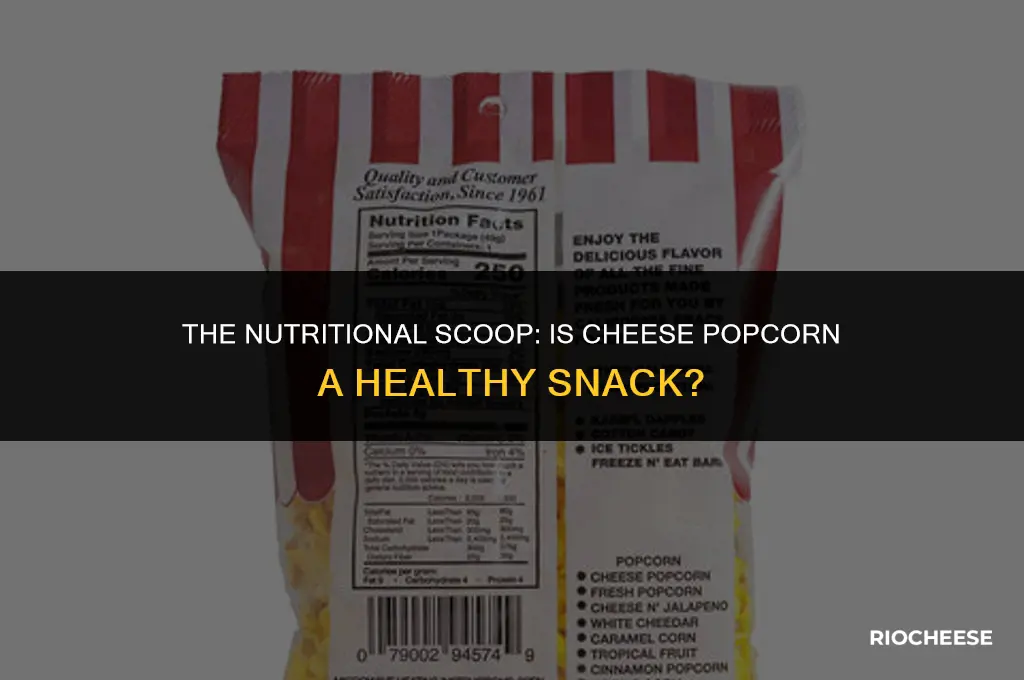
Cheese popcorn is a popular snack that combines the savory flavors of cheese with the light, airy texture of popcorn. While it can be a delicious treat, many people wonder about its nutritional value. Is cheese popcorn healthy, or is it a guilty pleasure best enjoyed in moderation? To answer this question, we need to consider the ingredients and nutritional content of cheese popcorn, as well as its potential health benefits and drawbacks. By examining these factors, we can gain a better understanding of whether cheese popcorn can be a part of a balanced diet or if it should be limited in our snacking choices.
Explore related products




What You'll Learn
- Nutritional Content: Cheese popcorn's calorie, fat, sodium, and protein content compared to plain popcorn
- Ingredients Analysis: Examination of common ingredients used in cheese popcorn, including potential additives and preservatives
- Health Benefits: Potential benefits of consuming cheese popcorn, such as calcium intake from cheese
- Serving Size: Recommended serving sizes to maintain a balanced diet and avoid excessive calorie intake
- Alternatives: Healthier snack options that can replace cheese popcorn, offering similar taste or nutritional benefits

Nutritional Content: Cheese popcorn's calorie, fat, sodium, and protein content compared to plain popcorn
Cheese popcorn, a popular snack choice, undergoes a significant nutritional transformation when compared to its plain counterpart. The addition of cheese flavoring introduces a variety of changes to the popcorn's calorie, fat, sodium, and protein content. Understanding these differences is crucial for making informed dietary choices.
In terms of calorie content, cheese popcorn typically contains more calories than plain popcorn. This increase is primarily due to the added fats and oils used in the cheese flavoring process. Depending on the brand and preparation method, cheese popcorn can have anywhere from 10 to 30 more calories per serving compared to plain popcorn.
Fat content is another area where cheese popcorn diverges from plain popcorn. The cheese flavoring often includes saturated fats, which can contribute to higher cholesterol levels and increased risk of heart disease when consumed in excess. It's important to note that not all fats are created equal, and some cheese popcorn varieties may use healthier unsaturated fats.
Sodium content is significantly higher in cheese popcorn due to the salt used in the cheese seasoning. This can be a concern for individuals with high blood pressure or those on a low-sodium diet. The sodium content can vary widely between brands, so it's essential to check the nutrition label.
Protein content in cheese popcorn is generally higher than in plain popcorn, thanks to the cheese itself. However, the amount of protein added is usually minimal and may not be sufficient to make cheese popcorn a good source of protein. It's also important to consider the quality of the protein, as some cheese flavorings may use lower-quality protein sources.
When evaluating the nutritional content of cheese popcorn, it's clear that moderation is key. While it can be a tasty treat, it's essential to balance it with other healthier snack options and to be mindful of portion sizes. Additionally, choosing cheese popcorn varieties with lower sodium and healthier fat profiles can help make it a more nutritious choice.
Exploring the Nutritional Value of Cheese Quesadillas: A Healthy Choice?
You may want to see also
Explore related products


Ingredients Analysis: Examination of common ingredients used in cheese popcorn, including potential additives and preservatives
Cheese popcorn is a popular snack that combines the savory flavors of cheese with the light, airy texture of popcorn. However, a closer examination of the ingredients used in cheese popcorn reveals a complex mix of additives and preservatives that may raise health concerns. One of the primary ingredients in cheese popcorn is, of course, popcorn kernels. These kernels are typically genetically modified to ensure uniformity and high yield. While the genetic modification process itself is generally considered safe, some consumers may prefer to avoid GMOs due to environmental or personal health concerns.
The cheese flavoring in popcorn is often derived from a combination of natural and artificial ingredients. Natural cheese flavorings may include cheese powder or whey, which can add a rich, authentic taste to the popcorn. However, these natural ingredients can also be high in sodium and saturated fat, which may contribute to health issues when consumed in excess. Artificial cheese flavorings, on the other hand, are created using a variety of chemicals and additives. These may include MSG (monosodium glutamate), which is known to enhance the savory taste of foods but can cause adverse reactions in some individuals.
In addition to the cheese flavoring, cheese popcorn often contains a variety of preservatives and additives to extend its shelf life and enhance its texture. These may include antioxidants such as BHT (butylated hydroxytoluene) and BHA (butylated hydroxyanisole), which are used to prevent the popcorn from becoming rancid. However, some studies have suggested that these antioxidants may have potential carcinogenic properties. Other common additives include artificial colors, which are used to give the popcorn a more appealing appearance, and artificial sweeteners, which may be added to balance out the salty flavor of the cheese.
One of the most concerning ingredients in cheese popcorn is trans fat. Trans fats are created during the hydrogenation process, which is used to solidify vegetable oils and extend their shelf life. However, trans fats have been shown to increase the risk of heart disease and other health problems. While some manufacturers have begun to phase out trans fats in response to consumer demand, they can still be found in some brands of cheese popcorn.
In conclusion, while cheese popcorn may be a tasty and convenient snack, it is important to be aware of the potential health risks associated with its ingredients. Consumers who are concerned about the health impacts of cheese popcorn may want to consider making their own popcorn at home using natural ingredients, or choosing alternative snacks that are lower in sodium, saturated fat, and artificial additives.
Unveiling the Nutritional Truth: Bacon, Egg, and Cheese Sandwich
You may want to see also
Explore related products


Health Benefits: Potential benefits of consuming cheese popcorn, such as calcium intake from cheese
Cheese popcorn offers a unique combination of flavors and nutrients that can contribute positively to one's diet. One of the primary health benefits of cheese popcorn is its calcium content, derived from the cheese used in its preparation. Calcium is essential for maintaining strong bones and teeth, and it plays a crucial role in muscle function and nerve transmission. Consuming cheese popcorn can be a tasty way to increase your calcium intake, especially for those who may not enjoy traditional sources of calcium such as milk or leafy greens.
In addition to calcium, cheese popcorn also provides a good source of protein. Protein is vital for building and repairing tissues in the body, and it helps to maintain muscle mass. The combination of calcium and protein in cheese popcorn makes it a nutritious snack option that can support overall health and well-being.
Another potential health benefit of cheese popcorn is its ability to satisfy hunger and cravings. The combination of carbohydrates from the popcorn and protein and fat from the cheese can help to keep you feeling full and satisfied, reducing the likelihood of overeating or snacking on less healthy options. This can be particularly beneficial for those who are trying to manage their weight or maintain a balanced diet.
However, it is important to note that cheese popcorn can also be high in calories and sodium, depending on the preparation method and ingredients used. To maximize the health benefits of cheese popcorn, it is recommended to prepare it at home using air-popped popcorn and a moderate amount of cheese. This allows for better control over the nutritional content and can help to reduce the intake of unhealthy fats and additives.
In conclusion, cheese popcorn can be a healthy and delicious snack option when consumed in moderation and prepared with wholesome ingredients. Its calcium and protein content, along with its ability to satisfy hunger, make it a nutritious choice for those looking to add variety to their diet while still maintaining a focus on health.
Exploring Miyoko's Cheese: A Nutritious Alternative or Just Hype?
You may want to see also
Explore related products


Serving Size: Recommended serving sizes to maintain a balanced diet and avoid excessive calorie intake
Determining the appropriate serving size is crucial when considering the health implications of cheese popcorn. The recommended serving size for popcorn is typically around 3 cups, which is roughly equivalent to 1 ounce or 28 grams. However, when it comes to cheese popcorn, the calorie and fat content can significantly increase due to the added cheese coating. Therefore, it's essential to adjust the serving size accordingly to maintain a balanced diet and avoid excessive calorie intake.
For cheese popcorn, a reasonable serving size would be approximately 1.5 cups, which is about half the recommended serving size for plain popcorn. This adjustment accounts for the additional calories and fat from the cheese coating. It's also important to consider the type of cheese used, as some varieties may be higher in fat and calories than others. Opting for a lower-fat cheese option can help reduce the overall calorie content of the snack.
When consuming cheese popcorn, it's helpful to measure out the serving size beforehand to avoid overeating. Using a smaller bowl or plate can also help control portion sizes. Additionally, pairing the cheese popcorn with a side of fresh vegetables or fruit can help balance out the snack and provide essential nutrients.
In summary, while cheese popcorn can be a tasty treat, it's important to be mindful of the serving size to maintain a healthy diet. By adjusting the portion size and considering the type of cheese used, it's possible to enjoy cheese popcorn in moderation without compromising nutritional goals.
Nutritional Breakdown: Is Your Ham and Cheese Sandwich a Healthy Choice?
You may want to see also
Explore related products


Alternatives: Healthier snack options that can replace cheese popcorn, offering similar taste or nutritional benefits
Cheese popcorn, while a popular snack, can be high in calories, fat, and sodium. For those looking to make healthier choices without sacrificing taste, there are several alternatives to consider. One option is to opt for air-popped popcorn seasoned with nutritional yeast, which provides a cheesy flavor without the added fat and calories. Another alternative is to try roasted chickpeas, which are high in protein and fiber, and can be seasoned with a variety of spices to mimic the savory taste of cheese popcorn.
For those who enjoy the crunch of popcorn, whole grain crackers or rice cakes can be a healthier substitute. These options are lower in calories and fat, and can be paired with hummus or avocado for a satisfying snack. Additionally, vegetable sticks with a low-fat dip can provide a nutritious and crunchy alternative to cheese popcorn. Options like carrot, celery, and cucumber sticks are high in vitamins and fiber, and can be dipped in a variety of healthy spreads such as tzatziki or salsa.
When it comes to finding healthier snack options, it's important to consider both taste and nutritional benefits. By choosing alternatives like air-popped popcorn with nutritional yeast, roasted chickpeas, whole grain crackers, or vegetable sticks with a low-fat dip, individuals can enjoy a satisfying snack while also supporting their overall health and wellness goals. These options provide a variety of flavors and textures, making them a great choice for those looking to make healthier snack choices without sacrificing taste.
Nutritional Insights: Salami and Cheese - A Healthy Choice?
You may want to see also
Frequently asked questions
Cheese popcorn can be a relatively healthy snack if consumed in moderation. It is a good source of calcium and protein from the cheese, and whole grain popcorn is rich in fiber and antioxidants. However, it's important to watch the portion size and the amount of added butter or oil.
Cheese popcorn generally has higher calories and fat content compared to plain popcorn due to the added cheese. However, it also provides additional nutrients like calcium and protein. Plain popcorn is lower in calories and fat but lacks the extra nutrients provided by the cheese.
Some healthier alternatives to cheese popcorn include air-popped plain popcorn, popcorn seasoned with herbs and spices instead of cheese, or popcorn made with healthier oils like olive oil. You can also try adding nutritional yeast for a cheesy flavor without the added fat.
Yes, cheese popcorn can be part of a balanced diet when consumed in moderation. It's important to balance it with other nutrient-dense foods and to be mindful of the overall calorie and fat intake. Including a variety of fruits, vegetables, whole grains, lean proteins, and healthy fats in your diet is key to maintaining balance.