Randy Chandler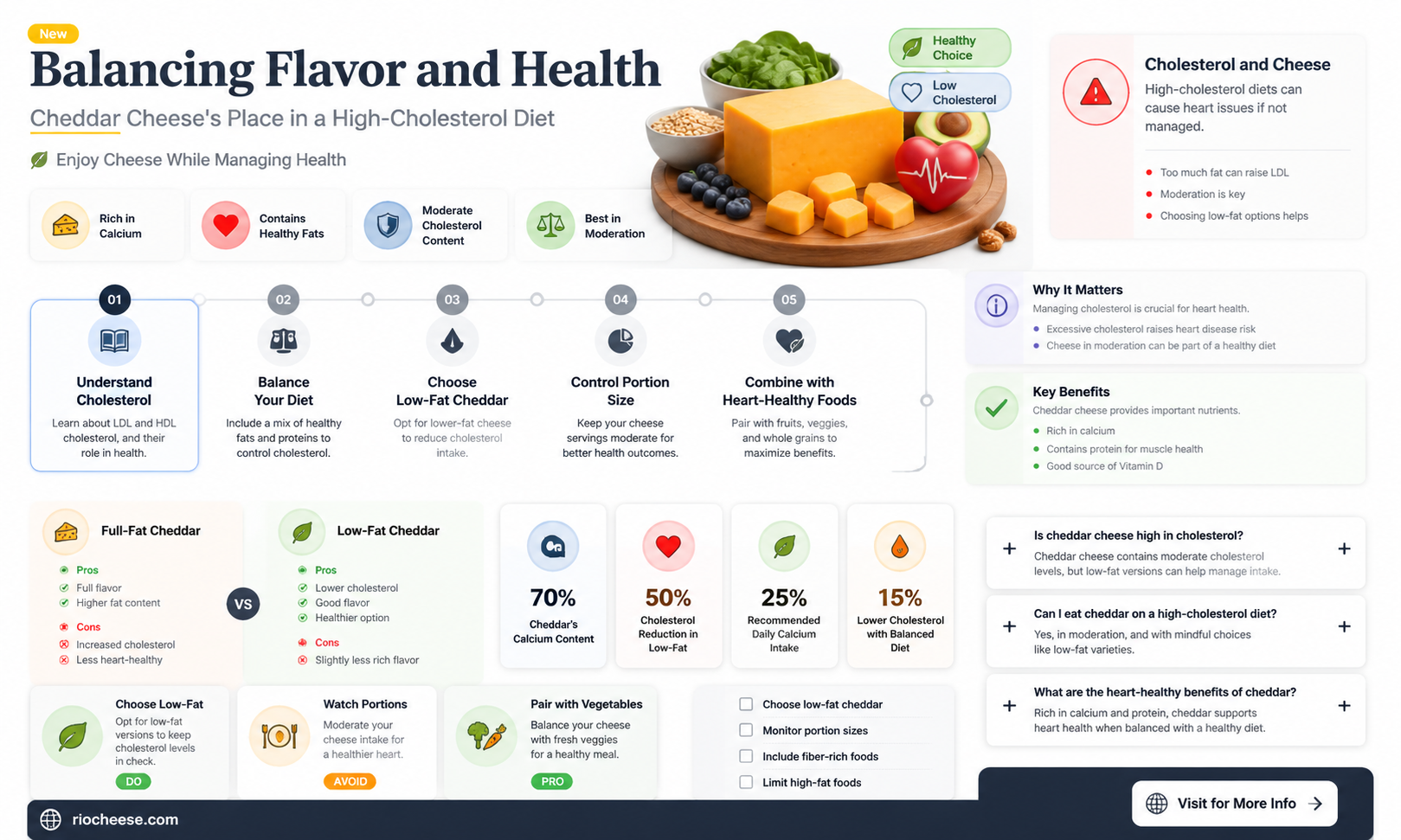
When it comes to managing high cholesterol, dietary choices play a crucial role. One common question that arises is whether cheddar cheese, a popular dairy product known for its rich flavor and versatility, is suitable for individuals with high cholesterol levels. To answer this, it's essential to understand the relationship between dietary cholesterol and blood cholesterol levels. While cheddar cheese does contain cholesterol, research suggests that the impact of dietary cholesterol on blood cholesterol levels is more complex than previously thought. Factors such as overall diet quality, saturated fat intake, and individual genetic predispositions also play significant roles. Therefore, moderation and balance are key when incorporating cheddar cheese into a diet aimed at managing high cholesterol.
Explore related products



What You'll Learn
- Nutritional Content: Cheddar cheese is high in saturated fat and cholesterol, which can contribute to high cholesterol levels
- Moderation Key: Consuming cheddar cheese in moderation may be acceptable for some individuals with high cholesterol, depending on their overall diet
- Alternative Cheeses: Opting for lower-fat and lower-cholesterol cheese options, such as part-skim mozzarella or feta, can be a healthier choice
- Dietary Balance: Incorporating a balanced diet rich in fruits, vegetables, whole grains, and lean proteins can help offset the effects of high-cholesterol foods like cheddar cheese
- Individual Health Factors: People with high cholesterol should consult with their healthcare provider to determine if and how much cheddar cheese they can safely consume

Nutritional Content: Cheddar cheese is high in saturated fat and cholesterol, which can contribute to high cholesterol levels
Cheddar cheese, a popular dairy product, is indeed high in saturated fat and cholesterol. A single ounce of cheddar cheese contains approximately 6 grams of saturated fat and 30 milligrams of cholesterol. These nutrients are known to contribute to elevated cholesterol levels in the blood when consumed in excess. High cholesterol is a significant health concern as it increases the risk of heart disease and stroke. Therefore, individuals with high cholesterol or those at risk of developing it should be cautious about their cheddar cheese consumption.
The American Heart Association recommends limiting saturated fat intake to no more than 5-6% of total daily calories. For someone on a 2,000 calorie diet, this translates to about 11-13 grams of saturated fat per day. Given that cheddar cheese is high in saturated fat, it's essential to balance its consumption with other dietary choices. One strategy could be to choose lower-fat cheese options or to reduce portion sizes. Additionally, incorporating more plant-based foods, which are naturally low in saturated fat, can help maintain a heart-healthy diet.
It's also important to consider the overall dietary pattern rather than focusing solely on individual foods. A diet rich in fruits, vegetables, whole grains, lean proteins, and healthy fats can help mitigate the effects of high-cholesterol foods like cheddar cheese. Regular physical activity and maintaining a healthy weight are also crucial components of managing cholesterol levels.
In conclusion, while cheddar cheese can be part of a balanced diet, its high saturated fat and cholesterol content necessitate moderation, especially for those with high cholesterol. By adopting a comprehensive approach to diet and lifestyle, individuals can enjoy cheddar cheese in a way that supports overall heart health.
Feline Nutrition: The Truth About Cheddar Cheese for Cats
You may want to see also
Explore related products


Moderation Key: Consuming cheddar cheese in moderation may be acceptable for some individuals with high cholesterol, depending on their overall diet
For individuals with high cholesterol, the key to enjoying cheddar cheese lies in moderation. This means being mindful of portion sizes and balancing cheese consumption with other dietary choices. A small slice of cheddar cheese, roughly an ounce, contains about 10 grams of fat, 6 grams of which are saturated fat. While saturated fat can contribute to high cholesterol levels, moderate intake may not significantly impact cholesterol levels in some individuals.
To determine if cheddar cheese is acceptable for someone with high cholesterol, it's essential to consider their overall diet and health goals. For example, if an individual is following a heart-healthy diet that is low in saturated fat and rich in fruits, vegetables, whole grains, and lean proteins, a small amount of cheddar cheese may be a reasonable addition. However, if someone's diet is already high in saturated fat from other sources, such as red meat and full-fat dairy products, adding cheddar cheese could exacerbate high cholesterol levels.
It's also important to note that not all cheddar cheeses are created equal. Some varieties may be lower in fat and calories than others, making them a better choice for those with high cholesterol. Additionally, pairing cheddar cheese with foods that are known to help lower cholesterol, such as nuts, fruits, and vegetables, can help mitigate any potential negative effects.
Ultimately, the decision to consume cheddar cheese should be made in consultation with a healthcare provider or registered dietitian, who can provide personalized advice based on an individual's specific health needs and dietary habits. By focusing on moderation and making informed choices, some individuals with high cholesterol may be able to enjoy cheddar cheese as part of a balanced and nutritious diet.
Unlocking the Nutritional Secrets of Cheddar Cheese: A Comprehensive Guide
You may want to see also
Explore related products


Alternative Cheeses: Opting for lower-fat and lower-cholesterol cheese options, such as part-skim mozzarella or feta, can be a healthier choice
For individuals managing high cholesterol, the choice of cheese can be a significant dietary consideration. While cheddar cheese is a popular option, its high fat and cholesterol content may not be suitable for everyone. Alternative cheeses, such as part-skim mozzarella or feta, offer lower-fat and lower-cholesterol options that can still satisfy cheese cravings without compromising heart health.
Part-skim mozzarella, for instance, contains significantly less saturated fat and cholesterol compared to cheddar cheese. It is made by removing some of the fat from the milk before processing, resulting in a cheese that is both flavorful and healthier. Feta cheese is another excellent alternative, as it is typically lower in fat and calories than cheddar. It is made from sheep's or goat's milk and has a tangy, salty flavor that can add a unique taste to various dishes.
When incorporating these alternative cheeses into a diet, it is essential to consider portion sizes and overall dietary balance. While part-skim mozzarella and feta are healthier options, they should still be consumed in moderation as part of a well-rounded diet. It is also important to note that these cheeses may not be suitable replacements for cheddar in all recipes, as their flavors and textures can differ significantly.
In conclusion, opting for alternative cheeses like part-skim mozzarella or feta can be a healthier choice for individuals with high cholesterol. These options provide the opportunity to enjoy cheese while maintaining a heart-healthy diet. However, it is crucial to consider portion sizes and overall dietary balance to ensure that these alternative cheeses are consumed in a way that supports overall health and well-being.
Nutritional Guide: Is Cheddar Cheese Safe for Babies?
You may want to see also
Explore related products



Dietary Balance: Incorporating a balanced diet rich in fruits, vegetables, whole grains, and lean proteins can help offset the effects of high-cholesterol foods like cheddar cheese
A balanced diet is key to managing cholesterol levels and mitigating the effects of high-cholesterol foods like cheddar cheese. Incorporating a variety of fruits, vegetables, whole grains, and lean proteins can help offset the impact of occasional indulgences in foods high in saturated fats. For instance, soluble fiber found in oats, barley, and certain fruits and vegetables can help lower LDL (bad) cholesterol by binding to it and facilitating its removal from the body.
Lean proteins, such as chicken, turkey, and fish, are excellent alternatives to high-fat meats and can help reduce overall saturated fat intake. Additionally, plant-based proteins like beans, lentils, and tofu offer cholesterol-free options that can be easily incorporated into a variety of dishes. When it comes to dairy, opting for low-fat or fat-free versions of cheese, yogurt, and milk can significantly reduce saturated fat consumption without sacrificing essential nutrients like calcium and protein.
It's also important to pay attention to portion sizes and moderation. While it's possible to enjoy high-cholesterol foods like cheddar cheese occasionally, it's crucial to balance these indulgences with healthier options throughout the day. For example, if you have a slice of cheddar cheese, pair it with a side of fresh fruit or a handful of nuts to add fiber and healthy fats to your snack.
In summary, maintaining a balanced diet that emphasizes whole, nutrient-dense foods can help offset the effects of high-cholesterol foods like cheddar cheese. By incorporating a variety of fruits, vegetables, whole grains, and lean proteins, and practicing moderation with portion sizes, it's possible to enjoy a flavorful and satisfying diet while managing cholesterol levels effectively.
Managing Diabetes: The Surprising Truth About Cheddar Cheese
You may want to see also
Explore related products




Individual Health Factors: People with high cholesterol should consult with their healthcare provider to determine if and how much cheddar cheese they can safely consume
People with high cholesterol often find themselves at a crossroads when it comes to dietary choices, particularly regarding foods high in saturated fats like cheddar cheese. While cheese can be a delicious addition to many meals, its impact on cholesterol levels is a significant concern. For individuals with high cholesterol, it is crucial to consult with a healthcare provider to determine if and how much cheddar cheese can be safely consumed.
The relationship between dietary cholesterol and blood cholesterol levels is complex. While some studies suggest that dietary cholesterol has a minimal impact on blood cholesterol for most people, others indicate that individuals with high cholesterol may be more sensitive to dietary cholesterol intake. Cheddar cheese, being high in saturated fat and cholesterol, can potentially exacerbate high cholesterol levels in susceptible individuals.
Healthcare providers often recommend a personalized approach to managing cholesterol levels. This may involve assessing the individual's overall diet, lifestyle, and health status to determine the appropriate level of cheese consumption. Factors such as age, weight, physical activity level, and the presence of other health conditions can all influence the recommended dietary guidelines.
In some cases, individuals with high cholesterol may be advised to limit their intake of cheddar cheese or opt for lower-fat alternatives. However, this does not necessarily mean a complete ban on cheese consumption. Moderation and balance are key components of a heart-healthy diet, and incorporating small amounts of cheese in moderation may be possible for some individuals.
It is also important to consider the nutritional benefits of cheese, such as its high protein and calcium content. These nutrients are essential for maintaining overall health, and finding a balance between these benefits and the potential risks associated with high cholesterol is crucial. Healthcare providers can offer guidance on how to incorporate cheese into a balanced diet while managing cholesterol levels.
Ultimately, the decision regarding cheese consumption for individuals with high cholesterol should be made in consultation with a healthcare provider. By considering the individual's unique health profile and dietary needs, a personalized approach can be developed to ensure that dietary choices support overall health and well-being.
Navigating Nutrition: Is Cheddar Cheese a Fatty Liver Friend or Foe?
You may want to see also
Frequently asked questions
Cheddar cheese can be part of a balanced diet for people with high cholesterol, but it's important to consume it in moderation. It contains saturated fat, which can raise cholesterol levels when consumed in excess. However, it also provides nutrients like calcium, protein, and vitamins.
The American Heart Association recommends limiting saturated fat intake to less than 6% of total daily calories. For someone with high cholesterol, it's advisable to keep portion sizes small, perhaps limiting cheddar cheese consumption to a few ounces per day, and to choose lower-fat varieties when possible.
Yes, there are several healthier cheese alternatives for people with high cholesterol. Options include part-skim mozzarella, reduced-fat cheddar, feta, and goat cheese, which are lower in saturated fat and calories. Additionally, plant-based cheese substitutes can be a good option as they are typically free from saturated fat and cholesterol.