Andy Montoya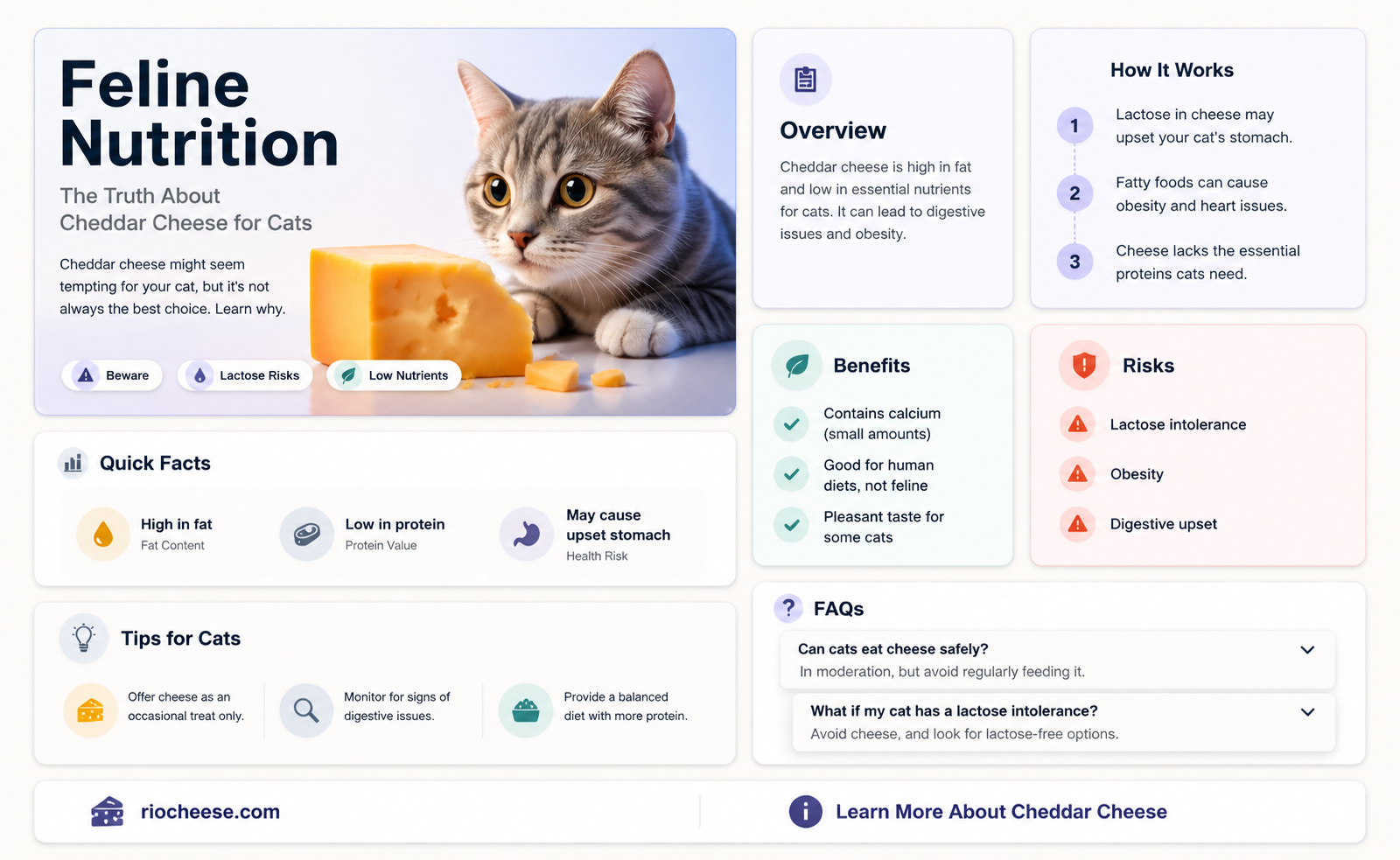
Cheddar cheese, a popular dairy product known for its sharp flavor and firm texture, is often a subject of curiosity for cat owners. While cats are obligate carnivores and do not require dairy in their diet, some may show interest in cheese due to its strong aroma. However, it's important to note that not all cheeses are safe for feline consumption. Cheddar cheese, in particular, contains high levels of fat and salt, which can be harmful to cats if ingested in large quantities. Additionally, many cats are lactose intolerant, meaning they lack the enzymes to properly digest lactose found in dairy products, leading to gastrointestinal issues such as diarrhea or vomiting. Therefore, it's generally recommended to avoid feeding cheddar cheese to cats and instead provide them with a balanced, meat-based diet that meets their nutritional needs.
Explore related products


What You'll Learn
- Nutritional value: Cheddar cheese is high in fat and calories, which can contribute to obesity in cats
- Lactose intolerance: Many cats are lactose intolerant and cannot digest dairy products like cheddar cheese
- Choking hazard: The texture and size of cheddar cheese cubes can pose a choking risk for cats
- Sodium content: Cheddar cheese is high in sodium, which can lead to dehydration and other health issues in cats
- Allergic reactions: Some cats may have an allergic reaction to cheddar cheese, resulting in digestive upset or skin problems

Nutritional value: Cheddar cheese is high in fat and calories, which can contribute to obesity in cats
Cheddar cheese, while a delicious treat for humans, poses significant nutritional concerns for cats. Its high fat and calorie content can lead to obesity, a condition that affects a cat's overall health and well-being. Obesity in cats can result in various health issues, including diabetes, joint problems, and heart disease. Therefore, it's crucial to monitor and control a cat's intake of high-calorie foods like cheddar cheese.
One of the main reasons cheddar cheese is not suitable for cats is its lactose content. Cats are lactose intolerant, meaning they lack the enzymes to digest lactose properly. This can lead to gastrointestinal issues such as diarrhea and vomiting. Additionally, the high sodium content in cheddar cheese can contribute to dehydration and put a strain on a cat's kidneys.
It's also important to consider the potential for cheddar cheese to contain additives and preservatives that may be harmful to cats. Some cheeses contain ingredients like onion or garlic, which are toxic to cats and can cause anemia. Furthermore, the mold used in some types of cheese can produce mycotoxins, which are dangerous for feline consumption.
In conclusion, while cheddar cheese may seem like a harmless treat, its nutritional profile and potential additives make it unsuitable for cats. Pet owners should opt for safer alternatives when looking to give their cats a special treat, such as small amounts of plain, unsalted cheese or cat-specific treats that are formulated to meet their dietary needs.
Unlocking the Nutritional Secrets of Cheddar Cheese: A Comprehensive Guide
You may want to see also
Explore related products


Lactose intolerance: Many cats are lactose intolerant and cannot digest dairy products like cheddar cheese
Lactose intolerance is a common issue among cats, making it difficult for them to digest dairy products like cheddar cheese. This is because cats lack the necessary enzymes to break down lactose, a sugar found in milk and dairy products. When cats consume lactose, it can lead to gastrointestinal upset, including symptoms such as diarrhea, vomiting, and stomach pain.
It's important for cat owners to be aware of their pet's lactose intolerance and avoid feeding them dairy products. While some cats may be able to tolerate small amounts of lactose, it's generally best to err on the side of caution and provide alternative sources of nutrition. There are many lactose-free cat food options available on the market, as well as supplements that can help support a cat's digestive health.
In addition to avoiding dairy products, cat owners can also take steps to ensure their pet's overall health and well-being. This includes providing a balanced diet, ensuring access to clean water, and scheduling regular veterinary check-ups. By being proactive about their cat's health, owners can help prevent issues related to lactose intolerance and other dietary concerns.
It's also worth noting that lactose intolerance in cats can vary in severity. Some cats may experience mild symptoms, while others may have more severe reactions. If a cat owner suspects their pet is lactose intolerant, it's important to consult with a veterinarian for proper diagnosis and treatment. In some cases, a veterinarian may recommend a lactose-free diet or prescribe medication to help manage symptoms.
Overall, it's crucial for cat owners to be aware of the potential risks associated with feeding their pets dairy products like cheddar cheese. By understanding lactose intolerance and taking steps to provide a balanced, lactose-free diet, owners can help ensure their cat's health and happiness.
Nutritional Guide: Is Cheddar Cheese Safe for Babies?
You may want to see also
Explore related products


Choking hazard: The texture and size of cheddar cheese cubes can pose a choking risk for cats
Cheddar cheese cubes, with their firm texture and small size, can indeed present a choking hazard for cats. This risk is particularly significant for kittens and older cats, who may have difficulty chewing and swallowing solid foods. The sharp edges and dense consistency of cheddar cheese can cause it to lodge in a cat's throat, leading to choking. It's crucial for cat owners to be aware of this potential danger and take precautions when feeding their pets.
One effective way to mitigate the choking risk is to grate or shred the cheddar cheese before offering it to your cat. This breaks down the cheese into smaller, more manageable pieces that are easier for your pet to chew and swallow. Alternatively, you can opt for softer, more pliable cheeses that are less likely to pose a choking hazard. Always supervise your cat while they're eating to ensure they're not experiencing any difficulties.
It's also important to consider the nutritional needs of your cat when deciding whether to feed them cheese. While small amounts of cheese can be a tasty treat, it's not a nutritionally complete food for cats and should not replace their regular diet. Cheese is high in fat and calories, and some cats may be lactose intolerant, which can lead to digestive issues. Consult with your veterinarian to determine the appropriate amount and type of cheese to feed your cat, if any.
In summary, while cheddar cheese cubes can be a choking hazard for cats, there are ways to safely offer cheese to your pet. By grating or shredding the cheese, choosing softer varieties, and monitoring your cat's consumption, you can minimize the risk of choking. However, it's essential to remember that cheese should be given in moderation and as part of a balanced diet that meets your cat's nutritional needs.
Sodium content: Cheddar cheese is high in sodium, which can lead to dehydration and other health issues in cats
Cheddar cheese, a popular dairy product among humans, contains a significant amount of sodium. This high sodium content can pose health risks to cats, particularly leading to dehydration. Cats have a lower thirst drive compared to humans and often rely on the moisture content of their food to stay hydrated. When cats consume high-sodium foods like cheddar cheese, their bodies may attempt to dilute the sodium concentration by drawing water from their cells, leading to dehydration.
Dehydration in cats can result in a range of health issues, including lethargy, dry mouth and nose, sunken eyes, and in severe cases, organ failure. It is crucial for cat owners to monitor their pets' sodium intake and ensure they have access to fresh water at all times. While small amounts of cheddar cheese may not be immediately harmful, it is generally recommended to avoid feeding it to cats regularly due to its high sodium content.
Instead of cheddar cheese, cat owners can opt for safer alternatives to provide their pets with the necessary nutrients. Commercial cat foods are formulated to meet the specific dietary needs of cats, including the right balance of proteins, fats, and minerals. Some cat foods even contain added moisture to help keep cats hydrated. Additionally, plain, unsalted yogurt or small amounts of cooked chicken can be offered as treats, providing a healthier option for cats.
In conclusion, while cheddar cheese may be a tasty treat for humans, its high sodium content makes it a less-than-ideal choice for cats. Cat owners should be mindful of their pets' dietary needs and opt for safer, more appropriate alternatives to ensure their cats stay healthy and hydrated.
Allergic reactions: Some cats may have an allergic reaction to cheddar cheese, resulting in digestive upset or skin problems
While cheddar cheese may be a tasty treat for humans, it's important to recognize that not all cats can tolerate it. Some felines may experience allergic reactions to cheddar cheese, which can manifest in various ways. These reactions are typically triggered by the proteins found in the cheese, which the cat's immune system may perceive as foreign and potentially harmful.
Digestive upset is one of the most common signs of an allergic reaction to cheddar cheese in cats. This can include symptoms such as vomiting, diarrhea, and abdominal pain. In some cases, the reaction may be more severe, leading to dehydration and electrolyte imbalances. It's crucial for cat owners to monitor their pet's behavior after introducing cheddar cheese into their diet and to seek veterinary attention if any signs of digestive distress are observed.
Skin problems are another potential consequence of an allergic reaction to cheddar cheese. Cats may develop itchy, red, or swollen skin, which can lead to excessive scratching and hair loss. In severe cases, the skin may become infected due to the constant irritation. It's essential to address these symptoms promptly, as they can significantly impact the cat's quality of life.
To prevent allergic reactions, it's recommended to introduce cheddar cheese to a cat's diet gradually and in small amounts. This allows the cat's immune system to become accustomed to the new food. However, it's important to note that some cats may never be able to tolerate cheddar cheese, and it should be removed from their diet entirely if any adverse reactions are observed.
In conclusion, while cheddar cheese can be a delicious treat for some cats, it's crucial to be aware of the potential for allergic reactions. By monitoring your cat's behavior and health after introducing cheddar cheese, you can help ensure that they enjoy this treat safely and without any negative consequences.
Frequently asked questions
While small amounts of cheddar cheese are unlikely to harm cats, it's not recommended as a regular part of their diet. Cats are lactose intolerant, and dairy products can cause digestive issues.
Feeding cheddar cheese to cats can lead to gastrointestinal upset, including vomiting and diarrhea. Additionally, the high fat and salt content can contribute to obesity and other health problems.
Cats lack the enzyme lactase, which is necessary to digest lactose found in dairy products like cheddar cheese. This can result in digestive discomfort and other issues.
Instead of cheddar cheese, consider offering your cat plain, unsalted yogurt or small amounts of cottage cheese. These options are lower in fat and salt and may be easier for your cat to digest.
It's best to limit any dairy intake to very small amounts. A tiny piece of cheddar cheese, no larger than a pea, might be tolerated by some cats, but it's crucial to monitor for any signs of digestive upset.