Frederic Melton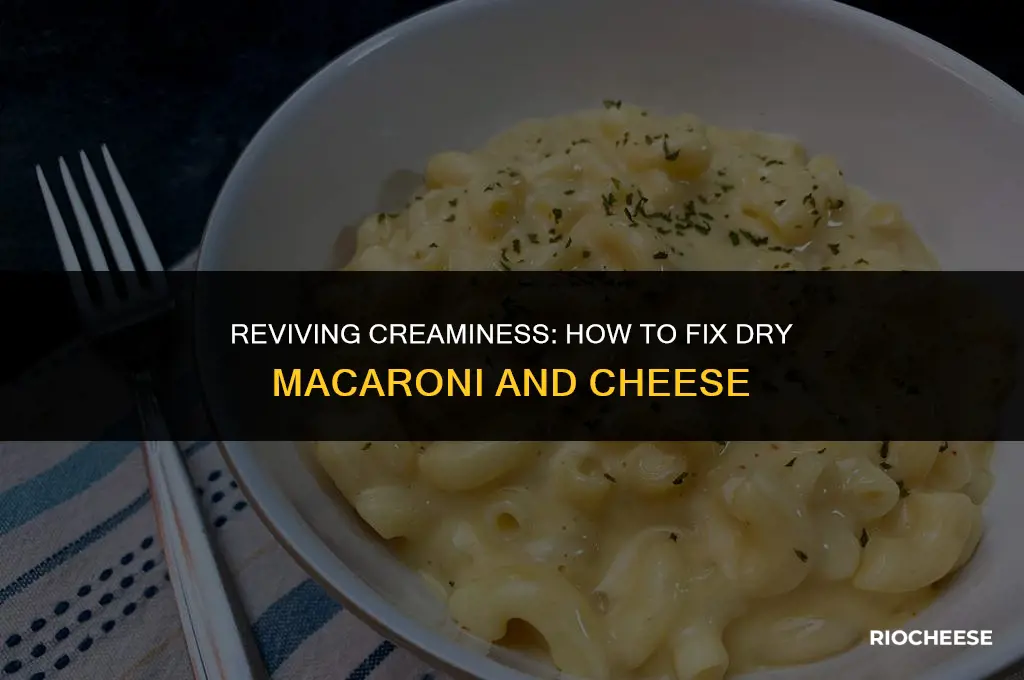
Dry macaroni and cheese can be a disappointing culinary experience, but fortunately, there are several techniques to revive and enhance its texture and flavor. One effective method is to add a splash of milk or cream to the dish, which helps to rehydrate the pasta and create a smoother, creamier sauce. Another option is to incorporate melted cheese, such as cheddar or mozzarella, to add richness and improve the overall consistency. Additionally, tossing the macaroni and cheese with a bit of butter can help to add moisture and a touch of indulgence. For those looking to add some extra flavor, seasonings like garlic powder, onion powder, or a pinch of cayenne pepper can elevate the dish. By employing these simple yet effective techniques, you can transform dry macaroni and cheese into a satisfying and delicious meal.
Explore related products


What You'll Learn
- Add moisture: Incorporate milk, cream, or butter to rehydrate the pasta and enrich the cheese sauce
- Adjust seasoning: Enhance flavor with salt, pepper, paprika, or other spices to taste
- Introduce add-ins: Mix in vegetables, meats, or seafood to add texture and variety to the dish
- Change cooking method: Try baking or stovetop methods to achieve a creamier, more evenly cooked result
- Use different pasta: Opt for pasta shapes that hold sauce better, like shells or elbows, for improved texture

Add moisture: Incorporate milk, cream, or butter to rehydrate the pasta and enrich the cheese sauce
One effective way to combat dry macaroni and cheese is by introducing moisture back into the dish. This can be achieved by incorporating dairy products such as milk, cream, or butter. These ingredients not only help to rehydrate the pasta but also enrich the cheese sauce, enhancing its flavor and texture.
When adding milk or cream, it's important to do so gradually. Start by pouring in a small amount and stirring it into the pasta. If the mixture is still too dry, continue adding more liquid until the desired consistency is reached. Be cautious not to add too much at once, as this can lead to a watery sauce. For a more indulgent option, heavy cream can be used in place of milk. It will add a richer, more velvety texture to the dish.
Butter is another excellent choice for adding moisture and flavor. Simply melt a tablespoon or two of butter and stir it into the pasta. The butter will not only help to rehydrate the dish but also add a subtle, nutty flavor that complements the cheese sauce. For an extra boost of flavor, consider using a flavored butter, such as garlic or herb-infused.
In addition to adding moisture, incorporating these dairy products can also help to improve the overall taste of the macaroni and cheese. The fat content in milk, cream, and butter can help to balance out the sharpness of the cheese, creating a more harmonious flavor profile. Furthermore, the added richness can make the dish more satisfying and comforting.
When using these methods, it's important to keep in mind that the type and amount of dairy product used can affect the nutritional content of the dish. For those who are health-conscious or have dietary restrictions, it may be necessary to use lower-fat alternatives or to limit the amount of dairy added. However, for those looking to indulge, these techniques can transform a dry, lackluster macaroni and cheese into a creamy, delicious meal.
Debunking the Myth: Macaroni and Cheese as a Vegetable?
You may want to see also
Explore related products


Adjust seasoning: Enhance flavor with salt, pepper, paprika, or other spices to taste
To elevate the flavor of dry macaroni and cheese, a careful adjustment of seasoning is crucial. Begin by tasting the dish to identify which flavors are lacking. If the macaroni and cheese tastes bland, a pinch of salt can help bring out the natural flavors of the cheese and pasta. Be cautious not to overdo it, as excessive salt can lead to an unbalanced taste.
For those who prefer a bit of heat, adding a dash of paprika or cayenne pepper can introduce a smoky or spicy element that complements the richness of the cheese. If you're looking to add depth to the flavor profile, consider incorporating a blend of spices such as garlic powder, onion powder, or even a hint of nutmeg. These spices can enhance the overall taste without overpowering the dish.
When adjusting the seasoning, it's essential to do so gradually. Start with small amounts and taste as you go, making incremental adjustments until you achieve the desired flavor. This method ensures that you don't accidentally make the dish too spicy or salty.
Another tip is to experiment with different types of salt, such as sea salt or Himalayan pink salt, which can add unique mineral notes to the dish. Similarly, using freshly ground black pepper can provide a more robust and aromatic flavor compared to pre-ground pepper.
Remember, the key to successfully adjusting the seasoning is to trust your taste buds and be patient. Take your time to find the perfect balance of flavors that will transform your dry macaroni and cheese into a delicious and satisfying meal.
Mastering the Art of Keeping Macaroni and Cheese Warm
You may want to see also
Explore related products


Introduce add-ins: Mix in vegetables, meats, or seafood to add texture and variety to the dish
To combat the dryness that often plagues macaroni and cheese, introducing add-ins such as vegetables, meats, or seafood can be a game-changer. These ingredients not only enhance the texture but also add a variety of flavors that can elevate the dish from bland to brilliant. For instance, incorporating steamed broccoli florets can provide a pleasant crunch and a subtle earthiness that complements the creamy cheese sauce. Similarly, diced ham or crispy bacon bits can introduce a savory, smoky element that pairs well with the richness of the cheese.
When selecting add-ins, it's essential to consider their moisture content and cooking time. Vegetables like bell peppers, onions, and mushrooms release water when cooked, which can help counteract the dryness of the pasta. However, they should be sautéed or pre-cooked to remove excess moisture and prevent the macaroni and cheese from becoming too soggy. Meats and seafood, on the other hand, should be fully cooked before being mixed in to ensure food safety and to avoid adding any additional liquid to the dish.
The key to successfully incorporating add-ins is to balance their flavors and textures with the existing components of the macaroni and cheese. For example, if using a strong-flavored meat like sausage, it may be necessary to reduce the amount of seasoning in the cheese sauce to avoid overwhelming the palate. Additionally, the add-ins should be mixed in gently to maintain the integrity of the pasta and prevent it from becoming mushy.
Experimenting with different combinations of add-ins can lead to exciting and unexpected flavor profiles. For a gourmet twist, try adding sautéed spinach and artichoke hearts for a Mediterranean flair, or combine roasted chicken with sun-dried tomatoes for a burst of tangy sweetness. The possibilities are endless, and by introducing a variety of add-ins, you can transform a simple macaroni and cheese into a satisfying and sophisticated meal.
Egg-cellent Addition or Not? The Macaroni and Cheese Debate
You may want to see also
Explore related products


![Mac Yourself | Delicious Cheddar Cheese Sauce Mix | Perfect Cheese Powder for Macaroni, Nachos, Veggies and More | 9.3 oz [Pack of 2]](https://m.media-amazon.com/images/I/71YXa4qvdAL._AC_UL320_.jpg)
Change cooking method: Try baking or stovetop methods to achieve a creamier, more evenly cooked result
One effective way to combat dry macaroni and cheese is to alter your cooking method. Instead of relying solely on boiling, consider baking or using the stovetop to achieve a creamier, more evenly cooked result. Baking macaroni and cheese can help to distribute the heat more evenly, ensuring that the pasta is cooked through without becoming overcooked or dried out. To do this, simply prepare your macaroni and cheese as usual, then transfer it to a baking dish and bake in a preheated oven at 350°F (175°C) for 20-25 minutes, or until the top is golden brown and the cheese is melted and bubbly.
Alternatively, you can use the stovetop method to achieve a similar result. This involves cooking the pasta in a large pot of boiling water until it is al dente, then draining it and returning it to the pot. Add your cheese sauce and stir until the pasta is well coated, then cover the pot and let it simmer on low heat for 5-10 minutes, stirring occasionally, until the cheese is melted and the pasta is cooked through. This method allows you to keep a close eye on the macaroni and cheese as it cooks, ensuring that it doesn't dry out or become overcooked.
When using either of these methods, it's important to keep an eye on the moisture level of your macaroni and cheese. If it starts to look dry, you can add a small amount of milk or cream to help loosen it up. Additionally, be sure to use a good quality cheese that melts well, such as cheddar or mozzarella, to ensure that your macaroni and cheese is creamy and delicious.
Another benefit of baking or using the stovetop method is that it allows you to add additional ingredients to your macaroni and cheese, such as vegetables or meats, which can enhance the flavor and texture of the dish. For example, you could add some sautéed mushrooms or bell peppers to the baking dish before putting it in the oven, or stir in some cooked bacon or ham into the stovetop mixture.
In conclusion, changing your cooking method to baking or stovetop can help to achieve a creamier, more evenly cooked result when making macaroni and cheese. By following these simple steps and keeping an eye on the moisture level of your dish, you can create a delicious and satisfying meal that is sure to please.
Creative Ways to Repurpose Leftover Macaroni and Cheese
You may want to see also
Explore related products


Use different pasta: Opt for pasta shapes that hold sauce better, like shells or elbows, for improved texture
One effective way to combat dry macaroni and cheese is to switch up your pasta shape. Different pasta shapes hold onto sauce differently, which can significantly impact the final texture of your dish. For instance, pasta with more surface area and crevices, such as shells or elbows, can trap more of the creamy cheese sauce, resulting in a richer, more satisfying bite.
When cooking macaroni and cheese, it's essential to consider how the pasta shape will interact with the sauce. Shells, with their large, open centers, are excellent at holding onto chunky sauces, while elbows, with their curved tubes, can capture sauce both inside and out. Other good options include rotini, which has a spiral shape that can drill into the sauce, and farfalle, or bow-tie pasta, which has a unique shape that allows it to hold onto sauce well.
To make the most of your pasta choice, be sure to cook it al dente, as overcooked pasta can become mushy and lose its ability to hold onto sauce. Once the pasta is cooked, drain it well and return it to the pot over low heat. Add your cheese sauce gradually, stirring constantly to ensure that the pasta is evenly coated. This will help the sauce to adhere to the pasta and prevent it from drying out.
Another tip is to use a combination of cheeses in your sauce, as this can help to create a more complex flavor profile and a creamier texture. For example, you could use a mix of cheddar, Gruyère, and Parmesan cheeses for a rich, indulgent sauce. Additionally, be sure to season your sauce well with salt, pepper, and any other desired spices or herbs to enhance the overall flavor of your dish.
By choosing the right pasta shape and following these cooking tips, you can create a macaroni and cheese dish that is anything but dry. Experiment with different pasta shapes and sauce combinations to find your perfect match, and enjoy a comforting, creamy meal that is sure to satisfy.
Mastering the Art of Freezing Macaroni and Cheese
You may want to see also
Frequently asked questions
To fix dry macaroni and cheese, you can try adding more milk or cream to the mixture. Start with a small amount and gradually increase until you reach the desired consistency. You can also add a bit of butter or oil to enhance the texture and flavor.
If adding milk doesn't improve the texture, you can try incorporating a roux made from equal parts flour and butter. Cook the roux for a minute or two, then slowly whisk in milk or cream. This will create a thicker, creamier sauce that can help revive your dry macaroni and cheese.
Yes, you can also try adding ingredients like sour cream, yogurt, or even a bit of mustard to add moisture and flavor. Additionally, incorporating some grated cheese, such as cheddar or mozzarella, can help create a smoother, more cohesive sauce.