 Kamil Perry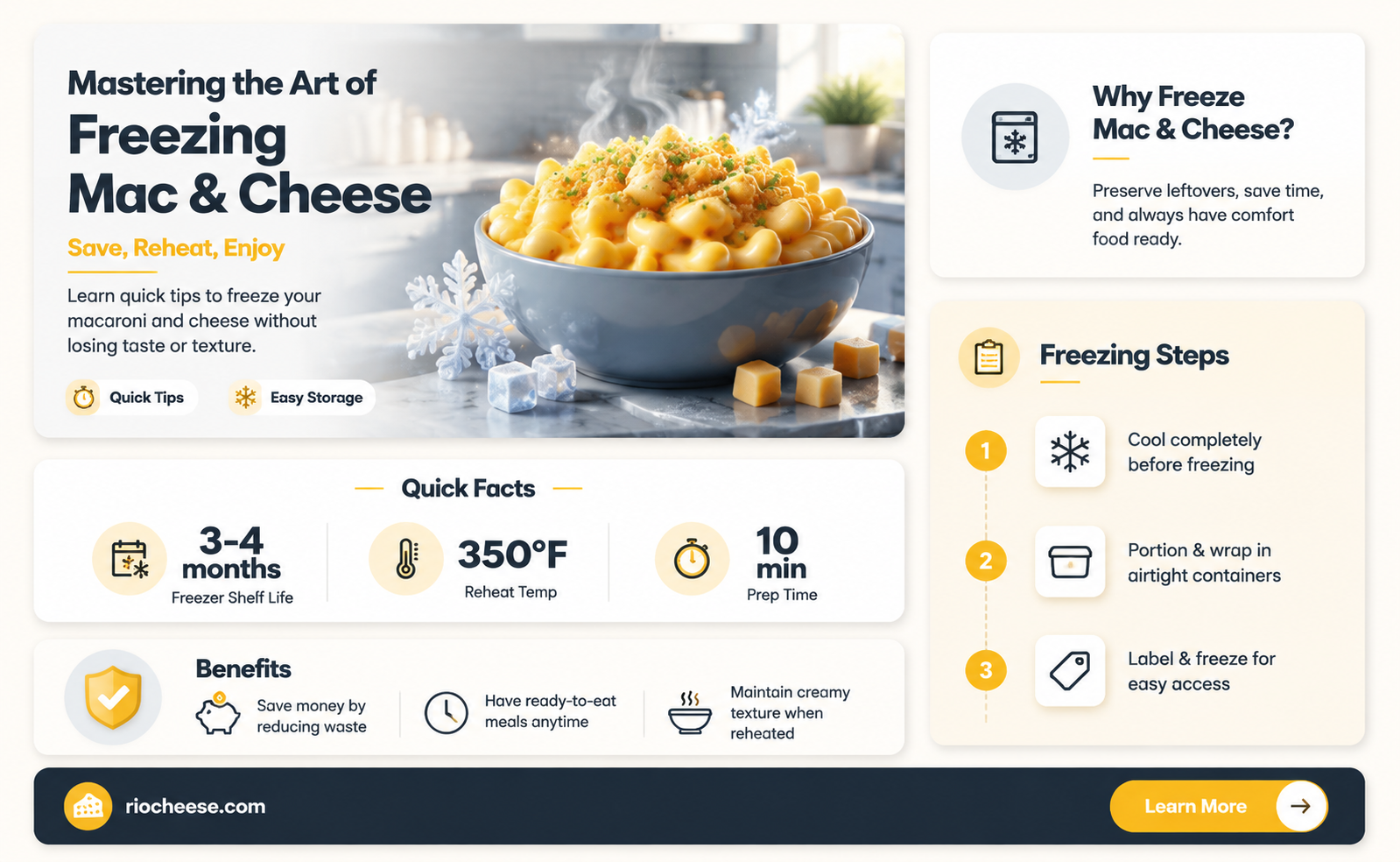
Freezing macaroni and cheese is a convenient way to preserve this comforting dish for later enjoyment. Whether you've made a large batch or have leftovers, freezing allows you to store the mac and cheese for several months without compromising its taste and texture. In this guide, we'll walk you through the steps to properly freeze macaroni and cheese, ensuring that when you're ready to enjoy it again, it's as delicious as the day you made it. From choosing the right container to the ideal thawing method, we've got you covered with all the essential tips and tricks.
What You'll Learn
- Preparation: Cook macaroni and cheese according to recipe, ensuring it's fully cooked and creamy
- Cooling: Allow the macaroni and cheese to cool down to room temperature to prevent ice crystals from forming
- Portioning: Divide the cooled macaroni and cheese into individual portions or a single large portion for freezing
- Packaging: Transfer portions into airtight containers or freezer bags, removing as much air as possible
- Freezing: Place containers or bags in the freezer, labeling with the date for easy identification

Preparation: Cook macaroni and cheese according to recipe, ensuring it's fully cooked and creamy
To prepare macaroni and cheese for freezing, it's crucial to start with a well-cooked and creamy base. Begin by selecting a reliable macaroni and cheese recipe, one that yields a rich, velvety texture. This is important because the freezing process can sometimes cause the sauce to separate or become grainy. A good recipe will help mitigate these issues.
When cooking the macaroni, be sure to follow the package instructions carefully to achieve the perfect al dente texture. Overcooked pasta will become mushy when frozen and reheated, while undercooked pasta will be tough and unpleasant. Drain the pasta thoroughly and return it to the pot over low heat. This step helps to remove excess moisture, which can lead to ice crystals forming during freezing.
Next, prepare the cheese sauce according to your chosen recipe. It's essential to ensure that the sauce is fully cooked and has reached the desired consistency before combining it with the pasta. If the sauce is too thin, it may become watery when reheated. On the other hand, if it's too thick, it might not coat the pasta evenly. Once the sauce is ready, add it to the pasta and stir gently until everything is well combined.
Before freezing, allow the macaroni and cheese to cool completely. This step is vital to prevent the formation of condensation inside the freezer container, which can lead to freezer burn. Transfer the cooled macaroni and cheese to an airtight container or freezer bag, making sure to remove as much air as possible before sealing. Label the container with the date and store it in the freezer for up to three months.
When you're ready to reheat the macaroni and cheese, transfer it to a microwave-safe dish and cover it loosely with plastic wrap. Microwave on high for 2-3 minutes, or until heated through. Be sure to stir the macaroni and cheese halfway through the reheating process to ensure even heating. If the sauce appears to have separated or become grainy, you can try adding a small amount of milk or cream and stirring vigorously to restore its creamy texture.
Exploring Halal Options: Is Kraft Macaroni and Cheese Compliant?
You may want to see also
Cooling: Allow the macaroni and cheese to cool down to room temperature to prevent ice crystals from forming
Cooling macaroni and cheese to room temperature before freezing is a crucial step that many overlook. This process helps prevent the formation of ice crystals, which can alter the texture and consistency of the dish when thawed. Ice crystals can make the macaroni and cheese grainy and unappetizing, detracting from the creamy, smooth texture that is characteristic of this comfort food. By allowing the macaroni and cheese to cool down, you ensure that it freezes in a way that preserves its quality and taste.
The cooling process should be done gradually to avoid shocking the dish, which can also lead to texture changes. A rapid drop in temperature can cause the starches in the pasta to retrograde, resulting in a firmer, less desirable texture. To cool the macaroni and cheese effectively, transfer it to a shallow dish or spread it out on a baking sheet. This increases the surface area, allowing the heat to dissipate more quickly and evenly. Avoid using a deep container, as this can trap heat and slow down the cooling process.
It's important to stir the macaroni and cheese occasionally as it cools to ensure that the temperature is consistent throughout the dish. This also helps to redistribute any ingredients that may have settled at the bottom, such as cheese or sauce. Once the macaroni and cheese has reached room temperature, it can be transferred to an airtight container or freezer bag for storage. Be sure to label the container with the date, so you can keep track of how long it has been frozen.
When you're ready to reheat the macaroni and cheese, it's best to do so slowly over low heat. This helps to prevent the formation of hot spots and ensures that the dish heats evenly. You can reheat it on the stovetop, in the oven, or in the microwave, depending on your preference. Adding a splash of milk or cream during the reheating process can help to restore the creamy texture and bring the dish back to its original consistency.
In summary, cooling macaroni and cheese to room temperature before freezing is a simple yet essential step that can significantly improve the quality of the dish when it's time to reheat and enjoy it. By following these guidelines, you can ensure that your frozen macaroni and cheese remains creamy, smooth, and delicious.
Macaroni and Cheese: A Potassium-Rich Comfort Food or Not?
You may want to see also
Portioning: Divide the cooled macaroni and cheese into individual portions or a single large portion for freezing
Once the macaroni and cheese has cooled to room temperature, it's crucial to portion it appropriately for freezing. This step ensures that the dish retains its quality and texture when reheated. For individual portions, use airtight containers or freezer bags, pressing out as much air as possible before sealing. Label each portion with the date and contents for easy identification later. If opting for a single large portion, consider using a loaf pan or a large, shallow dish that will allow for quicker thawing and reheating. Cover the dish tightly with plastic wrap or aluminum foil, ensuring no air pockets remain.
When portioning, it's essential to consider the serving size and the number of people you plan to serve. A standard serving of macaroni and cheese is about 1 cup, so portion accordingly. If you're freezing for meal prep, you might want to portion into single servings for convenience. However, if you're planning to serve a larger group, a single large portion might be more practical.
Another factor to consider is the type of macaroni and cheese you're freezing. If it's a baked version with a crispy top layer, you might want to remove the top layer before freezing to prevent it from becoming soggy. Alternatively, you could freeze the dish with the top layer intact and reheat it in the oven to restore the crispiness.
Remember to always use the freshest ingredients when making macaroni and cheese for freezing. This will ensure the best flavor and texture when the dish is reheated. Additionally, consider adding a little extra cheese or milk to the dish before freezing, as this can help maintain the creamy consistency when reheated.
In summary, proper portioning is key to successfully freezing macaroni and cheese. Whether you choose individual portions or a single large portion, make sure to use airtight containers, label them clearly, and consider the serving size and type of macaroni and cheese. By following these guidelines, you can enjoy delicious, homemade macaroni and cheese even after it's been frozen and reheated.
Exploring Kosher Cuisine: Macaroni and Cheese Edition
You may want to see also
Packaging: Transfer portions into airtight containers or freezer bags, removing as much air as possible
To ensure your macaroni and cheese remains fresh and flavorful after freezing, proper packaging is crucial. Transferring portions into airtight containers or freezer bags helps prevent freezer burn and maintains the dish's quality. When using containers, opt for ones made of glass or BPA-free plastic to avoid any potential chemical leaching. For freezer bags, choose heavy-duty options designed specifically for freezing to prevent punctures or tears.
Before sealing the containers or bags, remove as much air as possible to minimize the risk of freezer burn. This can be done by gently pressing out the air with your hands or using a vacuum sealer for a more thorough removal. If using freezer bags, you can also lay them flat and press out the air before sealing, which helps in preventing the formation of ice crystals that can affect the texture of your macaroni and cheese.
Labeling your containers or bags is an essential step in the freezing process. Be sure to include the date of freezing, the contents, and any relevant reheating instructions. This not only helps in keeping track of how long the dish has been frozen but also ensures that you reheat it properly to maintain its taste and safety.
When it comes to portioning, consider dividing the macaroni and cheese into smaller, manageable servings. This makes it easier to reheat only what you need and reduces the risk of having to refreeze leftovers, which can compromise the dish's quality. Additionally, smaller portions tend to freeze and reheat more evenly, ensuring a consistent texture throughout.
Finally, when you're ready to reheat your frozen macaroni and cheese, do so gently over low to medium heat to prevent burning or drying out the dish. Stirring occasionally can help in achieving an even reheat and maintaining the creamy consistency that makes macaroni and cheese so comforting.
The Freezing Dilemma: Why Macaroni Cheese Doesn't Freeze Well
You may want to see also
Freezing: Place containers or bags in the freezer, labeling with the date for easy identification
Once you've prepared your macaroni and cheese, freezing is a great way to preserve it for future meals. To freeze macaroni and cheese effectively, it's crucial to use airtight containers or freezer bags to prevent freezer burn and maintain freshness. Before placing the containers or bags in the freezer, label them with the date of freezing. This simple step will help you keep track of how long the macaroni and cheese has been stored and ensure you consume it within a reasonable timeframe.
When labeling your containers or bags, consider using a permanent marker or a label maker for clear and durable markings. Include not only the date but also the contents of the container or bag, especially if you have multiple types of macaroni and cheese or other dishes stored in the freezer. This will save you time and effort when you're looking for a specific meal in the future.
It's also a good idea to portion your macaroni and cheese into individual servings before freezing. This way, you can easily grab the amount you need without having to thaw and reheat the entire batch. To portion your macaroni and cheese, simply divide it into smaller containers or freezer bags, making sure to remove as much air as possible before sealing.
Before placing the containers or bags in the freezer, make sure they are completely cool to the touch. This will help prevent condensation from forming inside the freezer, which can lead to freezer burn and affect the quality of your macaroni and cheese. Once your containers or bags are properly labeled, portioned, and cooled, you can place them in the freezer, arranging them in a single layer to ensure even freezing.
Remember to always follow safe food handling practices when freezing and thawing macaroni and cheese. This includes using clean utensils and surfaces, avoiding cross-contamination, and reheating the macaroni and cheese to an internal temperature of 165°F (74°C) before consuming. By following these guidelines and properly labeling your containers or bags, you can enjoy your frozen macaroni and cheese for up to 3-4 months.
The Ultimate Guide to Freezing Macaroni and Cheese: Tips and Tricks
You may want to see also
Frequently asked questions
Yes, macaroni and cheese can be frozen. It's best to freeze it in an airtight container or freezer bag to prevent freezer burn and maintain its quality.
Macaroni and cheese can be stored in the freezer for up to 3-4 months. After this period, the quality may start to decline, and it might not taste as good when thawed.
The best way to reheat frozen macaroni and cheese is in the oven. Preheat your oven to 350°F (175°C), place the thawed macaroni and cheese in an oven-safe dish, cover it with aluminum foil, and bake for 20-25 minutes or until it's heated through.
It's recommended to freeze macaroni and cheese before baking it. This helps preserve its texture and prevents it from becoming too dry or overcooked when you reheat it later.
