Andy Montoya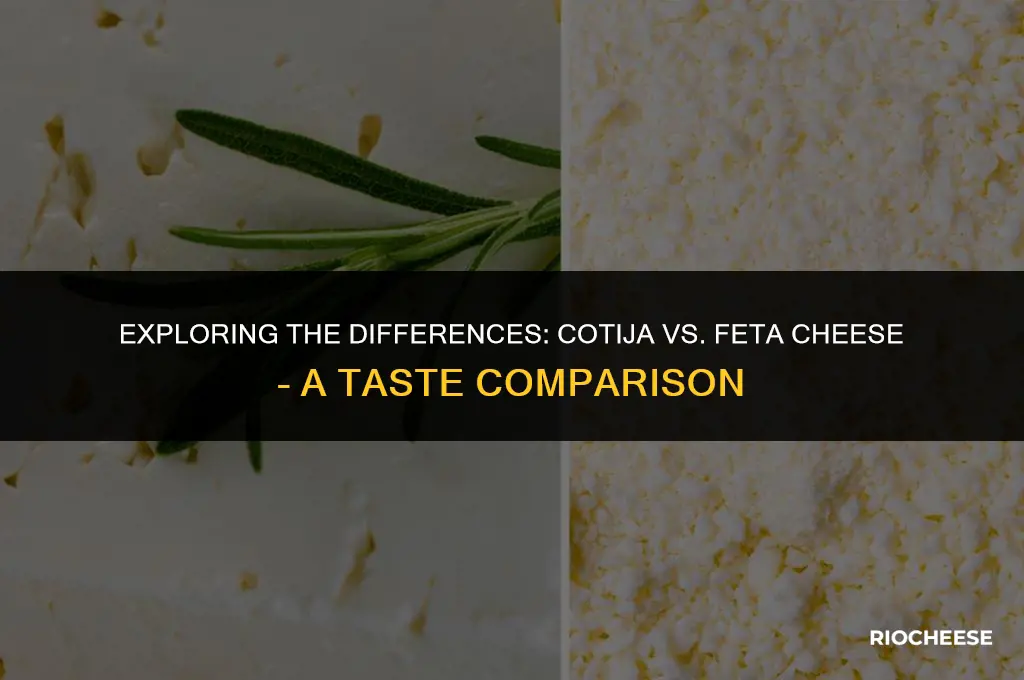
Cotija cheese and feta cheese are two distinct types of cheese that, while sharing some similarities, have unique characteristics that set them apart. Cotija, also known as queso cotija, is a crumbly, salty cheese originating from Mexico. It is often used as a topping for various dishes, such as tacos, salads, and soups. Feta, on the other hand, is a brined curd white cheese made in Greece. It is known for its tangy flavor and is commonly used in Mediterranean cuisine, including salads, sandwiches, and pastries. Despite both being crumbly and salty, cotija and feta have different textures, flavors, and uses in cooking.
Explore related products


What You'll Learn
- Origin and Production: Cotija is Mexican, made from cow's milk. Feta is Greek, traditionally from sheep's or goat's milk
- Texture and Flavor: Cotija is crumbly with a mild, salty taste. Feta is also crumbly but has a tangier, more robust flavor
- Usage in Cuisine: Cotija is often used in Mexican dishes like tacos and salads. Feta is a staple in Greek salads and pastries
- Nutritional Content: Both cheeses are high in protein and calcium but can vary in fat content and calories
- Substitution in Recipes: While they have different flavors, cotija and feta can sometimes be substituted for each other in recipes

Origin and Production: Cotija is Mexican, made from cow's milk. Feta is Greek, traditionally from sheep's or goat's milk
Cotija cheese, a staple in Mexican cuisine, originates from the state of Michoacán. It is crafted from cow's milk, which is curdled using lime juice or vinegar. The curds are then molded into small, white blocks that are left to dry and age for several weeks, developing a crumbly texture and a mild, slightly salty flavor. This aging process is crucial as it concentrates the cheese's flavor and gives it a distinctive appearance.
On the other hand, feta cheese hails from Greece and is traditionally made from sheep's or goat's milk, although cow's milk can also be used in some modern variations. The milk is coagulated using rennet, and the resulting curds are cut into small pieces, drained, and then brined in a saltwater solution for several weeks. This brining process not only preserves the cheese but also enhances its tangy, salty flavor. Feta is known for its crumbly texture and is often used in salads, pastries, and as a table cheese.
While both cotija and feta are crumbly, white cheeses, their production methods and origins are distinct. Cotija's use of cow's milk and lime juice or vinegar for curdling sets it apart from feta, which traditionally relies on sheep's or goat's milk and rennet. Additionally, the aging and brining processes differ, contributing to their unique flavors and textures.
In terms of culinary applications, cotija is often used as a topping for dishes like tacos, tostadas, and salads, adding a mild, creamy flavor. Feta, with its sharper, tangier taste, is a popular ingredient in Greek dishes such as spanakopita, salads, and as a standalone appetizer. Understanding these differences can help chefs and home cooks choose the right cheese for their specific culinary needs.
In conclusion, while cotija and feta may appear similar at first glance, their distinct origins, production methods, and flavor profiles make them unique cheeses with specific culinary uses. By appreciating these differences, one can better utilize each cheese in various dishes, enhancing the overall dining experience.
The Great Feta Rinse Debate: To Wash or Not to Wash?
You may want to see also
Explore related products


Texture and Flavor: Cotija is crumbly with a mild, salty taste. Feta is also crumbly but has a tangier, more robust flavor
Cotija cheese, a staple in Mexican cuisine, is known for its crumbly texture and mild, salty flavor. It's often used as a topping for dishes like tacos, salads, and soups, adding a subtle richness without overpowering the other ingredients. The cheese is typically made from cow's milk and is aged for a short period, which contributes to its soft, crumbly consistency and delicate taste.
Feta cheese, on the other hand, is a Greek cheese that also boasts a crumbly texture but with a tangier, more robust flavor profile. Made from sheep's or goat's milk, feta is brined and aged for several months, resulting in its distinctive salty and tangy taste. This cheese is a key ingredient in many Mediterranean dishes, such as salads, pastries, and grilled meats, where its bold flavor can stand up to other strong ingredients.
While both cotija and feta are crumbly cheeses, their flavor profiles and culinary uses differ significantly. Cotija's mild, salty taste makes it a versatile ingredient that can complement a wide range of dishes without overpowering them. In contrast, feta's tangy, robust flavor makes it a statement ingredient that can add a bold punch to Mediterranean-inspired recipes.
When comparing the two cheeses, it's clear that they each have their own unique characteristics that set them apart. Cotija's delicate flavor and soft texture make it an excellent choice for dishes where a subtle cheese presence is desired. Feta, with its strong flavor and crumbly texture, is better suited for recipes that call for a more pronounced cheese element.
In conclusion, while cotija and feta may share some similarities in texture, their distinct flavor profiles and culinary applications make them two very different cheeses. Understanding these differences can help cooks and food enthusiasts choose the right cheese for their specific needs and preferences.
Can Dogs Enjoy Feta Cheese? A Comprehensive Guide for Pet Owners
You may want to see also
Explore related products

![Traditional Feta Chunk has a rich, creamy texture and bold, tangy taste that elevates any dish. Inspired by Greek tradition, it’s made with fresh, simple ingredients for authentic flavor. Crumble it over salads, tuck it into wraps, or serve it on a cheeseboard—this versatile cheese adds a Mediterranean twist to your favorite foods. It’s a delicious way to bring depth and character to everyday meals or special recipes. [ 32 oz , 2 lb ]](https://m.media-amazon.com/images/I/51MZ2OhOE-L._AC_UL320_.jpg)

Usage in Cuisine: Cotija is often used in Mexican dishes like tacos and salads. Feta is a staple in Greek salads and pastries
Cotija cheese, with its crumbly texture and salty flavor, is a beloved ingredient in Mexican cuisine. It's often sprinkled over tacos, adding a burst of flavor and a satisfying crunch. In salads, cotija provides a rich, creamy element that balances the freshness of the vegetables. Its versatility extends to other dishes as well, such as enchiladas and chiles rellenos, where it adds depth and complexity to the flavors.
On the other hand, feta cheese is a cornerstone of Greek cuisine. Its tangy, briny taste and creamy texture make it a perfect complement to the fresh ingredients found in Greek salads. Feta is also a key ingredient in many Greek pastries, such as spanakopita and baklava, where it adds a savory, salty contrast to the sweet, flaky dough. Additionally, feta is often used in marinades and dressings, lending its distinctive flavor to a variety of dishes.
While both cotija and feta are used in their respective cuisines to add flavor and texture, they have distinct characteristics that set them apart. Cotija is typically made from cow's milk and has a milder, saltier taste compared to feta, which is made from sheep's or goat's milk and has a stronger, tangier flavor. This difference in flavor profiles is why cotija and feta are not interchangeable in recipes, and each cheese has its own unique role in the dishes it's used in.
In conclusion, cotija and feta cheeses, while both delicious and versatile, have different uses in cuisine due to their distinct flavors and textures. Cotija is a staple in Mexican dishes, adding a salty, crumbly element, while feta is a key ingredient in Greek cuisine, providing a tangy, creamy contrast. Understanding these differences can help you appreciate the unique qualities of each cheese and use them effectively in your cooking.
The Ultimate Guide to Storing Feta Cheese Blocks
You may want to see also
Explore related products


Nutritional Content: Both cheeses are high in protein and calcium but can vary in fat content and calories
Cotija and feta cheeses, while similar in some culinary uses, exhibit distinct nutritional profiles that can impact dietary choices. Both cheeses are indeed rich sources of protein and calcium, essential nutrients for muscle function and bone health. However, their fat content and caloric values can vary significantly, making one cheese a better fit for certain dietary needs than the other.
Cotija cheese, originating from Mexico, tends to be lower in fat and calories compared to feta. A typical serving of cotija (about 28 grams) contains around 100 calories, with approximately 7 grams of fat. In contrast, feta cheese, which hails from Greece, is generally higher in fat and calories. A similar serving size of feta can contain about 150 calories and 12 grams of fat. This difference in fat content can be attributed to the varying production methods and the type of milk used in each cheese.
For individuals monitoring their calorie intake or managing conditions like obesity or heart disease, cotija may be a preferable choice due to its lower fat and calorie content. On the other hand, feta's higher fat content may be beneficial for those requiring a higher-calorie diet, such as athletes or individuals with increased energy needs.
It's also important to consider the sodium content when comparing these cheeses. Feta tends to be higher in sodium due to the brining process it undergoes, which can be a concern for those with hypertension or on a low-sodium diet. Cotija, while still containing some sodium, generally has less than feta, making it a better option for sodium-restricted diets.
In summary, while both cotija and feta cheeses offer valuable nutrients like protein and calcium, their differing fat, calorie, and sodium contents make them suitable for different dietary requirements and preferences. Understanding these nutritional nuances can help consumers make informed choices about which cheese best fits their health and culinary needs.
The Shelf Life of Feta Cheese: Does It Really Expire?
You may want to see also
Explore related products


Substitution in Recipes: While they have different flavors, cotija and feta can sometimes be substituted for each other in recipes
Cotija and feta, while distinct in flavor and origin, can indeed be substituted for each other in certain recipes. This substitution is particularly useful when one type of cheese is not available or when a cook wishes to experiment with different flavor profiles. Cotija, a Mexican cheese, is often salty and crumbly, similar to feta, a Greek cheese known for its tangy and briny taste. Both cheeses are commonly used in salads, tacos, and as toppings for various dishes.
When substituting cotija for feta, it's important to consider the saltiness and texture. Cotija tends to be saltier than feta, so reducing the amount of added salt in the recipe may be necessary to balance the flavors. Additionally, cotija's crumbly texture can add a pleasant contrast to dishes that typically use feta, such as Greek salads or pasta dishes. Conversely, when using feta as a substitute for cotija, one might need to adjust for feta's stronger tang and softer texture. Feta can be a delightful addition to Mexican-inspired dishes like tacos or quesadillas, offering a creamy and tangy element that complements the other ingredients.
In terms of quantity, a general rule of thumb is to use an equal amount of cotija as you would feta, adjusting as needed based on personal taste preferences. For example, if a recipe calls for 1 cup of crumbled feta, you can start by substituting 1 cup of crumbled cotija and then taste the dish to see if any further adjustments are required.
It's also worth noting that while cotija and feta can be used interchangeably in some recipes, they each have unique qualities that make them stand out. Cotija's salty, nutty flavor pairs exceptionally well with cilantro, lime, and other bold flavors found in Mexican cuisine. Feta, on the other hand, is a staple in Mediterranean dishes and is often paired with olives, tomatoes, and herbs like oregano and thyme.
In conclusion, substituting cotija for feta or vice versa can be a creative and practical way to explore new flavor combinations in your cooking. By understanding the differences in taste, texture, and culinary traditions associated with each cheese, you can make informed decisions that enhance the overall dining experience.
Exploring the Anti-Inflammatory Benefits of Feta Cheese
You may want to see also
Frequently asked questions
No, cotija cheese and feta cheese are not the same type of cheese. They are both white, crumbly cheeses but have different origins, flavors, and textures.
The main difference between cotija cheese and feta cheese lies in their origins and production methods. Cotija cheese is a Mexican cheese made from cow's milk, while feta cheese is a Greek cheese traditionally made from sheep's or goat's milk.
Yes, cotija cheese can be used as a substitute for feta cheese in many recipes due to its similar crumbly texture and salty flavor. However, keep in mind that the taste will be slightly different, and cotija may not be suitable for all dishes that call for feta.
Cotija cheese has a mild, slightly tangy, and salty flavor, while feta cheese has a sharper, more acidic taste. Both cheeses are known for their crumbly texture and are often used in salads, salsas, and other dishes.
Cotija cheese is commonly used in Mexican dishes such as tacos, enchiladas, and salsas. Feta cheese, on the other hand, is often found in Greek dishes like salads (e.g., Greek salad), pastries (e.g., spanakopita), and as a topping for various dishes.


![Feta Crumbles, have a firm texture and salty flavor that brings out the best any dish. It is the perfect spruce up to any gathering. Pair with your favorite wine, beer or salad. [ 22 oz, 1.3 lb ]](https://m.media-amazon.com/images/I/51RtUvD6FSL._AC_UL320_.jpg)

![Original PDO Feta Cheese, is an original Greek feta cheese naturally preserved in brine. The cheese is made from pasteurized sheep and goat milk. Product of Greece. [ 14.1 oz, 0.88 lb ]](https://m.media-amazon.com/images/I/51U8KSCGDGL._AC_UL320_.jpg)