Kamil Perry
Blue cheese, known for its distinctive pungent aroma and veined appearance, has a rich history that dates back centuries. Originating in Europe, particularly in regions like France, Italy, and England, blue cheese was initially created as a way to preserve cheese for longer periods. The characteristic blue mold, Penicillium roqueforti, was introduced either naturally through airborne spores or deliberately by cheesemakers using mold cultures. Over time, the production of blue cheese became an art form, with various regions developing their unique styles and methods. Today, blue cheese is celebrated worldwide for its bold flavors and is used in a variety of culinary applications, from salads and sandwiches to gourmet dishes.
Explore related products


What You'll Learn
- Origins of blue cheese: Discovered in ancient caves, blue cheese has a rich history dating back centuries
- Penicillium roqueforti: This mold is responsible for the distinctive blue veins and flavor in blue cheese
- Traditional production: Blue cheese is made by introducing mold to curds and aging them in specific conditions
- Popular varieties: Explore different types of blue cheese, such as Roquefort, Gorgonzola, and Stilton
- Culinary uses: Blue cheese is versatile in cooking, used in salads, dressings, and as a bold flavor accent

Origins of blue cheese: Discovered in ancient caves, blue cheese has a rich history dating back centuries
The origins of blue cheese can be traced back to ancient times, with evidence suggesting that it was first discovered in caves. These caves provided the ideal environment for the aging process of cheese, with their cool temperatures and high humidity levels. As cheese aged in these conditions, it developed the characteristic blue veins that give blue cheese its distinctive flavor and appearance.
One theory is that the discovery of blue cheese was accidental, with cheese makers leaving their products in caves for extended periods. Upon returning, they found that the cheese had developed the blue mold, which they then tasted and found to be delicious. From this point on, the process of creating blue cheese was refined and perfected, leading to the variety of blue cheeses we know today.
Another theory suggests that the ancient Greeks were the first to intentionally create blue cheese. They would leave their cheese in caves to age, and the blue mold would develop naturally over time. The Greeks valued the unique flavor of blue cheese and considered it a delicacy.
Regardless of its exact origins, blue cheese has a rich history that spans centuries. Its distinctive flavor and texture have made it a popular choice among cheese enthusiasts around the world. Today, blue cheese is produced in many countries, each with its own unique varieties and production methods.
In conclusion, the origins of blue cheese can be traced back to ancient caves, where the ideal conditions for aging cheese led to the development of the characteristic blue veins. Whether discovered accidentally or intentionally created by the ancient Greeks, blue cheese has a fascinating history and continues to be a beloved cheese variety.
Discover the Best Spots to Buy Roka Blue Cheese Spread
You may want to see also
Explore related products


Penicillium roqueforti: This mold is responsible for the distinctive blue veins and flavor in blue cheese
Penicillium roqueforti is a type of mold that plays a crucial role in the production of blue cheese. This mold is responsible for the distinctive blue veins that run through the cheese, as well as its unique flavor profile. The mold is introduced to the cheese during the aging process, where it grows and spreads throughout the curds, breaking down the fats and proteins and releasing various compounds that contribute to the cheese's characteristic taste and aroma.
The use of Penicillium roqueforti in cheese-making dates back centuries, with the earliest recorded instances of blue cheese production believed to have originated in Europe. The mold was likely discovered accidentally, as it is common for molds to grow on aged cheeses. However, the realization that this particular mold could impart a desirable flavor and texture to the cheese led to its intentional use in the cheese-making process.
One of the most famous blue cheeses, Roquefort, is named after the village of Roquefort-sur-Soulzon in southern France, where it has been produced for centuries. The cheese is made from sheep's milk and aged in natural limestone caves, where the mold grows naturally on the walls and floors. This unique environment provides the ideal conditions for the mold to thrive and impart its distinctive flavor to the cheese.
In addition to Roquefort, there are many other types of blue cheese produced around the world, each with its own unique characteristics and flavor profiles. Some of the most popular varieties include Gorgonzola, Stilton, and Cheddar Blue. While the specific strains of Penicillium roqueforti used in these cheeses may vary, the basic process of introducing the mold to the cheese during aging remains the same.
The production of blue cheese is a complex and time-consuming process that requires careful attention to detail. The cheese must be aged at the correct temperature and humidity levels to ensure that the mold grows properly and does not spoil the cheese. Additionally, the cheese must be turned and rubbed regularly to prevent the mold from growing too thickly in any one area.
Despite the challenges involved in producing blue cheese, its unique flavor and texture have made it a popular choice among cheese enthusiasts around the world. The use of Penicillium roqueforti in the cheese-making process is a testament to the ingenuity of early cheese-makers and their ability to harness the power of natural molds to create a truly distinctive and delicious product.
The Truth About Blue Cheese: Unpasteurized or Not?
You may want to see also
Explore related products
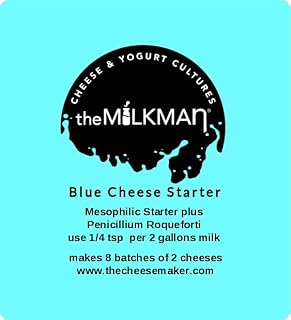


Traditional production: Blue cheese is made by introducing mold to curds and aging them in specific conditions
The traditional production of blue cheese involves a meticulous process that dates back centuries. It begins with the introduction of mold to curds, a step that requires precision and expertise. The mold used is typically Penicillium roqueforti, which is responsible for the distinctive blue veins and sharp flavor characteristic of blue cheese. This mold is added to the curds either by spraying or rubbing, ensuring an even distribution throughout the cheese.
Once the mold has been introduced, the curds are aged in specific conditions that promote the growth of the mold and the development of the cheese's unique flavor profile. This aging process typically takes place in temperature and humidity-controlled environments, such as caves or specialized aging rooms. The cheese is often turned and rubbed with salt during this period to enhance its texture and flavor.
The origins of blue cheese can be traced back to ancient times, with some theories suggesting that it was first produced in the caves of Roquefort, France. These caves provided the ideal conditions for aging cheese, with their consistent temperature and humidity levels. Over time, the production of blue cheese spread to other regions, each developing its own unique varieties and production methods.
Today, blue cheese is produced in many parts of the world, with each region putting its own spin on the traditional production methods. Despite these variations, the core process of introducing mold to curds and aging them in specific conditions remains the same. This time-honored technique is what gives blue cheese its distinctive taste and texture, making it a beloved and versatile ingredient in many cuisines.
Exploring the Flavor Profile: Gorgonzola vs. Blue Cheese
You may want to see also
Explore related products


![Blue Cheese Crumbles. These crumbles are handmade with cow's milk and are easy to incorporate into many recipes. Toss these blue cheese crumbles onto salads, on top of steaks and burgers, or even inside buffalo chicken wraps. [ 12 oz , 0.75 lb ]](https://m.media-amazon.com/images/I/61YHpZEyQtL._AC_UL320_.jpg)

Popular varieties: Explore different types of blue cheese, such as Roquefort, Gorgonzola, and Stilton
Roquefort, hailing from the south of France, is one of the most renowned types of blue cheese. It's made from sheep's milk and is known for its strong, pungent flavor and creamy texture. The cheese is aged in natural limestone caves, which contribute to its unique taste and blue-green veins. Roquefort is often used in salads, dressings, and as a table cheese.
Gorgonzola, on the other hand, originates from Italy and is made from cow's milk. It has a milder flavor compared to Roquefort and is known for its crumbly texture. Gorgonzola is typically aged for three to four months and is often used in pasta dishes, risottos, and as a pizza topping.
Stilton, a quintessential English blue cheese, is also made from cow's milk. It has a rich, creamy texture and a sharp, tangy flavor. Stilton is aged for several months and is often used in sandwiches, soups, and as a table cheese. It's also a popular choice for cheese boards and is often paired with sweet accompaniments like honey or figs.
These three varieties of blue cheese not only differ in their country of origin and milk source but also in their flavor profiles, textures, and aging processes. Exploring these differences can help cheese enthusiasts appreciate the unique characteristics of each type and find new ways to incorporate them into their culinary creations.
Ranch vs. Blue Cheese: Unraveling the Healthier Dressing Debate
You may want to see also
Explore related products


Culinary uses: Blue cheese is versatile in cooking, used in salads, dressings, and as a bold flavor accent
Blue cheese's culinary versatility is a testament to its enduring popularity. One of its most common uses is in salads, where its pungent flavor and creamy texture add depth and richness. For instance, a classic Cobb salad is elevated by the addition of crumbled blue cheese, which pairs beautifully with the smoky bacon and crisp lettuce. In dressings, blue cheese is often the star ingredient, providing a tangy and savory base that complements a variety of greens. A simple vinaigrette made with blue cheese, olive oil, and vinegar can transform a mundane salad into a gourmet dish.
Beyond salads and dressings, blue cheese is also used as a bold flavor accent in various dishes. It can be crumbled over roasted vegetables, such as asparagus or Brussels sprouts, to add a salty and umami element. In pasta dishes, blue cheese can be incorporated into sauces or sprinkled on top as a garnish, adding a luxurious touch to the meal. For a more adventurous culinary experience, blue cheese can be used in desserts, such as in a blue cheese and pear tart, where its sharpness contrasts with the sweetness of the fruit.
When cooking with blue cheese, it's important to consider its strong flavor and adjust the amount used accordingly. A little goes a long way, and using too much can overpower the other ingredients in the dish. Additionally, the type of blue cheese used can greatly impact the final result. For example, a milder blue cheese like Gorgonzola may be more suitable for desserts, while a stronger variety like Roquefort is better suited for savory dishes.
In conclusion, blue cheese's versatility in cooking is a result of its unique flavor profile and creamy texture. From salads and dressings to roasted vegetables and desserts, this cheese can add a bold and luxurious touch to a wide range of dishes. By understanding how to use blue cheese effectively, home cooks and professional chefs alike can create memorable and delicious meals that showcase the best of this versatile ingredient.
Crafting the Perfect Charcuterie: A Guide to Slicing Blue Cheese
You may want to see also
Frequently asked questions
Blue cheese is believed to have originated in Europe, with the earliest known production dating back to ancient Rome. However, the specific strains of mold used in modern blue cheeses were likely developed in the Roquefort region of France.
Blue cheese is made by introducing Penicillium cultures to curdled milk. The mold ferments the curds, creating the characteristic blue veins and strong flavor. The cheese is then aged in controlled conditions to develop its texture and taste.
Some popular types of blue cheese include Roquefort from France, Gorgonzola from Italy, Stilton from England, and Bleu de Gex from Switzerland. Each variety has its own unique flavor profile and production methods.
Blue cheese is a good source of protein, calcium, and vitamins such as B12. It also contains probiotics from the mold cultures, which can aid in digestion. However, it is high in fat and sodium, so it should be consumed in moderation.
Blue cheese can be used in a variety of dishes, from salads and sandwiches to pasta and pizza. It can be crumbled over food as a topping, melted into sauces, or used as a flavoring in dressings and marinades. Its strong flavor pairs well with sweet and tangy ingredients.


![Danish Blue Cheese features blue mold veins and has a fine and nutty aroma with hints of marzipan and the soft bitter flavor of sourdough, making it a favorite for cooking and snacking. It is made using homogenized cow's milk, which contributes to its strong bite, while the cream in the milk provides the perfect balance for its sharp flavor. The unique taste of Danish Blue Cheese will not go unnoticed. It is strong and flavorful while boasting a memorable aroma. The taste is sharp, salty, savory, nutty, with hints of marzipan and soft bitter flavor of sourdough. [ 12.3 oz , 0.76 lb ]](https://m.media-amazon.com/images/I/51x+Xt306vL._AC_UL320_.jpg)