Kamil Perry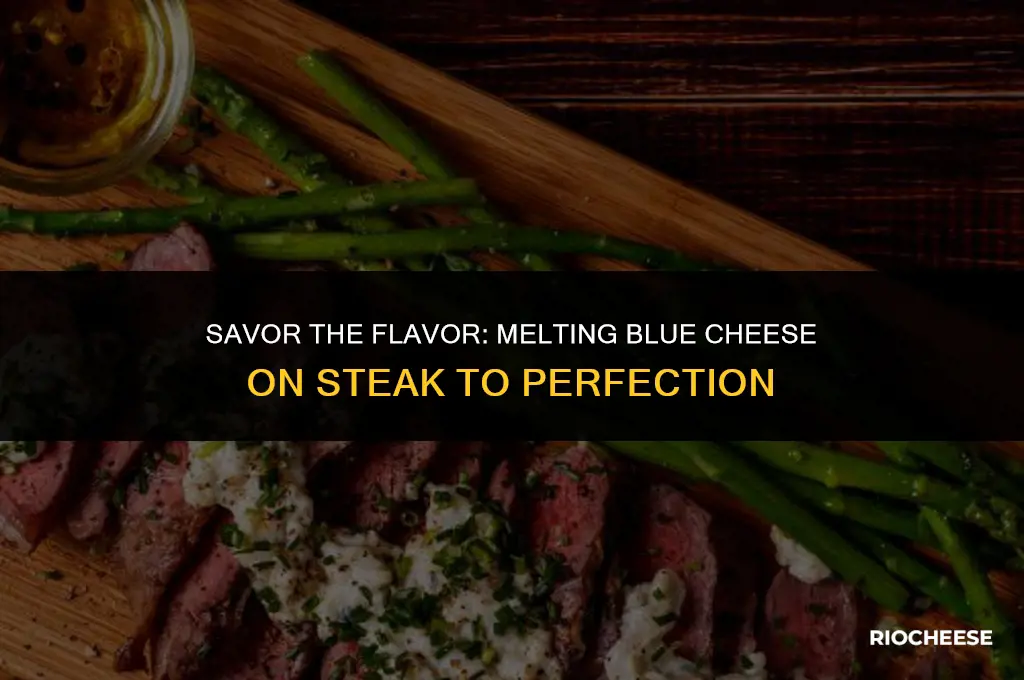
Melting blue cheese on steak is a culinary technique that can elevate a simple steak dinner into a gourmet experience. Blue cheese, known for its strong, pungent flavor and creamy texture, pairs surprisingly well with the rich, savory taste of steak. When melted, the cheese forms a decadent sauce that complements the meat's natural juices, creating a harmonious blend of flavors. This method not only adds a luxurious touch to the dish but also introduces a delightful contrast between the warm, tender steak and the cool, creamy cheese. Whether you're a seasoned chef or a home cook looking to impress, learning how to melt blue cheese on steak is a valuable skill that can transform your meals.
Explore related products

What You'll Learn
- Choosing the Right Blue Cheese: Select a high-quality, pungent blue cheese that complements the rich flavor of steak
- Preparing the Steak: Season the steak with salt, pepper, and other desired spices before cooking to enhance its taste
- Cooking Methods: Grill, pan-sear, or broil the steak to your preferred level of doneness, ensuring a juicy interior
- Melting the Cheese: Place the blue cheese on top of the cooked steak and melt it under a broiler or with a kitchen torch
- Serving Suggestions: Pair the blue cheese steak with a side salad, roasted vegetables, or a glass of red wine for a complete meal

Choosing the Right Blue Cheese: Select a high-quality, pungent blue cheese that complements the rich flavor of steak
Selecting the perfect blue cheese for your steak is crucial to achieving a harmonious balance of flavors. A high-quality, pungent blue cheese will not only melt beautifully but also enhance the rich, savory taste of the steak. When choosing a blue cheese, look for varieties that are known for their strong, distinct flavor profiles, such as Gorgonzola, Roquefort, or Stilton. These cheeses have a bold character that can stand up to the robust flavor of the meat.
Consider the age of the cheese as well. Aged blue cheeses tend to have a more intense flavor and a firmer texture, which makes them ideal for melting on steak. Younger blue cheeses may be milder and creamier, which can also work well depending on your preference. It's essential to choose a cheese that complements the specific cut and preparation of the steak. For example, a sharply flavored blue cheese pairs well with a juicy, well-marbled ribeye, while a milder blue cheese might be better suited for a leaner cut like a sirloin.
Texture is another important factor to consider. A cheese with a crumbly texture, like Roquefort, will melt differently than a creamier cheese like Gorgonzola. Crumbly cheeses tend to add a nice contrast to the tender texture of the steak, while creamy cheeses can create a rich, velvety sauce. Experiment with different textures to find the one that you enjoy the most.
When selecting a blue cheese, it's also important to consider the fat content. Cheeses with a higher fat content tend to melt more smoothly and create a richer sauce. However, they can also be more calorie-dense. If you're watching your calorie intake, you may want to opt for a lower-fat blue cheese.
Finally, don't be afraid to try different types of blue cheese to find the one that you like best. Each variety has its own unique flavor profile and melting characteristics, so it's worth experimenting with a few different options. You may even want to create a blue cheese tasting board to sample different varieties and see how they pair with various cuts of steak.
Exploring Mexico's Blue Cheese Alternatives: A Flavorful Journey
You may want to see also
Preparing the Steak: Season the steak with salt, pepper, and other desired spices before cooking to enhance its taste
To elevate the flavor of your steak and create a perfect canvas for melting blue cheese, proper seasoning is essential. Begin by patting the steak dry with paper towels to remove any excess moisture, which can hinder the formation of a flavorful crust. Next, generously sprinkle both sides of the steak with kosher salt and freshly ground black pepper. The coarse texture of kosher salt will help to tenderize the meat and enhance its natural juices, while the pungency of fresh black pepper will add a subtle heat and complexity to the dish.
In addition to salt and pepper, consider incorporating other spices and herbs to complement the rich flavor of the blue cheese. A pinch of garlic powder or onion powder can add depth and aroma, while dried herbs like thyme or rosemary can provide a fragrant, earthy note. For a bolder flavor profile, experiment with spices like paprika, cayenne pepper, or even a touch of ground cumin. Remember, the key is to balance the seasonings so that they enhance the steak without overpowering the delicate flavor of the blue cheese.
Once the steak is seasoned, allow it to rest at room temperature for 30-45 minutes before cooking. This will help the meat cook more evenly and ensure that the blue cheese melts smoothly and consistently. During this time, preheat your grill or skillet to a high heat, which will create a crispy, caramelized exterior on the steak. When the steak is ready to cook, sear it for 3-4 minutes per side for a medium-rare doneness, adjusting the cooking time based on your desired level of doneness and the thickness of the steak.
As the steak cooks, prepare the blue cheese by crumbling it into small pieces and mixing it with a splash of heavy cream or melted butter. This will help the cheese melt more evenly and create a luxurious, creamy sauce. Once the steak is cooked to your liking, remove it from the heat and let it rest for a few minutes before topping it with the blue cheese mixture. The residual heat from the steak will cause the cheese to melt, creating a decadent and flavorful topping that perfectly complements the seasoned meat.
Unveiling the Mystery: Is Cambozola Truly a Blue Cheese?
You may want to see also
Cooking Methods: Grill, pan-sear, or broil the steak to your preferred level of doneness, ensuring a juicy interior
To achieve a perfectly cooked steak with a juicy interior, it's essential to master the cooking methods of grilling, pan-searing, or broiling. Each method offers unique benefits and challenges, but with the right techniques, you can ensure your steak is cooked to your preferred level of doneness.
Grilling is a popular choice for cooking steak, as it imparts a smoky flavor and creates attractive grill marks. To grill your steak, preheat your grill to high heat and season your steak generously with salt and pepper. Place the steak on the grill and cook for 3-4 minutes per side for a medium-rare steak, adjusting the time based on your desired level of doneness. Use a meat thermometer to check the internal temperature of the steak, aiming for 130-135°F (54-57°C) for medium-rare.
Pan-searing is another effective method for cooking steak, especially when you want a crispy crust and a juicy interior. To pan-sear your steak, heat a heavy-bottomed skillet over high heat and add a small amount of oil. Season your steak with salt and pepper, then place it in the skillet. Cook for 2-3 minutes per side for a medium-rare steak, adjusting the time as needed. Use a meat thermometer to check the internal temperature, and remove the steak from the skillet when it reaches your desired level of doneness.
Broiling is a less common method for cooking steak, but it can produce excellent results. To broil your steak, preheat your oven's broiler and season your steak with salt and pepper. Place the steak on a broiler pan and cook for 3-4 minutes per side for a medium-rare steak, adjusting the time based on your desired level of doneness. Use a meat thermometer to check the internal temperature, and remove the steak from the oven when it reaches your preferred level of doneness.
Regardless of the cooking method you choose, it's important to let your steak rest for a few minutes after cooking to allow the juices to redistribute. This will ensure that your steak is juicy and flavorful when you cut into it.
Exploring the Bold Flavors: Cheeses That Rival Blue Cheese
You may want to see also
Melting the Cheese: Place the blue cheese on top of the cooked steak and melt it under a broiler or with a kitchen torch
To achieve the perfect melt for your blue cheese on steak, it's essential to understand the characteristics of blue cheese and how it reacts to heat. Blue cheese, known for its strong flavor and creamy texture, melts differently than other cheeses due to its high fat and moisture content. When exposed to direct heat, such as from a broiler or kitchen torch, the cheese undergoes a transformation that enhances its flavor and creates a luxurious, gooey texture that complements the savory taste of the steak.
Begin by selecting a high-quality blue cheese that is suitable for melting. Varieties like Gorgonzola, Roquefort, or Stilton work exceptionally well. Once your steak is cooked to your desired level of doneness, remove it from the heat and let it rest for a few minutes. This resting period allows the juices to redistribute within the meat, ensuring a juicy and flavorful steak.
Now, place the blue cheese on top of the warm steak. The residual heat from the steak will start to melt the cheese slightly, making it easier to achieve an even melt. If using a broiler, preheat it to a high temperature and place the steak under the broiler for about 1-2 minutes, or until the cheese is melted and slightly browned. Keep a close eye on the cheese, as it can burn quickly. Alternatively, if using a kitchen torch, hold it about 6 inches away from the cheese and slowly move it back and forth, melting the cheese evenly. Be cautious not to apply too much heat, as this can cause the cheese to become rubbery or burn.
As the cheese melts, it will release its pungent aroma, infusing the steak with an irresistible flavor. The combination of the tender, juicy steak and the rich, creamy melted blue cheese creates a dish that is both indulgent and satisfying. Serve immediately and enjoy the harmonious blend of flavors and textures.
Discover the Best Spots to Buy Blue Cheese Near You
You may want to see also
Serving Suggestions: Pair the blue cheese steak with a side salad, roasted vegetables, or a glass of red wine for a complete meal
To elevate your blue cheese steak to a gourmet experience, consider pairing it with a fresh side salad. The crispness of the greens and the tang of a light vinaigrette will cut through the richness of the melted blue cheese, creating a harmonious balance of flavors. For a heartier option, roasted vegetables such as asparagus, Brussels sprouts, or carrots can complement the savory notes of the steak while adding a satisfying texture contrast.
For those who prefer a more indulgent accompaniment, a glass of red wine is an excellent choice. The tannins in a full-bodied red, such as a Cabernet Sauvignon or a Malbec, will help to cleanse the palate between bites, enhancing the overall dining experience. When selecting a wine, consider the intensity of the blue cheese and the cut of the steak to ensure a perfect match.
When plating your blue cheese steak, presentation is key. Arrange the steak prominently on the plate, allowing the melted cheese to cascade over the sides. Place the side salad or roasted vegetables artfully alongside, ensuring they do not overshadow the main attraction. If serving with wine, pour it into a suitable glass and position it to the right of the plate, creating an inviting and sophisticated table setting.
To take your serving suggestions to the next level, consider adding a few finishing touches. A sprinkle of fresh herbs, such as parsley or thyme, can add a pop of color and a burst of freshness to the dish. For an extra layer of flavor, drizzle a balsamic reduction or a truffle oil over the steak and vegetables. These small details can transform a simple meal into a memorable culinary experience.
Remember, the key to a successful blue cheese steak is not just in the melting technique, but also in the thoughtful pairing and presentation. By considering these serving suggestions, you can create a well-rounded and satisfying meal that will impress even the most discerning diners.
The Lowdown on Blue Cheese Dressing: Carbs and Nutrition Facts
You may want to see also
Frequently asked questions
Gorgonzola or Roquefort are excellent choices for melting on steak due to their strong flavors and smooth textures when melted.
Yes, the steak should be cooked to your desired level of doneness before adding the blue cheese. This ensures the cheese melts properly and the steak remains juicy.
Crumble the blue cheese into small pieces or slices. This helps it melt more evenly and quickly when placed on the hot steak.
The ideal temperature is medium-high heat, around 350°F to 400°F (175°C to 200°C). This temperature ensures the cheese melts without burning the steak.
It typically takes about 2 to 5 minutes for blue cheese to melt on a steak, depending on the heat and the size of the cheese pieces. Keep an eye on it to prevent burning.