Randy Chandler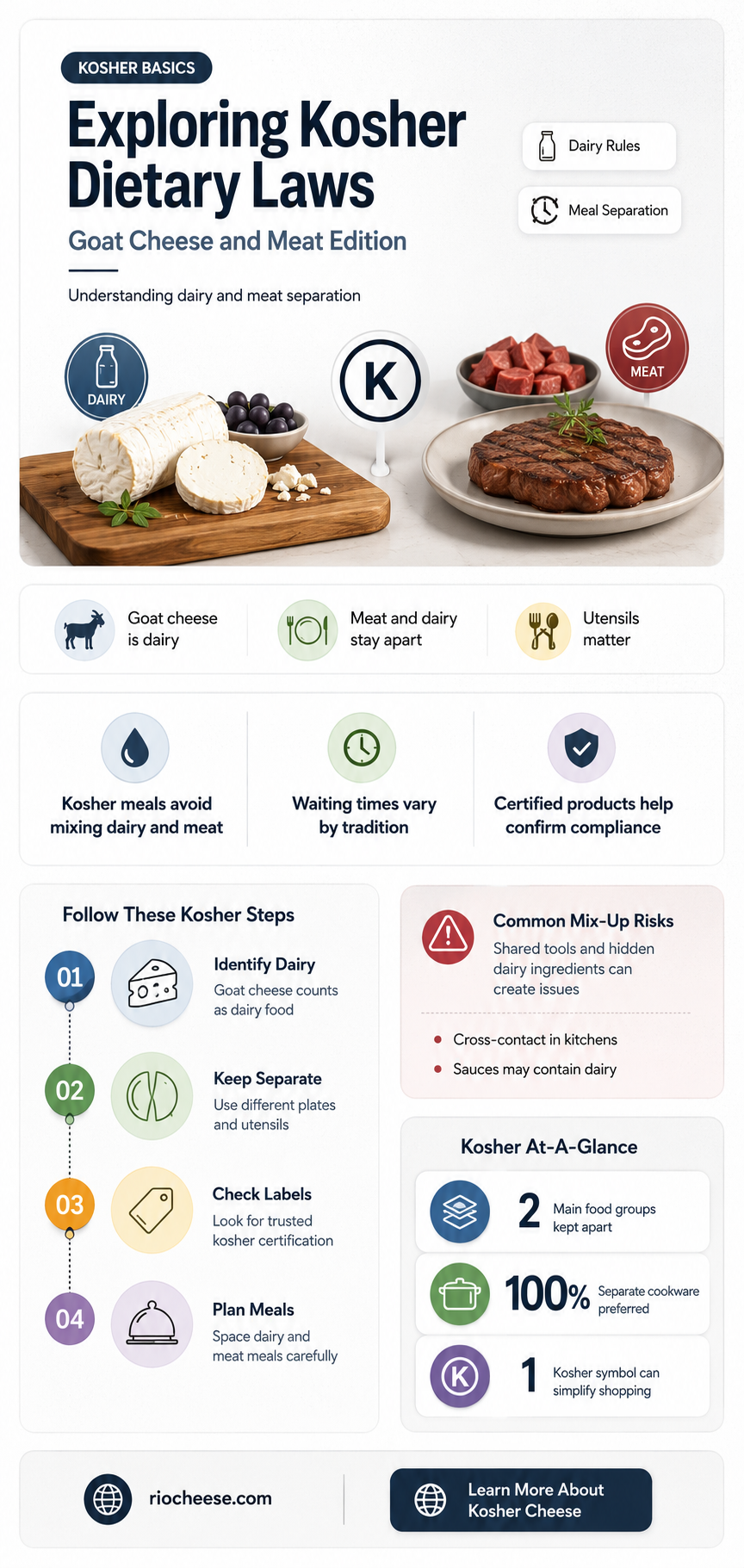
Kosher dietary laws, derived from Jewish religious traditions, govern the consumption of various foods, including dairy and meat products. Goat cheese and meat are subject to these regulations, which dictate specific conditions under which they can be considered kosher. For goat cheese to be kosher, it must be produced from milk sourced from a kosher goat, and the cheese-making process must adhere to kosher standards, including the use of kosher enzymes and equipment. Similarly, goat meat is kosher only if the goat is slaughtered according to kosher rituals, known as shechita, and prepared without any contamination from non-kosher substances. Observing these stringent guidelines ensures that the goat cheese and meat align with Jewish dietary requirements, allowing them to be consumed by those following a kosher diet.
Explore related products


What You'll Learn
- Kosher Dietary Laws: Overview of Jewish dietary regulations, including the consumption of dairy and meat products
- Goat Cheese Production: Process of making goat cheese and potential kosher certification requirements
- Meat Preparation: Guidelines for preparing kosher meat, including the separation of dairy and meat
- Kosher Certification: Importance of kosher certification for goat cheese and meat products
- Culinary Uses: Kosher recipes and dishes that incorporate goat cheese and meat

Kosher Dietary Laws: Overview of Jewish dietary regulations, including the consumption of dairy and meat products
Kosher dietary laws, derived from Jewish religious texts, provide a comprehensive framework for the consumption of food, particularly concerning the separation of dairy and meat products. These regulations are rooted in the Torah and further elaborated in the Talmud and other rabbinical texts. The primary principle governing the kosher status of food is the prohibition against mixing dairy and meat, which extends to the use of separate utensils, cookware, and even dishwashers for each category.
The consumption of goat cheese and meat together is a common point of inquiry within the context of kosher dietary laws. According to these regulations, goat cheese is considered dairy, while goat meat is classified as meat. Therefore, the two cannot be consumed together or prepared in the same vessel. This separation is not limited to the actual consumption but also applies to the preparation and storage of these foods. For instance, a kosher kitchen would require separate cutting boards, knives, and storage containers for dairy and meat products to avoid any cross-contamination.
In addition to the separation of dairy and meat, kosher dietary laws also stipulate specific methods for the slaughter and preparation of meat. Animals must be slaughtered in a particular manner, known as shechita, which involves a swift cut to the throat to ensure the animal dies quickly and with minimal suffering. Following slaughter, the meat must undergo a process called treifing, where certain parts, such as the sciatic nerve, are removed. Dairy products, on the other hand, must be derived from kosher animals and prepared under kosher supervision to ensure they meet the necessary standards.
The adherence to kosher dietary laws is not only a matter of religious observance but also has practical implications for those following these regulations. It requires careful planning and attention to detail in meal preparation and can influence social and cultural practices related to food. For example, kosher individuals may need to bring their own food to non-kosher restaurants or events to ensure they can eat according to their dietary restrictions.
In conclusion, kosher dietary laws provide a detailed and structured approach to food consumption, with a strong emphasis on the separation of dairy and meat products. Understanding these regulations is essential for those who follow kosher practices, as it impacts various aspects of their daily lives and social interactions. The specific case of goat cheese and meat highlights the importance of adhering to these laws, as combining the two would violate the fundamental principles of kosher dietary observance.
Exploring the Origins: Is Goat Cheese Truly Alpine?
You may want to see also
Explore related products

![Goat Cheese Crumbles , A rich, creamy and tangy cheese made from goat's milk and crumbled for enjoyment on pasta dishes, salads, sandwiches or as a pizza topping. Product stored in 8 oz. reusable cup for convenience. [ 8 oz , 0.5 lb ]](https://m.media-amazon.com/images/I/61r9fJTd7nL._AC_UL320_.jpg)



Goat Cheese Production: Process of making goat cheese and potential kosher certification requirements
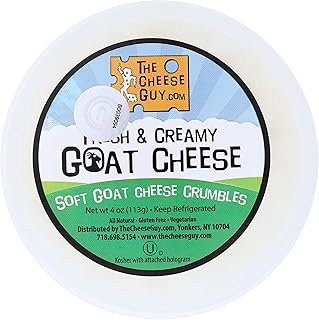
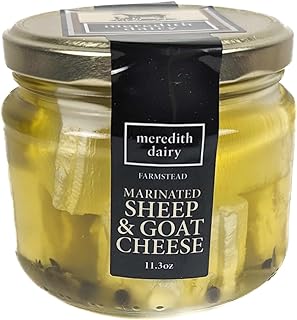
The process of making goat cheese involves several key steps that must be carefully followed to ensure the final product meets kosher certification requirements. First, the milk must be sourced from kosher goats, which means they have been fed a diet free from any non-kosher substances. The goats must also be healthy and free from any diseases that could affect the quality of the milk.
Once the milk has been collected, it must be pasteurized to kill any harmful bacteria. This is typically done by heating the milk to a temperature of 145°F (63°C) for 30 minutes. After pasteurization, the milk is cooled and then mixed with a starter culture, which helps to ferment the milk and separate the curds from the whey.
The curds are then drained and pressed to remove any excess whey. This process can take several hours, depending on the type of cheese being made. Once the curds have been properly drained and pressed, they are shaped into the desired form and allowed to age. The aging process can vary from a few days to several weeks, depending on the type of cheese and the desired flavor profile.
In order for goat cheese to be considered kosher, it must meet several specific requirements. First, the milk must come from kosher goats, as mentioned earlier. Second, the cheese must be made using kosher equipment and utensils. Third, the cheese must be aged for a minimum of 60 days, which helps to ensure that any non-kosher substances have been broken down and are no longer present in the final product.
Finally, the cheese must be certified by a reputable kosher certification agency. This agency will inspect the production process and ensure that all kosher requirements have been met. Once the cheese has been certified, it can be labeled as kosher and sold to consumers who follow kosher dietary laws.
Unveiling the Truth: Is Goat Cheese an Allergen?
You may want to see also
Explore related products


Meat Preparation: Guidelines for preparing kosher meat, including the separation of dairy and meat
In the context of kosher dietary laws, meat preparation involves stringent guidelines to ensure the separation of dairy and meat products. This is based on the biblical commandment that prohibits cooking a kid in its mother's milk, which has been interpreted to mean a complete separation of dairy and meat in both preparation and consumption.
To adhere to these guidelines, it is essential to maintain separate utensils, cutting boards, and cooking surfaces for dairy and meat products. This includes having distinct knives for cutting meat and dairy, as well as separate pots and pans for cooking. Additionally, it is crucial to ensure that any surfaces that come into contact with dairy products are thoroughly cleaned and sanitized before being used for meat preparation.
Another important aspect of kosher meat preparation is the process of koshering the meat itself. This involves a series of steps, including salting the meat to draw out any impurities, rinsing it thoroughly, and then cooking it in a kosher manner. It is also necessary to ensure that any additives or seasonings used in the preparation of kosher meat are themselves kosher.
In the case of goat cheese and meat, it is important to note that goat cheese is considered dairy and should therefore be kept separate from meat products during preparation and consumption. This means that if goat cheese is to be served as part of a meal that includes meat, it should be prepared and served on separate dishes and utensils to avoid any cross-contamination.
Overall, the key to ensuring that meat preparation is kosher is to maintain strict separation between dairy and meat products, use kosher utensils and equipment, and follow the proper procedures for koshering the meat. By doing so, individuals can ensure that their meals are prepared in accordance with kosher dietary laws and avoid any potential issues related to the mixing of dairy and meat.
Exploring Dairy Alternatives: Is Goat Cheese AIP-Friendly?
You may want to see also
Explore related products


Kosher Certification: Importance of kosher certification for goat cheese and meat products
Kosher certification plays a crucial role in ensuring that goat cheese and meat products meet the stringent dietary laws prescribed by Jewish tradition. This certification process involves a series of rigorous inspections and adherence to specific guidelines, which cover every stage from the animal's birth to the final packaging of the product. For instance, the goats must be raised in a controlled environment, fed a kosher diet, and slaughtered according to precise ritualistic methods. The milk and meat must then be processed in facilities that comply with kosher standards, including the use of separate equipment for dairy and meat products to prevent cross-contamination.
The importance of kosher certification extends beyond mere compliance with religious laws. It also serves as a mark of quality assurance, indicating that the products have been produced under strict sanitary conditions and are free from additives and preservatives that may be harmful to health. This is particularly significant for consumers who are health-conscious or have specific dietary restrictions. Furthermore, kosher certification can enhance the marketability of goat cheese and meat products, as it appeals to a growing segment of consumers who are seeking out kosher options.
In addition to its religious and health implications, kosher certification also has economic and social dimensions. For producers, obtaining kosher certification can open up new markets and increase their customer base. This is especially true in regions with large Jewish populations or in countries where kosher products are in high demand. Moreover, kosher certification can foster a sense of community and shared values among consumers who adhere to kosher dietary laws. It serves as a symbol of cultural identity and religious observance, reinforcing the bonds between individuals and their faith.
In conclusion, kosher certification is a multifaceted process that encompasses religious, health, economic, and social aspects. It ensures that goat cheese and meat products are produced in accordance with Jewish dietary laws, while also providing consumers with a guarantee of quality and safety. As such, kosher certification is an essential component of the food industry, catering to the needs and preferences of a diverse range of consumers.
Exploring the pH Balance: Is Goat Cheese Alkaline or Acidic?
You may want to see also
Explore related products


Culinary Uses: Kosher recipes and dishes that incorporate goat cheese and meat
Goat cheese and meat are both kosher, and they can be combined in a variety of delicious and creative ways. One popular dish is goat cheese stuffed chicken breasts, where the chicken is pounded flat, stuffed with a mixture of goat cheese and herbs, and then rolled up and baked. Another option is a goat cheese and meat pizza, where the pizza dough is topped with tomato sauce, goat cheese, and sliced meat such as sausage or pepperoni.
For a more traditional approach, goat cheese can be used in place of cream cheese in many kosher recipes, such as cheesecake or cream cheese frosting. Goat cheese can also be used to make a variety of dips and spreads, such as a goat cheese and herb dip or a goat cheese and sun-dried tomato spread. These dips can be served with crackers or vegetables, or used as a topping for sandwiches or wraps.
When it comes to kosher cooking, it's important to remember that dairy and meat products must be kept separate. This means that goat cheese and meat cannot be mixed together in the same dish, and they must be prepared and served using separate utensils and equipment. However, this doesn't limit the possibilities for creative and delicious kosher recipes that incorporate both goat cheese and meat.
One unique way to use goat cheese and meat together is to make a goat cheese and meat terrine. This dish involves layering goat cheese and meat in a loaf pan, and then baking it until it's set. The terrine can be served cold or at room temperature, and it makes a great appetizer or main course for a kosher meal.
Another option is to use goat cheese and meat in a kosher lasagna. This dish involves layering lasagna noodles with a mixture of goat cheese and herbs, as well as a meat sauce made with ground beef or sausage. The lasagna is then baked until it's bubbly and golden brown, and it makes a hearty and satisfying kosher meal.
In conclusion, goat cheese and meat are both kosher, and they can be combined in a variety of creative and delicious ways. From stuffed chicken breasts to pizza, dips to terrines, and lasagna to cheesecake, there are endless possibilities for kosher recipes that incorporate both goat cheese and meat. Just remember to keep dairy and meat products separate, and to use separate utensils and equipment for each.
Exploring the Inflammatory Effects of Goat Cheese: A Comprehensive Guide
You may want to see also
Frequently asked questions
Yes, goat cheese is generally considered kosher as long as it is produced under kosher supervision. This ensures that the milk used comes from a kosher source and that the cheese-making process adheres to kosher regulations.
Yes, goat meat is kosher. In fact, it is one of the most common types of kosher meat consumed. Like all kosher meats, it must be slaughtered according to specific kosher guidelines by a trained individual known as a shochet.
Yes, the goats must be healthy and alive at the time of slaughter. They should also be of a species that is traditionally considered kosher, such as the domestic goat (Capra aegagrus hircus).
Look for the kosher certification symbol on the packaging, which indicates that the product has been produced under kosher supervision. You can also check with your local kosher authority or rabbi for guidance on specific brands or products.
While both kosher and halal refer to food that is permissible under Jewish and Islamic law, respectively, there are some differences in the certification processes and requirements. For example, kosher certification typically involves more stringent supervision of the production process, while halal certification may focus more on the source of the ingredients. It's important to check the specific certification requirements for each if you are looking to consume products that meet both kosher and halal standards.