Kamil Perry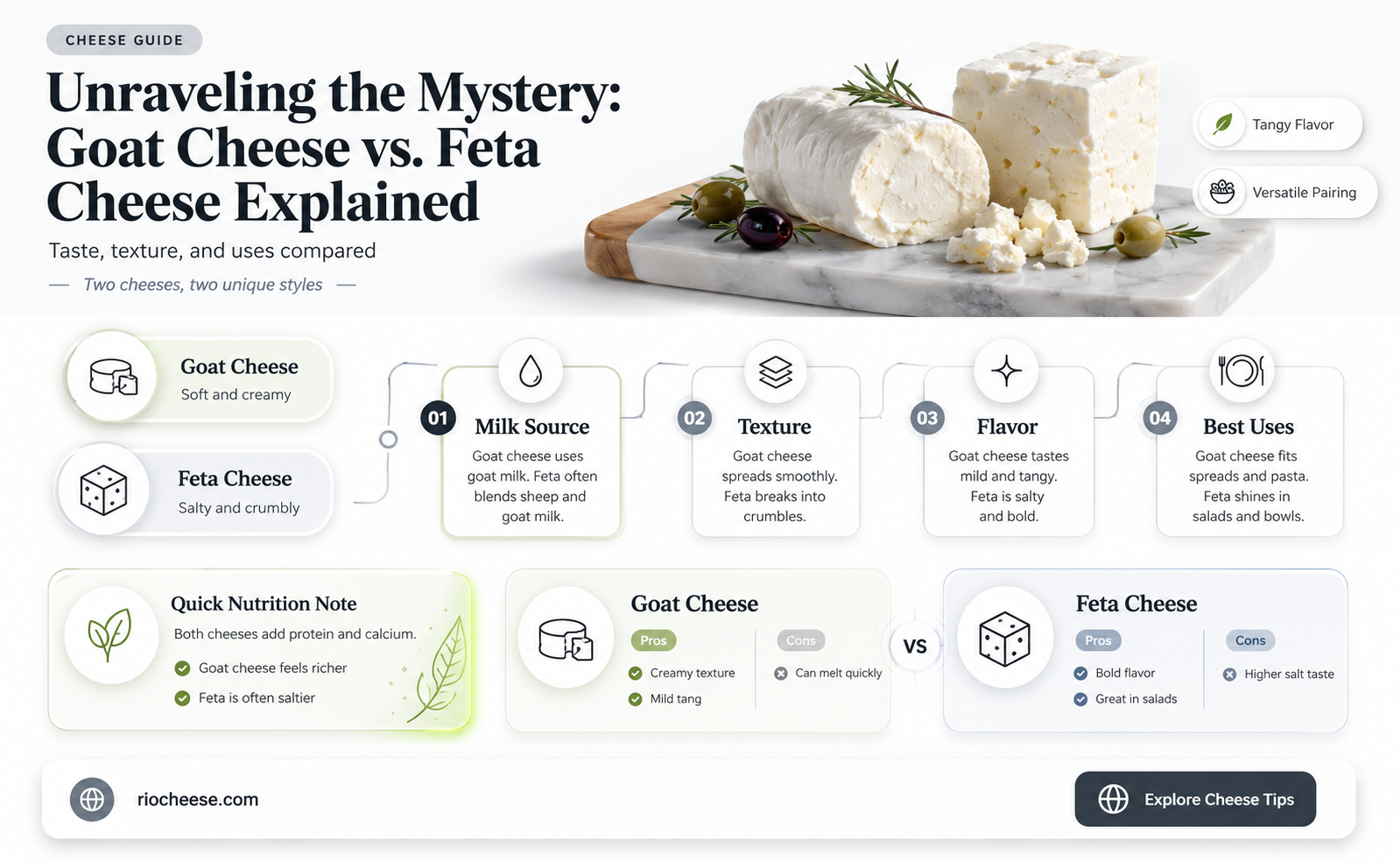
Goat cheese and feta cheese are often confused with each other due to their similar appearance and tangy flavors, but they are distinct types of cheese with unique characteristics. Goat cheese is made from goat's milk and can range in texture from soft and spreadable to firm and crumbly, depending on the aging process. It has a mild to sharp flavor profile and is commonly used in dishes like salads, sandwiches, and desserts. On the other hand, feta cheese is a brined curd white cheese made in Greece from sheep's milk or a mixture of sheep and goat's milk. It is known for its crumbly texture and salty, tangy taste, making it a staple in Mediterranean cuisine, often used in salads, pastries, and as a topping for various dishes. While both cheeses share some similarities, their differences in milk source, production methods, and flavor profiles set them apart in the culinary world.
| Characteristics | Values |
|---|---|
| Origin | Goat cheese: Made from goat's milk. Feta cheese: Made from sheep's milk or a mixture of sheep and goat's milk. |
| Texture | Goat cheese: Generally softer and creamier. Feta cheese: Crumbly and moist. |
| Flavor | Goat cheese: Mild to tangy flavor. Feta cheese: Salty and tangy flavor. |
| Appearance | Goat cheese: Usually white or off-white. Feta cheese: White with small holes. |
| Production Process | Goat cheese: Coagulated using bacterial or fungal cultures. Feta cheese: Coagulated using rennet, then brined. |
| Fat Content | Goat cheese: Typically lower in fat than feta cheese. Feta cheese: Higher in fat, often around 40%. |
| Protein Content | Goat cheese: Slightly higher in protein than feta cheese. Feta cheese: Contains about 4 grams of protein per ounce. |
| Calcium Content | Goat cheese: Similar calcium content to feta cheese. Feta cheese: Rich in calcium, about 25% of the daily value per ounce. |
| Sodium Content | Goat cheese: Lower in sodium than feta cheese. Feta cheese: High in sodium due to the brining process. |
| Uses in Cooking | Goat cheese: Often used in salads, spreads, and desserts. Feta cheese: Commonly used in Greek dishes, salads, and as a topping for various foods. |
| Shelf Life | Goat cheese: Typically has a shorter shelf life than feta cheese. Feta cheese: Can last longer due to its higher salt content. |
| Price | Goat cheese: Generally more expensive than feta cheese. Feta cheese: More affordable and widely available. |
Explore related products


What You'll Learn
- Origin and Production: Goat cheese originates from various regions, while feta is traditionally Greek
- Texture and Taste: Goat cheese can range from soft to firm with a mild to tangy flavor; feta is crumbly and salty
- Nutritional Content: Both cheeses offer protein and calcium, but goat cheese generally has less fat and calories
- Culinary Uses: Goat cheese is versatile in both sweet and savory dishes; feta is often used in Mediterranean cuisine
- Storage and Shelf Life: Proper storage is crucial for both, with goat cheese typically lasting longer than feta

Origin and Production: Goat cheese originates from various regions, while feta is traditionally Greek
Goat cheese and feta cheese, while both made from goat's milk, have distinct origins and production methods that set them apart. Goat cheese is a broad term that encompasses various types of cheese made from goat's milk, originating from different regions around the world. These regions include France, Spain, Italy, and the United States, among others. The production of goat cheese can vary significantly depending on the region and the specific type of cheese being made. For example, some goat cheeses are soft and spreadable, like the French Chevre, while others are hard and aged, such as the Spanish Manchego.
On the other hand, feta cheese has a very specific origin and production method. Traditionally, feta cheese is made in Greece, and its production is regulated by European Union law to ensure that it meets certain standards. Feta cheese is typically made from a mixture of goat's and sheep's milk, although some varieties are made exclusively from goat's milk. The cheese is characterized by its crumbly texture and salty flavor, which is achieved through a process of brining and aging.
The production of feta cheese involves several key steps. First, the milk is pasteurized and then coagulated using rennet. The curds are then cut into small pieces and stirred gently to release excess whey. The curds are then molded into blocks and placed in a brine solution, where they are left to age for several weeks. During this time, the cheese develops its characteristic texture and flavor.
In contrast, the production of goat cheese can vary widely depending on the type of cheese being made. Some goat cheeses are made using a similar process to feta cheese, while others involve different techniques, such as aging the cheese in a cave or smoking it over wood. The aging process for goat cheese can also vary significantly, ranging from a few weeks to several years.
In summary, while both goat cheese and feta cheese are made from goat's milk, they have distinct origins and production methods. Goat cheese is a broad term that encompasses various types of cheese from different regions, while feta cheese is a specific type of cheese that is traditionally made in Greece using a regulated production method.
Exploring Dairy Alternatives: Is Goat Cheese AIP-Friendly?
You may want to see also
Explore related products


Texture and Taste: Goat cheese can range from soft to firm with a mild to tangy flavor; feta is crumbly and salty
Goat cheese and feta cheese, while both derived from goat's milk, exhibit distinct textural and flavor profiles that set them apart. Goat cheese can vary significantly in texture, ranging from soft and spreadable to firm and sliceable. This versatility allows it to be used in a multitude of culinary applications, from creamy dips to grilled slices. The flavor of goat cheese is equally diverse, with some varieties offering a mild, slightly sweet taste, while others boast a tangy, robust flavor that can stand up to bold ingredients.
In contrast, feta cheese is characterized by its crumbly texture and salty taste. Made by curdling goat's milk with an acid, such as vinegar or lemon juice, feta is then brined in a saltwater solution, which contributes to its distinctive saltiness. The crumbly texture of feta makes it an excellent choice for sprinkling over salads, crumbling into pasta dishes, or using as a topping for pizzas and flatbreads.
The differences in texture and taste between goat cheese and feta cheese are primarily due to the production methods and aging processes. Goat cheese is typically fresh and unaged, which contributes to its softer texture and milder flavor. Feta, on the other hand, undergoes a longer aging process in brine, which results in its crumbly texture and salty taste.
When considering the use of these cheeses in cooking, it's important to think about how their textures and flavors will complement the other ingredients in a dish. For example, a soft, mild goat cheese might be a better choice for a delicate salad, while a tangy, firm goat cheese could hold its own in a hearty sandwich. Feta's salty, crumbly nature makes it a perfect addition to dishes that benefit from a burst of flavor and a contrasting texture.
In summary, while both goat cheese and feta cheese are made from goat's milk, they offer unique textural and flavor characteristics that make them suitable for different culinary uses. Understanding these differences can help you choose the right cheese for your next recipe, ensuring that the flavors and textures of your dish are perfectly balanced.
Exploring the Origins: Is Goat Cheese Truly Alpine?
You may want to see also
Explore related products


Nutritional Content: Both cheeses offer protein and calcium, but goat cheese generally has less fat and calories
Goat cheese and feta cheese, while often used interchangeably in culinary contexts, have distinct nutritional profiles that set them apart. Both cheeses are rich sources of protein and calcium, essential nutrients for muscle and bone health. However, when it comes to fat and calorie content, goat cheese generally has the upper hand.
A closer look at the nutritional values reveals that goat cheese typically contains less fat and calories compared to feta cheese. For instance, a 100-gram serving of goat cheese may have around 200-250 calories and 15-20 grams of fat, whereas feta cheese in the same quantity can have approximately 250-300 calories and 20-25 grams of fat. This difference can be attributed to the fact that goat cheese is often made from whole milk, while feta cheese is typically made from a mixture of whole and skimmed milk, which can result in a higher fat content.
It's important to note that these values can vary depending on the specific type and brand of cheese. Some goat cheeses may be higher in fat and calories, while some feta cheeses may be lower. Therefore, it's always a good idea to check the nutritional label before making a purchase, especially if you're watching your calorie or fat intake.
In terms of other nutrients, both cheeses are good sources of vitamins B12 and K, as well as minerals like phosphorus and magnesium. However, goat cheese may have a slight edge in terms of vitamin content, particularly vitamin A and riboflavin (vitamin B2). Feta cheese, on the other hand, may contain more sodium due to the brining process it undergoes.
When considering the nutritional content of these cheeses, it's also important to think about portion sizes. While goat cheese may be lower in fat and calories, it's often used in larger quantities due to its milder flavor. Feta cheese, with its stronger taste, is often used more sparingly. Therefore, the overall nutritional impact of each cheese can depend on how they're used in your diet.
In conclusion, while both goat cheese and feta cheese offer valuable nutrients, goat cheese generally has less fat and calories, making it a potentially better choice for those watching their dietary intake. However, as with any food, moderation and balance are key, and it's important to consider the overall nutritional profile of your diet rather than focusing on individual foods.
Exploring the Inflammatory Effects of Goat Cheese: A Comprehensive Guide
You may want to see also
Explore related products


Culinary Uses: Goat cheese is versatile in both sweet and savory dishes; feta is often used in Mediterranean cuisine
Goat cheese and feta cheese, while both derived from goat's milk, offer distinct culinary applications due to their unique textures and flavors. Goat cheese, known for its creamy and tangy profile, is a versatile ingredient that can be used in a variety of dishes, ranging from sweet to savory. Its smooth texture makes it an excellent choice for spreading on crackers or toast, and it can also be incorporated into desserts like cheesecakes or fruit tarts. In savory dishes, goat cheese can be crumbled over salads, added to pasta sauces, or used as a filling for stuffed vegetables.
Feta cheese, on the other hand, is characterized by its crumbly texture and salty, briny flavor. It is a staple in Mediterranean cuisine and is often used in dishes such as Greek salads, where it is combined with tomatoes, cucumbers, olives, and red onions. Feta can also be found in pastries like spanakopita, where it is mixed with spinach and phyllo dough, or used as a topping for pizzas and flatbreads. Its bold flavor makes it a great addition to marinades and dressings as well.
Despite their differences, both goat cheese and feta cheese can be used interchangeably in some recipes, depending on the desired texture and flavor profile. For example, crumbled goat cheese can be used as a substitute for feta in salads or as a topping for dishes where a milder flavor is preferred. Conversely, feta can be used in place of goat cheese in recipes where a stronger, saltier taste is desired.
When using goat cheese and feta cheese in cooking, it is important to consider their distinct characteristics and how they will complement or contrast with other ingredients in the dish. Experimenting with these cheeses can lead to delicious and innovative culinary creations that highlight their unique qualities.
Exploring Dairy Alternatives: Is Goat Cheese Paleo-Friendly?
You may want to see also
Explore related products




Storage and Shelf Life: Proper storage is crucial for both, with goat cheese typically lasting longer than feta
Proper storage is crucial for both goat cheese and feta to maintain their quality and safety. Goat cheese typically has a longer shelf life than feta due to its lower moisture content and higher fat content, which acts as a natural preservative. However, both cheeses require careful storage to prevent spoilage and maintain their distinct flavors and textures.
For goat cheese, it should be stored in the refrigerator at a temperature between 35°F and 40°F (1.6°C and 4.4°C). It is best to keep it in its original packaging or wrap it tightly in plastic wrap or aluminum foil to prevent it from drying out. If the goat cheese is fresh and soft, it should be consumed within 1 to 2 weeks. If it is aged and firmer, it can last up to 4 to 6 weeks.
Feta cheese, on the other hand, should be stored in the refrigerator at a temperature between 35°F and 40°F (1.6°C and 4.4°C) as well. It is best to keep it in its original brine or wrap it tightly in plastic wrap or aluminum foil to prevent it from drying out. Feta cheese can last up to 2 to 4 weeks in the refrigerator.
It is important to note that both goat cheese and feta cheese should not be frozen, as freezing can alter their texture and flavor. If you need to store them for a longer period, it is best to keep them in the refrigerator and consume them as soon as possible.
In summary, proper storage is crucial for both goat cheese and feta cheese to maintain their quality and safety. Goat cheese typically has a longer shelf life than feta due to its lower moisture content and higher fat content. However, both cheeses require careful storage in the refrigerator at a temperature between 35°F and 40°F (1.6°C and 4.4°C) to prevent spoilage and maintain their distinct flavors and textures.
Unveiling the Truth: Is Goat Cheese an Allergen?
You may want to see also
Frequently asked questions
No, goat cheese and feta cheese are not the same thing, although they are both made from goat's milk. Goat cheese is a general term that refers to any cheese made from goat's milk, while feta cheese is a specific type of goat cheese that originates from Greece and has a distinct flavor and texture.
The main difference between goat cheese and feta cheese is their flavor and texture. Goat cheese can have a wide range of flavors and textures depending on how it is made, while feta cheese has a tangy, salty flavor and a crumbly texture.
Yes, you can substitute goat cheese for feta cheese in recipes, but keep in mind that the flavor and texture may be different. If you want a similar flavor and texture to feta cheese, look for a goat cheese that is tangy and crumbly.
Feta cheese is made by coagulating goat's milk with rennet, then draining and pressing the curds into blocks. The blocks are then brined in a saltwater solution for several weeks, which gives feta cheese its distinctive tangy and salty flavor.