Frederic Melton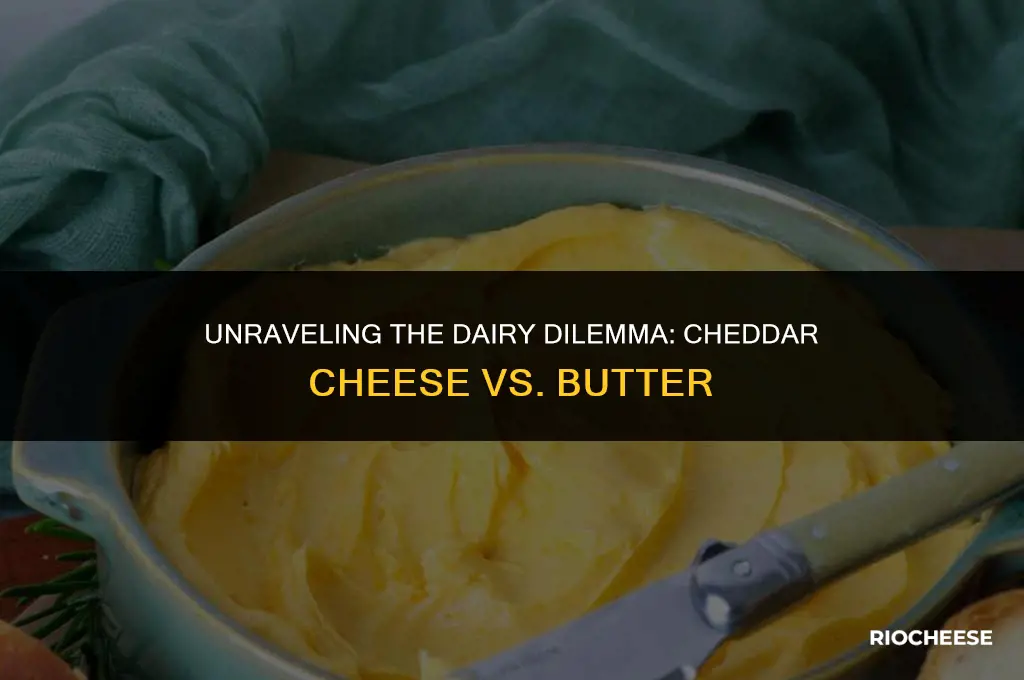
Cheddar cheese and butter are two distinct dairy products that, while both derived from milk, possess unique characteristics and uses in culinary applications. Cheddar cheese is a type of hard cheese that undergoes a specific aging process, resulting in its signature sharp flavor and crumbly texture. On the other hand, butter is a semi-solid emulsion made from the fat and protein components of milk or cream, known for its rich, creamy taste and spreadable consistency. Despite their differences, both cheddar cheese and butter are staples in many cuisines around the world, each offering its own unique contributions to a wide variety of dishes.
Explore related products


What You'll Learn
- Nutritional Comparison: Cheddar cheese and butter differ significantly in calories, fat content, and protein levels
- Ingredients and Production: Cheese is made from milk, cultures, and enzymes, while butter is produced by churning cream
- Culinary Uses: Cheddar is often used in dishes for its flavor and texture, whereas butter is used for cooking and baking
- Taste and Texture: Cheddar cheese has a sharp, tangy flavor and a firm texture, unlike butter's rich, creamy taste
- Storage and Shelf Life: Cheddar cheese typically has a longer shelf life and requires different storage conditions compared to butter

Nutritional Comparison: Cheddar cheese and butter differ significantly in calories, fat content, and protein levels
Cheddar cheese and butter, while both dairy products, exhibit marked differences in their nutritional profiles. A key area of divergence lies in their caloric content. Per 100 grams, cheddar cheese contains approximately 400 calories, whereas butter has around 717 calories. This significant disparity is primarily due to butter's higher fat content, which stands at about 81 grams per 100 grams, compared to cheddar cheese's 33 grams.
In terms of fat composition, butter is predominantly saturated fat, which has been a subject of health scrutiny due to its potential impact on cholesterol levels and heart health. Cheddar cheese, on the other hand, contains a mix of saturated and unsaturated fats, with the latter being considered more heart-healthy. Additionally, cheddar cheese offers a notable amount of protein, approximately 25 grams per 100 grams, which is essential for muscle repair and growth. Butter, in contrast, provides minimal protein, around 0.9 grams per 100 grams.
Another important nutritional aspect is the presence of vitamins and minerals. Cheddar cheese is a good source of calcium, vital for bone health, and also contains vitamins A and B12. Butter, while not as rich in calcium, is an excellent source of vitamin A and provides some vitamin K and B12. However, it's important to note that both products are high in sodium, with cheddar cheese containing about 620 milligrams and butter around 150 milligrams per 100 grams.
In summary, while both cheddar cheese and butter are calorie-dense and should be consumed in moderation, cheddar cheese offers a more balanced nutritional profile with its protein content and mix of fats, along with essential vitamins and minerals. Butter, with its high saturated fat content and minimal protein, should be used sparingly, especially for those monitoring their cholesterol intake.
Unveiling the Nutritional Truth: Is Cheddar Cheese Powder Healthy?
You may want to see also
Explore related products


Ingredients and Production: Cheese is made from milk, cultures, and enzymes, while butter is produced by churning cream
Cheese and butter are two distinct dairy products with unique ingredients and production processes. While both are derived from milk, the methods used to create them are fundamentally different. Cheese is made by curdling milk using cultures and enzymes, which separate the curds from the whey. The curds are then pressed and aged to develop the characteristic flavors and textures of different cheese varieties, such as cheddar.
In contrast, butter is produced by churning cream, which is the fat-rich layer that forms on top of milk. The churning process breaks down the fat globules in the cream, causing them to stick together and form butter. This method results in a smooth, spreadable product with a rich, creamy flavor.
The ingredients used in cheese and butter production also differ significantly. Cheese typically contains milk, cultures, enzymes, and sometimes additional ingredients like salt or herbs. Butter, on the other hand, is primarily made from cream and may contain added salt or other flavorings.
From a production standpoint, cheese making is a more complex process that involves multiple steps, including pasteurization, inoculation, coagulation, draining, pressing, and aging. Butter production, while still requiring careful control of temperature and churning speed, is a relatively simpler process that can be completed in a shorter timeframe.
In summary, while both cheese and butter are dairy products, they have distinct ingredients and production methods that result in unique flavors, textures, and uses in cooking and baking. Understanding these differences can help consumers make informed choices about which product to use in various culinary applications.
The Aging Process of Cheddar Cheese: Ripened to Perfection
You may want to see also
Explore related products


Culinary Uses: Cheddar is often used in dishes for its flavor and texture, whereas butter is used for cooking and baking
Cheddar cheese and butter are two distinct dairy products with unique culinary applications. Cheddar, known for its rich flavor and crumbly texture, is a popular choice for enhancing the taste of various dishes. It is commonly grated over pasta, melted into sauces, or used as a key ingredient in sandwiches and salads. The sharpness of cheddar can range from mild to extra sharp, allowing chefs to select the perfect variety to complement their recipes.
On the other hand, butter is a versatile ingredient used primarily for cooking and baking. Its high smoke point makes it ideal for sautéing vegetables, searing meats, and creating rich sauces. In baking, butter adds moisture and tenderness to cakes, cookies, and pastries. It can also be used to create flavorful spreads and dips when combined with herbs, spices, or other ingredients.
While both cheddar and butter are derived from milk, they undergo different processing methods. Cheddar is made by curdling milk with an acid, such as vinegar or lemon juice, and then aging the curds to develop their characteristic flavor and texture. Butter, however, is produced by churning cream until the fat separates from the liquid, resulting in a smooth, spreadable product.
In terms of nutritional content, cheddar cheese is higher in protein and calcium compared to butter, but it also contains more fat and calories. Butter is primarily composed of fat, with minimal protein and calcium content. When choosing between the two for culinary purposes, it is essential to consider the desired flavor profile, texture, and nutritional implications of each ingredient.
In conclusion, cheddar cheese and butter are not interchangeable ingredients, despite both being dairy products. Cheddar is prized for its flavor and texture in various dishes, while butter is valued for its versatility in cooking and baking. Understanding the unique properties and uses of each ingredient can help chefs and home cooks create delicious and well-balanced meals.
Unlocking the Health Benefits: Is Cheddar Cheese a Probiotic Powerhouse?
You may want to see also
Explore related products


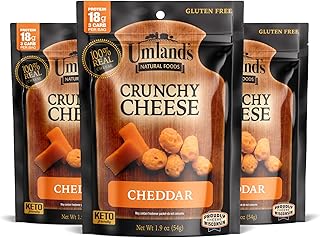

Taste and Texture: Cheddar cheese has a sharp, tangy flavor and a firm texture, unlike butter's rich, creamy taste
Cheddar cheese and butter are two dairy products that, while sharing some similarities, have distinct taste and texture profiles. Cheddar cheese is known for its sharp, tangy flavor, which can range from mild to extra sharp depending on the aging process. This flavor is a result of the fermentation process and the presence of specific bacteria that contribute to its characteristic taste. In contrast, butter has a rich, creamy taste that is often described as smooth and velvety. The flavor of butter is primarily influenced by the cream from which it is made and can vary slightly based on the type of cream and the churning process.
In terms of texture, cheddar cheese is typically firm and crumbly, especially when aged. This firmness makes it ideal for grating, slicing, and incorporating into various dishes where a strong, distinct cheese flavor is desired. On the other hand, butter has a soft, spreadable texture that is easily manipulated and melted. This texture is due to the high fat content in butter, which gives it a smooth and creamy consistency at room temperature.
The differences in taste and texture between cheddar cheese and butter are not only due to their ingredients but also the production methods. Cheddar cheese undergoes a lengthy aging process, during which it develops its sharp flavor and firm texture. Butter, however, is made by churning cream, which separates the butterfat from the buttermilk, resulting in its rich, creamy taste and soft texture.
When comparing cheddar cheese and butter, it is important to consider their culinary uses. Cheddar cheese is often used in savory dishes, such as sandwiches, salads, and casseroles, where its strong flavor can stand out. Butter, on the other hand, is a versatile ingredient that can be used in both sweet and savory recipes, from baking pastries to sautéing vegetables.
In conclusion, while cheddar cheese and butter are both dairy products, they have distinct taste and texture profiles that set them apart. Cheddar cheese is characterized by its sharp, tangy flavor and firm texture, while butter is known for its rich, creamy taste and soft, spreadable consistency. These differences are a result of their ingredients and production methods, and they influence their culinary uses in various dishes.
Managing Diabetes: The Surprising Truth About Cheddar Cheese
You may want to see also
Explore related products




Storage and Shelf Life: Cheddar cheese typically has a longer shelf life and requires different storage conditions compared to butter
Cheddar cheese and butter, while both dairy products, have distinct storage requirements and shelf lives. Cheddar cheese, being a harder cheese, typically has a longer shelf life than butter. This is due to its lower moisture content and higher fat content, which act as natural preservatives. Hard cheeses like cheddar can last for several months when stored properly, whereas butter, with its higher water content, is more susceptible to spoilage and generally lasts for only a few weeks.
To maximize the shelf life of cheddar cheese, it should be stored in a cool, dry place, ideally in a refrigerator. The cheese should be wrapped tightly in plastic wrap or aluminum foil to prevent air from reaching it, which can cause it to dry out or develop mold. It's also important to store cheddar cheese away from strong-smelling foods, as it can absorb odors easily. In contrast, butter should be stored in the refrigerator as well, but it should be kept in its original packaging or wrapped tightly to prevent it from absorbing flavors from other foods.
When it comes to freezing, cheddar cheese can be frozen for longer-term storage, but the texture may change upon thawing, becoming crumbly. It's best to grate or shred the cheese before freezing to maintain its quality. Butter, on the other hand, freezes well and can be stored in the freezer for several months without significant changes in texture or flavor. It's advisable to wrap butter tightly in plastic wrap or aluminum foil before freezing to prevent freezer burn.
In summary, while both cheddar cheese and butter require refrigeration, cheddar cheese has a longer shelf life and can be stored for several months, whereas butter typically lasts for only a few weeks. Freezing is an option for both, but the texture of cheddar cheese may change, and it's best to grate it before freezing. Butter freezes well and can be stored in the freezer for several months without significant changes in texture or flavor.
Unraveling the Flavor Mystery: Is Cheddar Cheese Salty?
You may want to see also
Frequently asked questions
No, cheddar cheese and butter are not the same. Cheddar cheese is a type of cheese made from cow's milk, while butter is a dairy product made from the fat and protein components of milk or cream.
While cheddar cheese can be used in some recipes as a flavor enhancer, it cannot be used as a direct substitute for butter due to their different textures and fat contents. Butter is typically used for its melting properties and to add moisture, whereas cheddar cheese is used for its flavor and texture.
Cheddar cheese is higher in protein and calcium compared to butter, but it also contains more calories and saturated fat. Butter is primarily composed of fat, with minimal protein and calcium content.
Cheddar cheese is made by curdling cow's milk with an acid, such as vinegar or lemon juice, and then aging the curds. Butter is made by churning cream or whole milk until the fat separates from the liquid, resulting in butter and buttermilk.
Both cheddar cheese and butter can be used together in various dishes, such as grilled cheese sandwiches, cheese sauces, and baked goods like scones or biscuits. They complement each other well in terms of flavor and texture.