 Bushra Griffith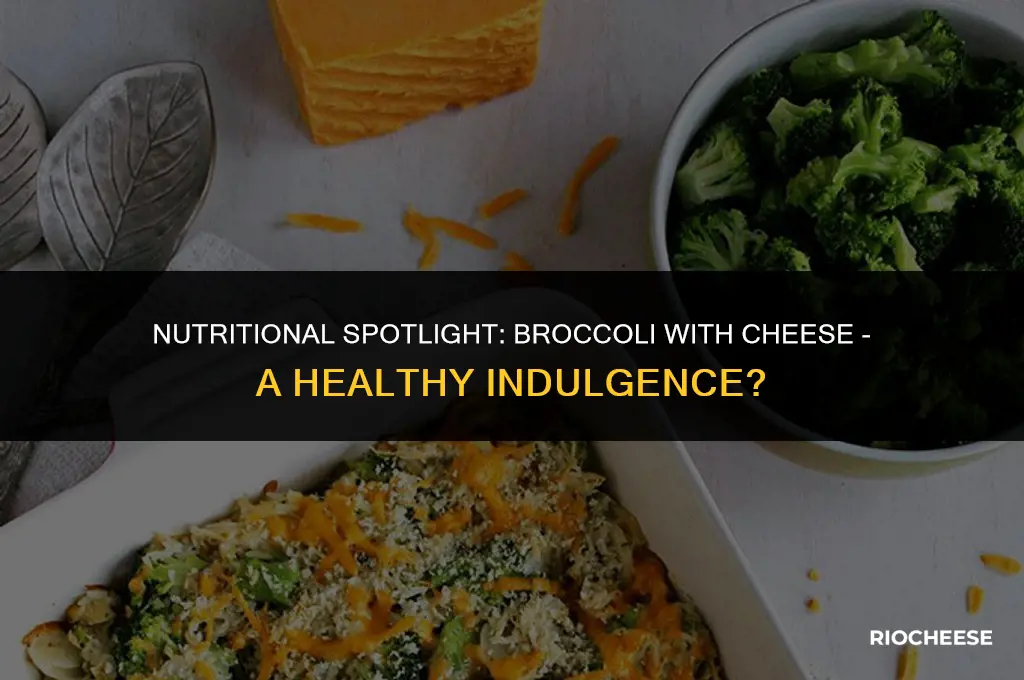
Broccoli with cheese is a popular dish that combines the nutritional benefits of broccoli with the rich flavor of cheese. Broccoli is a cruciferous vegetable that is high in vitamins C and K, fiber, and antioxidants, which can help support a healthy immune system and reduce inflammation. Cheese, on the other hand, is a good source of protein, calcium, and vitamin B12, which are essential for strong bones and teeth. However, cheese can also be high in saturated fat and calories, which can contribute to weight gain and other health problems if consumed in excess. So, is broccoli with cheese healthy? The answer depends on the amount of cheese used and the overall balance of the dish. When consumed in moderation, broccoli with cheese can be a nutritious and delicious addition to a balanced diet.
Explore related products



What You'll Learn
- Nutritional Benefits: Broccoli is rich in vitamins C and K, fiber, and antioxidants, while cheese provides calcium and protein
- Calorie Content: The combination can be calorie-dense due to cheese's fat content, so portion control is essential
- Fat Composition: Cheese contains saturated fats, which should be consumed in moderation, balanced by broccoli's low-fat profile
- Micronutrient Synergy: The pairing offers a mix of essential micronutrients, supporting overall health and immune function
- Potential Additives: Some cheese products may contain additives or preservatives, which could impact the dish's overall healthiness

Nutritional Benefits: Broccoli is rich in vitamins C and K, fiber, and antioxidants, while cheese provides calcium and protein
Broccoli is a cruciferous vegetable that stands out for its impressive nutrient profile. It is an excellent source of vitamins C and K, providing over 100% of the daily value for these essential nutrients in just one cup. Vitamin C is crucial for immune function and skin health, while vitamin K plays a vital role in blood clotting and bone health. Additionally, broccoli is rich in dietary fiber, which aids in digestion and helps maintain healthy blood sugar levels. The antioxidants found in broccoli, such as sulforaphane, have been shown to have anti-inflammatory and anti-cancer properties, further enhancing its health benefits.
Cheese, on the other hand, is a dairy product that is high in calcium and protein. Calcium is essential for strong bones and teeth, and it also plays a role in muscle function and nerve transmission. Protein is a macronutrient that is necessary for building and repairing tissues in the body. Cheese also contains vitamins A, B12, and riboflavin, as well as minerals like phosphorus and zinc. However, it is important to note that cheese can be high in saturated fat and sodium, so it should be consumed in moderation as part of a balanced diet.
Combining broccoli with cheese can create a delicious and nutritious dish. The creamy texture and rich flavor of cheese can complement the slightly bitter taste of broccoli, making it more palatable for those who may not enjoy the vegetable on its own. This combination can be particularly appealing to children or picky eaters, encouraging them to consume more vegetables. Additionally, the protein and calcium from the cheese can help to balance out the meal, making it a more satisfying and filling option.
When preparing broccoli with cheese, it is important to consider the cooking method and the type of cheese used. Steaming or lightly sautéing the broccoli can help to preserve its nutrients, while overcooking can lead to a loss of vitamins and minerals. As for the cheese, choosing a lower-fat option like part-skim mozzarella or reduced-fat cheddar can help to keep the calorie and saturated fat content in check. Alternatively, using a small amount of a stronger-flavored cheese like blue cheese or feta can add a burst of flavor without adding too much fat.
In conclusion, broccoli with cheese can be a healthy and delicious addition to a balanced diet. By combining the nutrient-dense properties of broccoli with the protein and calcium-rich qualities of cheese, this dish can provide a variety of essential nutrients while also being enjoyable to eat. As with any meal, it is important to consider portion sizes and cooking methods to ensure that the dish remains nutritious and balanced.
Exploring the Nutritional Benefits of Gruyère Cheese: A Tasty and Healthy Choice?
You may want to see also
Explore related products


Calorie Content: The combination can be calorie-dense due to cheese's fat content, so portion control is essential
The combination of broccoli and cheese can indeed be calorie-dense, primarily due to the high fat content found in many types of cheese. This means that while the dish may be nutritious, it's also important to be mindful of portion sizes to avoid excessive calorie intake. For individuals watching their weight or managing their caloric intake, it's essential to balance the consumption of this dish with other lower-calorie foods throughout the day.
One way to manage the calorie content of broccoli with cheese is to choose lower-fat cheese options. For example, using part-skim mozzarella or reduced-fat cheddar can significantly lower the overall calorie count without sacrificing too much flavor. Additionally, incorporating more vegetables into the dish, such as adding sliced bell peppers or mushrooms, can increase the volume and nutrient density while keeping the calorie content in check.
Another strategy is to control the amount of cheese used. Instead of smothering the broccoli in cheese, consider using it as a garnish or mixing it in sparingly. This approach allows you to enjoy the flavor of the cheese while keeping the calorie content lower. You can also experiment with different cooking methods, such as steaming or roasting the broccoli, to enhance its natural flavors and reduce the need for additional cheese.
It's also important to consider the overall nutritional profile of the dish. While cheese can be high in calories and fat, it also provides valuable nutrients such as protein, calcium, and vitamins. Broccoli, on the other hand, is low in calories and rich in fiber, vitamins, and minerals. By combining these two ingredients in moderation, you can create a balanced and satisfying meal that offers a range of health benefits.
In summary, while broccoli with cheese can be a calorie-dense dish, there are several ways to manage its calorie content without sacrificing taste or nutrition. By choosing lower-fat cheese options, controlling portion sizes, incorporating more vegetables, and using different cooking methods, you can enjoy this delicious combination as part of a healthy and balanced diet.
Exploring the Nutritional Benefits of Dubliner Cheese: A Healthy Choice?
You may want to see also
Explore related products


Fat Composition: Cheese contains saturated fats, which should be consumed in moderation, balanced by broccoli's low-fat profile
Cheese is a dairy product known for its rich flavor and versatility in various dishes. However, it is also high in saturated fats, which have been linked to increased levels of LDL cholesterol and a higher risk of heart disease when consumed in excess. The American Heart Association recommends limiting saturated fat intake to less than 6% of total daily calories.
Broccoli, on the other hand, is a cruciferous vegetable that is low in fat and calories but high in fiber, vitamins, and minerals. It is an excellent source of vitamin C, vitamin K, and folate, and also contains compounds that have been shown to have anti-inflammatory and anti-cancer properties.
When combining cheese and broccoli in a dish, it is important to consider the overall fat composition of the meal. While cheese can add flavor and texture to broccoli, it is essential to use it in moderation to avoid excessive saturated fat intake. A balanced approach would be to use a small amount of cheese as a topping or mixed into the broccoli, rather than as the main component of the dish.
One way to enjoy broccoli with cheese in a healthier manner is to use a lower-fat cheese option, such as part-skim mozzarella or reduced-fat cheddar. Another alternative is to use a cheese substitute made from plant-based ingredients, which can provide a similar flavor profile without the saturated fat content.
In conclusion, while cheese can be a delicious addition to broccoli, it is crucial to be mindful of portion sizes and choose lower-fat options to maintain a balanced and healthy diet. By doing so, you can enjoy the benefits of both cheese and broccoli without compromising your overall health goals.
Nutritional Harmony: Unpacking the Health Benefits of Turkey and Cheese
You may want to see also
Explore related products




Micronutrient Synergy: The pairing offers a mix of essential micronutrients, supporting overall health and immune function
Broccoli and cheese, when paired, offer a remarkable synergy of micronutrients that can significantly boost overall health and immune function. This combination is particularly noteworthy for its ability to provide a balanced mix of vitamins, minerals, and other essential compounds that the body needs to function optimally.
One of the key benefits of this pairing lies in the complementary nature of the nutrients found in broccoli and cheese. Broccoli is rich in vitamins C and K, as well as fiber and various antioxidants. Cheese, on the other hand, is an excellent source of calcium, vitamin B12, and protein. When consumed together, these nutrients can work in harmony to support a wide range of bodily functions.
For instance, the vitamin C in broccoli can help to enhance the absorption of calcium from cheese, which is crucial for maintaining strong bones and teeth. Additionally, the fiber in broccoli can aid in digestion and help to regulate blood sugar levels, while the protein in cheese can provide a sustained source of energy and support muscle growth and repair.
Furthermore, the antioxidants found in broccoli can help to protect the body against oxidative stress and inflammation, which are known to play a role in the development of chronic diseases. The vitamin B12 in cheese is essential for the production of red blood cells and the maintenance of a healthy nervous system.
In conclusion, the pairing of broccoli and cheese is a simple yet powerful way to support overall health and immune function. By combining these two nutrient-dense foods, individuals can enjoy a delicious and satisfying snack or meal that provides a wide range of essential micronutrients.
Exploring the Nutritional Benefits of Manchego Cheese
You may want to see also
Explore related products


Potential Additives: Some cheese products may contain additives or preservatives, which could impact the dish's overall healthiness
Cheese, while a delicious and popular ingredient, can sometimes contain additives or preservatives that may affect the healthiness of a dish. When considering the nutritional value of broccoli with cheese, it's essential to be aware of these potential additions. Some common additives found in cheese products include sodium nitrate, sodium phosphate, and carrageenan. These substances are used to enhance flavor, texture, or shelf life but can have negative health impacts if consumed in excess.
Sodium nitrate, for instance, has been linked to an increased risk of heart disease and certain types of cancer. Sodium phosphate can lead to kidney damage and bone loss over time. Carrageenan, a seaweed-derived additive, has been associated with gastrointestinal inflammation and other digestive issues. To minimize the intake of these additives, it's advisable to choose cheese products that are labeled as "additive-free" or "preservative-free."
Another consideration is the type of cheese used in the dish. Some cheeses, like processed American cheese or cheese spreads, are more likely to contain additives than others. Opting for natural, minimally processed cheeses such as cheddar, mozzarella, or feta can help reduce the additive content of the meal. Additionally, using cheese in moderation and balancing it with other nutrient-dense ingredients can further enhance the health benefits of the dish.
In conclusion, while broccoli with cheese can be a healthy and nutritious meal, it's crucial to be mindful of the potential additives in cheese products. By choosing additive-free cheese options and using cheese in moderation, one can enjoy this dish while minimizing any negative health impacts.
Exploring the Nutritional Benefits of Monterey Jack Cheese
You may want to see also
Frequently asked questions
Broccoli with cheese can be a healthy meal option when consumed in moderation. Broccoli is a nutrient-dense vegetable, rich in vitamins, minerals, and fiber. Cheese, while high in fat and calories, also provides protein and calcium. The key is to balance the portion sizes to manage calorie intake.
Broccoli is an excellent source of vitamins C and K, folate, potassium, and fiber. It also contains antioxidants and phytochemicals that may help reduce the risk of chronic diseases such as heart disease and certain cancers.
Adding cheese to broccoli increases the calorie, fat, and protein content of the dish. While cheese can enhance the flavor and make the dish more satisfying, it's important to choose a cheese that is lower in fat and sodium to maintain the overall health benefits of the meal.
To make broccoli with cheese healthier, consider using a lower-fat cheese such as part-skim mozzarella or reduced-fat cheddar. You can also use a smaller amount of cheese or mix it with a healthier alternative like Greek yogurt or cottage cheese. Additionally, steaming or roasting the broccoli instead of boiling can help retain more of its nutrients.


