Bushra Griffith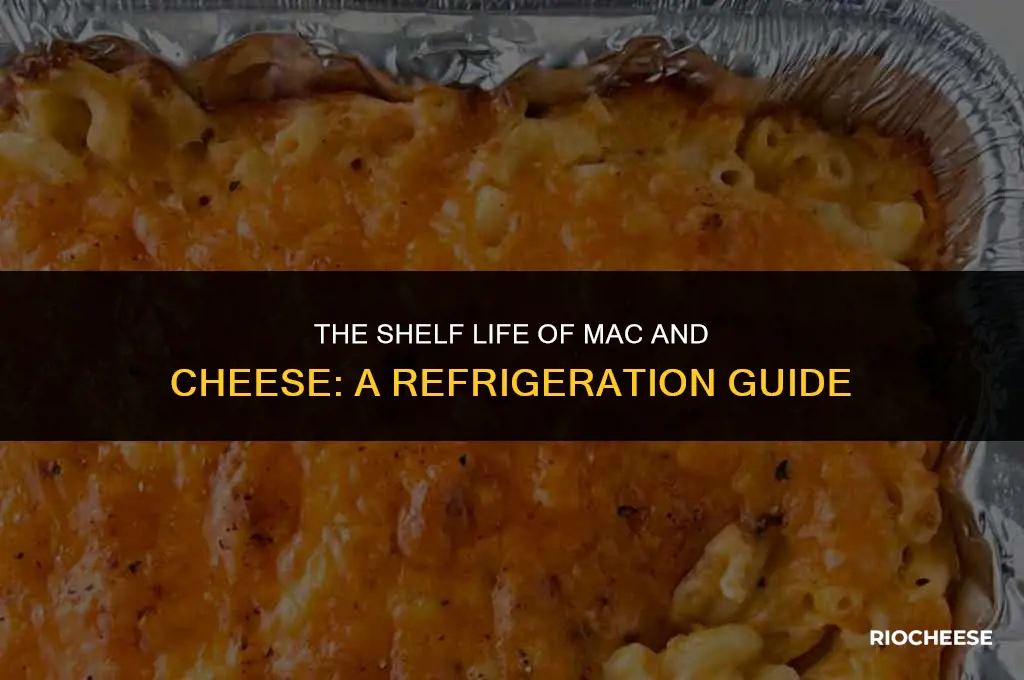
Macaroni and cheese, a beloved comfort food, is a staple in many households. When it comes to leftovers, a common question arises: how long does mac and cheese last in the refrigerator? Proper storage is crucial to ensure food safety and maintain the dish's quality. In general, mac and cheese can be safely stored in the refrigerator for 3 to 5 days. However, this timeframe can vary depending on factors such as the ingredients used, the cooking method, and the storage conditions. It's essential to store the mac and cheese in an airtight container to prevent contamination and spoilage. Additionally, reheating the dish properly is important to avoid foodborne illnesses. Understanding these guidelines can help you enjoy your mac and cheese leftovers safely and deliciously.
Explore related products


What You'll Learn
- Storage Guidelines: Optimal conditions for storing mac and cheese to maintain freshness and prevent spoilage
- Expiration Dates: Understanding the typical shelf life of mac and cheese in the fridge and signs of spoilage
- Reheating Methods: Best practices for reheating refrigerated mac and cheese to ensure even heating and texture retention
- Freezing Instructions: How to properly freeze mac and cheese for longer storage, including container recommendations and thawing techniques
- Food Safety Tips: Important guidelines to follow when handling and consuming mac and cheese to avoid foodborne illnesses

Storage Guidelines: Optimal conditions for storing mac and cheese to maintain freshness and prevent spoilage
To maintain the freshness and prevent spoilage of mac and cheese, it's crucial to store it under optimal conditions. The ideal storage environment for mac and cheese is a refrigerator with a consistent temperature below 40°F (4°C). This temperature range inhibits the growth of harmful bacteria, ensuring that your mac and cheese remains safe to eat for a longer period.
When storing mac and cheese, it's important to use airtight containers to prevent air and moisture from entering, which can lead to spoilage. Glass or plastic containers with tight-fitting lids are excellent choices. If you're using plastic wrap or aluminum foil, ensure that it's wrapped tightly around the dish to create a seal. Additionally, consider dividing the mac and cheese into smaller portions before storing, as this will allow you to reheat only what you need, reducing the risk of contamination and waste.
Labeling your containers with the date of storage is a helpful practice, as it allows you to keep track of how long the mac and cheese has been in the refrigerator. Generally, cooked mac and cheese can be stored in the refrigerator for 3 to 5 days. However, if you notice any signs of spoilage, such as an off smell, discoloration, or the presence of mold, it's best to discard the dish immediately, regardless of the storage duration.
Freezing is another option for storing mac and cheese, especially if you want to keep it for a longer period. To freeze mac and cheese, allow it to cool completely, then transfer it to a freezer-safe container or wrap it tightly in plastic wrap or aluminum foil. When reheating frozen mac and cheese, thaw it in the refrigerator overnight and then reheat it in the oven or on the stovetop, stirring occasionally to ensure even heating.
In summary, proper storage of mac and cheese involves using airtight containers, maintaining a refrigerator temperature below 40°F (4°C), and consuming the dish within 3 to 5 days. Freezing is an alternative for longer storage, with careful attention to thawing and reheating procedures to maintain quality and safety.
Dairy-Free Delight: Baked Mac and Cheese Without Milk
You may want to see also
Explore related products


Expiration Dates: Understanding the typical shelf life of mac and cheese in the fridge and signs of spoilage
Mac and cheese, a beloved comfort food, has a typical shelf life of 3 to 5 days when stored in the refrigerator. This timeframe assumes that the dish was properly cooled before being placed in the fridge and that it has been stored in an airtight container to prevent contamination and drying out. It's crucial to note that this is a general guideline, and the actual shelf life can vary based on factors such as the ingredients used, the cooking method, and the storage conditions.
To determine if mac and cheese has spoiled, look for signs such as an off odor, discoloration, or the presence of mold. If the dish has been left out at room temperature for more than 2 hours, it's best to discard it to avoid the risk of foodborne illness. Additionally, if the mac and cheese appears dry or has a skin on top, it may have been stored for too long and should be thrown away.
When reheating mac and cheese, ensure that it reaches an internal temperature of 165°F (74°C) to kill any bacteria that may have grown during storage. This can be done in the microwave, oven, or on the stovetop, but be sure to stir the dish frequently to ensure even heating. If the mac and cheese has been frozen, thaw it in the refrigerator overnight before reheating.
To extend the shelf life of mac and cheese, consider adding a small amount of heavy cream or milk when reheating, which can help to restore its creamy texture and prevent it from drying out. Additionally, storing the dish in a shallow container can help it cool more quickly and evenly, reducing the risk of bacterial growth.
In summary, understanding the typical shelf life of mac and cheese in the fridge and recognizing the signs of spoilage is essential for ensuring food safety and quality. By following proper storage and reheating guidelines, you can enjoy this comforting dish while minimizing the risk of foodborne illness.
Shelf Life Secrets: How Long Does Mac and Cheese Last?
You may want to see also
Explore related products


Reheating Methods: Best practices for reheating refrigerated mac and cheese to ensure even heating and texture retention
To reheat refrigerated mac and cheese effectively, it's crucial to focus on two main aspects: even heating and texture retention. The best method to achieve this is by using a combination of stovetop and oven reheating. First, transfer the mac and cheese from the refrigerator to a saucepan and gently warm it over medium heat, stirring occasionally to ensure even heating. This step helps to bring the temperature up gradually without overheating or drying out the pasta.
Once the mac and cheese is warmed through, transfer it to an oven-safe dish and cover it loosely with aluminum foil. Preheat your oven to 350°F (175°C) and place the dish inside. Bake for about 15-20 minutes, or until the mac and cheese is heated through and the top is slightly crispy. The oven step helps to restore the creamy texture and ensures that the cheese is melted and gooey, just like when it was first made.
It's important to avoid using a microwave to reheat mac and cheese, as this can lead to uneven heating and a rubbery texture. Additionally, be cautious not to overheat the mac and cheese, as this can cause the cheese to separate and the pasta to become mushy. By following these best practices, you can enjoy your refrigerated mac and cheese as if it were freshly made, with a creamy texture and rich flavor.
Exploring the Grain Debate: Is Mac and Cheese a Grain?
You may want to see also
Explore related products


Freezing Instructions: How to properly freeze mac and cheese for longer storage, including container recommendations and thawing techniques
To properly freeze mac and cheese for longer storage, it's essential to follow specific instructions to maintain its quality and texture. First, allow the mac and cheese to cool completely to room temperature. This step is crucial as freezing hot food can lead to uneven freezing and potentially affect the consistency of the dish. Once cooled, transfer the mac and cheese to an airtight container or freezer-safe bag. If using a container, make sure it's labeled and dated for easy identification.
When it comes to thawing frozen mac and cheese, there are a few methods you can use. The safest method is to thaw it in the refrigerator overnight. This allows the dish to thaw slowly and evenly, reducing the risk of bacterial growth. If you're short on time, you can also thaw the mac and cheese in cold water, changing the water every 30 minutes. However, this method requires more attention and should be done just before reheating.
It's important to note that the quality of the mac and cheese may change slightly after freezing and thawing. The texture might become a bit softer, and the flavors may not be as vibrant. To combat this, you can add a bit of milk or cream when reheating to help restore the creamy consistency. Additionally, consider adding some fresh herbs or spices to enhance the flavor.
In terms of container recommendations, opt for glass or BPA-free plastic containers. These materials are more durable and less likely to absorb odors or flavors from the mac and cheese. If using freezer-safe bags, make sure to remove as much air as possible before sealing to prevent freezer burn.
Remember, proper freezing and thawing techniques are essential for maintaining the safety and quality of the mac and cheese. Always follow food safety guidelines and use your best judgment when determining the freshness of the dish.
Mac and Cheese: A Surprising Ally in Your Weight Loss Journey?
You may want to see also
Explore related products


Food Safety Tips: Important guidelines to follow when handling and consuming mac and cheese to avoid foodborne illnesses
Mac and cheese, a beloved comfort food, can pose food safety risks if not handled properly. To prevent foodborne illnesses, it's crucial to follow specific guidelines when preparing, storing, and consuming this dish. Here are some essential food safety tips to keep in mind:
Firstly, always cook mac and cheese to the correct internal temperature. Use a food thermometer to ensure it reaches at least 165°F (74°C) throughout. This temperature kills harmful bacteria that can cause illness. When reheating leftovers, make sure to heat them to the same temperature to maintain safety.
Secondly, store mac and cheese promptly after cooking. If left at room temperature for more than two hours, bacteria can grow rapidly, increasing the risk of foodborne illness. Transfer the cooked mac and cheese to a shallow container and refrigerate it within two hours of cooking. For optimal safety, consume refrigerated leftovers within three to four days.
Thirdly, be cautious when freezing mac and cheese. While it can be frozen for longer storage, the texture and quality may change. If you do freeze it, make sure to cool it completely first, then transfer it to an airtight container or freezer bag. Label and date the container, and consume the frozen mac and cheese within two to three months for best quality and safety.
Fourthly, always use clean utensils and surfaces when handling mac and cheese. Wash your hands thoroughly before and after preparing the dish, and make sure all cutting boards, bowls, and utensils are cleaned and sanitized. This prevents cross-contamination and reduces the risk of illness.
Lastly, be aware of potential allergens in mac and cheese. Common allergens include milk, cheese, and wheat (from the pasta). If you have food allergies, check the ingredient list carefully and consider using alternative ingredients or purchasing a pre-made, allergen-friendly version.
By following these food safety tips, you can enjoy mac and cheese while minimizing the risk of foodborne illnesses. Remember, proper handling and storage are key to ensuring this comfort food remains safe and delicious.
The Scoop on Stale Mac and Cheese: Safe or Sorry?
You may want to see also
Frequently asked questions
Mac and cheese can last 3 to 5 days in the refrigerator when stored properly in an airtight container.
To extend the shelf life of mac and cheese, it should be cooled to room temperature before being transferred to an airtight container. It's best to store it in the main section of the refrigerator rather than the door, as the temperature is more consistent there.
Yes, mac and cheese can be frozen. When stored in an airtight container or freezer bag, it can last up to 3 months in the freezer. Thaw it in the refrigerator overnight before reheating.