Frederic Melton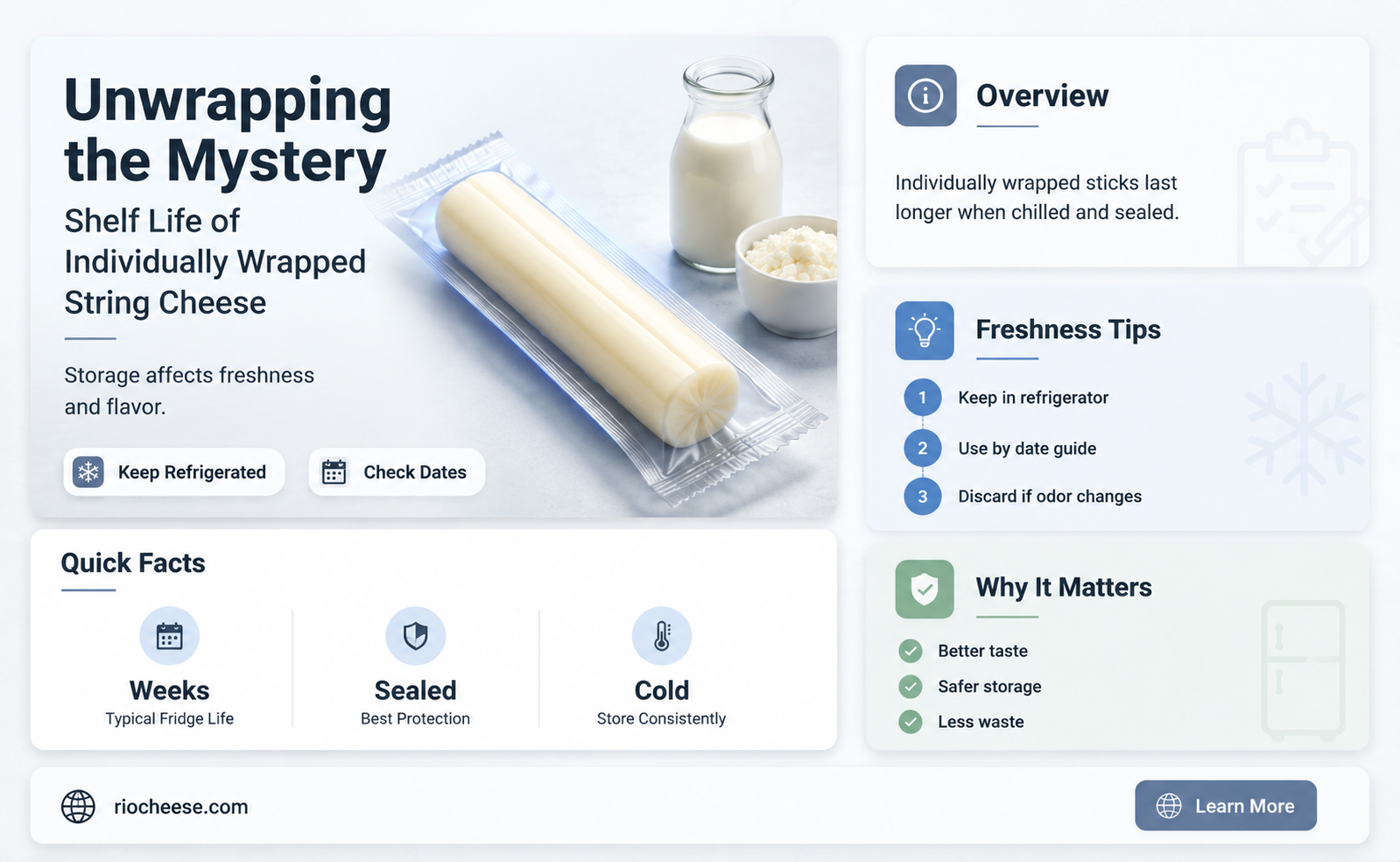
Individually wrapped string cheese is a popular snack known for its convenience and portability. When it comes to its shelf life, several factors can influence how long it lasts. Typically, unopened and properly stored string cheese can last anywhere from 3 to 6 months past its sell-by date. However, once opened, it's best consumed within a week to ensure optimal freshness and flavor. It's important to store string cheese in the refrigerator at a consistent temperature below 40°F (4°C) to prevent bacterial growth and spoilage. Additionally, checking the packaging for any specific storage instructions or expiration dates is crucial to ensure you're getting the most out of your string cheese.
Explore related products



What You'll Learn
- Storage Conditions: Proper storage methods to extend the shelf life of individually wrapped string cheese
- Expiration Dates: Understanding and interpreting expiration dates on string cheese packaging
- Opened vs. Unopened: Shelf life differences between opened and unopened individually wrapped string cheese
- Temperature Effects: How temperature fluctuations impact the longevity of string cheese
- Preservation Tips: Practical tips for preserving the quality and freshness of string cheese

Storage Conditions: Proper storage methods to extend the shelf life of individually wrapped string cheese
To maximize the shelf life of individually wrapped string cheese, it is crucial to adhere to specific storage conditions. The ideal temperature range for storing string cheese is between 35°F and 40°F (1.6°C and 4.4°C). This temperature range helps to slow down the growth of bacteria and mold, which can spoil the cheese. It is important to note that string cheese should never be stored at room temperature, as this can lead to rapid spoilage.
In addition to maintaining the proper temperature, it is also essential to store string cheese in a dry environment. Excess moisture can promote the growth of mold and bacteria, which can compromise the quality and safety of the cheese. If you notice any condensation inside the packaging, it is best to remove the cheese and place it in a dry container or wrap it in a clean, dry cloth before returning it to the refrigerator.
Another key factor in extending the shelf life of string cheese is to minimize its exposure to air. Air can cause the cheese to dry out and become less palatable. To prevent this, it is best to store string cheese in its original packaging or in an airtight container. If you have opened the packaging, you can use plastic wrap or aluminum foil to cover the cheese before placing it back in the refrigerator.
It is also important to avoid storing string cheese near strong-smelling foods, as it can absorb odors from its surroundings. This can affect the taste and quality of the cheese. Instead, store string cheese in a separate compartment or drawer in the refrigerator to minimize its exposure to other foods.
By following these storage guidelines, you can help to extend the shelf life of individually wrapped string cheese and ensure that it remains fresh and safe to consume for as long as possible.
The Shelf Life of Havarti Cheese: A Comprehensive Guide
You may want to see also
Explore related products


Expiration Dates: Understanding and interpreting expiration dates on string cheese packaging
String cheese, a popular snack among both children and adults, often comes with expiration dates that can be confusing to interpret. These dates are crucial for ensuring the product's safety and quality, but they can vary depending on the brand, packaging, and storage conditions. Understanding these expiration dates is essential for consumers to make informed decisions about the freshness and safety of their string cheese.
Expiration dates on string cheese packaging typically indicate the last date the product is expected to maintain its optimal quality and safety when stored properly. However, these dates are not always straightforward. Some packages may display a "best by" date, which suggests the product will be at its best quality up to that date but may still be safe to consume after. Others might show a "sell by" date, which is more of a guideline for retailers on how long to keep the product on the shelves.
To interpret these dates accurately, consumers should first check the packaging for any specific storage instructions. String cheese often requires refrigeration to maintain its freshness, and the expiration date assumes that the product has been stored at the correct temperature. If the cheese has been left at room temperature for an extended period, its shelf life may be significantly reduced, regardless of the expiration date.
Additionally, it's important to consider the packaging type. Individually wrapped string cheese typically has a longer shelf life than unwrapped or bulk varieties because the individual packaging helps protect the cheese from contaminants and moisture. When examining the expiration date, consumers should also look for any signs of tampering or damage to the packaging, as this could compromise the product's safety.
In conclusion, understanding and interpreting expiration dates on string cheese packaging is key to ensuring that consumers enjoy a safe and high-quality product. By paying attention to the specific dates, storage instructions, and packaging conditions, individuals can make informed decisions about the freshness and safety of their string cheese, ultimately reducing food waste and potential health risks.
Savoring Pecorino Romano: A Guide to Its Shelf Life and Storage Tips
You may want to see also
Explore related products




Opened vs. Unopened: Shelf life differences between opened and unopened individually wrapped string cheese
Individually wrapped string cheese is a convenient snack option, but its shelf life can vary significantly depending on whether it has been opened or not. Unopened packages of string cheese typically have a longer shelf life, as they are sealed and protected from external contaminants. On the other hand, opened packages are more susceptible to spoilage due to exposure to air, moisture, and potential bacterial contamination.
The shelf life of unopened string cheese can range from 6 to 8 weeks when stored properly in the refrigerator. It is essential to keep the cheese in its original packaging and store it at a consistent temperature below 40°F (4°C) to maintain its freshness and prevent the growth of harmful bacteria. In contrast, opened string cheese should be consumed within 5 to 7 days to ensure optimal taste and safety. Once opened, it is crucial to rewrap the cheese tightly in plastic wrap or aluminum foil and store it in the refrigerator to minimize exposure to air and moisture.
Several factors can influence the shelf life of string cheese, including the type of cheese, the packaging material, and the storage conditions. For instance, some varieties of string cheese, such as those made from mozzarella or provolone, may have a longer shelf life than others due to their lower moisture content and higher acidity. Additionally, the type of packaging used can impact the shelf life, as some materials may provide better protection against oxygen and moisture than others.
To maximize the shelf life of string cheese, it is essential to follow proper storage guidelines and pay attention to any signs of spoilage. If the cheese develops an off odor, mold, or slimy texture, it should be discarded immediately to avoid potential health risks. By understanding the differences in shelf life between opened and unopened string cheese and following appropriate storage practices, consumers can enjoy this tasty snack while minimizing waste and ensuring food safety.
The Shelf Life of Unopened Boursin Cheese: A Comprehensive Guide
You may want to see also
Explore related products
![Low Moisture Part-Skim Mozzarella String Cheese , Each individually wrapped stick offers a delicious, convenient way to get your daily dose of dairy, made from part-skim milk for a satisfying and wholesome treat. Ideal for lunchboxes, on-the-go snacking, or a protein-packed addition to your favorite meals [ 32 oz , 2 lb ]](https://m.media-amazon.com/images/I/51CnFOHJspL._AC_UL320_.jpg)



Temperature Effects: How temperature fluctuations impact the longevity of string cheese
Temperature plays a crucial role in determining the shelf life of individually wrapped string cheese. The ideal storage temperature for string cheese is between 35°F and 40°F (1.6°C and 4.4°C). At this temperature range, the cheese remains fresh and retains its quality for the longest period. However, temperature fluctuations can significantly impact the longevity of string cheese.
When string cheese is exposed to temperatures above 40°F (4.4°C), the growth of bacteria accelerates, leading to a faster spoilage rate. This is because higher temperatures create a more favorable environment for bacterial growth, causing the cheese to become unsafe to consume more quickly. On the other hand, storing string cheese at temperatures below 35°F (1.6°C) can also have negative effects. Low temperatures can cause the cheese to become too firm and lose its characteristic stringy texture.
To maintain the quality and safety of individually wrapped string cheese, it is essential to store it in a refrigerator at a consistent temperature within the recommended range. Avoid storing the cheese in areas of the refrigerator that are prone to temperature fluctuations, such as near the freezer compartment or in the door shelves. Additionally, it is crucial to keep the cheese in its original packaging until ready to consume, as the packaging helps to protect it from temperature changes and other environmental factors.
In summary, temperature fluctuations can have a significant impact on the longevity of individually wrapped string cheese. Storing the cheese at the recommended temperature range of 35°F to 40°F (1.6°C to 4.4°C) and avoiding temperature extremes will help to ensure that the cheese remains fresh, safe, and enjoyable for consumption.
The Shelf Life of Powdered Cheese: A Comprehensive Guide
You may want to see also
Explore related products


![Low Moisture Part-Skim Mozzarella String Cheese , Each individually wrapped stick offers a delicious, convenient way to get your daily dose of dairy, made from part-skim milk for a satisfying and wholesome treat. Ideal for lunchboxes, on-the-go snacking, or a protein-packed addition to your favorite meals [ 32 oz , 2 lb ]](https://m.media-amazon.com/images/I/515Cat0ZCHL._AC_UL320_.jpg)


Preservation Tips: Practical tips for preserving the quality and freshness of string cheese
To preserve the quality and freshness of string cheese, it's essential to understand the factors that affect its shelf life. String cheese, particularly when individually wrapped, can last longer than its unwrapped counterparts due to the protective barrier against air and contaminants. However, proper storage is key to maximizing its freshness.
One practical tip is to store string cheese in the refrigerator at a consistent temperature below 40°F (4°C). Fluctuations in temperature can lead to faster spoilage. It's also important to keep the cheese away from strong-smelling foods, as it can absorb odors easily. Using airtight containers or resealable plastic bags can further help in maintaining freshness by limiting exposure to air.
Another preservation method is to freeze string cheese for long-term storage. Freezing can extend its shelf life by several months. To freeze, wrap the cheese tightly in plastic wrap or aluminum foil to prevent freezer burn. When ready to use, thaw the cheese in the refrigerator overnight to avoid any texture changes that might occur from rapid thawing.
In addition to proper storage, handling string cheese with clean hands and utensils is crucial to prevent contamination. Always check the expiration date before consuming and discard any cheese that shows signs of spoilage, such as an off smell, slimy texture, or mold growth.
By following these preservation tips, you can enjoy string cheese at its best quality for a longer period, ensuring that it remains a delicious and convenient snack option.
Maximizing Shelf Life: The Longevity of High-Temperature Cheese
You may want to see also
Frequently asked questions
Individually wrapped string cheese typically lasts for 3 to 4 weeks when stored properly in the refrigerator.
Yes, you can freeze individually wrapped string cheese. When stored in the freezer, it can last for up to 2 months. However, the texture may change slightly upon thawing.
The best way to store individually wrapped string cheese is to keep it in the refrigerator at a temperature below 40°F (4°C). Make sure to store it in the original packaging or in an airtight container to prevent exposure to air and moisture.
If individually wrapped string cheese has gone bad, you may notice an off smell, discoloration, or mold growth. The cheese may also become slimy or develop a sour taste. If you suspect that the cheese has spoiled, it's best to discard it to avoid foodborne illness.


![Whole Milk Low Moisture Mozzarella String Cheese , This mozzarella string cheese is perfect for a quick, satisfying snack. Made with no artificial flavors or colors, these individually wrapped portable cheese snacks can be enjoyed anywhere, anytime. This string cheese is made with whole milk for an extra creamy texture. Each serving contains 90 calories and 7 grams of protein. [ 30 oz , 1.8 lb ] .. 30 ct.](https://m.media-amazon.com/images/I/61xcgIZeAxL._AC_UL320_.jpg)