Andy Montoya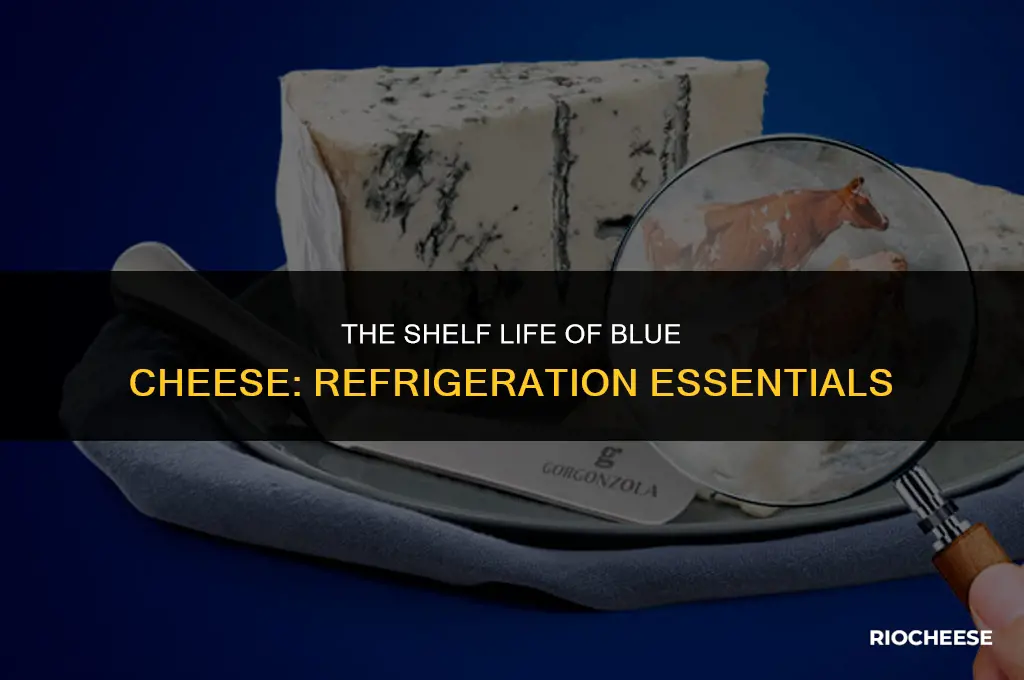
Blue cheese, known for its distinctive pungent smell and bold flavor, is a type of cheese that undergoes a natural aging process. This process involves the growth of mold cultures, which contribute to its unique taste and texture. When it comes to storage, blue cheese can indeed go bad if not kept properly. The ideal storage condition for blue cheese is in the refrigerator, where it should be wrapped tightly in plastic wrap or aluminum foil to prevent it from drying out or absorbing odors from other foods. While refrigeration can slow down the aging process, it's important to note that blue cheese will continue to age and eventually spoil. The shelf life of blue cheese in the fridge typically ranges from 3 to 6 weeks, depending on the specific type and how it's stored. After this period, the cheese may develop an off smell, slimy texture, or discoloration, indicating that it's no longer safe to consume.
Explore related products


$11.72 $16.99


What You'll Learn
- Storage Conditions: Optimal temperature and humidity levels for blue cheese in the fridge
- Shelf Life: Typical duration blue cheese remains fresh when refrigerated properly
- Signs of Spoilage: Indicators that blue cheese has gone bad, such as mold or odor
- Freezing Blue Cheese: Guidelines for freezing blue cheese to extend its shelf life
- Health Risks: Potential health hazards associated with consuming spoiled blue cheese

Storage Conditions: Optimal temperature and humidity levels for blue cheese in the fridge
Blue cheese, known for its distinctive pungent aroma and rich flavor, requires specific storage conditions to maintain its quality and prevent spoilage. The optimal temperature for storing blue cheese in the refrigerator is between 35°F and 38°F (1.6°C and 3.3°C). This temperature range helps to slow down the growth of bacteria and mold, which can cause the cheese to spoil. It is important to note that blue cheese should not be stored in the freezer, as freezing can cause the cheese to become crumbly and lose its flavor.
In addition to temperature, humidity plays a crucial role in the storage of blue cheese. The ideal humidity level for blue cheese is between 70% and 80%. This level of humidity helps to prevent the cheese from drying out, which can lead to a loss of flavor and texture. To maintain the proper humidity level, it is recommended to store blue cheese in a sealed container or wrap it tightly in plastic wrap. This will help to trap moisture and prevent the cheese from being exposed to dry air.
When storing blue cheese, it is also important to keep it away from other foods, as the strong aroma of the cheese can transfer to other items in the refrigerator. Additionally, blue cheese should be stored in the coldest part of the refrigerator, typically the bottom shelf, to ensure that it remains at a consistent temperature.
To further extend the shelf life of blue cheese, it is recommended to purchase cheese that is as fresh as possible and to consume it within a few weeks of purchase. If the cheese begins to show signs of spoilage, such as an off odor or discoloration, it should be discarded immediately.
In summary, proper storage conditions are essential for maintaining the quality and flavor of blue cheese. By keeping the cheese at the optimal temperature and humidity levels, and following the recommended storage practices, you can enjoy the rich taste of blue cheese for an extended period.
Exploring the Perfect Pairings for Blue Cheese: A Flavor Journey
You may want to see also
Explore related products




Shelf Life: Typical duration blue cheese remains fresh when refrigerated properly
Blue cheese, known for its distinctive pungent smell and sharp flavor, is a type of cheese that undergoes a natural aging process. When stored correctly in the refrigerator, blue cheese can maintain its freshness and quality for a specific period. Typically, blue cheese has a shelf life of about 4 to 6 weeks when refrigerated properly. This timeframe can vary depending on the specific type of blue cheese and the storage conditions.
To ensure that blue cheese remains fresh for as long as possible, it is important to store it in the refrigerator at a consistent temperature of around 40°F (4°C). The cheese should be wrapped tightly in plastic wrap or aluminum foil to prevent it from drying out or absorbing odors from other foods in the refrigerator. It is also recommended to store blue cheese in the crisper drawer, as this area provides a more humid environment that can help to maintain the cheese's texture and flavor.
Despite its relatively long shelf life when refrigerated, blue cheese can still go bad if not stored properly. Signs that blue cheese has gone bad include a strong, unpleasant odor, a slimy or moldy appearance, or a significant change in texture. If any of these signs are present, it is best to discard the cheese to avoid the risk of foodborne illness.
In addition to proper storage, it is also important to handle blue cheese carefully to prevent contamination. Always use clean utensils when cutting or serving blue cheese, and avoid cross-contaminating it with other foods. By following these guidelines, you can help to ensure that your blue cheese remains fresh and safe to eat for as long as possible.
In summary, blue cheese has a typical shelf life of 4 to 6 weeks when refrigerated properly. To maintain its freshness, it is important to store it at a consistent temperature, wrap it tightly, and keep it in the crisper drawer. By following these storage guidelines and handling the cheese carefully, you can enjoy its distinctive flavor and texture for an extended period.
Unveiling the Mystery: Humboldt Fog vs. Blue Cheese
You may want to see also
Explore related products


Signs of Spoilage: Indicators that blue cheese has gone bad, such as mold or odor
Blue cheese, known for its distinctive pungent smell and veined appearance, can indeed spoil, even when stored in the refrigerator. While the cold environment slows down the spoilage process, it doesn’t halt it entirely. The first and most obvious sign that blue cheese has gone bad is the presence of mold. Unlike the characteristic blue-green mold that gives blue cheese its name and flavor, spoilage mold can appear in various colors, including white, green, or black. These molds can grow on the surface of the cheese or penetrate deeper into it, compromising its quality and safety.
Another key indicator of spoilage is an off odor. While blue cheese naturally has a strong, pungent smell, a spoiled cheese will emit a more unpleasant, ammonia-like odor. This change in smell is often accompanied by a slimy or wet texture, which is a result of the cheese breaking down. If the cheese has been stored for an extended period, even if it’s within the recommended timeframe, it’s crucial to inspect it closely for these signs before consumption.
In addition to mold and odor, the appearance of the cheese can also provide clues about its freshness. Fresh blue cheese typically has a crumbly texture and a vibrant color. If the cheese appears dull, discolored, or has lost its crumbly texture, it may be past its prime. It’s also important to check the packaging for any signs of damage or leaks, as these can allow bacteria to enter and accelerate the spoilage process.
To prevent spoilage, it’s essential to store blue cheese properly. It should be wrapped tightly in plastic wrap or aluminum foil and placed in the coldest part of the refrigerator. It’s also advisable to consume the cheese within a few weeks of purchase, as its quality will start to decline after that. If you notice any signs of spoilage, it’s best to discard the cheese to avoid the risk of foodborne illness.
Discovering the Perfect Blue: A Cheese Lover's Quest
You may want to see also
Explore related products


Freezing Blue Cheese: Guidelines for freezing blue cheese to extend its shelf life
Blue cheese, known for its strong flavor and distinctive blue veins, is a type of cheese that can benefit from freezing to extend its shelf life. However, it's important to follow specific guidelines to ensure that the cheese retains its quality and flavor after thawing.
To freeze blue cheese, start by wrapping it tightly in plastic wrap or aluminum foil to prevent freezer burn and to keep out any air that could cause the cheese to dry out. If the cheese is already in a container, make sure it is airtight and suitable for freezing. It's also a good idea to label the container with the date of freezing so you can keep track of how long it has been stored.
When it comes to thawing frozen blue cheese, it's best to do so slowly in the refrigerator. This process can take several hours to a day, depending on the size of the cheese. Avoid thawing blue cheese at room temperature or in the microwave, as this can cause the cheese to become too soft and lose its texture.
One thing to note is that freezing can alter the texture of blue cheese, making it slightly crumblier than before. However, the flavor should remain intact if the cheese is frozen and thawed properly. It's also important to use frozen blue cheese within a reasonable timeframe, typically within 3 to 6 months, to ensure the best quality.
In summary, freezing blue cheese can be a useful way to extend its shelf life, but it's crucial to follow proper freezing and thawing techniques to maintain the cheese's quality and flavor. By wrapping the cheese tightly, labeling it with the freezing date, and thawing it slowly in the refrigerator, you can enjoy your blue cheese for a longer period while preserving its distinctive taste and texture.
Ken's Blue Cheese Dressing: Pasteurized or Not?
You may want to see also
Explore related products



Health Risks: Potential health hazards associated with consuming spoiled blue cheese
Consuming spoiled blue cheese can pose several health risks, primarily due to the growth of harmful bacteria and molds. One of the most significant concerns is the potential for foodborne illnesses caused by bacteria such as Salmonella, E. coli, and Listeria. These bacteria can multiply rapidly in the moist environment of spoiled cheese, leading to symptoms such as nausea, vomiting, diarrhea, and abdominal cramps. In severe cases, foodborne illnesses can result in hospitalization and even death, particularly in vulnerable populations such as the elderly, young children, and individuals with weakened immune systems.
In addition to bacterial contamination, spoiled blue cheese may also harbor harmful molds that can produce mycotoxins. Mycotoxins are toxic compounds that can cause a range of health problems, including allergic reactions, respiratory issues, and even cancer. Some common molds that can grow on spoiled blue cheese include Aspergillus, Penicillium, and Fusarium. These molds can produce mycotoxins such as aflatoxins, ochratoxins, and fumonisin, which can be dangerous if ingested in large quantities.
Another potential health hazard associated with consuming spoiled blue cheese is the risk of histamine poisoning. Histamine is a naturally occurring compound found in many foods, including cheese. However, when cheese spoils, histamine levels can increase significantly, leading to symptoms such as headaches, nausea, vomiting, and diarrhea. In severe cases, histamine poisoning can cause anaphylaxis, a life-threatening allergic reaction that requires immediate medical attention.
To minimize the risk of health problems associated with spoiled blue cheese, it is essential to store cheese properly and discard any cheese that shows signs of spoilage. Blue cheese should be stored in the refrigerator at a temperature of 40°F (4°C) or below. It should be wrapped tightly in plastic wrap or aluminum foil to prevent exposure to air and moisture. If blue cheese develops an off odor, mold, or slimy texture, it should be discarded immediately.
In conclusion, consuming spoiled blue cheese can pose significant health risks due to bacterial contamination, mold growth, and histamine poisoning. Proper storage and handling of blue cheese are crucial to prevent spoilage and ensure food safety. If in doubt about the quality of blue cheese, it is always best to err on the side of caution and discard it to avoid potential health hazards.
Exploring the Gluten-Free Status of Blue Cheese: A Comprehensive Guide
You may want to see also
Frequently asked questions
Blue cheese can go bad in the fridge if not stored properly. It's important to keep it in a sealed container or wrapped tightly in plastic wrap or aluminum foil to prevent it from drying out or absorbing odors from other foods.
If blue cheese has gone bad, it may develop an off smell, become overly dry or crumbly, or show signs of mold that are not part of its normal veining. It's best to discard any blue cheese that you suspect has spoiled.
Blue cheese can typically last for about 3 to 4 weeks in the fridge when stored properly. However, this can vary depending on the specific type of blue cheese and how it was stored before purchase.