Kamil Perry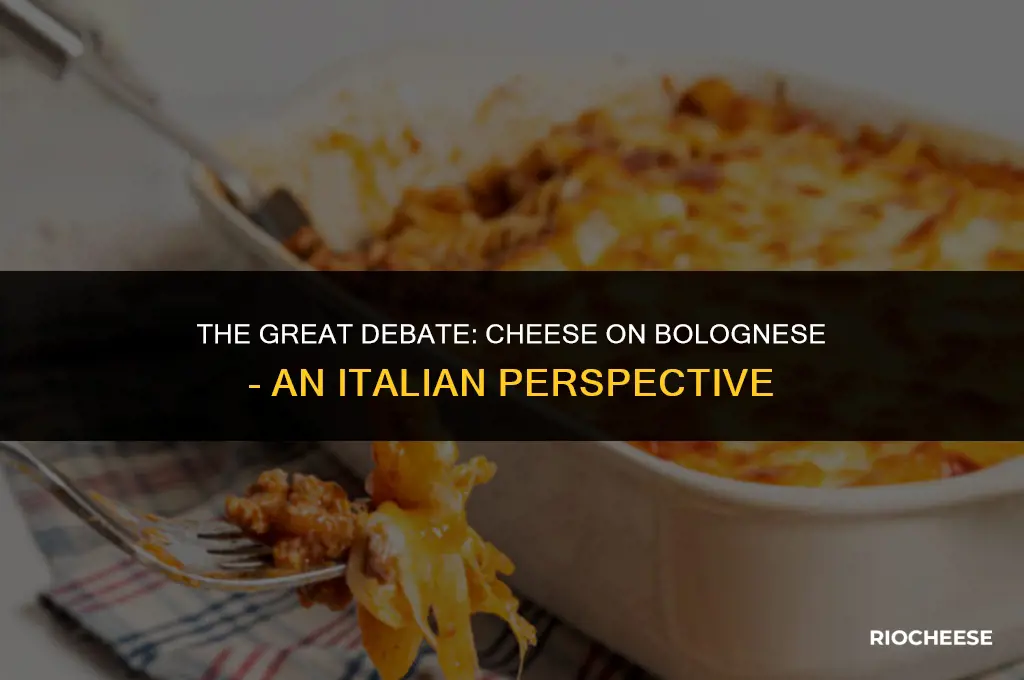
When it comes to the culinary traditions of Italy, the question of whether Italians put cheese on bolognese is a topic of some debate. Bolognese, a rich and hearty meat sauce originating from the city of Bologna, is traditionally served with tagliatelle pasta. While cheese is a beloved ingredient in many Italian dishes, its use in bolognese is not as straightforward. Some argue that adding cheese to bolognese is a sacrilege, as it detracts from the sauce's authentic flavors. Others, however, believe that a sprinkle of grated Parmesan or Pecorino can enhance the dish's taste profile. Ultimately, the decision to add cheese to bolognese comes down to personal preference and regional variations.
Explore related products



What You'll Learn
- Traditional Italian Cuisine: Bolognese sauce origins and typical ingredients used in authentic Italian cooking
- Cheese in Bolognese: Types of cheese commonly added to bolognese in Italy, if any
- Regional Variations: How bolognese recipes differ across various Italian regions regarding cheese usage
- Global Adaptations: Overview of how bolognese is adapted worldwide, including cheese preferences in different countries
- Nutritional Considerations: Analysis of the nutritional impact of adding cheese to bolognese sauce

Traditional Italian Cuisine: Bolognese sauce origins and typical ingredients used in authentic Italian cooking
Bolognese sauce, a cornerstone of Italian cuisine, has its roots in the city of Bologna, nestled in the heart of Italy's Emilia-Romagna region. This rich, meaty sauce is traditionally made with ground beef, though variations may include pork or a combination of meats. The sauce's depth of flavor is achieved through a slow-cooking process, allowing the ingredients to meld together harmoniously. Key components include onions, carrots, celery, tomatoes, and a soffritto—a flavorful base made by sautéing the vegetables in olive oil. Wine, often red, is added to deglaze the pan and infuse the sauce with additional complexity.
While cheese is a beloved ingredient in many Italian dishes, its role in Bolognese sauce is a subject of debate. In authentic Italian cooking, cheese is not typically mixed into the Bolognese sauce itself. Instead, grated Parmesan or other hard cheeses are often sprinkled on top of the finished dish, just before serving. This allows the cheese to add a salty, umami flavor without overpowering the delicate balance of the sauce. The cheese also provides a textural contrast, enhancing the overall dining experience.
The misconception that cheese is a primary ingredient in Bolognese sauce may stem from its widespread use in other Italian-American dishes, such as lasagna or spaghetti with meatballs. However, in traditional Italian cuisine, the focus is on allowing the natural flavors of the ingredients to shine through, with cheese serving as a complementary garnish rather than a dominant component.
In conclusion, while cheese may be present in Bolognese sauce served in some regions or restaurants, it is not a traditional ingredient in authentic Italian cooking. The emphasis is on creating a rich, flavorful sauce using quality ingredients and allowing the natural tastes to take center stage.
Perfecting Shepherd's Pie: The Optimal Moment for Cheese Addition
You may want to see also
Explore related products


Cheese in Bolognese: Types of cheese commonly added to bolognese in Italy, if any
In Italy, the addition of cheese to bolognese sauce is not a traditional practice. Bolognese, a meat-based tomato sauce originating from Bologna, is typically served with pasta such as tagliatelle or spaghetti. While cheese is a staple in Italian cuisine, it is not commonly mixed into the bolognese sauce itself. Instead, grated cheese, usually Parmigiano-Reggiano, is often sprinkled on top of the pasta just before serving. This allows the cheese to melt slightly from the heat of the sauce, adding a rich, salty flavor to the dish without altering the consistency of the sauce.
However, there are variations of bolognese sauce that include cheese, particularly in regions outside of Italy or in modern adaptations of the recipe. Some recipes might incorporate grated Parmesan or other hard cheeses into the sauce during cooking, which can enhance the depth of flavor. It's important to note that while these variations exist, they are not representative of the traditional Bolognese sauce as it is known in Italy.
The choice of cheese, if any, can significantly impact the taste and texture of the bolognese. Hard cheeses like Parmigiano-Reggiano are preferred for their ability to add a savory umami flavor without becoming too gooey. Softer cheeses, while not traditional, could potentially be used to create a creamier sauce, but this would be a departure from the classic recipe.
In summary, while cheese is not typically added to bolognese sauce in Italy, there are instances where grated hard cheeses are used as a topping or incorporated into the sauce in non-traditional recipes. The type of cheese used can greatly influence the final taste and texture of the dish.
The Truth About Cheese: Sawdust and Other Surprising Additives
You may want to see also
Explore related products


Regional Variations: How bolognese recipes differ across various Italian regions regarding cheese usage
In the heart of Italy, the Emilia-Romagna region is renowned for its classic bolognese sauce, which traditionally includes a generous sprinkling of freshly grated Parmigiano-Reggiano cheese. This hard, aged cheese adds a nutty, savory depth to the rich meat sauce, complementing the acidity of the tomatoes and the sweetness of the onions and carrots. However, as one travels across the Italian peninsula, regional variations in bolognese recipes emerge, each with its unique twist on cheese usage.
In the northern region of Lombardy, for instance, the bolognese sauce is often served with a side of creamy, soft cheese like mascarpone or ricotta, which adds a luxurious, velvety texture to the dish. In contrast, the southern region of Campania might incorporate a milder, fresher cheese such as mozzarella or provolone, which melts beautifully into the sauce, creating a gooey, stringy consistency that is highly prized by locals.
The island of Sicily offers yet another variation, with the use of pecorino siciliano, a sharp, salty sheep's milk cheese that adds a bold, pungent flavor to the bolognese. Meanwhile, in the coastal region of Liguria, the sauce is sometimes topped with a sprinkle of grated pecorino romano, which provides a bright, tangy contrast to the rich, meaty sauce.
These regional differences in cheese usage not only reflect the diverse culinary traditions of Italy but also highlight the creativity and adaptability of Italian cooks, who are always eager to experiment with new flavors and textures. Whether it's a hard, aged cheese like Parmigiano-Reggiano or a soft, creamy cheese like mascarpone, the addition of cheese to bolognese sauce is a testament to the enduring popularity of this beloved Italian dish.
Elevate Your Charcuterie: A Guide to Perfect Cheese Pairings
You may want to see also
Explore related products


Global Adaptations: Overview of how bolognese is adapted worldwide, including cheese preferences in different countries
Bolognese sauce, a quintessential Italian dish, has transcended its origins to become a global culinary phenomenon. As it has spread across different cultures, it has undergone various adaptations to suit local tastes and ingredients. One of the most notable variations is in the use of cheese, which differs significantly from country to country.
In Italy, the birthplace of bolognese, Parmigiano-Reggiano is the cheese of choice. This hard, aged cheese is grated over the sauce to add a nutty, savory flavor. However, in other parts of the world, different cheeses have become popular. For instance, in the United States, mozzarella is often used due to its mild flavor and excellent melting properties. In the United Kingdom, cheddar cheese is a common topping, adding a sharp, tangy taste to the dish.
The adaptation of bolognese sauce extends beyond cheese preferences. In some countries, the meat used in the sauce is varied. While traditional bolognese is made with ground beef, some regions use a combination of beef and pork, or even chicken or turkey. Vegetarians and vegans have also adapted the sauce, using plant-based proteins such as lentils, tempeh, or tofu.
Another aspect of global adaptation is the incorporation of local spices and herbs. In India, for example, bolognese sauce might be spiced with cumin, coriander, and turmeric, giving it a distinct flavor profile. In Mexico, chili powder and cumin are often added to create a spicier version of the sauce.
The serving style of bolognese also varies around the world. In Italy, it is typically served with tagliatelle pasta, but in other countries, it might be paired with spaghetti, penne, or even rice. Some regions also add additional toppings, such as olives, mushrooms, or bell peppers, to enhance the dish.
In conclusion, the global adaptations of bolognese sauce demonstrate how a traditional dish can evolve to suit different cultures and preferences. From cheese choices to meat alternatives and spice blends, each region puts its own unique spin on this classic sauce, making it a versatile and beloved dish worldwide.
The Cheesy Evolution: McDonald's Burgers Then and Now
You may want to see also
Explore related products


Nutritional Considerations: Analysis of the nutritional impact of adding cheese to bolognese sauce
Adding cheese to bolognese sauce can significantly alter its nutritional profile. Cheese is a calorie-dense food, high in fat and protein, which can increase the overall energy content of the dish. For instance, a 100-gram serving of grated Parmesan cheese contains approximately 431 calories, 28 grams of fat, and 40 grams of protein. When combined with the already rich and hearty bolognese sauce, the calorie and fat content can quickly escalate, making it a less suitable option for those monitoring their caloric intake or following a low-fat diet.
However, cheese also contributes valuable nutrients to the dish. It is an excellent source of calcium, which is essential for bone health, and provides vitamins A, B12, and riboflavin. These nutrients can enhance the nutritional value of bolognese sauce, particularly for individuals who may be deficient in these areas. For example, a serving of bolognese sauce with Parmesan cheese can provide up to 30% of the daily recommended intake of calcium for adults.
The type of cheese used can also influence the nutritional impact. Hard cheeses like Parmesan tend to be higher in fat and calories but also offer more concentrated amounts of protein and calcium. In contrast, softer cheeses like mozzarella may have lower fat content but also provide fewer nutrients per serving. Choosing a cheese that aligns with one's dietary needs and preferences can help balance the nutritional benefits and drawbacks of adding cheese to bolognese sauce.
Moreover, the portion size of cheese added to the sauce plays a crucial role in determining its nutritional effect. A small sprinkle of grated cheese can add flavor without significantly increasing the calorie count, while a generous handful can transform the dish into a more indulgent, high-calorie meal. Practicing portion control is key to enjoying the benefits of cheese while minimizing its potential negative impacts on the overall nutritional value of the bolognese sauce.
In conclusion, while adding cheese to bolognese sauce can enhance its flavor and provide valuable nutrients, it is essential to consider the type and amount of cheese used to manage the dish's nutritional profile effectively. By making informed choices, one can enjoy a delicious and nutritious meal that aligns with their dietary goals and preferences.
Perfecting Your Mac and Cheese: The Ideal Egg-to-Pasta Ratio
You may want to see also
Frequently asked questions
No, Italians do not traditionally put cheese on bolognese. Bolognese is a meat-based sauce from Bologna, Italy, typically served with pasta like tagliatelle. Cheese is not a standard ingredient in the sauce itself.
In Italy, it's more common to serve bolognese sauce with a side of grated Parmesan cheese, which diners can add to their pasta according to their preference. This allows individuals to control the amount of cheese and enjoy the sauce's authentic flavors.
This misconception might arise from the fact that many Italian dishes, such as lasagna and pizza, prominently feature cheese. Additionally, some non-traditional or international variations of bolognese sauce may include cheese, leading to confusion about the authentic Italian recipe.
Traditional bolognese sauce is made with ground beef, onions, carrots, celery, tomatoes, tomato paste, red wine, and a combination of herbs and spices, including bay leaves, oregano, and sometimes a pinch of nutmeg. Cheese is not included in the traditional recipe.