Kamil Perry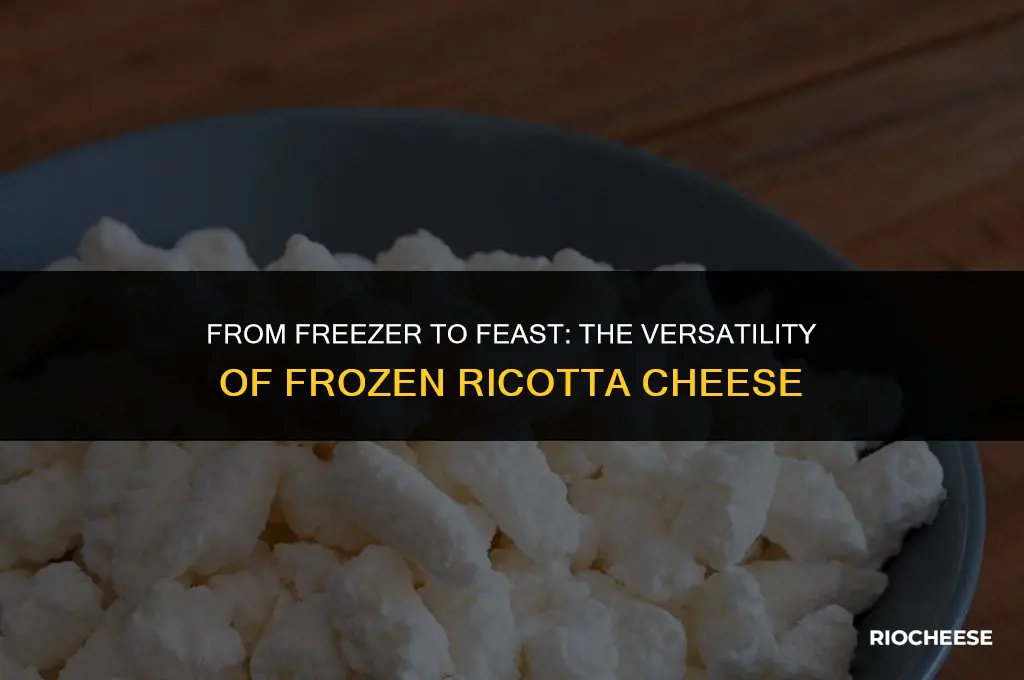
Frozen ricotta cheese is a versatile ingredient that can be used in a variety of dishes, from savory to sweet. While it's commonly used in Italian cuisine, particularly in dishes like lasagna and cannoli, frozen ricotta can also be a convenient substitute in recipes that call for fresh ricotta. When using frozen ricotta, it's important to thaw it properly to ensure the best texture and flavor. Simply place the frozen ricotta in the refrigerator overnight or thaw it in cold water for a few hours. Once thawed, you can use it in your favorite recipes, adding a rich and creamy element to your dishes.
Explore related products



What You'll Learn
- Thawing frozen ricotta: Best methods to safely thaw frozen ricotta cheese for optimal texture and taste
- Cooking with frozen ricotta: Incorporating frozen ricotta into recipes like lasagna, cannoli, and dips
- Substituting frozen ricotta: Using frozen ricotta as a substitute for fresh ricotta in various dishes
- Freezing ricotta cheese: Proper techniques for freezing fresh ricotta to extend its shelf life
- Nutritional value: Comparing the nutritional content of frozen versus fresh ricotta cheese

Thawing frozen ricotta: Best methods to safely thaw frozen ricotta cheese for optimal texture and taste
To safely thaw frozen ricotta cheese while preserving its optimal texture and taste, it's crucial to avoid exposing it to high temperatures or leaving it out at room temperature for extended periods. The best method involves transferring the frozen ricotta from the freezer to the refrigerator and allowing it to thaw slowly overnight. This gradual process ensures that the cheese retains its creamy consistency and mild flavor. If you're in a hurry, you can speed up the thawing process by placing the frozen ricotta in a sealed plastic bag and submerging it in cold water, changing the water every 30 minutes. However, this method should be used sparingly, as it can slightly alter the cheese's texture.
Another effective method is to use the defrost function on your microwave, but this requires careful monitoring to prevent the cheese from overheating. Place the frozen ricotta in a microwave-safe dish and cover it loosely with a damp paper towel. Defrost on low power for short intervals, checking the cheese's temperature and consistency frequently. Once thawed, it's essential to use the ricotta promptly or store it in the refrigerator for no more than a day or two to maintain its quality.
When thawing frozen ricotta, it's important to note that the cheese may release some liquid as it thaws. This is a natural occurrence and doesn't indicate spoilage. Simply drain the excess liquid before using the ricotta in your recipe. Additionally, frozen ricotta may not be suitable for all recipes, particularly those that require a very smooth or whipped texture. In such cases, it's best to use fresh ricotta cheese.
In summary, the key to successfully thawing frozen ricotta cheese lies in using gentle, gradual methods that preserve its delicate texture and flavor. By following these guidelines, you can safely incorporate frozen ricotta into your culinary creations without compromising on taste or quality.
Effortless Cheese Shredding: Food Processor Hacks Revealed
You may want to see also
Explore related products


Cooking with frozen ricotta: Incorporating frozen ricotta into recipes like lasagna, cannoli, and dips
Frozen ricotta cheese can be a versatile ingredient in various recipes, offering a creamy texture and mild flavor that complements many dishes. When incorporating frozen ricotta into recipes like lasagna, cannoli, and dips, it's essential to properly thaw and prepare the cheese to ensure the best results.
For lasagna, frozen ricotta can be thawed overnight in the refrigerator or quickly in cold water. Once thawed, it should be drained and patted dry to remove excess moisture. This helps prevent the lasagna from becoming too watery. You can then mix the ricotta with eggs, Parmesan cheese, and seasonings before layering it into your lasagna recipe.
When making cannoli, frozen ricotta should be thawed and drained as well. It's important to use a high-quality ricotta cheese for the best flavor and texture. After thawing, the ricotta can be mixed with powdered sugar, vanilla extract, and chocolate chips for a delicious cannoli filling. Be sure to chill the filling before piping it into the cannoli shells to help it set.
For dips, frozen ricotta can be thawed and mixed with various ingredients to create a flavorful and creamy dip. One popular option is to mix thawed ricotta with spinach, artichokes, and Parmesan cheese for a spinach and artichoke dip. Another idea is to blend ricotta with roasted red peppers, garlic, and olive oil for a roasted red pepper dip. These dips can be served with crackers, breadsticks, or vegetables for a tasty appetizer or snack.
In conclusion, frozen ricotta cheese can be a convenient and delicious ingredient in many recipes. By properly thawing and preparing the cheese, you can create dishes like lasagna, cannoli, and dips that are sure to impress. Remember to always drain and pat dry the thawed ricotta to remove excess moisture and ensure the best texture in your final dish.
Elevate Your Street Corn Game with Crumbly Feta Cheese
You may want to see also
Explore related products


Substituting frozen ricotta: Using frozen ricotta as a substitute for fresh ricotta in various dishes
Frozen ricotta cheese can be a convenient substitute for fresh ricotta in various dishes, offering a longer shelf life and similar nutritional benefits. When using frozen ricotta, it's essential to thaw it properly to ensure the best texture and flavor. To thaw frozen ricotta, place it in the refrigerator overnight or submerge the sealed package in cold water for about 30 minutes. Once thawed, the ricotta should be used within a few days.
One of the most common uses for frozen ricotta is in lasagna. When substituting frozen ricotta for fresh in a lasagna recipe, be sure to drain any excess liquid from the thawed ricotta to prevent the dish from becoming too watery. You can also mix the ricotta with eggs, Parmesan cheese, and herbs before layering it into the lasagna to enhance its flavor and texture.
Frozen ricotta can also be used in stuffed shells, manicotti, and ravioli. In these dishes, it's important to ensure that the ricotta is fully thawed and drained before mixing it with other ingredients. This will help prevent the filling from becoming too moist and ensure that the pasta holds its shape when cooked.
Another popular use for frozen ricotta is in desserts, such as cheesecakes and cannoli. When using frozen ricotta in these recipes, be sure to thaw it completely and drain any excess liquid before mixing it with sugar, eggs, and other ingredients. This will help ensure that the dessert has a smooth, creamy texture.
In summary, frozen ricotta cheese can be a versatile and convenient substitute for fresh ricotta in a variety of dishes. By properly thawing and draining the frozen ricotta, you can achieve similar results to using fresh ricotta while enjoying the benefits of a longer shelf life.
From Freezer to Feast: Cauliflower Cheese with a Twist
You may want to see also
Explore related products


Freezing ricotta cheese: Proper techniques for freezing fresh ricotta to extend its shelf life
To freeze ricotta cheese effectively, it's crucial to understand the proper techniques to maintain its texture and flavor. Ricotta cheese, known for its creamy consistency and mild taste, can be frozen to extend its shelf life, but it requires careful preparation to avoid a grainy or watery result.
Firstly, fresh ricotta should be drained thoroughly to remove excess moisture. This can be done by wrapping the ricotta in cheesecloth or a clean kitchen towel and allowing it to drain for several hours or overnight in the refrigerator. Draining is essential because freezing undrained ricotta can lead to a watery texture upon thawing.
Once drained, the ricotta should be portioned into airtight containers or freezer bags. It's advisable to portion the cheese into smaller amounts to allow for easier thawing and to prevent waste. When using freezer bags, it's helpful to lay them flat on a baking sheet before freezing to ensure even freezing and to save space in the freezer.
Frozen ricotta can be stored for up to three months. When thawing, it's best to do so slowly in the refrigerator to maintain its texture. Thawed ricotta may have a slightly different consistency than fresh, but it should still be suitable for use in various recipes.
It's important to note that while freezing can extend the shelf life of ricotta, it may not be ideal for all uses. For instance, frozen and thawed ricotta may not be as suitable for dishes that require a very smooth texture, such as certain desserts or sauces. However, for recipes like lasagna, stuffed shells, or as a filling for pastries, frozen ricotta can be a convenient and cost-effective option.
Delicious Broccoli Cheese Soup: Frozen Broccoli Edition
You may want to see also
Explore related products




Nutritional value: Comparing the nutritional content of frozen versus fresh ricotta cheese
Frozen ricotta cheese, when compared to its fresh counterpart, undergoes a transformation in nutritional content due to the freezing process. The primary difference lies in the water content; frozen ricotta has a lower water content due to the dehydration that occurs during freezing. This results in a more concentrated product, which can affect the overall nutritional profile.
One significant change is the protein content. Frozen ricotta cheese tends to have a slightly higher protein concentration than fresh ricotta because the water reduction intensifies the protein content. For individuals looking to increase their protein intake, frozen ricotta can be a beneficial choice. However, it's essential to note that the type of protein remains the same, predominantly casein, which is a slow-digesting dairy protein.
Calcium content is another critical nutrient to consider. Frozen ricotta retains most of its calcium content, making it a good source of this essential mineral. Calcium is vital for bone health, muscle function, and nerve transmission. While there might be a slight reduction in calcium due to the freezing process, the difference is generally minimal and may not be significant for most dietary needs.
Fat content is also affected by freezing. Frozen ricotta cheese often has a slightly lower fat content compared to fresh ricotta. This is because some of the fat can separate and be lost during the thawing process. For those monitoring their fat intake, frozen ricotta might be a preferable option, although the difference in fat content is typically not substantial.
In terms of vitamins and minerals, frozen ricotta generally retains most of its nutritional value. Vitamins A, B12, and riboflavin, as well as minerals like phosphorus and selenium, remain largely unaffected by the freezing process. However, there can be a slight reduction in vitamin D content, which is important for bone health and immune function.
When considering the nutritional value of frozen versus fresh ricotta cheese, it's clear that while there are some differences, both options can be part of a healthy diet. Frozen ricotta offers a more concentrated source of protein and can be a good choice for those looking to reduce their fat intake slightly. Fresh ricotta, on the other hand, provides a higher water content and may be more suitable for recipes where a softer, more moist texture is desired. Ultimately, the choice between frozen and fresh ricotta cheese depends on individual dietary needs and preferences.
Feta vs. Ricotta: A Cheesy Substitute Showdown
You may want to see also
Frequently asked questions
Yes, frozen ricotta cheese can be used in recipes. However, it's important to thaw it properly in the refrigerator before using it to ensure the best texture and flavor.
To thaw frozen ricotta cheese, place it in the refrigerator overnight or for at least 24 hours. This slow thawing process helps maintain the cheese's texture and prevents it from becoming too watery.
While frozen ricotta cheese is convenient, there may be a slight difference in taste and texture compared to fresh ricotta. Freezing can sometimes cause the cheese to become slightly grainy or watery upon thawing, but it's still usable in most recipes.