Andy Montoya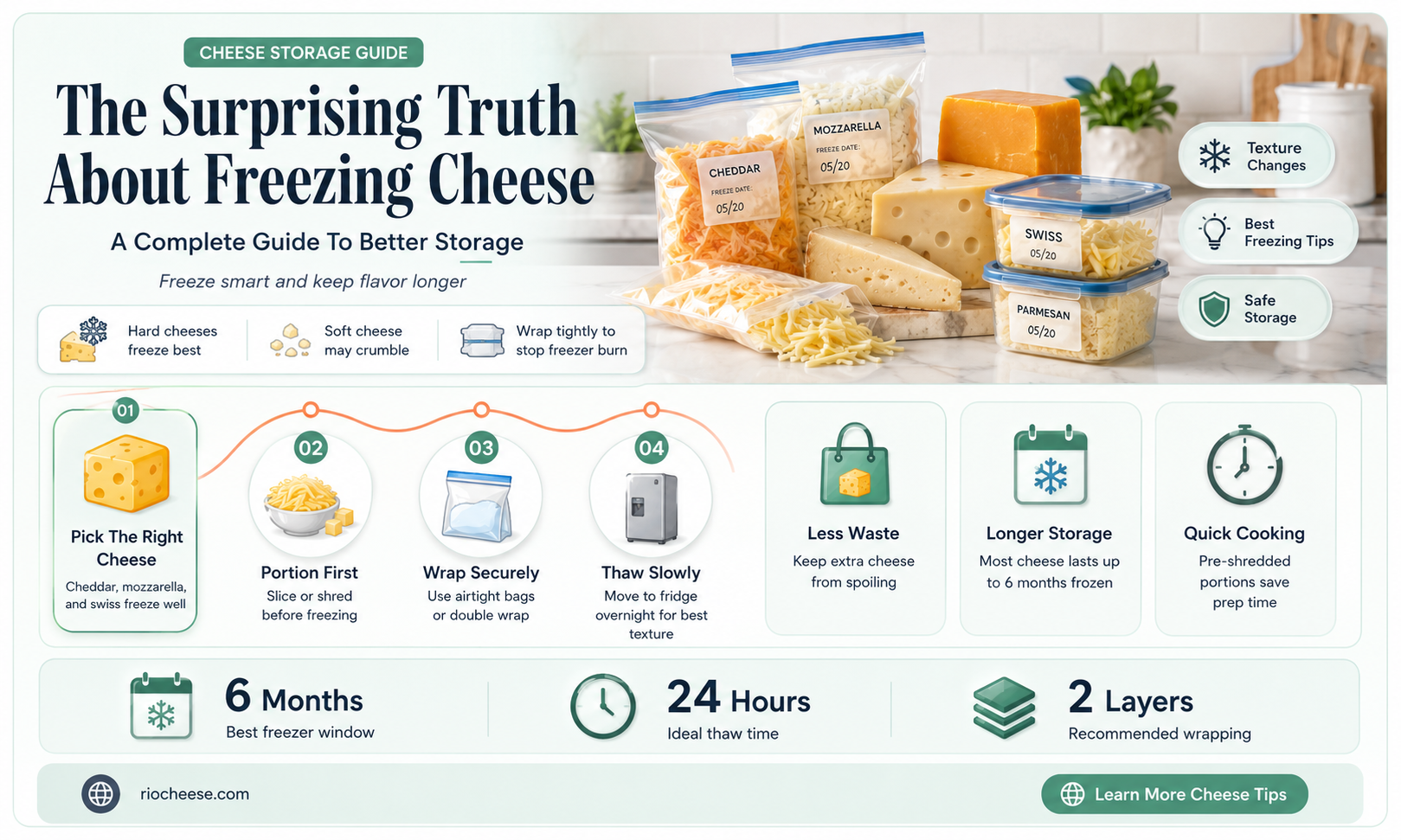
The question of whether you can freeze cheese is a common one among food enthusiasts and home cooks. Freezing cheese can be a convenient way to extend its shelf life, especially if you have a surplus or want to preserve a particular type for future use. However, the process isn't as straightforward as it might seem. Different types of cheese have varying freezing properties, and the texture and flavor can be affected by the freezing process. In this article, we'll explore the ins and outs of freezing cheese, including which types freeze well, how to properly freeze cheese to maintain its quality, and what to expect when you thaw it out.
Explore related products


What You'll Learn
- Freezing Techniques: Methods for safely freezing cheese to preserve its quality and texture
- Cheese Types: Which types of cheese freeze well and which do not, due to their composition
- Storage Duration: How long different types of cheese can be stored in the freezer without spoiling
- Thawing Process: Best practices for thawing frozen cheese to maintain its flavor and consistency
- Usage After Freezing: How frozen and thawed cheese can be used in various recipes and dishes

Freezing Techniques: Methods for safely freezing cheese to preserve its quality and texture
Cheese can be frozen, but it's crucial to do so correctly to maintain its quality and texture. Freezing cheese is a delicate process because it can alter the structure of the proteins and fats, leading to a change in texture and flavor. However, with the right techniques, you can preserve cheese for extended periods without significant degradation.
Before freezing, it's important to note that not all cheeses freeze equally well. Hard cheeses like cheddar and Swiss tend to freeze better than soft cheeses like brie or camembert. The key to successful cheese freezing lies in controlling the temperature and the rate of freezing. Rapid freezing at very low temperatures is ideal as it minimizes the formation of ice crystals, which can damage the cheese's structure.
To freeze cheese, start by wrapping it tightly in plastic wrap or aluminum foil to prevent air exposure, which can cause freezer burn. Then, place the wrapped cheese in a freezer bag or airtight container. It's best to freeze cheese in small quantities to ensure even freezing and to make it easier to thaw only what you need. The recommended freezing temperature is 0°F (-18°C) or lower.
When it comes to thawing frozen cheese, it's essential to do so slowly in the refrigerator to allow the proteins and fats to re-emulsify properly. This process can take several hours, depending on the size and type of cheese. Avoid thawing cheese at room temperature or in the microwave, as this can lead to uneven melting and a loss of texture.
In summary, while freezing cheese can be a convenient way to extend its shelf life, it requires careful attention to detail to preserve its quality. By following these freezing techniques, you can enjoy your cheese for months to come without compromising its taste or texture.
Can You Feed Regular String Cheese to Dogs?
You may want to see also
Explore related products


Cheese Types: Which types of cheese freeze well and which do not, due to their composition
Hard cheeses, such as cheddar, Swiss, and Parmesan, generally freeze well due to their lower moisture content. These cheeses have a denser structure that can withstand the freezing process without significant changes in texture or flavor. When freezing hard cheeses, it's best to grate or shred them first, as this will make it easier to use them directly from the freezer without having to thaw them out completely.
Soft cheeses, like Brie, Camembert, and goat cheese, do not freeze well because of their high moisture content and delicate texture. Freezing these cheeses can cause them to become crumbly, dry, and lose their characteristic creamy consistency. If you must freeze soft cheeses, it's recommended to use them in cooked dishes after thawing, as this will help to mask any changes in texture.
Blue cheeses, such as Roquefort and Gorgonzola, can be frozen, but their strong flavors may become more pronounced after freezing. These cheeses are best used in recipes where their intense flavor is desired, such as in dressings or sauces. When freezing blue cheeses, it's important to wrap them tightly in plastic wrap or aluminum foil to prevent the blue mold from spreading to other foods in the freezer.
Fresh cheeses, like mozzarella and ricotta, do not freeze well and are best used fresh. If you must freeze fresh cheeses, it's recommended to use them in cooked dishes after thawing, as their texture and flavor will be altered by the freezing process. When freezing any type of cheese, it's important to label and date the package, and to use the cheese within 6-8 months for best quality.
Cheesy Delights: A Guide to Safely Feeding Cheese to Your Kittens
You may want to see also
Explore related products





Storage Duration: How long different types of cheese can be stored in the freezer without spoiling
Hard cheeses like Parmesan and Cheddar can be stored in the freezer for up to 6 months without significant loss of quality. These cheeses have a lower moisture content, which makes them more resistant to freezer burn and texture changes. However, it's important to note that the flavor and texture may still deteriorate slightly over time. To maintain the best quality, it's recommended to grate or shred the cheese before freezing, as this increases the surface area and allows for more even freezing. When you're ready to use the cheese, simply thaw it in the refrigerator overnight.
Soft cheeses, such as Brie and Camembert, have a higher moisture content and are more prone to texture and flavor changes when frozen. These cheeses can be stored in the freezer for up to 2 months, but they may become crumbly or develop an off-flavor. To freeze soft cheeses, it's best to wrap them tightly in plastic wrap or aluminum foil to prevent freezer burn. When thawing, do so slowly in the refrigerator to minimize texture changes.
Blue cheeses, like Roquefort and Gorgonzola, can be frozen for up to 3 months. These cheeses have a strong flavor that can withstand the freezing process relatively well. However, the texture may become slightly crumbly upon thawing. To freeze blue cheeses, wrap them tightly in plastic wrap or aluminum foil and place them in a freezer-safe bag. Thaw them slowly in the refrigerator when you're ready to use them.
Fresh cheeses, such as mozzarella and ricotta, have a very high moisture content and are not well-suited for freezing. These cheeses can become watery and develop an off-flavor when frozen. If you must freeze fresh cheeses, it's best to use them within 1 month and to wrap them tightly in plastic wrap or aluminum foil. Thaw them slowly in the refrigerator and use them immediately after thawing.
It's important to remember that while freezing cheese can extend its shelf life, it may also affect the texture and flavor. Always label and date your cheese before freezing, and use the oldest cheese first to ensure the best quality.
Can You Feed Parmesan Cheese to a Dog? A Complete Guide
You may want to see also
Explore related products



Thawing Process: Best practices for thawing frozen cheese to maintain its flavor and consistency
The thawing process is a critical step in preserving the quality of frozen cheese. To maintain its flavor and consistency, it's essential to thaw cheese slowly and at a consistent temperature. The ideal method is to transfer the frozen cheese from the freezer to the refrigerator and allow it to thaw overnight. This gradual process ensures that the cheese's texture remains intact and its flavor profile is preserved.
If time is of the essence, a quicker method involves submerging the frozen cheese in cold water, changing the water every 30 minutes until the cheese is fully thawed. However, this method requires close monitoring to prevent the cheese from becoming too warm, which can lead to a loss of flavor and a change in texture.
It's important to note that microwaving frozen cheese is not recommended, as it can cause the cheese to melt unevenly and lose its flavor. Additionally, leaving cheese at room temperature for an extended period can lead to bacterial growth, posing a food safety risk.
Once thawed, cheese should be stored in the refrigerator and consumed within a few days to ensure optimal flavor and safety. If the cheese is not going to be used immediately, it can be rewrapped tightly and returned to the freezer, although this may affect its texture slightly.
In summary, the key to successfully thawing frozen cheese is to do so slowly and at a consistent temperature, using either the refrigerator or cold water method. By following these best practices, you can maintain the cheese's flavor and consistency, ensuring a high-quality culinary experience.
Robo Hamsters and Cheese: A Guide to Safe Feeding Practices
You may want to see also
Explore related products




Usage After Freezing: How frozen and thawed cheese can be used in various recipes and dishes
Frozen and thawed cheese can be a versatile ingredient in various recipes and dishes, offering a convenient and often cost-effective alternative to fresh cheese. When using frozen cheese, it's essential to thaw it properly to ensure the best texture and flavor. The thawing process can be done in the refrigerator, in cold water, or in the microwave, depending on the time available and the desired outcome.
Once thawed, cheese can be used in a wide range of dishes, from casseroles and pizzas to sandwiches and salads. It's important to note that the texture of thawed cheese may be slightly different from fresh cheese, so it's best to use it in recipes where the texture is not a critical factor. For example, thawed cheese works well in melted dishes like grilled cheese sandwiches or cheese sauces, where the slight change in texture is not noticeable.
In addition to its versatility in cooking, frozen and thawed cheese can also be used as a topping for various dishes. For instance, thawed shredded cheese can be sprinkled over tacos, nachos, or baked potatoes for added flavor and texture. It can also be used to make homemade cheese dips or spreads, which are perfect for parties or gatherings.
When using frozen cheese in recipes, it's important to consider the type of cheese and its flavor profile. For example, a mild cheddar may work well in a macaroni and cheese dish, while a stronger blue cheese may be better suited for a salad dressing or a cheese board. Experimenting with different types of frozen cheese can help you discover new flavor combinations and expand your culinary repertoire.
In conclusion, frozen and thawed cheese can be a valuable addition to any kitchen, offering a convenient and versatile ingredient for a wide range of recipes and dishes. By understanding the proper thawing techniques and considering the type and flavor of the cheese, you can make the most of this ingredient and enjoy delicious meals and snacks.
Is Pimento Cheese Safe for Dogs? A Complete Guide
You may want to see also