Kamil Perry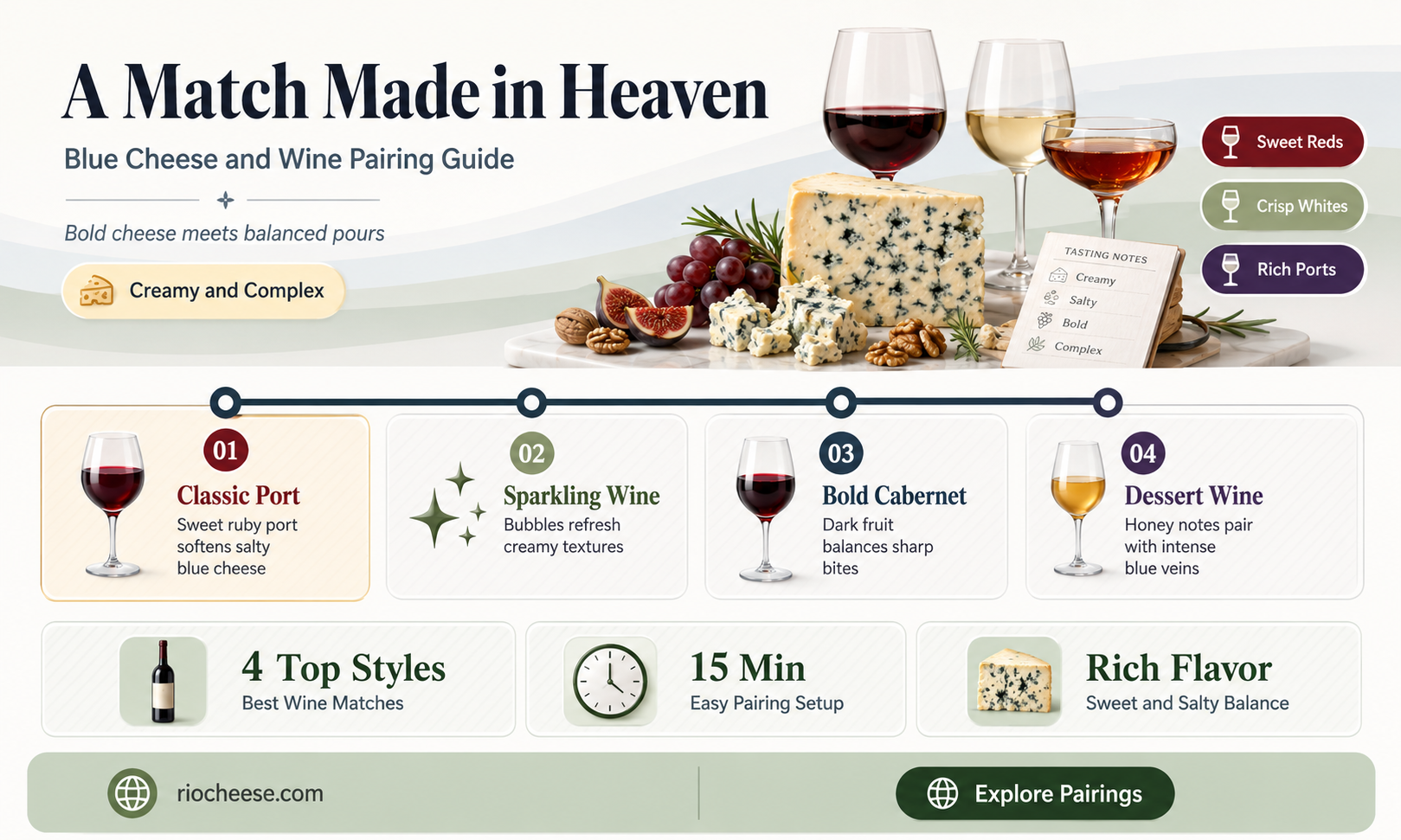
Blue cheese, known for its strong, pungent flavor and creamy texture, can be a challenging cheese to pair with wine. However, the right wine pairing can complement and enhance the bold characteristics of blue cheese, creating a harmonious and delightful tasting experience. When selecting a wine to pair with blue cheese, it's essential to consider the intensity and sweetness of the cheese, as well as the wine's body, acidity, and tannins. A general rule of thumb is to choose a wine that is sweet enough to balance the cheese's saltiness and strong enough to stand up to its robust flavor. Some classic wine pairings for blue cheese include sweet dessert wines like Port, Sauternes, or late-harvest Riesling, which offer a rich, fruity counterpoint to the cheese's savory notes. For a drier option, a full-bodied red wine with high tannins, such as a Cabernet Sauvignon or a Zinfandel, can also work well, as the tannins help to cut through the cheese's creaminess and refresh the palate. Ultimately, the key to a successful wine and blue cheese pairing is to find a balance between the two, allowing each component to shine while complementing the other's unique qualities.
Explore related products


What You'll Learn
- Sweet Wines: Port, Sauternes, and Moscato d'Asti complement blue cheese's pungency with their sweetness
- Strong Reds: Full-bodied reds like Cabernet Sauvignon, Zinfandel, and Malbec stand up to blue cheese's bold flavor
- Fruity Whites: Aromatic whites such as Riesling, Gewürztraminer, and Viognier balance the richness of blue cheese
- Dessert Wines: Late-harvest Riesling, Moscato, and Tawny Port enhance blue cheese's creamy texture and savory notes
- Sparkling Wines: Brut Champagne, Prosecco, and Cava cut through blue cheese's fat with their acidity and bubbles

Sweet Wines: Port, Sauternes, and Moscato d'Asti complement blue cheese's pungency with their sweetness
The pairing of sweet wines with blue cheese is a classic combination that balances the pungency of the cheese with the wine's sweetness. Port, Sauternes, and Moscato d'Asti are three sweet wines that are particularly well-suited to complementing the strong flavors of blue cheese. Port, a fortified wine from Portugal, has a rich, fruity flavor that stands up to the bold taste of blue cheese. Sauternes, a sweet white wine from the Bordeaux region of France, has a honeyed sweetness and a hint of acidity that cuts through the richness of the cheese. Moscato d'Asti, a sweet, sparkling wine from the Piedmont region of Italy, has a light, refreshing quality that cleanses the palate between bites of cheese.
When pairing sweet wines with blue cheese, it's important to consider the intensity of the cheese's flavor. For milder blue cheeses, such as Gorgonzola or Roquefort, a sweeter wine like Moscato d'Asti may be a good choice. For stronger, more pungent blue cheeses, such as Stilton or Cheddar, a wine with more acidity, like Sauternes, may be a better match. Port is a versatile choice that can pair well with a variety of blue cheeses, from mild to strong.
In terms of serving, it's best to serve sweet wines slightly chilled to enhance their sweetness and balance the richness of the cheese. When it comes to portion size, a small glass of sweet wine is usually sufficient to complement a serving of blue cheese. It's also important to note that sweet wines can be quite high in calories, so moderation is key.
Overall, the combination of sweet wines with blue cheese is a delightful pairing that can enhance the flavors of both the wine and the cheese. By choosing the right wine to complement the specific type of blue cheese, you can create a harmonious and satisfying culinary experience.
Delicious Blue Cheese Olives: A Simple Stuffing Guide
You may want to see also
Explore related products




![Wine Food: New Adventures in Drinking and Cooking [A Recipe Book]](https://m.media-amazon.com/images/I/816jyOJZTeL._AC_UL320_.jpg)

Strong Reds: Full-bodied reds like Cabernet Sauvignon, Zinfandel, and Malbec stand up to blue cheese's bold flavor
The bold flavors of blue cheese demand a wine that can stand toe-to-toe with its pungency and richness. Strong reds, such as Cabernet Sauvignon, Zinfandel, and Malbec, are up to this challenge. These full-bodied wines possess the tannins and acidity necessary to cut through the creaminess of blue cheese, while their intense fruit flavors complement the cheese's savory notes.
Cabernet Sauvignon, with its dark fruit flavors and firm tannins, is a classic pairing for blue cheese. The wine's boldness matches the cheese's strong character, creating a harmonious balance. Zinfandel, known for its spicy and fruity profile, adds a layer of complexity to the pairing. Its higher alcohol content can also help to cleanse the palate between bites of the rich cheese. Malbec, with its deep color and velvety texture, offers a smooth contrast to the crumbly texture of blue cheese. Its flavors of blackberry and plum enhance the cheese's earthy undertones.
When selecting a wine to pair with blue cheese, it's essential to consider the specific type of blue cheese you'll be serving. For example, a milder blue cheese like Gorgonzola may pair better with a slightly lighter-bodied red, while a stronger blue like Roquefort may require a more robust wine. Experimenting with different combinations can lead to exciting discoveries, as the interplay between the wine and cheese can bring out new flavors and textures in both.
In terms of serving, it's best to serve the wine at room temperature to allow its flavors to fully develop. The blue cheese should be served slightly chilled to maintain its texture and prevent it from becoming too soft. When presenting the pairing, consider arranging the wine and cheese on a platter with complementary foods, such as crackers, nuts, and dried fruits, to create a well-rounded tasting experience.
Remember, the key to a successful wine and cheese pairing is to find a balance between the flavors and textures of both components. With strong reds and blue cheese, the goal is to create a harmonious contrast that highlights the unique qualities of each. By carefully selecting and serving these pairings, you can elevate your wine and cheese game to new heights.
Unveiling the Truth: Is Blue Cheese Dressing Gluten-Free?
You may want to see also
Explore related products



Fruity Whites: Aromatic whites such as Riesling, Gewürztraminer, and Viognier balance the richness of blue cheese
The bold flavors of blue cheese demand a wine that can stand up to its pungency without overpowering it. Fruity white wines, such as Riesling, Gewürztraminer, and Viognier, offer a delightful counterbalance to the richness of blue cheese. These aromatic whites possess a natural sweetness and vibrant acidity that can cut through the creaminess and saltiness of the cheese, creating a harmonious pairing.
Riesling, with its crisp acidity and notes of green apple and citrus, is an excellent choice for milder blue cheeses like Gorgonzola or Roquefort. Its refreshing qualities can cleanse the palate between bites, allowing the cheese's flavors to shine through. Gewürztraminer, on the other hand, is a more robust option with its rich, spicy aromas and flavors of lychee and rose. This wine pairs beautifully with stronger blue cheeses like Stilton or Valdeón, as its intensity can match the cheese's boldness.
Viognier, with its floral and tropical fruit notes, offers a softer approach to pairing with blue cheese. Its moderate acidity and creamy texture can complement the tanginess of cheeses like Gorgonzola Dolce or Bleu d'Auvergne. When selecting a Viognier for blue cheese, look for one with a good balance of fruitiness and acidity to ensure it doesn't clash with the cheese's flavors.
When serving these fruity whites with blue cheese, it's essential to consider the temperature. Serve the wine slightly chilled to enhance its refreshing qualities and balance the richness of the cheese. Additionally, the order in which you taste the wine and cheese can impact the pairing. Start with a sip of the wine, then take a small bite of the cheese, allowing the flavors to meld together on your palate. This will help you appreciate the nuances of the pairing and how the wine's characteristics complement the cheese.
In conclusion, fruity white wines like Riesling, Gewürztraminer, and Viognier can provide a delicious contrast to the bold flavors of blue cheese. By selecting the right wine for the specific type of blue cheese and serving it at the appropriate temperature, you can create a memorable and harmonious pairing that will delight your taste buds.
Exploring the Kosher Status of Blue Cheese: A Delicious Dilemma
You may want to see also
Explore related products




Dessert Wines: Late-harvest Riesling, Moscato, and Tawny Port enhance blue cheese's creamy texture and savory notes
Late-harvest Riesling, with its concentrated sweetness and high acidity, offers a delightful contrast to the rich, creamy texture of blue cheese. The wine's residual sugar balances the cheese's saltiness, while its crisp acidity cuts through the fat, cleansing the palate between bites. This pairing is particularly effective with milder blue cheeses, such as Gorgonzola or Roquefort, where the wine's sweetness can complement the cheese's subtle pungency without overpowering it.
Moscato, known for its floral aromas and light, effervescent body, brings a refreshing dimension to the pairing with blue cheese. The wine's delicate sweetness and gentle bubbles help to lift the cheese's heavy creaminess, creating a harmonious balance of flavors and textures. Moscato's lower alcohol content also makes it an excellent choice for those who prefer a lighter wine, without sacrificing the complexity of the pairing. This combination works exceptionally well with stronger blue cheeses, like Stilton or Valdeón, where the wine's sweetness can temper the cheese's bold flavors.
Tawny Port, with its nutty, caramelized notes and smooth, velvety texture, offers a luxurious complement to the savory, umami-rich profile of blue cheese. The wine's sweetness is balanced by its oxidative character, which adds a layer of complexity that enhances the cheese's depth of flavor. Tawny Port's higher alcohol content and rich body make it an ideal pairing for robust blue cheeses, such as Gorgonzola Piccante or Bleu de Gex, where the wine's intensity can match the cheese's strong, pungent notes.
When pairing dessert wines with blue cheese, it's essential to consider the intensity and flavor profile of both the wine and the cheese. A general rule of thumb is to match the sweetness of the wine with the strength of the cheese, ensuring that neither component overwhelms the other. Additionally, serving the wine slightly chilled can help to accentuate its sweetness and acidity, enhancing the overall pairing experience.
In conclusion, dessert wines like Late-harvest Riesling, Moscato, and Tawny Port offer a unique and exciting way to elevate the classic pairing of wine and blue cheese. By carefully selecting a wine that complements the specific characteristics of the cheese, one can create a harmonious and memorable culinary experience that showcases the best of both worlds.
Exploring the Low FODMAP Diet: Is Blue Cheese a Suitable Choice?
You may want to see also
Explore related products


Sparkling Wines: Brut Champagne, Prosecco, and Cava cut through blue cheese's fat with their acidity and bubbles
The effervescence of sparkling wines like Brut Champagne, Prosecco, and Cava provides a delightful contrast to the rich, creamy texture of blue cheese. These wines, known for their high acidity and carbonation, effectively cut through the fat, cleansing the palate between bites. The Brut designation indicates a dry style, which is particularly effective in balancing the intense flavors of blue cheese without adding sweetness that could clash with its savory profile.
When pairing sparkling wines with blue cheese, consider the intensity of the cheese. Stronger blue cheeses, such as Gorgonzola or Roquefort, pair well with the more robust flavors of Brut Champagne. Prosecco, with its lighter body and fruitier notes, complements milder blue cheeses like Stilton or Bleu d'Auvergne. Cava, a Spanish sparkling wine, offers a versatile option with its blend of Chardonnay, Pinot Noir, and Parellada grapes, making it suitable for a range of blue cheese varieties.
To enhance the pairing experience, serve the sparkling wine chilled to around 45-50°F (7-10°C) to ensure its crisp acidity is at its peak. The cheese should be at room temperature to fully appreciate its texture and flavor. Begin with a small sip of the wine, followed by a bite of the cheese, and then another sip to observe how the flavors interact and evolve.
In addition to the classic pairing, consider incorporating other elements to elevate the experience. For example, adding a drizzle of honey or a sprinkle of toasted nuts can introduce new textures and flavors that complement both the wine and the cheese. Experimenting with different types of crackers or bread can also enhance the pairing, providing a neutral base that allows the wine and cheese to shine.
Ultimately, the key to a successful pairing lies in finding the right balance between the wine's acidity and the cheese's richness. By exploring different combinations and paying attention to the nuances of each, you can discover a harmonious and indulgent culinary experience that highlights the unique characteristics of both sparkling wines and blue cheeses.
The Surprising Truth About Blue Cheese and Rats
You may want to see also
Frequently asked questions
A sweet dessert wine, such as a late-harvest Riesling or a Sauternes, pairs excellently with blue cheese. The sweetness of the wine balances the strong, salty flavors of the cheese.
Sweet wines pair well with blue cheese because the sugar in the wine counteracts the saltiness and pungency of the cheese, creating a harmonious balance of flavors. The acidity in the wine also helps to cut through the richness of the cheese.
Yes, besides sweet dessert wines, some other wine options that can pair with blue cheese include full-bodied red wines like Cabernet Sauvignon or Zinfandel, and strong, aged cheeses like Gorgonzola or Roquefort can also pair well with a bold, sweet wine like a Port or a Sherry.