 Bushra Griffith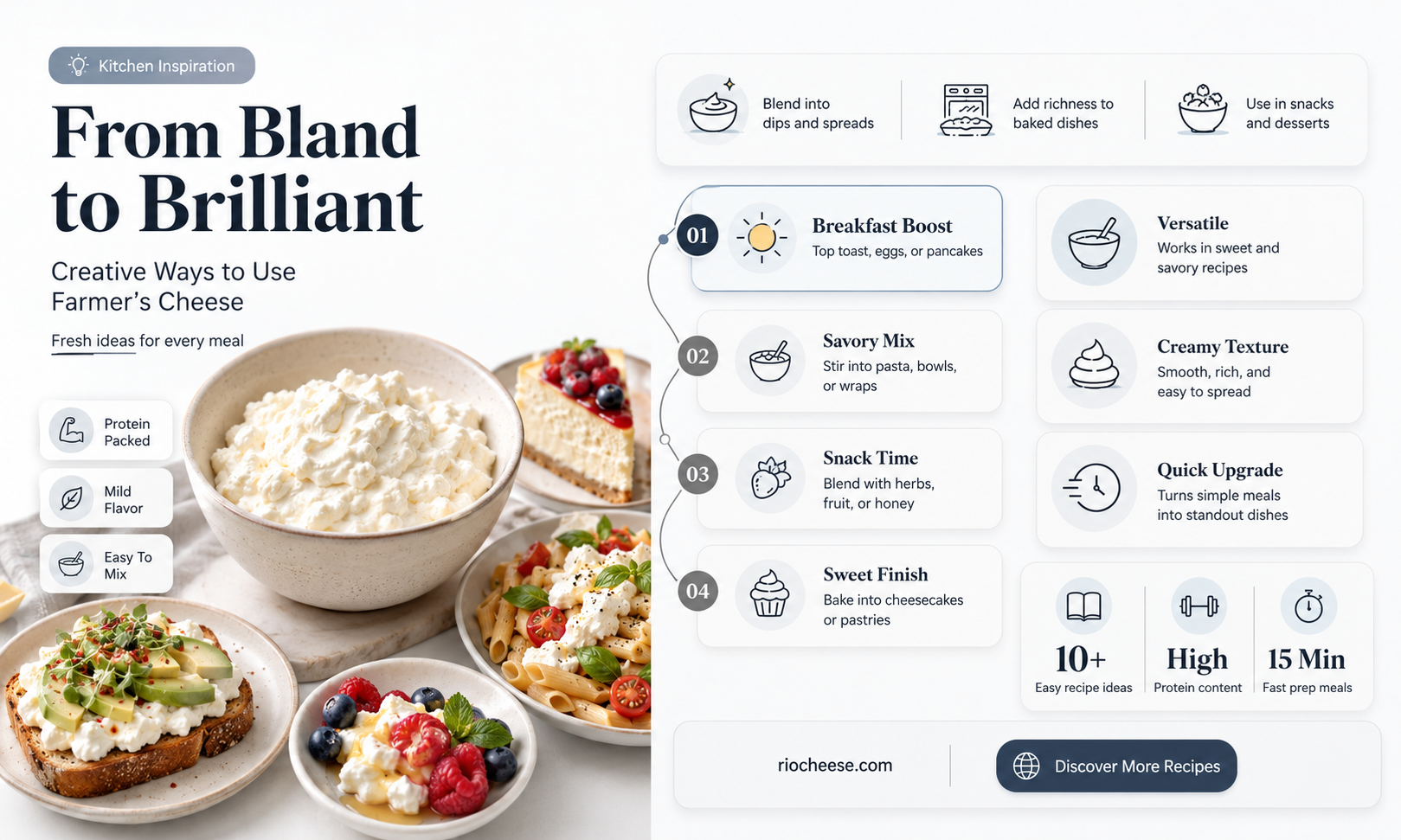
Farmers cheese, a versatile and nutritious dairy product, offers a plethora of culinary possibilities. Whether you're looking to incorporate it into a savory dish or a sweet treat, this cheese's mild flavor and creamy texture make it an excellent ingredient for various recipes. From traditional Eastern European dishes to modern fusion cuisine, farmers cheese can be used in a multitude of ways to enhance the flavor and richness of your meals. In this guide, we'll explore some creative and delicious ideas on what to do with farmers cheese, ranging from simple appetizers to more complex main courses and desserts.
Explore related products


What You'll Learn
- Recipes: Explore various dishes you can create using farmer's cheese, from savory to sweet
- Pairings: Discover ideal food and drink combinations that complement the taste and texture of farmer's cheese
- Storage Tips: Learn how to properly store farmer's cheese to maintain its freshness and quality
- Nutritional Benefits: Understand the health benefits of incorporating farmer's cheese into your diet
- DIY Projects: Find out how to make your own farmer's cheese at home with simple ingredients and techniques

Recipes: Explore various dishes you can create using farmer's cheese, from savory to sweet
Farmers cheese, with its mild flavor and creamy texture, is a versatile ingredient that can be used in a variety of dishes. From savory to sweet, this cheese can add a delightful twist to your culinary creations. Let's explore some unique recipes that showcase the versatility of farmers cheese.
For a savory option, try making a farmers cheese and herb omelette. Beat 3 eggs with a pinch of salt and pepper, then mix in 1/4 cup crumbled farmers cheese and 2 tablespoons chopped fresh herbs like parsley or chives. Heat a non-stick pan over medium heat, add a drizzle of olive oil, and pour in the egg mixture. Cook until the edges start to set, then fold the omelette in half and cook until fully set. Serve hot with a side of fresh fruit for a balanced breakfast.
If you're in the mood for something sweet, create a farmers cheese and honey parfait. Layer 1/2 cup crumbled farmers cheese with 1/4 cup granola and 2 tablespoons honey in a glass. Repeat the layers twice more, ending with a drizzle of honey on top. This parfait is not only delicious but also packed with protein and fiber, making it a great snack or light dessert.
Farmers cheese can also be used as a base for a creamy salad dressing. In a blender, combine 1/2 cup crumbled farmers cheese, 1/4 cup mayonnaise, 2 tablespoons lemon juice, 1 tablespoon Dijon mustard, and a pinch of salt and pepper. Blend until smooth and creamy. This dressing pairs well with a variety of salads, from green salads to pasta salads.
For a more substantial dish, try making farmers cheese stuffed shells. Cook 12 large pasta shells according to package instructions. In a bowl, mix 1 cup crumbled farmers cheese with 1/4 cup breadcrumbs, 2 tablespoons chopped fresh parsley, 1 egg, and a pinch of salt and pepper. Stuff each shell with the cheese mixture and place in a baking dish. Top with your favorite marinara sauce and bake at 375°F for 20-25 minutes, or until the cheese is melted and bubbly.
These recipes are just a few examples of the many ways you can use farmers cheese in your cooking. Whether you're looking for a savory breakfast option, a sweet snack, a creamy salad dressing, or a hearty dinner, farmers cheese can add a delicious and unique touch to your dishes.
The Laughing Cow Cheese: Unraveling the Shelf Stability Mystery
You may want to see also
Explore related products

![Artisan Cheese Making at Home: Techniques & Recipes for Mastering World-Class Cheeses [A Cookbook]](https://m.media-amazon.com/images/I/81eH1+cYeZL._AC_UY218_.jpg)
$17.84 $29.99


Pairings: Discover ideal food and drink combinations that complement the taste and texture of farmer's cheese
Farmers cheese, with its creamy texture and mild flavor, is a versatile ingredient that pairs well with a variety of foods and drinks. One classic combination is farmers cheese with fresh fruit, such as strawberries or peaches. The sweetness of the fruit complements the tanginess of the cheese, creating a balanced and refreshing dish. For a savory option, pair farmers cheese with smoked salmon and crackers. The rich, smoky flavor of the salmon contrasts beautifully with the mildness of the cheese, while the crackers provide a satisfying crunch.
When it comes to drinks, a crisp white wine like Sauvignon Blanc or Pinot Grigio pairs nicely with farmers cheese. The acidity in the wine cuts through the creaminess of the cheese, cleansing the palate between bites. For a non-alcoholic option, try pairing farmers cheese with a sparkling water infused with lemon or lime. The carbonation and citrus notes will help to refresh and balance the richness of the cheese.
Another interesting pairing is farmers cheese with honey and nuts. The sweetness of the honey and the crunch of the nuts add depth and complexity to the dish, making it a perfect appetizer or snack. Experiment with different types of nuts, such as almonds, walnuts, or pecans, to find your favorite combination.
For a more substantial meal, consider pairing farmers cheese with roasted vegetables and a balsamic glaze. The caramelized flavors of the vegetables and the tangy sweetness of the balsamic glaze create a harmonious blend with the creamy cheese. This dish can be served as a side or a main course, depending on your preference.
In conclusion, farmers cheese is a versatile ingredient that can be paired with a wide range of foods and drinks to create delicious and satisfying dishes. Whether you prefer sweet or savory combinations, there's a pairing that will suit your taste buds. Experiment with different flavors and textures to discover your ideal farmers cheese pairings.
Elevate Your Chardonnay Experience: The Perfect Cheese Pairings
You may want to see also
Explore related products


Storage Tips: Learn how to properly store farmer's cheese to maintain its freshness and quality
Proper storage is crucial for maintaining the freshness and quality of farmer's cheese. To ensure your farmer's cheese stays at its best, follow these storage tips:
- Refrigeration: Always store farmer's cheese in the refrigerator. The ideal temperature range is between 35°F and 40°F (1.6°C and 4.4°C). If your refrigerator has a crisper drawer, use it to maintain the cheese's moisture level.
- Wrapping: Wrap the cheese tightly in plastic wrap or aluminum foil to prevent it from drying out. If you have a vacuum sealer, use it to remove any excess air and seal the cheese for longer storage.
- Aging: If you prefer your farmer's cheese to be softer and more flavorful, you can age it at room temperature for a few days. However, be cautious not to leave it out for too long, as it can spoil quickly.
- Freezing: While freezing is not the best option for maintaining the texture of farmer's cheese, it can be done if you have an excess amount. Wrap the cheese tightly in plastic wrap, then place it in a freezer-safe bag. Thaw it in the refrigerator before using.
- Common Mistakes: Avoid storing farmer's cheese near strong-smelling foods, as it can absorb odors easily. Also, do not store it in a container with a lid, as this can trap moisture and lead to mold growth.
By following these storage tips, you can enjoy your farmer's cheese for a longer period while maintaining its delicious taste and texture.
Exploring the World of Cheese: What Makes a Big Unit?
You may want to see also
Explore related products


Nutritional Benefits: Understand the health benefits of incorporating farmer's cheese into your diet
Farmers cheese, a fresh, unaged cheese made from curds, is a nutritional powerhouse that can significantly enhance your diet. Rich in protein, it supports muscle growth and repair, making it an excellent choice for athletes or those looking to increase their protein intake. Additionally, farmers cheese is a good source of calcium, which is crucial for maintaining strong bones and teeth.
One of the unique nutritional benefits of farmers cheese is its high content of probiotics. These beneficial bacteria aid in digestion and promote a healthy gut microbiome. A healthy gut can lead to improved immune function, better nutrient absorption, and even a positive impact on mental health.
Farmers cheese is also relatively low in calories and fat compared to other cheeses, making it a great option for those watching their weight or trying to maintain a balanced diet. It's versatile in its use, allowing you to incorporate it into a variety of dishes without significantly increasing the calorie count.
When considering the nutritional benefits of farmers cheese, it's important to note that it is also a good source of vitamins B12 and B2 (riboflavin). Vitamin B12 is essential for the production of red blood cells and the proper functioning of the nervous system, while vitamin B2 plays a key role in energy production and cellular function.
Incorporating farmers cheese into your diet can be a delicious and nutritious way to support your overall health. Whether you enjoy it on its own, in salads, or as part of a cooked dish, this cheese offers a range of health benefits that make it a valuable addition to any meal plan.
The Mysterious Disappearance of Lance Gold-N Cheese: An Investigation
You may want to see also
Explore related products


DIY Projects: Find out how to make your own farmer's cheese at home with simple ingredients and techniques
Making your own farmer's cheese at home is a rewarding DIY project that allows you to enjoy fresh, artisanal cheese without the need for specialized equipment or ingredients. To begin, you'll need fresh milk, preferably from a local source to ensure the highest quality. Whole milk is ideal, but you can also use 2% or skim milk if you prefer a lower-fat cheese. Additionally, you'll need cheese salt, which is available at most specialty food stores or online.
The process starts by heating the milk in a large, heavy-bottomed pot over medium heat. Stir the milk occasionally to prevent it from sticking to the bottom of the pot. Once the milk reaches a temperature of around 85°F (29°C), remove it from the heat and let it cool slightly. At this point, you can add a small amount of cheese salt to the milk, which will help to coagulate the curds and improve the flavor of the final product.
Next, you'll need to introduce a coagulant to the milk to separate the curds from the whey. Traditional rennet is the most common coagulant used in cheese-making, but you can also use vegetarian alternatives such as microbial or fungal rennet. Add the coagulant to the milk according to the manufacturer's instructions, and then let the mixture sit undisturbed for about 30 minutes to an hour, or until the curds have fully formed.
Once the curds have formed, you can strain them from the whey using a cheesecloth or a fine-mesh sieve. Gently press the curds to remove as much whey as possible, but be careful not to press too hard, as this can result in a dry, crumbly cheese. After straining, you can either leave the curds to drain further or proceed to the next step of shaping and aging the cheese.
To shape the cheese, you can use a cheese mold or simply form the curds into a ball or log shape with your hands. If you're using a mold, make sure to line it with cheesecloth to prevent the curds from sticking. Once the cheese is shaped, you can age it in the refrigerator for several weeks to develop its flavor and texture. During this time, you can turn the cheese occasionally to ensure even aging.
After a few weeks, your farmer's cheese will be ready to enjoy. You can serve it as is, or you can experiment with different seasonings and herbs to create unique flavor combinations. Farmer's cheese is a versatile ingredient that can be used in a variety of dishes, from salads and sandwiches to desserts and baked goods. With its creamy texture and mild flavor, it's a delicious addition to any meal.
Exploring the Delicious World of Fontinella and Fontina Cheeses
You may want to see also
Frequently asked questions
Farmer's cheese is a versatile ingredient that can be used in a variety of dishes. It can be crumbled over salads, used as a filling for pastries and dumplings, or added to soups and stews for extra flavor and texture. It can also be used as a topping for baked potatoes or as an ingredient in cheese spreads and dips.
To keep farmer's cheese fresh, it should be stored in the refrigerator in a covered container. It's best to consume it within a week of purchase for optimal flavor and texture. If you need to store it for a longer period, you can wrap it tightly in plastic wrap or aluminum foil and freeze it for up to 2 months.
Farmer's cheese is a good source of protein, calcium, and other essential nutrients. It is also lower in fat and calories compared to some other types of cheese, making it a healthier option for those watching their diet. Additionally, it contains probiotics that can help support digestive health.


