Randy Chandler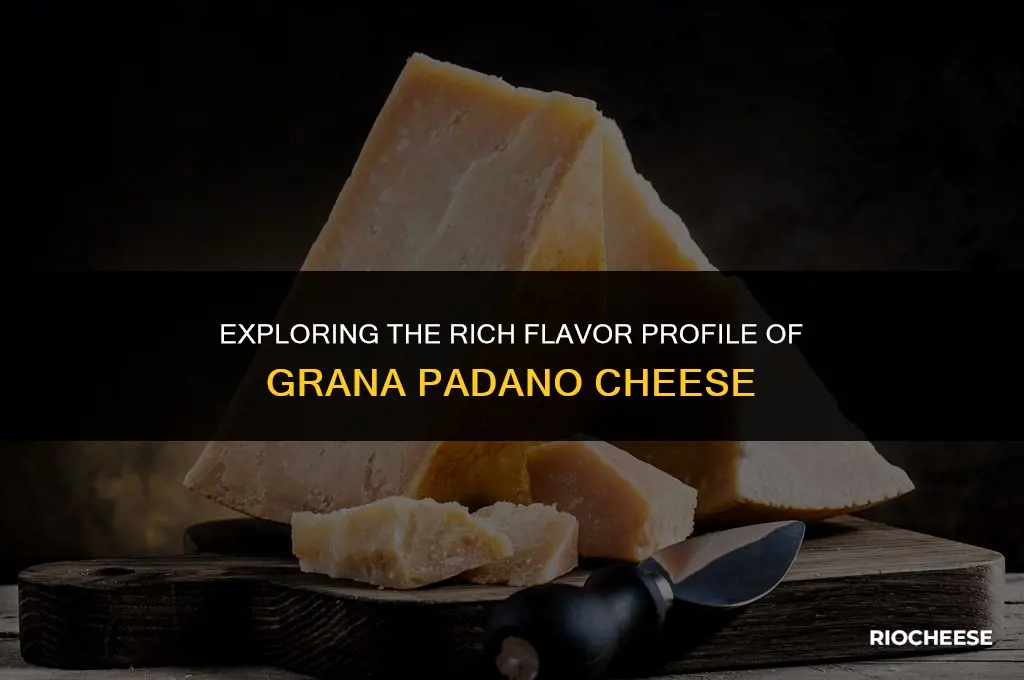
Grana Padano is a renowned Italian hard cheese that originates from the Po River Valley in Northern Italy. It is often compared to Parmesan due to its similar granular texture and rich, nutty flavor profile. However, Grana Padano has its own distinct characteristics that set it apart. Made from cow's milk, this cheese is aged for a minimum of 12 months, which contributes to its firm texture and concentrated taste. It is typically used as a grating cheese, enhancing the flavor of pasta dishes, salads, and soups. Grana Padano is also enjoyed on its own, often paired with fruits and nuts. Its versatility and unique flavor make it a popular choice among cheese enthusiasts and culinary professionals alike.
Explore related products


What You'll Learn
- Origin and History: Grana Padano's roots in Italy, its creation in the 12th century
- Production Process: Cow's milk fermentation, aging for 20 months minimum
- Nutritional Facts: High in protein, calcium, and phosphorus, low in lactose
- Flavor Profile: Rich, nutty, slightly sweet, with a hint of saltiness
- Uses in Cuisine: Grated over pasta, in salads, or enjoyed on its own

Origin and History: Grana Padano's roots in Italy, its creation in the 12th century
Grana Padano's storied origins trace back to the fertile Po Valley in Italy, a region renowned for its agricultural bounty. The cheese's creation in the 12th century is a testament to the ingenuity of medieval Italian cheesemakers, who sought to develop a hard, long-aging cheese that could be stored for extended periods. This was a crucial innovation, as it allowed for the preservation of milk's nutritional value throughout the year, especially during times when fresh milk was scarce.
The name "Grana Padano" itself is a nod to its geographical roots, with "Grana" referring to the cheese's granular texture and "Padano" denoting its origin in the Po Valley, known as "Padania" in Italian. The cheese's development was closely tied to the region's monasteries, where monks played a pivotal role in refining the production techniques and ensuring the cheese's quality. Over time, Grana Padano became a staple in Italian cuisine, prized for its rich flavor and versatility in cooking.
One of the unique aspects of Grana Padano's history is its evolution through various regional variations. As the cheese gained popularity, different areas of the Po Valley began to develop their own distinct styles, each with subtle differences in flavor, texture, and aging processes. This diversity within a single cheese type is a hallmark of Grana Padano's rich heritage and continues to be celebrated today, with various denominations of origin (DOP) recognizing the specific characteristics of each regional variation.
The production of Grana Padano has remained largely unchanged over the centuries, with traditional methods still employed to create this iconic cheese. The process begins with the careful selection of high-quality milk from local cows, which is then heated and mixed with rennet to initiate coagulation. The resulting curds are pressed into large wheels, which are aged for a minimum of 12 months, allowing the cheese to develop its signature flavor and texture. Some variations are aged for even longer periods, resulting in a more intense and complex taste profile.
Today, Grana Padano is not only a beloved component of Italian cuisine but also a symbol of the country's rich culinary heritage. Its enduring popularity is a testament to the skill and dedication of the cheesemakers who have continued to produce this exceptional cheese for nearly a millennium. Whether grated over pasta, served as a table cheese, or used in a variety of recipes, Grana Padano remains a versatile and indispensable ingredient in kitchens around the world.
Exploring the Rich Flavor Profile of Cooper Sharp Cheese
You may want to see also
Explore related products


Production Process: Cow's milk fermentation, aging for 20 months minimum
The production process of Grana Padano cheese begins with the careful selection of cow's milk, which is then subjected to a specific fermentation process. This process involves the addition of bacterial cultures that help to break down the lactose in the milk, producing lactic acid as a byproduct. The lactic acid acts as a natural preservative, helping to prevent the growth of harmful bacteria and contributing to the cheese's distinctive tangy flavor.
After fermentation, the milk is heated to a specific temperature and then cooled, allowing the curds to form. The curds are then separated from the whey and shaped into large wheels. These wheels are then aged for a minimum of 20 months, during which time they are regularly turned and rubbed with a mixture of salt and water. This aging process allows the cheese to develop its characteristic hard texture and rich, nutty flavor.
During the aging process, the cheese is stored in a controlled environment with a specific temperature and humidity level. This ensures that the cheese ages evenly and develops the desired flavor and texture. The cheese is also regularly inspected for quality and any defects are removed.
Once the cheese has been aged for the required minimum of 20 months, it is then ready for consumption. Grana Padano cheese is often grated over pasta dishes, used in salads, or simply enjoyed on its own as a snack. Its hard texture and rich flavor make it a versatile ingredient that can be used in a variety of dishes.
In summary, the production process of Grana Padano cheese involves the careful selection of cow's milk, fermentation, heating and cooling to form curds, shaping into wheels, and aging for a minimum of 20 months. This process results in a hard, nutty cheese that is perfect for grating over pasta dishes or enjoying on its own.
Starbucks Grilled Cheese: A Melty Mystery Unveiled
You may want to see also
Explore related products




Nutritional Facts: High in protein, calcium, and phosphorus, low in lactose
Grana Padano is renowned for its impressive nutritional profile, particularly its high content of protein, calcium, and phosphorus. These nutrients are essential for maintaining strong bones and muscles, making this cheese an excellent choice for individuals looking to support their skeletal health. The high protein content also contributes to muscle repair and growth, which is beneficial for athletes or those engaged in regular physical activity.
One of the unique aspects of Grana Padano is its low lactose content. Lactose is a sugar found in milk that can cause digestive issues in individuals who are lactose intolerant. The reduced lactose levels in Grana Padano make it a more digestible option for those who struggle with lactose, allowing them to enjoy the benefits of cheese without the associated discomfort.
The combination of high protein and low lactose makes Grana Padano a versatile ingredient in various dietary plans. It can be incorporated into meals as a source of protein for those following a low-carb or ketogenic diet, and its low lactose content makes it suitable for individuals with lactose intolerance or those following a dairy-free diet who still wish to include some dairy products.
In addition to its nutritional benefits, Grana Padano is also valued for its rich flavor and hard texture. It is often used as a grating cheese, adding depth and complexity to dishes such as pasta, salads, and soups. The cheese's aging process, which can last up to 24 months, contributes to its distinctive taste and texture, making it a popular choice among cheese enthusiasts.
Overall, Grana Padano's nutritional facts highlight its value as a healthful and flavorful addition to a balanced diet. Its high protein, calcium, and phosphorus content, combined with its low lactose levels, make it a unique and beneficial cheese option for a wide range of individuals.
Renal-Friendly Dairy: Cheese Options for Kidney Disease Patients
You may want to see also
Explore related products


Flavor Profile: Rich, nutty, slightly sweet, with a hint of saltiness
Grana Padano, a renowned Italian cheese, boasts a flavor profile that is rich, nutty, slightly sweet, and subtly salty. This complex taste is the result of a meticulous aging process that spans from 12 to 36 months, during which the cheese develops its distinctive characteristics. The richness of Grana Padano is derived from the high-quality milk used in its production, sourced from cows grazing on the lush pastures of the Po Valley. The nutty undertones are a testament to the cheese's long maturation period, allowing the flavors to deepen and evolve. A slight sweetness emerges from the lactose present in the milk, which caramelizes during aging, adding a delicate layer of complexity to the overall taste. The hint of saltiness is introduced through the brine solution in which the cheese wheels are immersed, enhancing the flavor and aiding in the preservation process.
Exploring the Perfect Cheese for Your Tamales: A Flavorful Journey
You may want to see also
Explore related products


Uses in Cuisine: Grated over pasta, in salads, or enjoyed on its own
Grana Padano, a hard Italian cheese, is renowned for its versatility in culinary applications. One of its most popular uses is as a grating cheese, where it is finely shredded and sprinkled over dishes to add a burst of flavor. This is particularly common in Italian cuisine, where Grana Padano is often grated over pasta dishes such as spaghetti, fettuccine, and risotto. The cheese's hard texture and fine grain make it ideal for grating, as it melts slightly when heated, creating a creamy, savory topping that complements the pasta's texture and sauce.
In addition to its use as a grating cheese, Grana Padano is also a popular ingredient in salads. Its sharp, nutty flavor pairs well with fresh greens, tomatoes, and other vegetables, adding depth and complexity to the dish. The cheese can be grated or shaved thinly and sprinkled over the salad, or it can be cut into small chunks and mixed in. This versatility makes Grana Padano a favorite among chefs and home cooks alike, as it can be used to elevate a simple salad into a more sophisticated dish.
Grana Padano is not only used as an ingredient in other dishes but is also enjoyed on its own. The cheese's hard texture and rich flavor make it a perfect choice for a cheese board or antipasto platter. It can be sliced thinly and served alongside crackers, bread, or fruit, or it can be cut into small wedges and enjoyed as a snack. The cheese's aging process, which can last anywhere from 12 to 36 months, contributes to its complex flavor profile, making it a popular choice among cheese connoisseurs.
When using Grana Padano in cuisine, it's important to consider the dish's overall flavor profile and the cheese's intensity. Because of its strong flavor, Grana Padano is best used in moderation, allowing it to enhance rather than overpower the other ingredients. Additionally, the cheese's hard texture means it doesn't melt easily, making it more suitable for dishes where it can be grated or shaved rather than melted.
In conclusion, Grana Padano's versatility in culinary applications makes it a staple in many kitchens. Whether grated over pasta, mixed into salads, or enjoyed on its own, this hard Italian cheese adds a unique depth of flavor and texture to a variety of dishes. Its popularity among chefs and home cooks alike is a testament to its adaptability and delicious taste.
Elevate Your Quesabirria Tacos: A Cheese Lover's Guide
You may want to see also
Frequently asked questions
Grana Padano is a hard, aged Italian cheese that is similar to Parmesan. It is made from cow's milk and is known for its granular texture and rich, nutty flavor.
Grana Padano is made by heating milk to a high temperature, then adding rennet to curdle it. The curds are drained, pressed, and aged for a minimum of 12 months, during which time they develop their characteristic texture and flavor.
While both Grana Padano and Parmesan are hard, aged Italian cheeses, there are some key differences. Grana Padano is made from cow's milk, while Parmesan can be made from either cow's or sheep's milk. Grana Padano is also typically aged for a shorter period of time than Parmesan, which can be aged for up to 36 months.
Grana Padano is a versatile cheese that can be used in a variety of dishes. It is often grated over pasta dishes, salads, and soups, and can also be used as a table cheese or in sandwiches. Its rich, nutty flavor makes it a popular choice for adding depth and complexity to many different types of cuisine.