Frederic Melton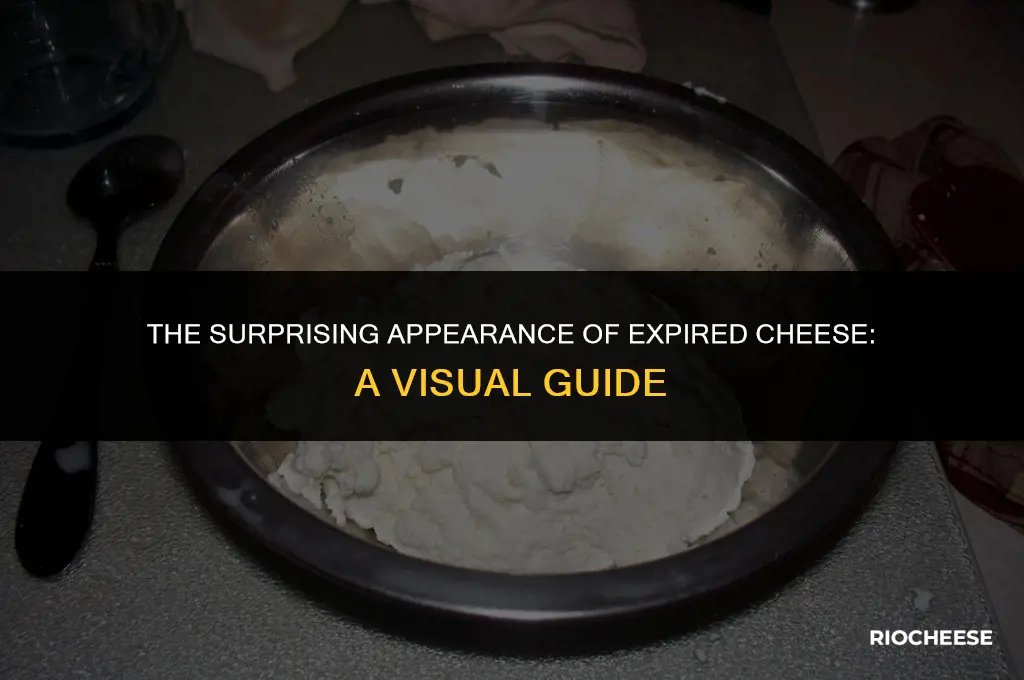
When cheese expires, its appearance can change significantly, making it important to know what to look for to ensure food safety. Expired cheese may develop a variety of visual cues that indicate it is no longer safe to consume. These can include mold growth, which appears as fuzzy or powdery patches on the surface of the cheese. The color of the cheese may also change, becoming darker or developing an off-color hue. Additionally, expired cheese may become slimy or develop a sour smell. It is crucial to pay attention to these signs and discard any cheese that shows them to prevent potential health risks.
Explore related products



What You'll Learn
- Color Changes: Expired cheese may develop discoloration, such as green, blue, or black spots and patches
- Texture Alterations: The texture of expired cheese can become slimy, mushy, or crumbly, indicating spoilage
- Odor Transformations: Expired cheese often emits a strong, unpleasant odor that may be sour, ammonia-like, or pungent
- Mold Growth: Visible mold growth, ranging from white to green or blue, is a clear sign of expired cheese
- Packaging Indicators: Expired cheese may show signs of bloating or leakage in its packaging, indicating bacterial growth

Color Changes: Expired cheese may develop discoloration, such as green, blue, or black spots and patches
One of the most noticeable signs that cheese has expired is a change in its color. While fresh cheese typically has a uniform, creamy hue, expired cheese may develop discoloration in the form of green, blue, or black spots and patches. These color changes are often caused by the growth of mold or bacteria, which can occur when cheese is not stored properly or is left out for too long.
The development of these discolorations can vary depending on the type of cheese and the specific conditions under which it has been stored. For example, blue cheese may develop more pronounced blue veins as it ages, while cheddar cheese may turn a darker orange or even brown. In some cases, the discoloration may be accompanied by an off-odor or a slimy texture, which are also indicators that the cheese has gone bad.
It is important to note that not all color changes in cheese are necessarily a sign of spoilage. Some cheeses, such as aged gouda or parmesan, may develop a darker color as they mature, which is a natural part of the aging process. However, if the discoloration is accompanied by other signs of spoilage, such as an off-odor or a slimy texture, it is best to err on the side of caution and discard the cheese.
To prevent cheese from expiring and developing discoloration, it is important to store it properly. Cheese should be kept in a cool, dry place, such as a refrigerator or a cheese cave, and should be wrapped tightly to prevent air from getting in. It is also important to consume cheese within a reasonable timeframe, as even properly stored cheese will eventually go bad.
In conclusion, color changes in cheese can be a clear indicator of spoilage, and it is important to be aware of these signs in order to avoid consuming expired cheese. By understanding the causes of discoloration and taking steps to store cheese properly, it is possible to extend its shelf life and enjoy its full flavor and texture for as long as possible.
Exploring the Rich Flavor Profile of Derby Cheese: A Culinary Journey
You may want to see also
Explore related products



Texture Alterations: The texture of expired cheese can become slimy, mushy, or crumbly, indicating spoilage
The texture of expired cheese undergoes significant alterations, serving as a clear indicator of spoilage. When cheese is fresh, its texture is typically smooth, firm, and consistent with its variety—whether it's the creamy softness of brie or the crumbly firmness of aged cheddar. However, as cheese ages beyond its prime, its texture begins to change noticeably.
One of the first signs of textural alteration in expired cheese is the development of a slimy surface. This sliminess is often due to the growth of bacteria and mold, which thrive in the moist environment of the cheese. The slime can range from a thin, almost invisible layer to a thick, gelatinous coating that makes the cheese unappetizing and potentially unsafe to eat.
In addition to sliminess, expired cheese may also become mushy. This mushiness is a result of the breakdown of the cheese's structure, caused by the same bacterial and enzymatic activity that leads to sliminess. The cheese may lose its shape, becoming soft and spreadable even when it's supposed to be firm. This textural change is particularly noticeable in cheeses that are meant to be sliced or grated, as they will no longer hold their form properly.
Another common textural alteration in expired cheese is crumbliness. While some cheeses are naturally crumbly when fresh, such as feta or blue cheese, an unnatural crumbliness can develop in other varieties as they spoil. This crumbliness is often accompanied by a dry, brittle texture that contrasts sharply with the cheese's original smoothness or creaminess.
To avoid these unpleasant textural changes, it's important to store cheese properly and consume it within its recommended shelf life. Keeping cheese in a cool, dry place and wrapping it tightly can help slow down the spoilage process. Additionally, being aware of the specific storage requirements for different types of cheese can help maintain their quality and prevent premature spoilage.
Unveiling the Flavor Profile of Eden Cheese: A Gourmet's Delight
You may want to see also
Explore related products


Odor Transformations: Expired cheese often emits a strong, unpleasant odor that may be sour, ammonia-like, or pungent
The transformation of cheese from a delightful culinary ingredient to a source of unpleasant odors is a fascinating yet unappetizing process. As cheese expires, the breakdown of its proteins and fats leads to the production of various volatile compounds that contribute to its distinctive smell. These odors can range from a mild sourness to a sharp, ammonia-like pungency, often signaling that the cheese has passed its prime.
One of the primary culprits behind the strong odor of expired cheese is the presence of ammonia. As the cheese decomposes, bacteria convert the nitrogen-containing compounds in the cheese into ammonia, which is released into the air. This process is particularly pronounced in cheeses with higher moisture content, as the bacteria thrive in these conditions.
Another contributor to the odor is the production of sulfur compounds. Certain bacteria present in cheese produce hydrogen sulfide and other sulfur-containing gases as they metabolize the cheese's components. These gases have a characteristic pungent smell that can be quite overpowering.
In addition to ammonia and sulfur compounds, expired cheese may also emit a sour odor due to the production of lactic acid and other organic acids. These acids are produced as the bacteria break down the lactose and other sugars in the cheese, leading to a decrease in pH and an increase in acidity.
The combination of these various compounds creates the complex and often unpleasant odor profile associated with expired cheese. This transformation serves as a natural warning sign that the cheese is no longer safe to consume, as the presence of harmful bacteria can pose health risks.
Understanding the odor transformations that occur in expired cheese can help individuals better identify when cheese has gone bad and should be discarded. By recognizing the signs of spoilage, such as strong odors, mold growth, or sliminess, consumers can avoid the potential health hazards associated with consuming expired cheese.
Exploring the Distinctive Appearance of Emmental Cheese
You may want to see also
Explore related products


Mold Growth: Visible mold growth, ranging from white to green or blue, is a clear sign of expired cheese
Mold growth on cheese is a clear indicator that it has passed its prime. This fungal invasion can manifest in various colors, including white, green, and blue, and is often accompanied by a musty or sour odor. The presence of mold on cheese not only affects its taste and texture but also poses potential health risks, as some molds can produce harmful mycotoxins.
To prevent mold growth, it's essential to store cheese properly. Hard cheeses should be wrapped tightly in plastic wrap or aluminum foil and stored in the refrigerator, while soft cheeses should be kept in a covered container. Additionally, it's crucial to consume cheese within its recommended shelf life, as the risk of mold growth increases significantly after this period.
If you encounter mold on cheese, it's best to discard it immediately. Attempting to remove mold from cheese can be ineffective and may even spread the spores further. In some cases, mold can penetrate deep into the cheese, making it impossible to remove completely. Therefore, it's always safer to err on the side of caution and dispose of any cheese that shows signs of mold growth.
In conclusion, mold growth is a definitive sign of expired cheese. By understanding the causes and prevention methods, you can ensure that your cheese remains fresh and safe to consume. Always prioritize food safety and discard any cheese that exhibits mold growth to avoid potential health risks.
Exploring the Rich Flavors of Cotswold Cheese: A Taste Journey
You may want to see also
Explore related products


Packaging Indicators: Expired cheese may show signs of bloating or leakage in its packaging, indicating bacterial growth
One of the primary indicators that cheese has expired is the condition of its packaging. Fresh cheese should be firmly encased in its wrapping, maintaining a consistent shape and texture. However, as cheese ages and bacterial growth increases, the packaging may begin to show signs of distress. Bloating is a common issue, where the package appears swollen or puffed up, indicating that gas has been produced by the bacteria breaking down the cheese. This can be particularly noticeable in vacuum-sealed packages, where the excess gas has nowhere to escape.
Leakage is another key indicator of expired cheese. As the bacteria grow and the cheese begins to liquefy, it may start to seep through the packaging. This can result in a noticeable wetness or dampness on the outside of the package, or even a small puddle of liquid cheese. In some cases, the cheese may also develop a strong, unpleasant odor that can permeate the packaging and be detected even before it is opened.
It's important to note that not all cheeses will show these packaging indicators when they expire. Some types of cheese, such as those with a higher moisture content, may simply develop mold or become slimy without affecting the packaging. However, for many cheeses, bloating and leakage are clear signs that the product has gone bad and should not be consumed.
In addition to checking the packaging, it's always a good idea to inspect the cheese itself for any signs of spoilage. This may include mold, discoloration, or an off smell. If in doubt, it's best to err on the side of caution and discard the cheese to avoid any potential health risks.
To prevent cheese from expiring too quickly, it's important to store it properly. Most cheeses should be kept in the refrigerator, ideally in a cheese drawer or a sealed container to maintain the right temperature and humidity levels. It's also important to consume cheese within a reasonable timeframe, as even properly stored cheese will eventually go bad. By paying attention to the packaging and the cheese itself, consumers can help ensure that they are enjoying fresh, safe, and delicious cheese.
Exploring the Rich and Tangy Flavor Profile of Curd Cheese
You may want to see also
Frequently asked questions
Expired cheese often shows mold growth, which can appear as green, white, or black spots. The texture may become slimy or overly dry, and the color might change, becoming darker or developing an off-yellow hue.
For hard cheeses, signs of spoilage include mold, a strong ammonia smell, and a change in texture, such as becoming crumbly or developing cracks. The color may also shift to a darker shade.
The expiration date on cheese packaging indicates the last date the manufacturer guarantees the cheese will be at its best quality and safe to consume. After this date, the cheese may start to spoil and should be inspected for signs of expiration before eating.
It is generally not recommended to eat cheese with mold, especially if it's soft cheese. Mold can produce toxins that may be harmful if ingested. For hard cheeses, if the mold is superficial, it can sometimes be cut off, but it's best to discard any cheese with extensive mold growth.
Cheese should be stored in the refrigerator, ideally in the crisper drawer where the humidity is higher. It should be wrapped tightly in plastic wrap or aluminum foil to prevent air exposure, which can accelerate spoilage. Different types of cheese may require specific storage conditions, so it's best to check the packaging for recommendations.