Bushra Griffith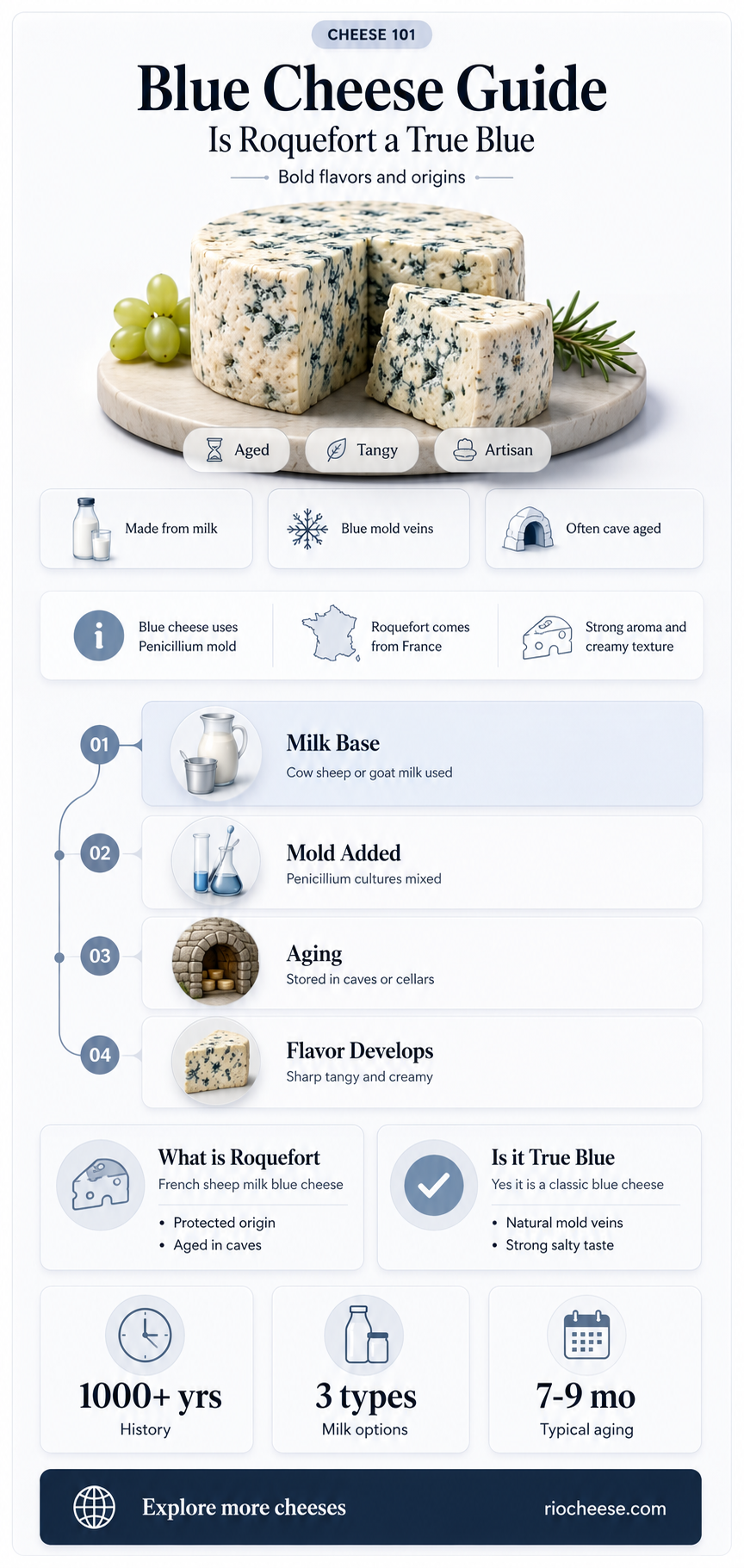
Roquefort is indeed a type of blue cheese, renowned for its distinctive flavor and texture. Originating from the Roquefort-sur-Soulzon region in southern France, this cheese is made from sheep's milk and is characterized by its creamy white interior veined with blue-green mold. The mold, known as Penicillium roqueforti, is what gives Roquefort its unique taste and appearance. Aged in natural limestone caves, Roquefort develops a complex flavor profile that ranges from sharp and tangy to rich and buttery. It is often enjoyed on its own, paired with bread or crackers, or used as an ingredient in various culinary dishes.
Explore related products


What You'll Learn
- Definition: Roquefort is a type of blue cheese made from sheep's milk, originating from France
- Production Process: It involves introducing Penicillium roqueforti mold to the cheese, which gives it the characteristic blue veins
- Flavor Profile: Roquefort has a strong, pungent flavor with a creamy texture and is often described as spicy and tangy
- Usage: It's commonly used in salads, dressings, and as a spread on bread or crackers
- Nutritional Information: Roquefort is high in fat and calories but also provides protein, calcium, and vitamins like B12

Definition: Roquefort is a type of blue cheese made from sheep's milk, originating from France
Roquefort cheese, a renowned delicacy from France, is indeed a type of blue cheese. This assertion is rooted in the cheese's distinctive characteristics and production methods. Blue cheese, as a category, is defined by the presence of blue or green veins of mold, which are typically introduced during the cheese-making process. Roquefort, made exclusively from sheep's milk, undergoes a similar mold-inoculation process, resulting in its signature blue veins.
The origins of Roquefort can be traced back to the Roquefort-sur-Soulzon region in southern France, where it has been produced for centuries. The cheese's unique flavor profile, which balances sharpness with a hint of sweetness, is a result of the specific mold cultures used and the aging process in the region's natural limestone caves.
One of the key aspects that sets Roquefort apart from other blue cheeses is its texture. While many blue cheeses can be quite crumbly, Roquefort is known for its creamy consistency. This is achieved through careful control of the cheese's moisture content and aging time. The cheese is typically aged for at least four months, during which time the mold develops and the flavors mature.
Roquefort's status as a blue cheese is further solidified by its classification as an Appellation d'Origine Contrôlée (AOC) product in France. This designation ensures that the cheese is produced according to strict guidelines, using traditional methods and local ingredients. The AOC label is a guarantee of quality and authenticity, and it helps to preserve the unique characteristics of Roquefort.
In conclusion, Roquefort is not only a blue cheese but also a product with a rich history and a distinct identity. Its classification as a blue cheese is based on its mold content, production methods, and flavor profile, all of which align with the characteristics of this cheese category. The specific techniques used in its creation, combined with the unique environmental conditions of its region of origin, contribute to Roquefort's status as a premium and highly sought-after cheese.
Exploring the Distinct Flavors: Blue Cheese vs. Roquefort
You may want to see also
Explore related products


Production Process: It involves introducing Penicillium roqueforti mold to the cheese, which gives it the characteristic blue veins
The production process of Roquefort cheese is a fascinating blend of traditional craftsmanship and scientific precision. It begins with the careful selection of milk, typically from sheep, which is then pasteurized and cooled to a specific temperature. The next crucial step involves introducing Penicillium roqueforti mold to the cheese. This mold is responsible for the distinctive blue veins that characterize Roquefort and other blue cheeses. The mold spores are evenly distributed across the surface of the cheese, and the mixture is left to incubate under controlled conditions.
During the incubation period, the mold penetrates the cheese, creating the iconic blue veins as it grows. This process is meticulously monitored to ensure that the mold development is uniform and that the cheese achieves the desired level of flavor and texture. The cheese is then aged in a cool, humid environment, often in natural caves, where it continues to mature and develop its complex flavor profile.
One of the unique aspects of Roquefort production is the use of salt in the aging process. Salt is applied to the surface of the cheese, which helps to draw out moisture and inhibit the growth of unwanted bacteria. This step also contributes to the cheese's distinctive taste and texture. After several weeks of aging, the Roquefort is ready for consumption, offering a rich, creamy flavor with a sharp, tangy kick from the blue mold.
In summary, the production of Roquefort cheese involves a series of precise steps, from milk selection and pasteurization to mold introduction and aging. The careful control of each stage ensures that the final product is a high-quality, flavorful cheese with the characteristic blue veins that define it as a true blue cheese.
Discover the Best Spots to Buy Blue Cheese Stuffed Olives
You may want to see also
Explore related products


Flavor Profile: Roquefort has a strong, pungent flavor with a creamy texture and is often described as spicy and tangy
Roquefort cheese is renowned for its distinctive and robust flavor profile, which sets it apart from other types of blue cheese. The strong, pungent aroma is the first characteristic that strikes the senses, hinting at the intense taste experience that awaits. This bold scent is a result of the specific mold cultures used during the cheese-making process, which contribute to its unique identity.
The creamy texture of Roquefort provides a rich and velvety mouthfeel, creating a luxurious contrast to its sharp flavor. This smoothness is achieved through careful aging and the use of high-quality milk, resulting in a cheese that is both indulgent and satisfying. The creaminess also helps to balance the intensity of the flavor, making it more approachable for those who may be hesitant to try a strong blue cheese.
In addition to its pungency, Roquefort is often described as having spicy and tangy notes. These flavors come from the natural enzymes present in the mold, which break down the fats and proteins in the cheese, creating a complex array of taste sensations. The spiciness can range from mild to quite pronounced, depending on the specific batch and aging process, while the tanginess adds a bright, acidic element that cuts through the richness of the cheese.
One of the key aspects of Roquefort's flavor profile is its ability to evolve and change over time. As the cheese ages, the flavors become more pronounced and the texture becomes firmer, offering a different experience at various stages of maturity. This makes Roquefort a fascinating cheese for connoisseurs and enthusiasts alike, as it can be enjoyed in a variety of ways and at different times in its life cycle.
In conclusion, the flavor profile of Roquefort cheese is a symphony of strong, pungent aromas, creamy textures, and spicy, tangy notes. Its unique characteristics make it a standout in the world of blue cheeses, offering a rich and complex taste experience that is both indulgent and memorable. Whether enjoyed on its own, paired with wine, or used in culinary creations, Roquefort's distinctive flavor profile is sure to leave a lasting impression.
Mastering the Art of Crumbling Blue Cheese: A Gourmet's Guide
You may want to see also
Explore related products


Usage: It's commonly used in salads, dressings, and as a spread on bread or crackers
Roquefort, a renowned blue cheese, is celebrated for its versatile culinary applications. One of its most common uses is in salads, where its pungent flavor and creamy texture add a rich, tangy dimension to mixed greens. The cheese is often crumbled over the top of salads, allowing its distinctive taste to meld with the other ingredients. Additionally, Roquefort is a popular choice for dressings, lending its bold character to vinaigrettes and creamy dressings alike. When incorporated into dressings, it not only enhances the flavor profile but also adds a luxurious, velvety consistency.
Beyond salads and dressings, Roquefort is frequently enjoyed as a spread on bread or crackers. This usage allows the cheese to be savored in its purest form, showcasing its complex flavor notes and smooth, spreadable texture. When paired with crusty bread or crisp crackers, Roquefort creates a delightful contrast of textures and tastes, making it a favorite for cheese boards and appetizers.
In culinary applications, Roquefort's usage extends to gourmet dishes as well. Chefs often incorporate it into sauces, soups, and casseroles to add depth and richness. Its ability to melt smoothly makes it an excellent choice for gratins and baked dishes, where it contributes a creamy, savory element. Furthermore, Roquefort pairs exceptionally well with fruits, nuts, and honey, making it a versatile ingredient for both sweet and savory recipes.
When using Roquefort in cooking, it's important to consider its strong flavor and adjust the quantity accordingly. A little goes a long way, and it's best to balance its pungency with other ingredients. For those new to using Roquefort, starting with small amounts and gradually increasing can help in achieving the desired flavor profile without overpowering the dish.
In summary, Roquefort's usage in salads, dressings, and as a spread on bread or crackers highlights its adaptability and enhances its reputation as a premium blue cheese. Its rich flavor and creamy texture make it a sought-after ingredient in both simple and sophisticated culinary creations.
Discover the Best Places to Purchase Rogue River Blue Cheese
You may want to see also
Explore related products


Nutritional Information: Roquefort is high in fat and calories but also provides protein, calcium, and vitamins like B12
Roquefort cheese, renowned for its distinctive blue veins and robust flavor, is indeed a type of blue cheese. This French delicacy is made from sheep's milk and aged in caves, which contributes to its unique taste and texture. The nutritional profile of Roquefort is quite rich, making it a subject of interest for both culinary enthusiasts and health-conscious individuals.
One of the most notable aspects of Roquefort's nutritional information is its high fat and calorie content. A single ounce (28 grams) of Roquefort cheese contains approximately 100 calories and 9 grams of fat, with about 6 grams being saturated fat. This high fat content is typical of many cheeses, especially those made from sheep's milk, and contributes to the cheese's creamy texture and rich flavor.
Despite its high fat and calorie content, Roquefort also offers several nutritional benefits. It is an excellent source of protein, providing about 6 grams per ounce. Protein is essential for building and repairing tissues in the body and plays a crucial role in maintaining muscle mass and bone health. Additionally, Roquefort is rich in calcium, with an ounce providing roughly 20% of the recommended daily intake. Calcium is vital for strong bones and teeth and is also involved in muscle function and nerve transmission.
Roquefort is also a good source of several vitamins, particularly vitamin B12. This vitamin is important for the production of red blood cells and the maintenance of the nervous system. It also plays a role in the metabolism of fats and proteins. Other vitamins present in Roquefort include vitamin A, which is important for vision and immune function, and vitamin K, which is necessary for blood clotting and bone health.
In conclusion, while Roquefort cheese is high in fat and calories, it also provides valuable nutrients such as protein, calcium, and vitamins B12, A, and K. As with any food, it should be consumed in moderation as part of a balanced diet. Its unique flavor and nutritional profile make it a popular choice for those looking to add variety to their cheese consumption.
The Surprising Truth About Blue Cheese and Rats
You may want to see also
Frequently asked questions
Yes, Roquefort is indeed a blue cheese. It is a type of cheese that is made from sheep's milk and is known for its strong flavor and blue veins, which are a result of the mold Penicillium roqueforti.
Roquefort cheese originates from the Roquefort-sur-Soulzon region in the south of France. It has been produced in this area for centuries and is protected by a strict appellation d'origine contrôlée (AOC) designation, ensuring its quality and authenticity.
Roquefort cheese is made by first coagulating sheep's milk, then draining and pressing the curds into molds. The cheese is then aged in natural caves for several months, during which time it is inoculated with the mold Penicillium roqueforti. This mold gives Roquefort its distinctive blue veins and strong flavor.
Roquefort cheese has a bold and pungent flavor profile. It is known for its sharp, tangy taste and slightly sweet undertones. The blue veins in the cheese contribute to its strong flavor, making it a popular choice for those who enjoy robust and flavorful cheeses.
Roquefort cheese should be stored in a cool, humid environment, such as a cheese cave or the crisper drawer of a refrigerator. It is important to keep the cheese wrapped in its original rind or in wax paper to prevent it from drying out. Roquefort cheese can be stored for several weeks, but it is best enjoyed when it is fresh and at its peak flavor.