 Andy Montoya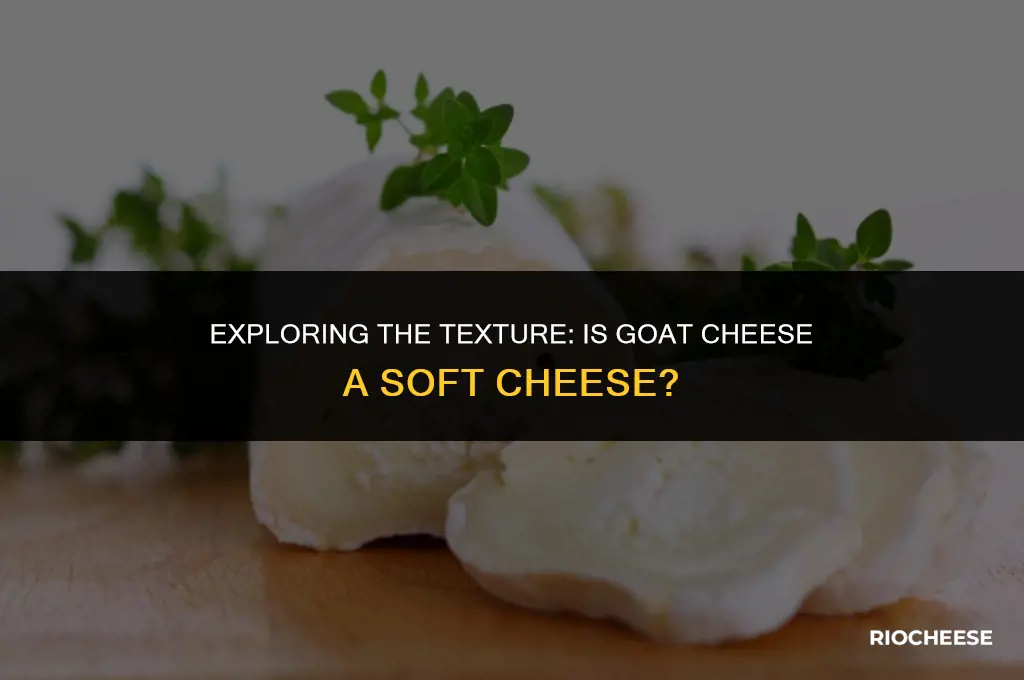
Goat cheese, also known as chevre, is indeed classified as a soft cheese. Soft cheeses are characterized by their creamy texture and spreadable consistency, often with a white rind. Goat cheese fits this description perfectly, as it is made from goat's milk and has a smooth, tangy flavor profile. It's commonly used in culinary applications where a soft, easily spreadable cheese is desired, such as on crackers, in salads, or as part of a cheese platter. Its soft texture also makes it a popular choice for those who prefer milder, less pungent cheeses.
Explore related products




What You'll Learn
- Definition of Soft Cheese: Understanding the characteristics that classify a cheese as soft, including texture and aging process
- Goat Cheese Texture: Exploring the typical texture of goat cheese and how it compares to other soft cheeses
- Aging Process: Discussing the aging duration of goat cheese and its impact on softness and flavor development
- Comparison to Other Cheeses: Contrasting goat cheese with other well-known soft cheeses like Brie or Camembert
- Culinary Uses: Highlighting common culinary applications of goat cheese that leverage its soft texture

Definition of Soft Cheese: Understanding the characteristics that classify a cheese as soft, including texture and aging process
Soft cheese is a category of cheese characterized by its creamy texture and short aging process. Unlike hard cheeses, which are aged for extended periods to develop a firm texture and strong flavor, soft cheeses are typically aged for only a few weeks to a few months. This shorter aging period results in a cheese that is spreadable, often with a white rind, and a milder flavor profile.
The texture of soft cheese is one of its defining features. It tends to be moist and creamy, with a consistency that can range from semi-soft to almost liquid. This texture is achieved through a combination of factors, including the type of milk used, the coagulation process, and the aging environment. Soft cheeses are often made from cow's, goat's, or sheep's milk, and the specific characteristics of the milk can influence the final texture of the cheese.
In terms of flavor, soft cheeses are generally milder than their hard counterparts. They can have a range of flavor profiles, from slightly tangy to rich and buttery. The flavor develops during the aging process, as enzymes break down the proteins and fats in the cheese, creating various compounds that contribute to its taste.
Some common examples of soft cheese include Brie, Camembert, and Chevre. Each of these cheeses has its own unique characteristics, but they all share the common traits of a soft texture and relatively short aging process.
Goat cheese, specifically, is often considered a soft cheese due to its creamy texture and mild flavor. It is typically made from goat's milk and can have a slightly tangy taste. Goat cheese is versatile and can be used in a variety of culinary applications, from spreading on crackers to incorporating into desserts.
In summary, soft cheese is defined by its creamy texture and short aging process, resulting in a mild-flavored cheese that is often spreadable. Goat cheese fits into this category due to its similar characteristics, making it a popular choice for those who enjoy soft cheeses.
Exploring the Link Between Goat Cheese and Rosacea: Facts and Myths
You may want to see also
Explore related products


Goat Cheese Texture: Exploring the typical texture of goat cheese and how it compares to other soft cheeses
Goat cheese is renowned for its distinct texture, which sets it apart from other soft cheeses. Typically, goat cheese has a creamy yet slightly crumbly consistency, often described as smooth with a delicate graininess. This texture is a result of the cheese-making process, where the curds are gently coagulated and then drained, leaving behind a moist, tender product. Compared to other soft cheeses like Brie or Camembert, goat cheese is less gooey and more firm, making it a versatile ingredient in various culinary applications.
The texture of goat cheese can vary depending on its age and the specific type. Fresh goat cheese, also known as chevre, is usually softer and creamier, while aged goat cheeses can develop a firmer, more crumbly texture. This variation allows goat cheese to be used in a wide range of dishes, from spreads and dips to salads and baked goods. Its unique texture also makes it a popular choice for cheese boards, where it can be paired with fruits, nuts, and crackers.
One of the key factors contributing to goat cheese's texture is the type of milk used. Goat's milk is naturally lower in fat and protein than cow's milk, which results in a lighter, more delicate cheese. Additionally, the acidity of goat's milk plays a role in the cheese's texture, as it helps to break down the proteins and create a softer curd. This combination of factors gives goat cheese its characteristic texture, which is both creamy and slightly crumbly.
In comparison to other soft cheeses, goat cheese's texture is often described as more refined and subtle. While cheeses like Brie and Camembert are known for their rich, buttery texture and strong flavors, goat cheese offers a lighter, more nuanced taste and mouthfeel. This makes it a popular choice for those who prefer a milder cheese that still offers a unique and enjoyable eating experience.
Overall, the texture of goat cheese is a defining characteristic that sets it apart from other soft cheeses. Its creamy yet slightly crumbly consistency, combined with its light and delicate flavor, makes it a versatile and popular ingredient in many culinary applications. Whether used as a spread, in salads, or on cheese boards, goat cheese's unique texture adds a distinctive touch to any dish.
Goat Cheese vs. Goat Milk: Which One Reigns Supreme?
You may want to see also
Explore related products


Aging Process: Discussing the aging duration of goat cheese and its impact on softness and flavor development
The aging process of goat cheese is a critical factor in determining its softness and flavor profile. Typically, goat cheese is aged for a period ranging from a few weeks to several months. During this time, the cheese undergoes a series of biochemical changes that contribute to its final texture and taste.
In the initial stages of aging, goat cheese is relatively soft and mild in flavor. As it ages, the cheese becomes firmer and develops a more pronounced, tangy flavor. This is due to the breakdown of lactose into lactic acid, which increases the acidity of the cheese and causes the proteins to coagulate, resulting in a firmer texture. Additionally, the aging process allows for the development of complex flavors through the action of enzymes and microorganisms present in the cheese.
The optimal aging duration for goat cheese depends on the desired level of softness and flavor intensity. For a softer, milder cheese, a shorter aging period is preferable, while a longer aging period is required for a firmer, more flavorful cheese. It is important to note that the aging process is highly sensitive to environmental conditions, such as temperature and humidity, which can significantly impact the final quality of the cheese.
In conclusion, the aging process plays a crucial role in shaping the characteristics of goat cheese. By carefully controlling the aging duration and environmental conditions, cheesemakers can produce a wide range of goat cheeses with varying levels of softness and flavor intensity, catering to diverse consumer preferences.
Exploring the Health Benefits: Goat Cheese for Kidney and Liver Wellness?
You may want to see also
Explore related products


Comparison to Other Cheeses: Contrasting goat cheese with other well-known soft cheeses like Brie or Camembert
Goat cheese, Brie, and Camembert are all soft cheeses, but they differ significantly in terms of flavor, texture, and production methods. Goat cheese is made from goat's milk and is known for its tangy, slightly salty taste and crumbly texture. Brie and Camembert, on the other hand, are made from cow's milk and have a milder, creamier flavor and a smoother, more spreadable texture.
One of the main differences between goat cheese and Brie or Camembert is the aging process. Goat cheese is typically aged for a shorter period of time, which contributes to its tangy flavor and crumbly texture. Brie and Camembert are aged for a longer period of time, which allows them to develop a more complex flavor and a softer, more spreadable texture.
Another difference between goat cheese and Brie or Camembert is the fat content. Goat cheese is generally lower in fat than Brie or Camembert, which makes it a popular choice for those who are looking for a healthier cheese option. Brie and Camembert, on the other hand, are higher in fat, which contributes to their rich, creamy flavor and smooth texture.
In terms of culinary uses, goat cheese is often used in salads, sandwiches, and as a garnish for various dishes. Brie and Camembert are often used as a spread for crackers or bread, or as an ingredient in various recipes such as quiches and casseroles.
Overall, while goat cheese, Brie, and Camembert are all soft cheeses, they have distinct differences in terms of flavor, texture, and production methods. Goat cheese is a good choice for those who prefer a tangy, slightly salty flavor and a crumbly texture, while Brie and Camembert are better suited for those who prefer a milder, creamier flavor and a smoother, more spreadable texture.
Navigating Lactose Intolerance: The Truth About Goat Cheese
You may want to see also
Explore related products


Culinary Uses: Highlighting common culinary applications of goat cheese that leverage its soft texture
Goat cheese, with its soft and creamy texture, is a versatile ingredient in the culinary world. One of its most common applications is as a spread for crackers or bread. The soft texture allows it to be easily smeared, making it an ideal choice for appetizers or snacks. Additionally, goat cheese can be used in dips and spreads, combined with herbs and spices to create flavorful accompaniments for vegetables or chips.
In the realm of salads, goat cheese adds a luxurious touch. Its soft texture contrasts beautifully with the crispness of fresh greens and vegetables. When crumbled over a salad, it provides a rich, tangy flavor that complements a variety of dressings. Goat cheese can also be used as a filling for stuffed vegetables or fruits, such as bell peppers or figs, where its softness allows it to blend seamlessly with other ingredients.
Another popular culinary use of goat cheese is in desserts. Its creamy texture and mild flavor make it an excellent choice for cheesecakes, tarts, and other sweet treats. Goat cheese can also be used to make ice cream or sorbet, where its richness adds depth to the flavor profile. In savory dishes, goat cheese can be incorporated into sauces or used as a topping for pizzas and flatbreads, where it melts slightly and adds a tangy, creamy element to the dish.
When cooking with goat cheese, it's important to consider its melting point, which is lower than that of many other cheeses. This means it can easily become too soft or even liquid when heated, so it's best used in dishes where it won't be subjected to high temperatures for extended periods. Additionally, goat cheese can be quite tangy, so it's often paired with sweet or acidic ingredients to balance its flavor.
In conclusion, goat cheese's soft texture makes it a highly versatile ingredient in a wide range of culinary applications. From spreads and dips to salads, desserts, and savory dishes, its creamy consistency and tangy flavor can add depth and richness to any meal.
Exploring the Impact of Goat Cheese on Arthritis: A Nutritional Insight
You may want to see also
Frequently asked questions
Yes, goat cheese is generally classified as a soft cheese. It has a creamy, spreadable texture and is often used in a similar manner to other soft cheeses like cream cheese or Brie.
Goat cheese is versatile and can be used in various culinary applications. It's popular in salads, on crackers or bread, in sandwiches, and as a topping for baked potatoes or grilled vegetables. It can also be used in desserts, such as cheesecakes or pastries.
Goat cheese has a distinct, tangy flavor that sets it apart from other cheeses. It's often described as having a slightly sharp, acidic taste, which can vary in intensity depending on the specific type and aging process. This unique flavor profile makes it a favorite among cheese enthusiasts.
Yes, there are several varieties of goat cheese, each with its own characteristics. Some common types include fresh goat cheese (also known as chevre), which is soft and spreadable; aged goat cheese, which is firmer and has a more pronounced flavor; and goat cheese with herbs or spices, which can add additional layers of flavor to the cheese.


![Soft-Ripened Cheese, artisan, soft-ripened cheese, Creamy rich buttery flavor, Keep refrigerated [16 oz, 1 lb ]](https://m.media-amazon.com/images/I/51OQgafe8bL._AC_UL320_.jpg)


