Kamil Perry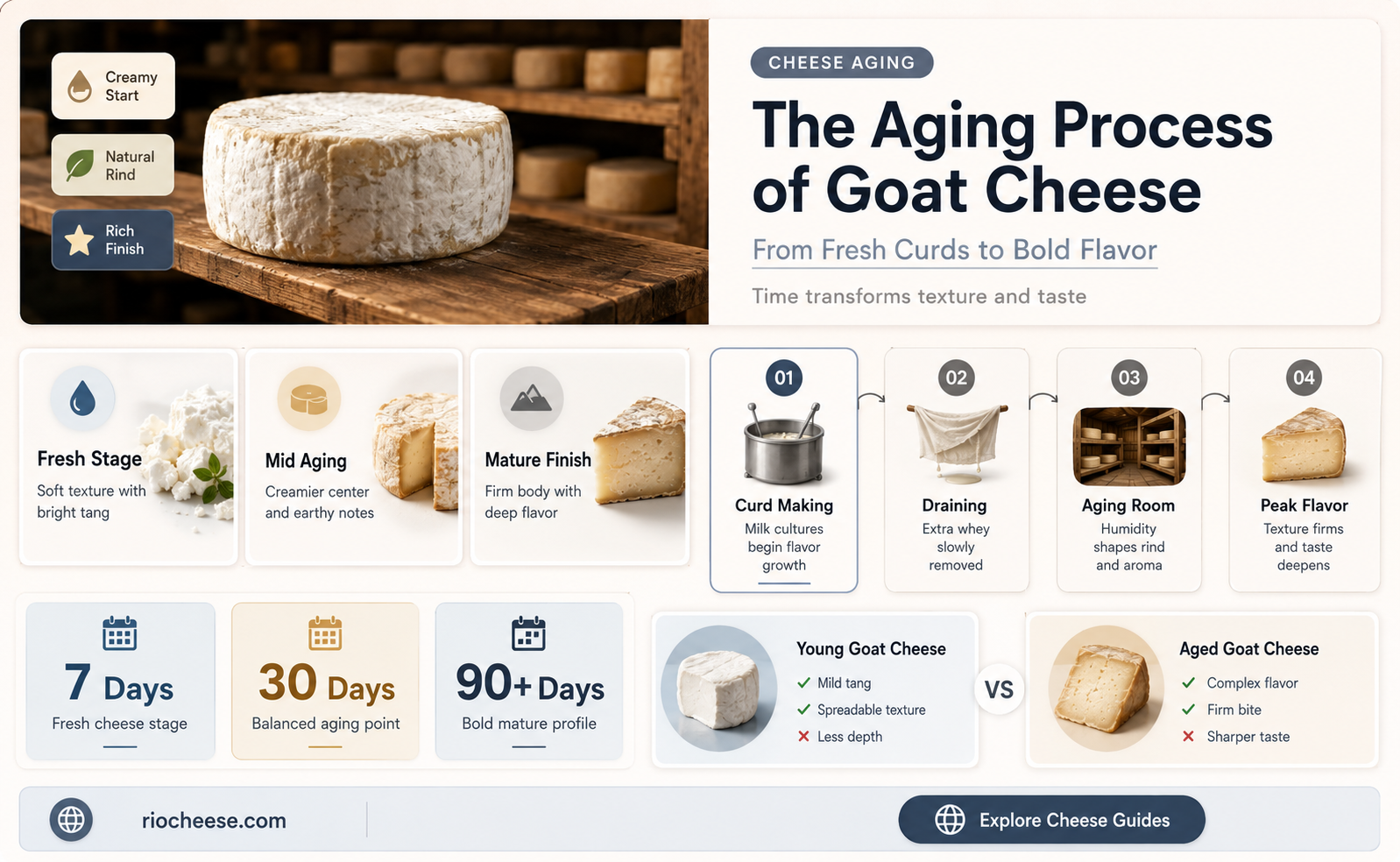
Goat cheese, also known as chevre, is a type of cheese made from goat's milk. It is typically soft and creamy with a slightly tangy flavor. While some varieties of goat cheese are aged, many are not. Aging is a process that involves storing the cheese for an extended period, which allows it to develop a stronger flavor and firmer texture. The aging process can vary from a few weeks to several months or even years, depending on the desired characteristics of the final product. In the case of goat cheese, aging can enhance its flavor profile, making it more complex and robust. However, not all goat cheeses undergo this process, and some are sold fresh, with a milder taste and softer consistency.
| Characteristics | Values |
|---|---|
| Aging Process | Goat cheese can be aged, but it is often consumed fresh. Aging typically lasts from a few weeks to several months. |
| Flavor Profile | Fresh goat cheese has a mild, tangy flavor. As it ages, the flavor becomes stronger, more pungent, and sometimes develops a slightly sour taste. |
| Texture | Fresh goat cheese is soft and creamy. Aged goat cheese becomes firmer and crumblier. |
| Appearance | Fresh goat cheese is usually white or off-white. Aged goat cheese may develop a rind and can have a more yellowish or brownish hue. |
| Fat Content | Goat cheese generally has a lower fat content compared to cow's milk cheeses, but this can vary depending on the specific type and aging process. |
| Protein Content | Goat cheese is a good source of protein, with aged varieties typically containing more protein than fresh ones due to the concentration of nutrients during the aging process. |
| Calcium Content | Goat cheese is rich in calcium, which is important for bone health. Aging can slightly increase the calcium content. |
| Shelf Life | Fresh goat cheese has a shorter shelf life, usually around 1-2 weeks. Aged goat cheese can last longer, often up to 6-8 weeks or more if properly stored. |
| Production Process | Goat cheese is made from goat's milk, which is coagulated using an acid or rennet. The curds are then drained and shaped. For aged goat cheese, the cheese is left to mature in a controlled environment. |
| Popular Varieties | Some popular aged goat cheeses include Chevre, Bucheron, and aged Gouda. Each variety has its unique aging process and flavor profile. |
| Pairing Suggestions | Aged goat cheese pairs well with fruits like figs and apricots, nuts, and honey. It can also be used in salads, sandwiches, or as a topping for crackers. |
| Nutritional Benefits | Goat cheese is easier to digest than cow's milk cheese and is a good source of vitamins and minerals, including vitamin B12, riboflavin, and phosphorus. Aging can enhance these nutritional benefits. |
| Cultural Significance | Goat cheese has a long history and is an integral part of many cuisines around the world, particularly in Mediterranean and Middle Eastern cultures. Aged goat cheese is often associated with gourmet and artisanal food traditions. |
| Storage Requirements | Fresh goat cheese should be stored in the refrigerator in a sealed container. Aged goat cheese can be stored at room temperature for short periods but should be refrigerated to prolong its shelf life. |
| Cooking Uses | Aged goat cheese can be used in cooking to add a rich, tangy flavor to dishes. It can be melted, crumbled, or used as a garnish. |
Explore related products


What You'll Learn
- Definition of Aged Cheese: Aged cheese is cheese that has been matured for a longer period, typically months or years
- Goat Cheese Aging Process: Goat cheese can be aged, but it's often consumed fresh. Aging enhances flavor and texture
- Types of Aged Goat Cheese: Examples include Bucheron, Chevre Noir, and aged Gouda made from goat's milk
- Flavor Profile Changes: Aging goat cheese intensifies its flavor, adding nuttiness, sharpness, and complexity
- Culinary Uses: Aged goat cheese is used in dishes requiring a stronger cheese flavor, such as salads, pizzas, and cheese boards

Definition of Aged Cheese: Aged cheese is cheese that has been matured for a longer period, typically months or years
Aged cheese is a type of cheese that has undergone a maturation process for an extended period, typically ranging from several months to several years. This process allows the cheese to develop a more complex flavor profile, a firmer texture, and a more concentrated nutritional content. The aging process can take place in a variety of environments, including caves, cellars, or specialized aging rooms, and may involve the use of molds, bacteria, or other microorganisms to enhance the cheese's characteristics.
The definition of aged cheese is not strictly limited to a specific type of milk or production method, but rather to the duration and conditions of the maturation process. As such, aged cheese can be made from cow's milk, sheep's milk, goat's milk, or even a combination of milks. The key factor in determining whether a cheese is considered aged is the length of time it has been allowed to mature and develop its unique qualities.
In the context of goat cheese, it is possible to produce aged goat cheese by allowing the cheese to mature for an extended period. However, goat cheese is often consumed fresh or semi-soft, and the aging process may not be as common or as well-known as it is for other types of cheese, such as cheddar or Parmesan. Aged goat cheese can have a strong, pungent flavor and a firm, crumbly texture, which may not be to everyone's taste.
When considering whether a particular cheese is an aged cheese, it is important to look for information about the maturation process, including the length of time the cheese has been aged and the conditions under which it was aged. This information can often be found on the cheese's packaging or by consulting with the cheese's producer or a knowledgeable cheese monger. By understanding the definition of aged cheese and the factors that contribute to its unique qualities, consumers can make informed choices about the types of cheese they purchase and consume.
Exploring the pH Balance: Is Goat Cheese Alkaline or Acidic?
You may want to see also
Explore related products



Goat Cheese Aging Process: Goat cheese can be aged, but it's often consumed fresh. Aging enhances flavor and texture
Goat cheese, unlike many other cheeses, is often consumed fresh rather than aged. However, the aging process can significantly enhance its flavor and texture, transforming it into a more complex and savory delicacy. Aging goat cheese involves a careful balance of temperature, humidity, and time, which allows the development of beneficial bacteria and molds that contribute to its unique taste and character.
The aging process for goat cheese typically begins with the fresh cheese being placed in a controlled environment, such as a cheese cave or a specialized aging room. The ideal temperature for aging goat cheese is between 50°F and 60°F (10°C and 15°C), with a relative humidity of 80% to 90%. This environment encourages the growth of natural bacteria and molds on the surface of the cheese, which are essential for developing its flavor profile.
As the cheese ages, it undergoes several transformations. The moisture content decreases, resulting in a firmer texture. The proteins in the cheese break down, creating a more tender and crumbly consistency. Additionally, the fats in the cheese become more pronounced, contributing to a richer and more buttery flavor. The aging process also allows the development of various flavor compounds, such as ammonia, sulfur, and aldehydes, which give aged goat cheese its distinctive taste.
The length of the aging process can vary depending on the desired outcome. Some goat cheeses are aged for only a few weeks, resulting in a mild and slightly tangy flavor. Others may be aged for several months or even years, producing a more intense and pungent taste. The rind of the cheese, which forms during the aging process, can also be eaten and adds an additional layer of flavor and texture.
In conclusion, while goat cheese is often enjoyed fresh, the aging process can elevate its taste and texture to new heights. By carefully controlling the environment and allowing the cheese to mature over time, producers can create a range of flavors and textures that cater to different palates and culinary applications.
Exploring Dairy Alternatives: Is Goat Cheese AIP-Friendly?
You may want to see also
Explore related products


Types of Aged Goat Cheese: Examples include Bucheron, Chevre Noir, and aged Gouda made from goat's milk
Aged goat cheese is a category of cheese that has been matured for an extended period, typically ranging from several months to a few years. This aging process allows the cheese to develop a more complex flavor profile, firmer texture, and often a stronger aroma compared to its fresh counterparts. Bucheron, Chevre Noir, and aged Gouda made from goat's milk are prime examples of this category, each with its unique characteristics and production methods.
Bucheron is a semi-soft, aged goat cheese originating from France. It is known for its creamy texture and rich, buttery flavor with hints of hazelnut and caramel. The cheese is typically aged for about 6-8 weeks, during which time it develops a white rind that is edible and adds to its overall taste. Bucheron is often enjoyed on its own or paired with fruits and nuts.
Chevre Noir, also known as black goat cheese, is a type of aged goat cheese that has been coated in a mixture of ash and salt before aging. This process gives the cheese its distinctive black exterior and contributes to its bold, tangy flavor. Chevre Noir is usually aged for several months, resulting in a firm texture and a strong, pungent aroma. It is commonly used in salads, sandwiches, or as a garnish for various dishes.
Aged Gouda made from goat's milk is a Dutch cheese that has been matured for an extended period, often up to 2 years or more. This aging process transforms the cheese from a soft, mild product into a hard, crumbly cheese with a rich, nutty flavor and a slightly sweet finish. Aged Gouda is known for its complex taste and is often compared to aged cheddar or Parmesan. It is typically enjoyed on its own, grated over dishes, or used in gourmet recipes.
In summary, aged goat cheese encompasses a variety of cheeses that have been matured to develop more intricate flavors and textures. Bucheron, Chevre Noir, and aged Gouda made from goat's milk are just a few examples of the diverse options available within this category. Each type of aged goat cheese offers a unique taste experience, making them a popular choice among cheese enthusiasts and culinary professionals alike.
Whole30 and Goat Cheese: A Match Made in Dietary Heaven?
You may want to see also
Explore related products


Flavor Profile Changes: Aging goat cheese intensifies its flavor, adding nuttiness, sharpness, and complexity
Aging goat cheese is a transformative process that significantly alters its flavor profile. As the cheese matures, its taste becomes more pronounced and complex, developing a rich nuttiness that is often associated with aged cheeses. This nuttiness is a result of the breakdown of proteins and fats during the aging process, which releases compounds that contribute to the cheese's depth of flavor.
In addition to the nutty notes, aged goat cheese also exhibits a heightened sharpness. This sharpness is due to the increased activity of enzymes within the cheese, which further break down the proteins and fats, leading to the production of more intense flavor compounds. The sharpness can range from mild to quite pungent, depending on the length of the aging process and the specific conditions under which the cheese is aged.
The complexity of aged goat cheese's flavor profile is another notable characteristic. As the cheese ages, it develops a more layered taste, with subtle notes of earthiness, fruitiness, and sometimes even a hint of spice. These additional flavors are a result of the interactions between the cheese's microorganisms and the environment in which it is aged, such as the type of rind, the temperature, and the humidity.
The aging process not only affects the flavor of goat cheese but also its texture. Younger goat cheeses tend to be soft and creamy, while aged goat cheeses become firmer and more crumbly. This textural change is due to the loss of moisture during aging, as well as the breakdown of the cheese's structure by enzymes.
In conclusion, aging goat cheese is a process that intensifies its flavor, adding nuttiness, sharpness, and complexity. This transformation is a result of the breakdown of proteins and fats, the increased activity of enzymes, and the interactions between the cheese's microorganisms and its environment. The aging process also affects the cheese's texture, making it firmer and more crumbly.
Exploring the Origins: Is Goat Cheese Truly Alpine?
You may want to see also
Explore related products


Culinary Uses: Aged goat cheese is used in dishes requiring a stronger cheese flavor, such as salads, pizzas, and cheese boards
Aged goat cheese is a versatile ingredient that can elevate a variety of dishes with its robust flavor profile. In salads, it adds a tangy, slightly nutty taste that complements fresh greens and vegetables. For example, a classic combination is to pair aged goat cheese with arugula, cherry tomatoes, and a balsamic vinaigrette, creating a harmonious balance of flavors and textures.
When used on pizzas, aged goat cheese provides a rich, savory element that can stand up to other bold toppings. It melts well, offering a creamy consistency that contrasts with the crispiness of the pizza crust. A popular pizza variation is to combine aged goat cheese with caramelized onions, prosciutto, and fresh basil, resulting in a gourmet twist on the traditional Margherita pizza.
Cheese boards are another ideal setting for showcasing aged goat cheese. Its strong flavor makes it a focal point among other cheeses, and it pairs well with a variety of accompaniments such as crackers, nuts, and dried fruits. To create an impressive cheese board, arrange aged goat cheese alongside other complementary cheeses like brie and cheddar, and include pairings like honey, fig jam, and sliced almonds. This combination not only highlights the unique taste of aged goat cheese but also provides a delightful sensory experience for guests.
In addition to these uses, aged goat cheese can also be incorporated into pasta dishes, sandwiches, and even desserts. Its adaptability makes it a valuable addition to any kitchen, offering a range of culinary possibilities that cater to diverse palates and preferences.
Exploring Dairy Alternatives: Goat Cheese and Candida Diet
You may want to see also
Frequently asked questions
Goat cheese can be either aged or fresh. Fresh goat cheese, also known as chevre, is typically soft and mild, while aged goat cheese develops a firmer texture and stronger flavor over time.
The aging process allows goat cheese to develop a more complex flavor profile, often becoming tangier and more robust. The texture also changes, becoming firmer and sometimes crumbly, depending on the specific aging process and duration.
Some popular types of aged goat cheese include Bucheron, a semi-soft French goat cheese with a creamy interior and rind; and aged Chevre, which can range from semi-soft to hard and is known for its sharp, tangy flavor.