Frederic Melton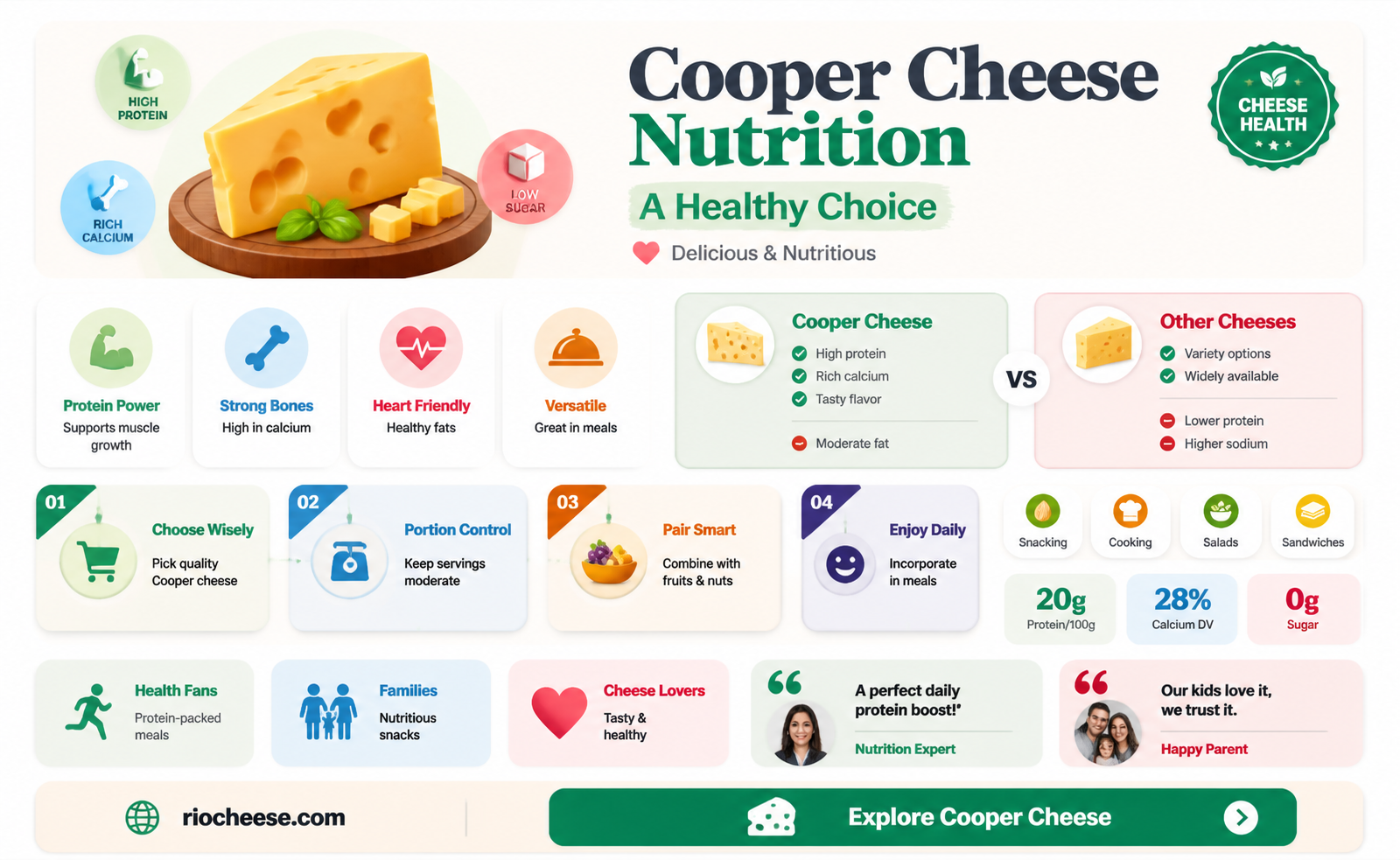
Cooper cheese, a popular brand of processed cheese, has been a staple in many households for its convenience and versatility. However, when it comes to its health benefits, there's ongoing debate. Processed cheeses like Cooper often contain high levels of sodium, preservatives, and saturated fats, which can contribute to health issues when consumed in excess. On the other hand, cheese is also a good source of protein, calcium, and vitamins. So, is Cooper cheese healthy? The answer lies in moderation and understanding the nutritional content of the product.
Explore related products


What You'll Learn
- Nutritional Content: Cooper cheese is rich in protein, calcium, and vitamins A and B12, but also high in fat and sodium
- Calorie Count: A 1-ounce serving of Cooper cheese contains approximately 100 calories, making it a moderate-calorie snack option
- Fat Content: Cooper cheese is high in saturated fat, which may contribute to increased cholesterol levels and heart disease risk when consumed excessively
- Sodium Content: With around 300mg of sodium per ounce, Cooper cheese can be a significant source of dietary sodium, potentially impacting blood pressure
- Health Benefits: Despite its high fat and sodium content, Cooper cheese can be part of a balanced diet when consumed in moderation, providing essential nutrients

Nutritional Content: Cooper cheese is rich in protein, calcium, and vitamins A and B12, but also high in fat and sodium
Cooper cheese, a popular variety known for its rich flavor and creamy texture, boasts an impressive nutritional profile. It is an excellent source of protein, which is essential for muscle growth and repair, as well as calcium, a mineral crucial for strong bones and teeth. Additionally, Cooper cheese is rich in vitamins A and B12, which play vital roles in maintaining healthy vision, immune function, and nerve cells.
However, it's important to note that Cooper cheese is also high in fat and sodium. The high fat content, particularly saturated fat, can contribute to increased cholesterol levels and heart disease risk when consumed in excess. Similarly, the high sodium content can lead to elevated blood pressure and other cardiovascular issues if not monitored carefully.
To enjoy the health benefits of Cooper cheese while minimizing its potential drawbacks, it's essential to consume it in moderation. The American Heart Association recommends limiting saturated fat intake to no more than 5-6% of total daily calories, which translates to about 13 grams per day for a 2,000-calorie diet. As for sodium, the recommended daily intake is less than 2,300 milligrams, with an ideal limit of 1,500 milligrams for most adults.
When incorporating Cooper cheese into your diet, consider pairing it with nutrient-dense foods that can help balance out its high fat and sodium content. For example, combining Cooper cheese with fresh fruits, vegetables, whole grains, and lean proteins can create a more balanced and nutritious meal. Additionally, opting for lower-fat varieties of Cooper cheese or using it as an occasional treat rather than a staple can help you enjoy its unique flavor without compromising your overall health goals.
In conclusion, while Cooper cheese offers several nutritional benefits, its high fat and sodium content necessitate mindful consumption. By enjoying it in moderation and pairing it with healthier food choices, you can savor the taste of Cooper cheese while maintaining a balanced and nutritious diet.
Explore related products


Calorie Count: A 1-ounce serving of Cooper cheese contains approximately 100 calories, making it a moderate-calorie snack option
Analyzing the calorie content of Cooper cheese reveals that a 1-ounce serving contains approximately 100 calories. This places it in the category of moderate-calorie snack options. For individuals monitoring their caloric intake, this information is crucial in making informed dietary choices.
To put this into perspective, a moderate-calorie snack typically ranges from 100 to 200 calories. Therefore, Cooper cheese falls well within this range, making it a suitable option for those looking to manage their weight or maintain a balanced diet. It's important to note that while calorie count is a significant factor, it's not the sole determinant of a food's healthiness. Other nutritional aspects, such as fat content, protein, and vitamins, should also be considered.
In terms of portion control, understanding the calorie content per ounce can help individuals gauge appropriate serving sizes. For example, if someone is aiming for a 200-calorie snack, they could consume 2 ounces of Cooper cheese. This portion would provide a satisfying snack without exceeding their calorie goal.
Moreover, the calorie information can be particularly useful for those following specific dietary plans, such as low-carb or ketogenic diets, where calorie and macronutrient tracking are essential. Cooper cheese, being a dairy product, also offers additional nutritional benefits like calcium and protein, which can contribute to overall dietary needs.
In conclusion, while Cooper cheese is a moderate-calorie snack option, its health benefits extend beyond just calorie count. It's a good source of essential nutrients and can be part of a balanced diet when consumed in moderation. As with any food choice, it's crucial to consider individual dietary needs and goals when incorporating Cooper cheese into one's diet.
Explore related products


Fat Content: Cooper cheese is high in saturated fat, which may contribute to increased cholesterol levels and heart disease risk when consumed excessively
Cooper cheese, a popular variety known for its rich flavor and creamy texture, contains a significant amount of saturated fat. This type of fat is known to raise LDL (low-density lipoprotein) cholesterol levels, often referred to as "bad" cholesterol, which can increase the risk of heart disease when consumed in excess. The American Heart Association recommends limiting saturated fat intake to less than 6% of total daily calories to maintain heart health.
A single serving of Cooper cheese, which is typically 1 ounce (28 grams), contains approximately 9 grams of saturated fat. This equates to about 45% of the recommended daily intake for saturated fat based on a 2,000 calorie diet. Therefore, consuming Cooper cheese in moderation is crucial for those monitoring their saturated fat intake.
It's important to note that while saturated fat is a concern, cheese also provides essential nutrients such as calcium, protein, and vitamins A and B12. These nutrients are vital for bone health, muscle function, and overall well-being. Thus, the key to incorporating Cooper cheese into a healthy diet lies in balancing its consumption with other nutrient-dense foods and limiting portion sizes.
For individuals with high cholesterol or those at risk for heart disease, it may be advisable to choose lower-fat cheese options or to consult with a healthcare provider or registered dietitian to determine the appropriate amount of saturated fat for their specific dietary needs. Additionally, incorporating more plant-based foods, whole grains, and lean proteins into one's diet can help offset the effects of saturated fat consumption.
In conclusion, while Cooper cheese can be a part of a healthy diet when consumed in moderation, its high saturated fat content necessitates mindful eating habits and a balanced approach to nutrition.
Explore related products


Sodium Content: With around 300mg of sodium per ounce, Cooper cheese can be a significant source of dietary sodium, potentially impacting blood pressure
Cooper cheese, with its rich flavor and creamy texture, is a popular choice for many cheese enthusiasts. However, its sodium content is a crucial factor to consider when evaluating its healthiness. A single ounce of Cooper cheese contains approximately 300mg of sodium, which is a significant amount considering the recommended daily intake of sodium is around 2,300mg for healthy adults.
Excessive sodium consumption is linked to various health issues, with high blood pressure being one of the most prominent concerns. When sodium levels in the blood are high, it can lead to increased fluid retention, putting extra strain on the heart and blood vessels. Over time, this strain can contribute to the development of hypertension, or high blood pressure, which is a major risk factor for heart disease, stroke, and kidney disease.
It's essential to note that the impact of sodium on blood pressure can vary from person to person. Some individuals may be more sensitive to the effects of sodium, while others may be able to tolerate higher levels without experiencing significant changes in blood pressure. Factors such as age, genetics, and overall health can influence sodium sensitivity.
To mitigate the potential negative effects of sodium in Cooper cheese, it's advisable to consume it in moderation as part of a balanced diet. Pairing it with foods that are low in sodium and high in potassium, such as fruits and vegetables, can help counteract the sodium content. Additionally, incorporating regular physical activity and maintaining a healthy weight can also contribute to overall cardiovascular health.
In conclusion, while Cooper cheese can be a significant source of dietary sodium, it doesn't necessarily have to be avoided entirely. By being mindful of portion sizes and incorporating other healthy dietary habits, it's possible to enjoy Cooper cheese as part of a balanced and nutritious diet.
Explore related products




Health Benefits: Despite its high fat and sodium content, Cooper cheese can be part of a balanced diet when consumed in moderation, providing essential nutrients
Cooper cheese, known for its rich flavor and creamy texture, can surprisingly offer health benefits when consumed in moderation. Despite its high fat and sodium content, this cheese can be a valuable addition to a balanced diet. One of the key nutrients found in Cooper cheese is calcium, which is essential for strong bones and teeth. Additionally, it contains protein, which is crucial for muscle repair and growth. The cheese also provides vitamins A and B12, which are important for maintaining healthy vision and nerve function, respectively.
However, it's important to note that moderation is key when it comes to consuming Cooper cheese. Due to its high fat and sodium content, excessive consumption can lead to health issues such as weight gain and high blood pressure. It's recommended to limit daily intake to a small portion, such as a slice or two, and to balance it with other nutrient-dense foods.
Incorporating Cooper cheese into a healthy diet can be done in various ways. For example, it can be used as a topping for salads or sandwiches, or as an ingredient in recipes that call for a rich, flavorful cheese. Pairing it with fruits or vegetables can help balance the meal and provide additional nutrients.
Overall, while Cooper cheese may not be the healthiest food choice, it can still be enjoyed as part of a balanced diet when consumed in moderation. Its essential nutrients can contribute to overall health and well-being, making it a valuable addition to a variety of meals.
Frequently asked questions
Cooper cheese, like many cheeses, can be part of a healthy diet when consumed in moderation. It is a good source of protein, calcium, and vitamins A and B12. However, it is also high in saturated fat and sodium, so it's important to balance your intake with other nutritious foods.
Cooper cheese provides several nutritional benefits. It is rich in protein, which is essential for muscle repair and growth. It also contains calcium, which is important for bone health, and vitamins A and B12, which support immune function and energy production, respectively.
The recommended serving size for cheese is typically about 1 ounce (28 grams). This portion size allows you to enjoy the benefits of cheese without overdoing it on calories, saturated fat, and sodium. It's important to consider your overall diet and health goals when determining how much cheese to include.
Cooper cheese, like many aged cheeses, is generally lower in lactose than softer, fresher cheeses. This means it may be more suitable for people with lactose intolerance. However, individual tolerance can vary, so it's best to try a small amount and see how your body reacts.
Yes, Cooper cheese can be included in a weight loss diet, but it's important to be mindful of portion sizes. Cheese is calorie-dense and high in fat, so it's crucial to balance your intake with other low-calorie, nutrient-dense foods. Consider using cheese as a flavor enhancer rather than a main component of your meals.