Patrick Oconnell
Creating the perfect cheese platter is an art that combines a variety of textures, flavors, and colors to delight both the eyes and the palate. Start by selecting a diverse array of cheeses, including a mix of soft, hard, and semi-hard varieties. Consider including a creamy brie, a sharp cheddar, and a tangy goat cheese to offer a range of flavors. Next, add complementary accompaniments such as fresh fruits, nuts, and crackers. Grapes, apples, and figs pair beautifully with cheese, while almonds and walnuts add a satisfying crunch. Choose crackers that are neutral in flavor to avoid overpowering the cheeses. Finally, arrange the platter thoughtfully, grouping similar items together and using small bowls or dishes for dips and spreads. A well-presented cheese platter is not only delicious but also a feast for the eyes, making it perfect for entertaining guests or enjoying a sophisticated snack.
Explore related products


What You'll Learn
- Cheese Selection: Choose a variety of cheeses with different textures and flavors for a balanced platter
- Accompaniments: Pair cheeses with complementary items like crackers, fruits, nuts, and honey for enhanced taste
- Presentation: Arrange the platter aesthetically, using different heights and groupings to make it visually appealing
- Temperature and Storage: Serve cheeses at the optimal temperature and store them properly to maintain freshness
- Cheese Tools: Use appropriate tools like cheese knives and boards to make cutting and serving easier and more enjoyable

Cheese Selection: Choose a variety of cheeses with different textures and flavors for a balanced platter
Selecting the perfect assortment of cheeses for a platter is an art that requires careful consideration of texture, flavor, and variety. A balanced cheese platter should offer a sensory journey, with each cheese providing a distinct experience that complements the others. To achieve this, it's essential to choose cheeses that vary in hardness, from soft and creamy to hard and crumbly, as well as a range of flavors from mild and buttery to sharp and tangy.
One approach to creating a diverse cheese selection is to categorize cheeses by their texture and flavor profiles. For instance, you might include a soft, mild cheese like Brie or Camembert, a semi-hard cheese with a nutty flavor like Gouda or Edam, and a hard, aged cheese with a strong flavor like Cheddar or Parmesan. Additionally, consider adding a blue cheese for its pungent, veiny character, and a fresh, tangy cheese like goat cheese or feta to cut through the richness of the other varieties.
When selecting cheeses, it's also important to think about the accompaniments that will be served with them. For example, a sweet and fruity chutney pairs well with a sharp, aged cheese, while a crisp, acidic apple can balance the creaminess of a soft cheese. Crackers and bread should also be chosen to complement the cheeses, with a variety of textures and flavors to enhance the overall tasting experience.
To ensure that your cheese platter is visually appealing as well as delicious, arrange the cheeses in an attractive pattern, using different shapes and sizes to create interest. Label each cheese with its name and origin, and provide small serving utensils for guests to use. Finally, remember to serve the cheeses at the appropriate temperature to bring out their best flavors and textures – soft cheeses are best served at room temperature, while hard cheeses can be served slightly chilled.
By following these guidelines, you can create a cheese platter that is not only visually stunning but also offers a delightful array of flavors and textures for your guests to enjoy.
Discovering the Ultimate Comfort Food: A Quest for the Best Macaroni and Cheese
You may want to see also
Explore related products




Accompaniments: Pair cheeses with complementary items like crackers, fruits, nuts, and honey for enhanced taste
Pairing cheese with complementary accompaniments is an art that can elevate the entire tasting experience. When selecting items to accompany your cheese platter, consider the flavor profiles and textures of each cheese variety. For instance, a bold, aged cheddar pairs beautifully with the sweetness of figs or the crunch of walnuts, while a creamy brie is enhanced by the tartness of fresh berries or the subtle flavor of water crackers.
One of the key principles of pairing is to balance flavors. If a cheese is particularly pungent or salty, pair it with something sweet or mild to counteract the intensity. Honey is an excellent choice for balancing strong flavors, as its natural sweetness can complement both the richness of blue cheeses and the tanginess of goat cheeses. Similarly, fruits like grapes, apples, and pears offer a refreshing contrast to the savory notes of most cheeses.
Texture also plays a crucial role in cheese pairings. The crispness of crackers or the crunch of nuts can provide a delightful contrast to the creaminess of soft cheeses. When choosing crackers, opt for varieties that are neutral in flavor, such as water crackers or rice crackers, to avoid overpowering the cheese. For a more rustic touch, consider using artisanal bread or crostini, which can hold up well to the bold flavors of aged cheeses.
Another consideration is the visual appeal of your cheese platter. Arrange your accompaniments in a way that creates an attractive and inviting display. Use small bowls or dishes to separate different items, and consider garnishing with fresh herbs or edible flowers for added color and elegance.
Finally, don't be afraid to experiment with unconventional pairings. Some of the most memorable cheese platters feature unexpected combinations that challenge the palate and spark conversation. For example, try pairing a smoky gouda with a sweet, spicy chutney, or a tangy feta with a drizzle of balsamic glaze. The possibilities are endless, and the key is to find combinations that enhance the flavors of each cheese while creating a harmonious and enjoyable tasting experience.
Crafting the Perfect Cheese and Meat Tray: A Gourmet's Guide
You may want to see also
Explore related products


Presentation: Arrange the platter aesthetically, using different heights and groupings to make it visually appealing
To create a visually stunning cheese platter, begin by selecting a variety of cheeses with different textures, colors, and shapes. This diversity will add visual interest and make the platter more appealing. Next, consider the arrangement of the cheeses. Place the largest or most visually striking cheese in the center of the platter to create a focal point. Then, arrange the remaining cheeses around it in a way that creates balance and harmony.
One effective technique is to group cheeses by type or region. For example, you could place all the soft cheeses together, or group cheeses from the same country. This not only makes the platter look more organized, but it also makes it easier for guests to navigate and select their preferred cheeses.
Another important aspect of presentation is the use of different heights. This can be achieved by using cheese stands or by stacking smaller cheeses on top of larger ones. Varying the heights adds depth and dimension to the platter, making it more visually interesting.
In addition to the cheeses, consider adding other elements to the platter that complement the cheeses and add visual appeal. This could include fresh fruits, nuts, olives, or crackers. These items not only add color and texture, but they also provide a contrast to the richness of the cheeses.
Finally, don't forget about the serving utensils. Choose utensils that are both functional and aesthetically pleasing. This could include cheese knives, spreaders, or forks. Place the utensils strategically around the platter to make it easy for guests to serve themselves.
By following these tips, you can create a cheese platter that is not only delicious, but also visually stunning. Remember, the key is to balance variety with organization, and to use different heights and groupings to create visual interest. With a little creativity and attention to detail, you can create a cheese platter that will impress your guests and make any gathering more enjoyable.
The Microbial Art of Cheese: Does Bacteria Reign Supreme?
You may want to see also
Explore related products


Temperature and Storage: Serve cheeses at the optimal temperature and store them properly to maintain freshness
Cheese, like wine, has an optimal serving temperature that enhances its flavors and textures. For most cheeses, this temperature range is between 50°F and 65°F (10°C and 18°C). Serving cheese too cold can mute its flavors and make it difficult to cut, while serving it too warm can cause it to become overly soft and lose its shape. To ensure your cheese platter is at its best, remove the cheeses from the refrigerator about 30 minutes to an hour before serving to allow them to come to room temperature gradually.
Proper storage is equally crucial for maintaining the freshness and quality of your cheeses. Hard cheeses, such as Parmesan or Cheddar, can be stored in the refrigerator wrapped in plastic wrap or aluminum foil to prevent them from drying out. Soft cheeses, like Brie or Camembert, should be stored in a cheese box or a covered dish in the refrigerator to protect them from absorbing odors from other foods. It's also important to store cheeses separately, as they can absorb flavors from one another.
When it comes to long-term storage, some cheeses can be frozen, but this should be done with caution. Freezing can alter the texture of cheese, making it crumbly or grainy. If you must freeze cheese, wrap it tightly in plastic wrap followed by a layer of aluminum foil. Thaw frozen cheese slowly in the refrigerator to prevent moisture from forming and affecting the cheese's quality.
Another consideration for optimal cheese storage is humidity. Cheeses need a certain level of humidity to prevent them from drying out. If your refrigerator is particularly dry, consider placing a small bowl of water or a damp cloth in the cheese storage area to maintain the necessary moisture levels.
By paying attention to temperature and storage, you can ensure that the cheeses on your platter are at their peak flavor and texture, providing a delightful experience for your guests. Remember, the key to a great cheese platter is not just in the selection of cheeses but also in how they are presented and maintained.
A Global Gouda Guide: Which Country Reigns Supreme in Cheese?
You may want to see also
Explore related products


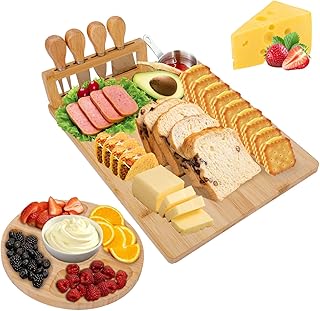
Cheese Tools: Use appropriate tools like cheese knives and boards to make cutting and serving easier and more enjoyable
Selecting the right cheese tools is crucial for an efficient and enjoyable cheese-cutting experience. Cheese knives are specifically designed to glide through various textures of cheese without crumbling or tearing. For soft cheeses like Brie or Camembert, a thin, flexible blade works best, allowing for smooth cuts. Harder cheeses like Cheddar or Parmesan require a sturdier knife with a sharp edge to slice through cleanly.
Cheese boards serve as both a functional and aesthetic element of cheese serving. They protect surfaces from scratches and provide a stable base for cutting. Boards come in various materials, including wood, marble, and slate, each offering different benefits. Wooden boards are gentle on knives and add a rustic charm, while marble boards keep cheese cool and are easy to clean. Slate boards offer a modern look and are durable, but they can be heavy and may dull knives over time.
Beyond knives and boards, other tools can enhance the cheese-serving experience. Cheese tongs are useful for picking up and serving small pieces of cheese, especially in a shared setting. A cheese plane can create thin, even slices of hard cheeses, ideal for platters. For soft, spreadable cheeses, a cheese spreader or spatula is essential. These tools not only make serving easier but also help maintain the integrity and presentation of the cheese.
Investing in quality cheese tools not only makes the process of creating a cheese platter more efficient but also elevates the overall experience. Proper tools ensure that each type of cheese is cut and served in the best possible way, preserving its texture and flavor. This attention to detail can make a significant difference in the enjoyment of the cheese platter, whether it's for a casual gathering or a formal event.
The Ultimate Guide to Choosing the Perfect Cheese for Your Burger
You may want to see also
Frequently asked questions
For a well-rounded cheese platter, consider including a variety of cheeses such as a soft cheese (like Brie or Camembert), a hard cheese (like Cheddar or Gouda), a blue cheese (like Roquefort or Gorgonzola), and a semi-soft cheese (like Havarti or Fontina). This will provide a range of textures and flavors for your guests to enjoy.
Arrange the cheeses in a visually appealing manner, considering color, shape, and size. You can place them in a circular pattern or create a cheese board with different sections for each type of cheese. Make sure to leave enough space between each cheese for easy serving.
Serve your cheese platter with a variety of accompaniments such as crackers, bread, nuts, dried fruits, and fresh fruits. You can also include spreads like honey, jam, or mustard, as well as olives, pickles, and cured meats for added flavor and texture.
Store the cheese in the refrigerator until you are ready to serve it. If possible, take the cheese out of the fridge about 30 minutes before serving to allow it to come to room temperature, which will enhance its flavor and texture.
To create a visually appealing cheese platter, consider using a variety of colors, shapes, and sizes of cheese. You can also add garnishes like fresh herbs, edible flowers, or a drizzle of olive oil. Use a platter or board that complements the colors of the cheese, and make sure to arrange the accompaniments in an attractive manner as well.