 Andy Montoya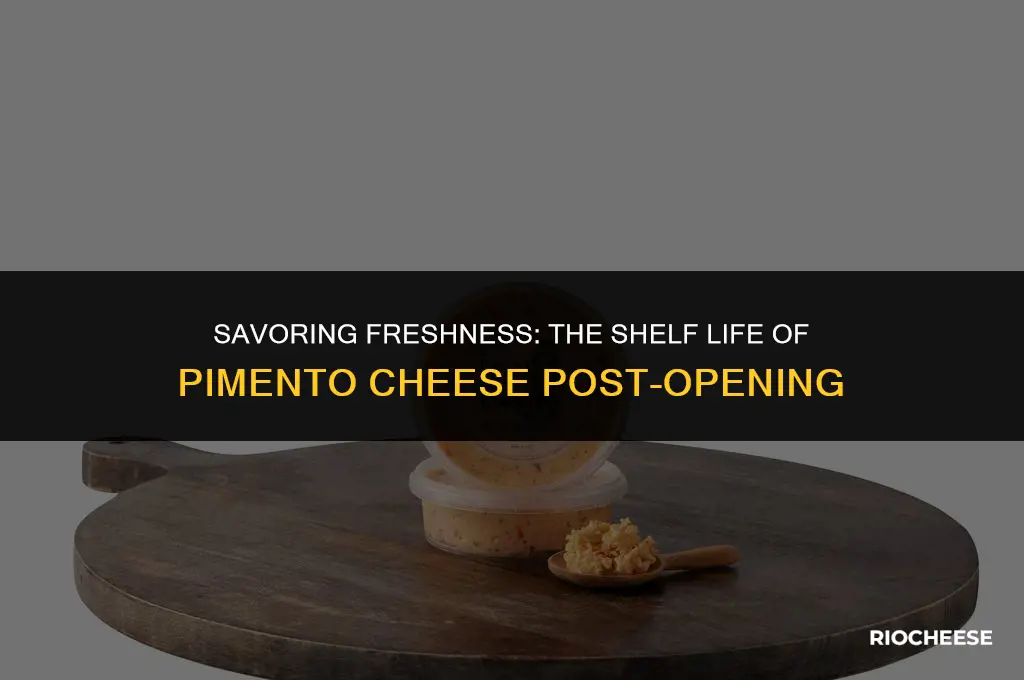
Pimento cheese, a popular spread made from cheese, mayonnaise, and pimentos, is a staple in many households. Once opened, it's essential to know how long it will last to ensure food safety and quality. The shelf life of pimento cheese after opening depends on various factors, including storage conditions and the type of cheese used. Typically, if stored properly in the refrigerator, pimento cheese can last for about 1 to 2 weeks after opening. However, it's crucial to check the packaging for specific storage instructions and expiration dates, as these can vary by brand and product type.
Explore related products


What You'll Learn
- Storage Conditions: Proper storage methods to extend the shelf life of pimento cheese
- Expiration Date: Understanding the expiration date and its implications for food safety
- Signs of Spoilage: Identifying visual and olfactory indicators that pimento cheese has gone bad
- Health Risks: Potential health risks associated with consuming spoiled pimento cheese
- Usage Tips: Creative ways to use pimento cheese before it spoils, reducing food waste

Storage Conditions: Proper storage methods to extend the shelf life of pimento cheese
To maximize the shelf life of pimento cheese, it's crucial to store it properly after opening. The ideal storage method involves placing the cheese in an airtight container to prevent exposure to air, which can cause it to dry out and lose flavor. Additionally, storing the cheese in the refrigerator is essential to prevent bacterial growth and spoilage. It's recommended to consume the cheese within 1-2 weeks of opening for optimal freshness and flavor.
When storing pimento cheese, it's important to avoid common mistakes that can lead to spoilage or reduced shelf life. One such mistake is not sealing the cheese properly after each use, which can allow air and bacteria to enter the container. Another mistake is storing the cheese at too warm of a temperature, which can accelerate bacterial growth and cause the cheese to spoil more quickly. To avoid these issues, always seal the cheese container tightly after each use and store it in the refrigerator at a temperature of 40°F (4°C) or below.
In addition to proper storage methods, there are also some practical tips that can help extend the shelf life of pimento cheese. One tip is to purchase cheese from a reputable source to ensure that it's fresh and of high quality. Another tip is to check the cheese regularly for signs of spoilage, such as mold or an off odor, and discard it if any of these signs are present. By following these tips and proper storage methods, you can help ensure that your pimento cheese stays fresh and delicious for as long as possible.
Perfectly Melty Nacho Cheese: Your Crock Pot Guide
You may want to see also
Explore related products


Expiration Date: Understanding the expiration date and its implications for food safety
The expiration date on a package of pimento cheese is a critical piece of information that helps consumers determine how long the product is safe to eat after opening. This date is typically printed on the packaging and can vary depending on the brand and type of pimento cheese. It's important to note that the expiration date is not the same as the "best by" date, which indicates the date by which the product is expected to retain its optimal quality and flavor. The expiration date, on the other hand, is a safety measure that indicates the last date the product should be consumed to avoid potential health risks.
Understanding the expiration date is crucial for food safety, as consuming expired pimento cheese can lead to foodborne illnesses. The bacteria that cause these illnesses can grow rapidly on perishable foods like pimento cheese, especially if they are not stored properly. By adhering to the expiration date, consumers can minimize the risk of contracting foodborne illnesses and ensure that they are consuming the product at its peak quality and safety.
To properly interpret the expiration date, it's essential to know how to read the date format used by the manufacturer. Some companies use a "MM/DD/YY" format, while others may use a "DD/MM/YY" format. Additionally, some manufacturers may include a time stamp, indicating the exact time the product was packaged. Once the expiration date has passed, it's important to discard the pimento cheese, even if it appears to be in good condition, as harmful bacteria may still be present.
In addition to understanding the expiration date, it's also important to store pimento cheese properly to maintain its quality and safety. Pimento cheese should be refrigerated at a temperature of 40°F (4°C) or below, and it should be kept in an airtight container to prevent contamination. If the pimento cheese is not stored properly, it may spoil more quickly, even if the expiration date has not passed.
In conclusion, understanding the expiration date and its implications for food safety is crucial when it comes to consuming pimento cheese. By paying attention to the expiration date, storing the product properly, and discarding it when necessary, consumers can enjoy pimento cheese while minimizing the risk of foodborne illnesses.
Savoring Flavor: The Shelf Life of Parmesan Cheese Wedge
You may want to see also
Explore related products




Signs of Spoilage: Identifying visual and olfactory indicators that pimento cheese has gone bad
Pimento cheese, a popular spread in the Southern United States, is made from cheese, mayonnaise, and pimentos. While it can be a delicious addition to sandwiches and crackers, it's important to know when it has gone bad to avoid foodborne illness. One of the first signs of spoilage in pimento cheese is a change in color. Fresh pimento cheese should have a vibrant orange hue due to the pimentos. If you notice the color has faded or turned grayish, it's a good indication that the cheese has started to spoil.
Another visual indicator of spoilage is the presence of mold. Mold can appear as small, fuzzy spots on the surface of the cheese. It's important to note that mold can be present even if the cheese doesn't have a strong odor. If you see any mold, it's best to discard the cheese immediately. In addition to visual cues, olfactory indicators can also signal that pimento cheese has gone bad. A strong, unpleasant odor is a clear sign of spoilage. This odor may be ammonia-like or have a sour, tangy smell. If the cheese has a strong odor that is different from its normal, mild scent, it's time to throw it away.
Texture can also be an indicator of spoilage. Fresh pimento cheese should have a smooth, creamy texture. If the cheese has become dry, crumbly, or has developed a slimy texture, it's a sign that it has gone bad. When in doubt, it's always best to err on the side of caution and discard the cheese. Proper storage can help extend the shelf life of pimento cheese. It should be stored in an airtight container in the refrigerator. Once opened, it's best to consume the cheese within a week to ensure it remains fresh and safe to eat.
Maximizing Freshness: A Guide to Cotija Cheese Storage
You may want to see also
Explore related products


Health Risks: Potential health risks associated with consuming spoiled pimento cheese
Consuming spoiled pimento cheese can pose several health risks. One of the primary concerns is the growth of harmful bacteria, such as Salmonella and Listeria, which can occur when the cheese is not stored properly or is left out for an extended period. These bacteria can cause foodborne illnesses, leading to symptoms like nausea, vomiting, diarrhea, and abdominal cramps. In severe cases, foodborne illnesses can result in hospitalization and even death, particularly in vulnerable populations such as the elderly, young children, and individuals with weakened immune systems.
Another health risk associated with consuming spoiled pimento cheese is the presence of mold. While some molds are harmless, others can produce mycotoxins, which are toxic compounds that can cause a range of health problems, including allergic reactions, respiratory issues, and even cancer. It is important to note that mold can grow on cheese even if it is stored in the refrigerator, especially if the cheese is not wrapped tightly or if the refrigerator is not maintained at the proper temperature.
In addition to bacterial and mold contamination, spoiled pimento cheese can also pose a risk due to the breakdown of its nutritional components. As the cheese spoils, its protein and fat content can degrade, leading to the formation of harmful compounds such as ammonia and hydrogen sulfide. These compounds can cause unpleasant odors and flavors, and in high concentrations, they can be toxic.
To minimize the health risks associated with consuming spoiled pimento cheese, it is essential to store the cheese properly and to discard any cheese that shows signs of spoilage. Pimento cheese should be stored in the refrigerator in a tightly wrapped container, and it should be consumed within a week of opening. If the cheese develops an off odor, flavor, or appearance, it should be discarded immediately.
In conclusion, consuming spoiled pimento cheese can pose significant health risks, including foodborne illnesses, mold contamination, and the presence of harmful compounds. By storing the cheese properly and discarding any spoiled cheese, individuals can minimize these risks and enjoy pimento cheese safely.
The Shelf Life of Unopened Velveeta Cheese: A Comprehensive Guide
You may want to see also
Explore related products


Usage Tips: Creative ways to use pimento cheese before it spoils, reducing food waste
Pimento cheese, a popular Southern spread, can be a versatile ingredient if used creatively before it spoils. To reduce food waste and make the most of this flavorful cheese, consider incorporating it into various dishes and recipes. Here are some unique usage tips to inspire your culinary creations:
One innovative way to use pimento cheese is to stuff it into cherry tomatoes for a bite-sized appetizer. Simply halve the tomatoes, scoop out the seeds, and fill each half with a dollop of pimento cheese. You can then drizzle them with olive oil and sprinkle with chopped fresh herbs like parsley or chives. This makes for a colorful and delicious addition to any party platter or picnic spread.
Another creative use for pimento cheese is to mix it into your favorite pasta salad recipe. The creamy texture and tangy flavor of the cheese will add a delightful twist to the dish. You can also use it as a topping for baked potatoes or as a filling for grilled chicken breasts. Simply slice the chicken breasts horizontally, stuff them with pimento cheese, and grill until cooked through. This results in a juicy and flavorful main course that's sure to impress.
If you're looking for a more savory option, try using pimento cheese as a base for a quiche or frittata. Mix the cheese with eggs, milk, and your choice of vegetables or meats, then pour the mixture into a pie crust or a greased skillet. Bake until set and serve warm for a satisfying breakfast or brunch dish.
For a sweet and savory combination, consider using pimento cheese in a grilled cheese sandwich with a twist. Layer the cheese with sliced apples or pears and a drizzle of honey before grilling to golden perfection. This unique flavor pairing will elevate your classic grilled cheese to a whole new level.
By exploring these creative ways to use pimento cheese, you can not only reduce food waste but also discover new and exciting flavor combinations. Whether you're using it as a spread, a filling, or a main ingredient, pimento cheese offers endless possibilities for culinary innovation.
The Shelf Life of Packaged Cheese: A Comprehensive Guide
You may want to see also
Frequently asked questions
Pimento cheese can last up to 2 weeks after opening when stored in the refrigerator. It's important to keep it in an airtight container to maintain its freshness and prevent it from drying out or absorbing odors from other foods.
Yes, pimento cheese can be frozen after opening. It can last up to 3 months in the freezer. To freeze, place the pimento cheese in an airtight container or freezer bag, removing as much air as possible before sealing. Thaw in the refrigerator overnight before using.
Signs that pimento cheese has gone bad after opening include an off or sour smell, discoloration, mold growth, or an unpleasant taste. If you notice any of these signs, it's best to discard the pimento cheese to avoid potential foodborne illness.


