Andy Montoya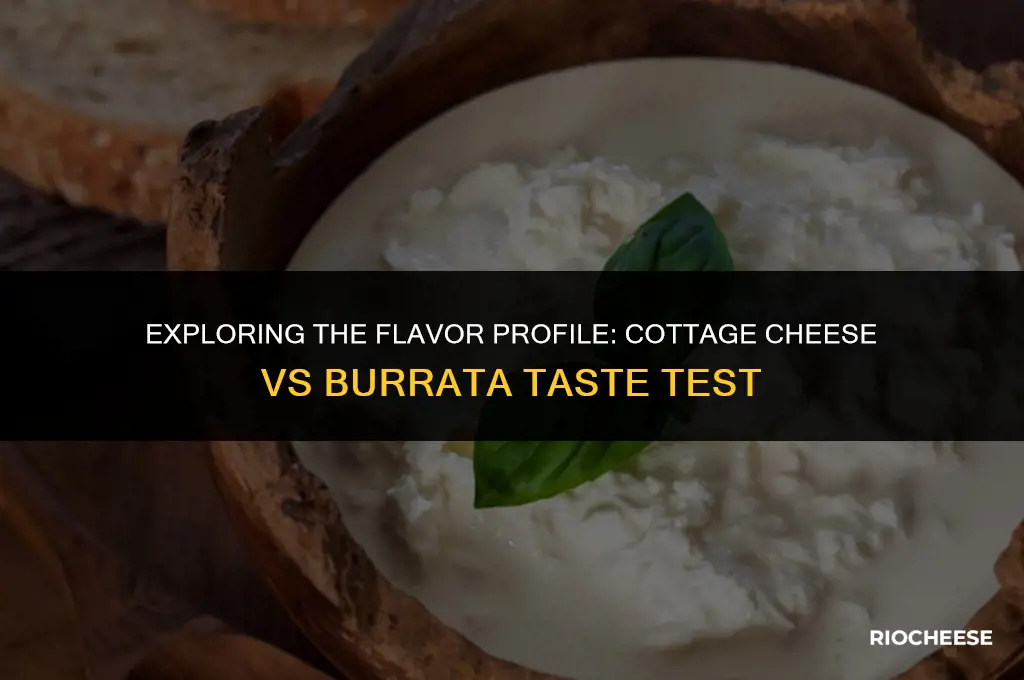
Cottage cheese and burrata are two distinct dairy products with unique flavors and textures. Cottage cheese is a fresh cheese made from curds and has a mild, slightly tangy taste with a creamy yet lumpy texture. On the other hand, burrata is a soft, fresh Italian cheese known for its rich, buttery flavor and smooth, creamy consistency. While both cheeses are enjoyed for their mild flavors, the taste of cottage cheese is more subtle and less rich compared to the indulgent, velvety taste of burrata.
Explore related products


What You'll Learn
- Texture Comparison: Cottage cheese's curds vs. burrata's creamy consistency
- Flavor Profile: Mildness of cottage cheese vs. richness of burrata
- Culinary Uses: Versatility in dishes for both cheeses
- Nutritional Content: Protein and fat differences between the two
- Pairing Suggestions: Ideal accompaniments for cottage cheese and burrata

Texture Comparison: Cottage cheese's curds vs. burrata's creamy consistency
Cottage cheese curds and burrata's creamy consistency present a fascinating textural contrast. Cottage cheese, with its lumpy and somewhat grainy curds, offers a rustic and hearty mouthfeel. Each curd is distinct, providing a satisfying bite that can be both firm and tender. In contrast, burrata boasts a smooth, velvety texture that is uniformly creamy throughout. This cheese melts effortlessly on the tongue, creating a rich and luxurious sensation.
The curds of cottage cheese are formed through a process of coagulation and drainage, resulting in their characteristic shape and texture. Burrata, on the other hand, is a fresh mozzarella cheese that is filled with a mixture of cream and mozzarella curds, giving it its signature creamy interior. The outer layer of burrata is typically smooth and slightly elastic, while the interior is soft and spreadable.
When comparing the two textures, it's clear that cottage cheese curds provide a more substantial and textured eating experience, while burrata offers a more delicate and refined sensation. The contrast between the firm, lumpy curds of cottage cheese and the smooth, creamy consistency of burrata highlights the diverse textural possibilities within the world of cheese.
In terms of culinary applications, the texture of each cheese plays a significant role. Cottage cheese curds are well-suited for dishes where a hearty, rustic texture is desired, such as in salads, dips, or as a standalone snack. Burrata, with its creamy consistency, is often used in dishes where a smooth, melt-in-your-mouth texture is preferred, such as on pizza, in pasta dishes, or as part of an antipasto platter.
Ultimately, the choice between cottage cheese curds and burrata's creamy consistency comes down to personal preference and the desired textural experience. Both cheeses offer unique and enjoyable mouthfeels that can enhance a variety of culinary creations.
Delicious Cottage Cheese Flatbread: Tips for Perfect Storage
You may want to see also
Explore related products


Flavor Profile: Mildness of cottage cheese vs. richness of burrata
The flavor profile of cottage cheese is characterized by its mild, slightly tangy taste, which is a result of the fermentation process used in its production. Cottage cheese is made by curdling milk with an acid, such as vinegar or lemon juice, and then draining the whey. This process results in a soft, crumbly cheese with a subtle flavor that is often described as bland or neutral. The mildness of cottage cheese makes it a versatile ingredient that can be used in a variety of dishes, from savory to sweet.
In contrast, burrata cheese has a rich, creamy flavor that is often described as buttery or nutty. Burrata is a soft, fresh cheese that is made by wrapping mozzarella curds in a thin layer of cream. This process gives burrata its distinctive texture and flavor, which is more pronounced than that of cottage cheese. The richness of burrata makes it a popular choice for dishes that require a bold, flavorful cheese, such as salads, sandwiches, and pasta dishes.
When comparing the flavor profiles of cottage cheese and burrata, it is clear that they are quite different. Cottage cheese has a mild, subtle flavor that is often used as a neutral base in dishes, while burrata has a rich, creamy flavor that is used to add depth and complexity to dishes. Despite their differences, both cheeses can be used in a variety of culinary applications, and their unique flavor profiles make them valuable ingredients in any kitchen.
In terms of texture, cottage cheese is soft and crumbly, while burrata is smooth and creamy. This difference in texture is due to the way in which the cheeses are made. Cottage cheese is made by draining the whey from curdled milk, which results in a soft, crumbly cheese. Burrata, on the other hand, is made by wrapping mozzarella curds in a thin layer of cream, which gives it a smooth, creamy texture.
Overall, the flavor profile of cottage cheese is defined by its mildness, while the flavor profile of burrata is characterized by its richness. These differences in flavor and texture make each cheese a unique and valuable ingredient in a variety of culinary applications.
Delicious Queso Made Easy: Cottage Cheese Edition
You may want to see also
Explore related products


![Small Curd 2% Milkfat Cottage Cheese , delicious, creamy, and packed with protein. Enjoyed on its own, as a side dish, a snack or an ingredient in a variety of recipes, low fat cheese is extremely versatile , Hand cut curds in a rich creamy dressing for a delicious cultured dairy experience , With protein and calcium, each serving of 2% Milkfat has 13g protein and 100 calories .. [ 32 oz , 2 lb ]](https://m.media-amazon.com/images/I/51XxK9r9diL._AC_UL320_.jpg)


Culinary Uses: Versatility in dishes for both cheeses
Cottage cheese and burrata, while distinct in taste and texture, offer remarkable versatility in culinary applications. Cottage cheese, with its mild flavor and crumbly texture, serves as an excellent base for a variety of dishes. It can be blended into smoothies for a protein boost, mixed into pancake batter for a healthier twist on a classic breakfast, or used as a filling for stuffed vegetables and chicken breasts. Its ability to absorb flavors makes it a chameleon in the kitchen, easily adapting to both sweet and savory recipes.
On the other hand, burrata's rich, creamy interior and delicate exterior make it a prized ingredient in Italian cuisine. It's often served simply, drizzled with olive oil and sprinkled with salt, allowing its natural flavors to shine. However, its versatility extends beyond the antipasto platter. Burrata can be incorporated into pasta dishes, adding a luxurious creaminess to sauces. It's also a delightful addition to salads, providing a contrasting texture to crisp greens and vegetables. When baked, burrata develops a golden, slightly crispy exterior, making it a decadent topping for bruschetta or a flavorful component in baked pasta dishes.
Both cheeses can be used in tandem to create dishes that play on their contrasting textures and flavors. For instance, a salad featuring both cottage cheese and burrata would offer a delightful mix of creamy and crumbly elements. Similarly, a baked dish that combines the two cheeses could provide a rich, indulgent experience with varying textures. The key to successfully incorporating both cheeses into a dish lies in balancing their distinct characteristics to create a harmonious flavor profile.
In conclusion, while cottage cheese and burrata may not share the same taste, their versatility in the kitchen allows for a wide range of culinary possibilities. By understanding and leveraging their unique properties, cooks can create dishes that are both innovative and delicious, showcasing the adaptability of these two cheeses in various cuisines.
Paneer vs. Cottage Cheese: Unraveling the Dairy Mystery
You may want to see also
Explore related products




Nutritional Content: Protein and fat differences between the two
Cottage cheese and burrata are both dairy products, but they differ significantly in their nutritional profiles, particularly in terms of protein and fat content. Cottage cheese is known for being a good source of protein, typically containing around 11 grams per 1/2 cup serving. This protein content is primarily in the form of casein, which is a slow-digesting protein that can help with muscle recovery and satiety. On the other hand, burrata cheese is higher in fat, with approximately 8 grams of fat per 1/2 cup serving. The fat in burrata is mostly saturated, which can contribute to its rich flavor and creamy texture.
In terms of calories, cottage cheese is generally lower than burrata. A 1/2 cup serving of cottage cheese contains about 80-100 calories, depending on the fat content, while the same serving of burrata can range from 150-200 calories. This difference in calorie content is primarily due to the higher fat content in burrata.
When comparing the two cheeses, it's also important to consider their micronutrient content. Cottage cheese is a good source of several vitamins and minerals, including vitamin B12, phosphorus, and selenium. Burrata, on the other hand, contains higher amounts of calcium and vitamin A. Both cheeses provide some potassium, but cottage cheese typically has slightly more.
In summary, while both cottage cheese and burrata offer nutritional benefits, they cater to different dietary needs. Cottage cheese is a better choice for those looking to increase their protein intake and manage their calorie consumption, while burrata is more suitable for those who enjoy a richer, fattier cheese and are not as concerned about calorie content.
Delicious Flatbread: A Simple Recipe Using Cottage Cheese
You may want to see also
Explore related products


Pairing Suggestions: Ideal accompaniments for cottage cheese and burrata
Cottage cheese and burrata, while distinct in texture and flavor, can be paired with a variety of accompaniments that enhance their individual characteristics. For cottage cheese, consider pairing it with fresh fruits like strawberries or peaches, which add a natural sweetness and juicy contrast to the creamy, mild flavor of the cheese. You can also experiment with savory options such as chopped herbs (like chives or parsley), a drizzle of olive oil, or a sprinkle of black pepper to elevate its taste.
When it comes to burrata, its rich, buttery flavor and soft, stretchy texture make it an excellent match for acidic and fresh ingredients. Try pairing it with ripe tomatoes, fresh basil leaves, and a drizzle of balsamic glaze for a classic Italian-inspired combination. Alternatively, you can complement its creaminess with crunchy elements like toasted nuts or crostini, or add a touch of sweetness with caramelized onions or roasted vegetables.
For a more adventurous pairing, consider combining both cottage cheese and burrata in a single dish. This can create an interesting contrast of textures and flavors, especially when paired with ingredients that complement both cheeses. For example, a salad featuring mixed greens, cherry tomatoes, cucumber slices, and a sprinkle of crumbled feta or goat cheese can be topped with dollops of both cottage cheese and burrata for a delightful medley of flavors and textures.
In terms of beverages, both cheeses pair well with light, crisp wines such as Sauvignon Blanc or Pinot Grigio, which can cut through their creaminess and refresh the palate. For non-alcoholic options, a sparkling water with a squeeze of lemon or lime, or a lightly sweetened iced tea, can also serve as ideal accompaniments to these cheeses.
When serving these pairings, consider the presentation as well. Arrange the cheeses and accompaniments on a platter or board, allowing guests to mix and match according to their preferences. This not only makes for an attractive display but also encourages a more interactive and enjoyable dining experience.
Exploring Passover Dietary Laws: Is Cottage Cheese Kosher?
You may want to see also
Frequently asked questions
Cottage cheese and burrata have distinct tastes. Cottage cheese has a mild, slightly tangy flavor and a creamy, lumpy texture. Burrata, on the other hand, is known for its rich, buttery taste and smooth, stretchy consistency. While both are dairy products, their flavor profiles and textures are quite different.
Cottage cheese can sometimes be used as a substitute for burrata in certain recipes, especially those where the cheese is not the primary flavor component. However, due to the differences in texture and taste, it may not be an ideal replacement in dishes where the creamy, stretchy quality of burrata is desired. It's best to use cottage cheese as a substitute in recipes where the cheese is mixed with other ingredients or used as a filling.
In some dishes, cottage cheese and burrata can be used interchangeably without significantly affecting the overall taste. These include salads, where the cheese is crumbled or mixed with other ingredients, or in pasta dishes where the cheese is used as a topping or mixed into the sauce. However, it's important to note that the texture and flavor of the dish may vary depending on which cheese is used.