Bushra Griffith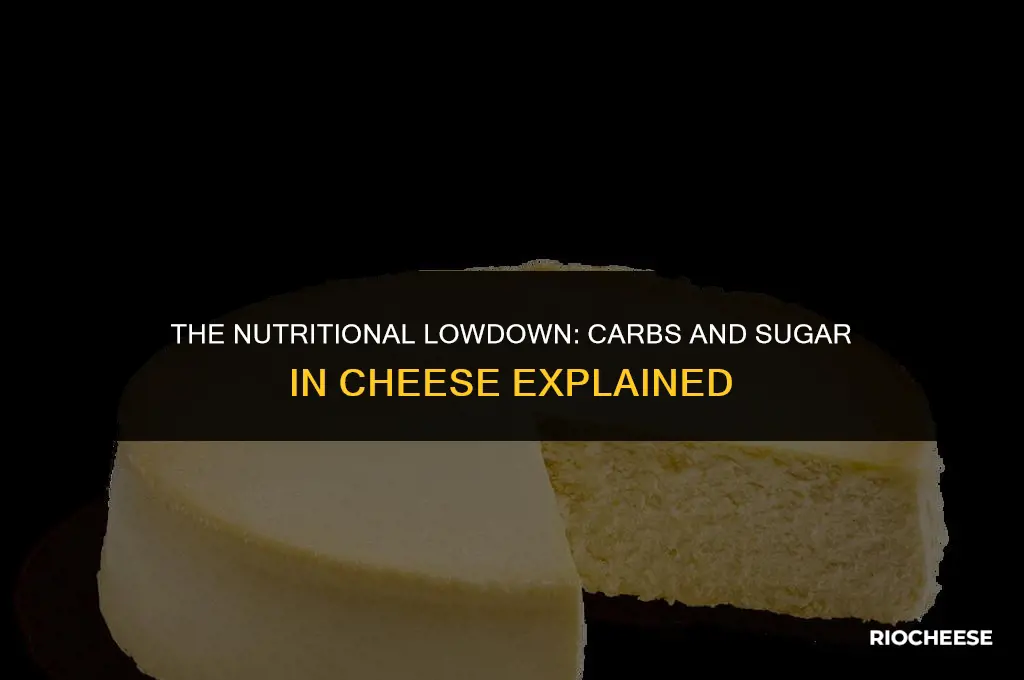
Cheese is a popular dairy product known for its rich flavor and versatility in various dishes. When considering its nutritional content, many people wonder whether cheese contains carbohydrates or sugar. The answer to this question is somewhat nuanced. Cheese does contain a small amount of lactose, which is a type of sugar found in milk. However, the lactose content in cheese is generally low, especially in aged cheeses. On the other hand, cheese is not a significant source of carbohydrates. A typical serving of cheese (about 1 ounce) contains less than 1 gram of carbohydrates. Therefore, while cheese does have a minimal amount of sugar in the form of lactose, it is not a high-carb food and can be enjoyed in moderation as part of a balanced diet.
Explore related products


What You'll Learn
- Nutritional Content: Cheese contains minimal carbohydrates and sugars, making it a low-carb food option
- Types of Cheese: Different cheeses have varying carb and sugar levels; for example, blue cheese has more carbs than cheddar
- Dietary Considerations: Cheese is suitable for ketogenic and low-carb diets due to its low sugar and carb content
- Health Benefits: Cheese provides protein, calcium, and other nutrients with minimal impact on blood sugar levels
- Common Misconceptions: Despite popular belief, cheese does not significantly contribute to carb or sugar intake in a balanced diet

Nutritional Content: Cheese contains minimal carbohydrates and sugars, making it a low-carb food option
Cheese is primarily composed of fats and proteins, with minimal carbohydrate content. This makes it an attractive option for individuals following low-carb diets, such as the ketogenic diet or Atkins diet. The low sugar content in cheese also makes it suitable for those managing diabetes or seeking to reduce their sugar intake.
The exact nutritional content of cheese varies depending on the type. For example, a 1-ounce serving of cheddar cheese contains approximately 0.6 grams of carbohydrates and 0.1 grams of sugar. In contrast, a 1-ounce serving of blue cheese contains about 2.3 grams of carbohydrates and 0.2 grams of sugar. Despite these variations, all types of cheese are relatively low in carbs and sugar compared to other food items.
It's important to note that while cheese is low in carbohydrates, it is high in calories and saturated fats. Therefore, it should be consumed in moderation as part of a balanced diet. Additionally, some cheeses may contain added sugars or artificial sweeteners, so it's essential to check the ingredient list and nutrition facts before purchasing.
In summary, cheese can be a part of a low-carb diet due to its minimal carbohydrate and sugar content. However, its high calorie and saturated fat content necessitates moderation. When selecting cheese, opt for varieties with the lowest carbohydrate content and avoid those with added sugars or artificial sweeteners.
Provolone Cheese: A Nutritional Breakdown of Carbs and More
You may want to see also
Explore related products




Types of Cheese: Different cheeses have varying carb and sugar levels; for example, blue cheese has more carbs than cheddar
Cheese enthusiasts often find themselves pondering the nutritional content of their favorite dairy products, particularly when it comes to carbohydrates and sugars. While it's a common misconception that cheese is devoid of carbs, the reality is quite different. Various types of cheese contain varying levels of carbohydrates and sugars, which can significantly impact one's dietary choices.
Blue cheese, for instance, is a prime example of a cheese with a higher carbohydrate content compared to others. This is primarily due to the fermentation process it undergoes, which results in the production of additional sugars. As a result, blue cheese can contain up to 2 grams of carbohydrates per ounce, which is notably higher than cheeses like cheddar or mozzarella.
On the other hand, hard cheeses such as cheddar, Parmesan, and Swiss tend to have lower carbohydrate levels, typically ranging from 0.5 to 1 gram per ounce. These cheeses undergo a longer aging process, which allows for the breakdown of lactose into simpler sugars that are then fermented by bacteria, resulting in a lower overall carbohydrate content.
Soft cheeses, like brie and camembert, fall somewhere in between, with carbohydrate levels ranging from 1 to 2 grams per ounce. These cheeses have a shorter aging process, which means they retain more of the original lactose content.
It's also worth noting that the sugar content in cheese can vary significantly. While some cheeses, like gorgonzola and Roquefort, can contain up to 5 grams of sugar per ounce, others, like feta and goat cheese, have minimal sugar content.
Understanding the carbohydrate and sugar content of different cheeses is crucial for individuals following specific diets, such as low-carb or ketogenic diets. By choosing cheeses with lower carbohydrate levels, one can still enjoy the rich flavors and textures of cheese without compromising their dietary goals.
Unveiling the Carb Content in Velveeta Cheese: A Nutritional Insight
You may want to see also
Explore related products




Dietary Considerations: Cheese is suitable for ketogenic and low-carb diets due to its low sugar and carb content
Cheese is a versatile and nutrient-dense food that can be a valuable addition to ketogenic and low-carb diets. Its low sugar and carbohydrate content makes it an ideal choice for individuals looking to reduce their carb intake while still enjoying a variety of flavors and textures. In fact, many types of cheese contain less than 1 gram of carbohydrates per ounce, making them a perfect fit for these dietary approaches.
One of the key benefits of incorporating cheese into a ketogenic or low-carb diet is its high fat content. Cheese is rich in healthy fats, including monounsaturated and polyunsaturated fats, which can help support satiety and provide a sustained source of energy. Additionally, cheese is a good source of protein, which is essential for maintaining muscle mass and supporting overall health.
When selecting cheeses for a ketogenic or low-carb diet, it's important to choose varieties that are low in carbohydrates and sugar. Some excellent options include cheddar, mozzarella, provolone, and gouda. These cheeses not only have a low carb count but also offer a range of flavors and textures that can enhance the overall eating experience.
It's worth noting that while cheese can be a healthy addition to a ketogenic or low-carb diet, it's still important to consume it in moderation. Cheese can be high in calories and saturated fat, so it's essential to balance your intake with other nutrient-dense foods and to pay attention to portion sizes.
In conclusion, cheese can be a delicious and nutritious component of ketogenic and low-carb diets, thanks to its low sugar and carbohydrate content. By choosing the right types of cheese and consuming them in moderation, individuals can enjoy the benefits of this versatile food while still adhering to their dietary goals.
Delicious Pimento Cheese: Unveiling Its Carb Content
You may want to see also
Explore related products




Health Benefits: Cheese provides protein, calcium, and other nutrients with minimal impact on blood sugar levels
Cheese is a nutrient-dense food that offers several health benefits, particularly for individuals managing their blood sugar levels. One of the primary advantages of cheese is its high protein content. Protein is essential for maintaining muscle mass, supporting immune function, and promoting satiety, which can help in weight management. Unlike carbohydrates, protein has a minimal impact on blood sugar levels, making cheese a suitable option for those with diabetes or those following a low-carb diet.
In addition to protein, cheese is an excellent source of calcium. Calcium is crucial for bone health, nerve function, and muscle contractions. It also plays a role in blood clotting and hormone secretion. Consuming adequate amounts of calcium can help prevent osteoporosis and support overall bone density. Cheese provides this essential mineral in a form that is easily absorbed by the body, making it a valuable addition to a balanced diet.
Cheese also contains other important nutrients such as vitamins A, B12, and K, as well as minerals like phosphorus and zinc. Vitamin A is vital for vision, immune function, and skin health, while vitamin B12 is necessary for red blood cell formation and neurological function. Vitamin K is essential for blood clotting and bone health. Phosphorus is involved in energy production and DNA synthesis, and zinc supports immune function and wound healing.
Moreover, cheese has a low glycemic index, meaning it causes a slow and gradual rise in blood sugar levels. This makes it a better choice for individuals with diabetes compared to high-glycemic foods that can cause rapid spikes in blood sugar. The fat content in cheese also contributes to its minimal impact on blood sugar levels, as fat does not raise blood sugar in the same way that carbohydrates do.
However, it is important to consume cheese in moderation due to its high calorie and fat content. Choosing lower-fat varieties of cheese can help reduce overall calorie intake while still providing the nutritional benefits. Additionally, pairing cheese with fiber-rich foods such as vegetables or whole grains can further minimize its impact on blood sugar levels and promote a balanced diet.
In summary, cheese offers a range of health benefits due to its protein, calcium, and other nutrient content, while having a minimal impact on blood sugar levels. This makes it a suitable option for individuals managing their blood sugar, such as those with diabetes or those following a low-carb diet. However, moderation and mindful pairing with other foods are key to maximizing the health benefits of cheese.
Unveiling the Carb Count: A Whopper with Cheese Breakdown
You may want to see also
Explore related products


Common Misconceptions: Despite popular belief, cheese does not significantly contribute to carb or sugar intake in a balanced diet
Contrary to popular belief, cheese is often misunderstood when it comes to its carbohydrate and sugar content. Many individuals mistakenly assume that cheese, due to its rich and indulgent nature, must be high in carbs and sugars. However, a closer examination of the nutritional facts reveals a different story. Cheese, in its various forms, typically contains very low amounts of carbohydrates and sugars, making it a suitable choice for those following a low-carb or ketogenic diet.
One of the primary reasons for this misconception is the association of cheese with high-calorie and high-fat foods. While cheese does contain a significant amount of fat, this does not necessarily translate to high carbohydrate or sugar content. In fact, many types of cheese, such as cheddar, mozzarella, and feta, contain less than 1 gram of carbohydrates per serving. Additionally, the sugar content in cheese is minimal, often less than 0.5 grams per serving.
Another factor contributing to the misconception is the presence of lactose in cheese. Lactose is a type of sugar found in milk and dairy products, which can lead some to believe that cheese must contain a substantial amount of sugar. However, during the cheese-making process, most of the lactose is removed, resulting in a final product with very low sugar content. Furthermore, aged cheeses, such as Parmesan and Swiss, contain even less lactose and sugar than their fresher counterparts.
It is also important to consider the role of cheese in a balanced diet. Cheese can be a valuable source of protein, calcium, and other essential nutrients, making it a nutritious addition to meals. When consumed in moderation as part of a well-rounded diet, cheese does not significantly contribute to overall carbohydrate or sugar intake. In fact, incorporating cheese into meals can help promote satiety and reduce the consumption of other high-carb and high-sugar foods.
In conclusion, the notion that cheese is a major contributor to carbohydrate and sugar intake is a common misconception. By understanding the nutritional composition of cheese and its role in a balanced diet, individuals can make informed choices about their food consumption without unnecessarily restricting their intake of this delicious and nutritious food.
Culver's Cheese Curds: A Tempting Treat with Hidden Carbs
You may want to see also
Frequently asked questions
Cheese generally contains a small amount of carbohydrates. The exact amount varies depending on the type of cheese, but most cheeses have around 1-2 grams of carbs per ounce.
Cheese does not contain added sugars. However, some cheeses, particularly those that are aged or processed, may contain small amounts of naturally occurring sugars. These sugars are typically in the form of lactose, which is a type of sugar found in milk.
Yes, cheese can be a good option for people following a low-carb or ketogenic diet. Because it is low in carbohydrates and high in fat and protein, it fits well within the macronutrient requirements of these diets. However, it's important to consume cheese in moderation and choose varieties that are lower in carbs and higher in fat.