Randy Chandler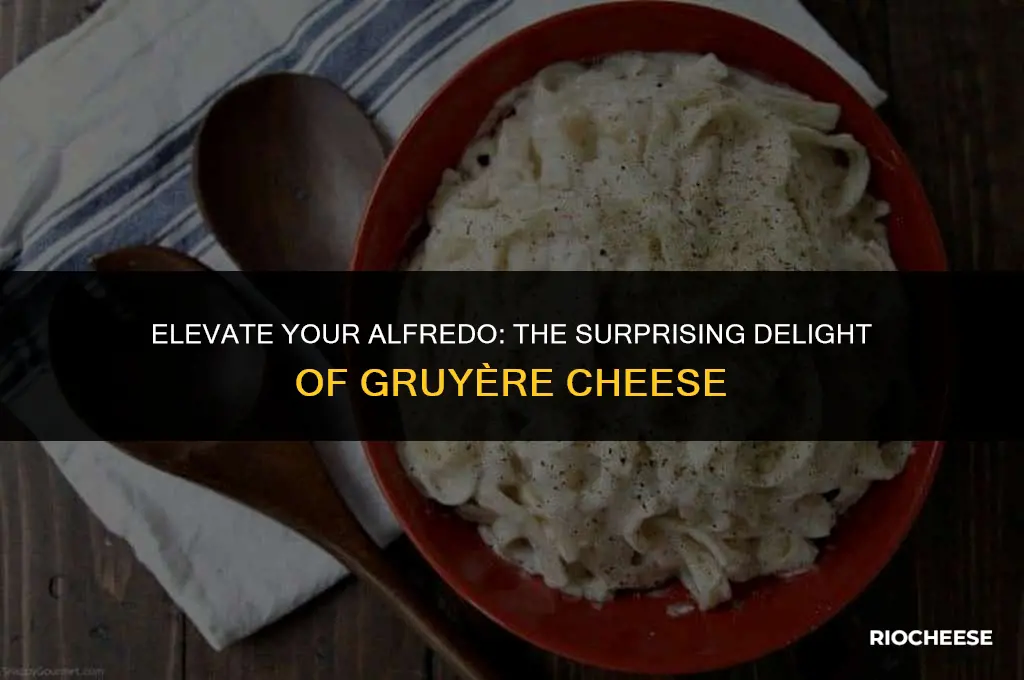
Alfredo sauce, a rich and creamy pasta sauce originating from Italy, traditionally consists of butter, heavy cream, and Parmesan cheese. However, culinary creativity often leads to variations in this classic recipe. Gruyère cheese, known for its nutty flavor and excellent melting properties, is a popular choice for enhancing the taste and texture of Alfredo sauce. In this paragraph, we'll explore how incorporating Gruyère cheese into Alfredo sauce can elevate the dish, providing a unique twist on a beloved favorite.
Explore related products


What You'll Learn
- Gruyere vs. Parmesan: Comparing the flavor profiles and melting properties of Gruyere and Parmesan in Alfredo sauce
- Nutritional Differences: Analyzing the nutritional content of Alfredo sauce made with Gruyere versus traditional Parmesan
- Texture and Consistency: Evaluating how Gruyere affects the creaminess and overall texture of Alfredo sauce compared to Parmesan
- Pairing Suggestions: Recommending pasta types and additional ingredients that complement Alfredo sauce made with Gruyere cheese
- Cultural Adaptations: Exploring how using Gruyere in Alfredo sauce reflects culinary fusion and adaptation in different cuisines

Gruyere vs. Parmesan: Comparing the flavor profiles and melting properties of Gruyere and Parmesan in Alfredo sauce
Gruyère and Parmesan are two distinct cheeses with unique flavor profiles and melting properties, making them suitable for different culinary applications, including Alfredo sauce. Gruyère, a Swiss cheese, is known for its smooth, creamy texture and mild, slightly nutty flavor. It melts exceptionally well, creating a velvety consistency that can enhance the richness of Alfredo sauce. On the other hand, Parmesan, an Italian hard cheese, boasts a sharp, salty, and umami-rich taste. While it doesn't melt as smoothly as Gruyère, it can add a complex depth of flavor to sauces when grated or shaved.
When comparing the two cheeses in the context of Alfredo sauce, it's essential to consider how their flavors and textures will complement or contrast with the sauce's other ingredients. Alfredo sauce typically consists of butter, heavy cream, and grated Parmesan, resulting in a rich, indulgent, and savory dish. Adding Gruyère to this sauce could introduce a subtle nuttiness and a smoother melt, potentially creating a more balanced and less salty flavor profile. However, it may also dilute the distinct umami taste that Parmesan provides.
In terms of melting properties, Gruyère's superior meltability can contribute to a more uniform and creamy sauce. This can be particularly beneficial when serving the sauce over pasta, as it ensures an even coating and a luxurious mouthfeel. Parmesan, while it may not melt as seamlessly, can offer a delightful textural contrast when grated over the top of the sauce, adding a touch of saltiness and depth with each bite.
Ultimately, the choice between Gruyère and Parmesan in Alfredo sauce depends on personal preference and the desired flavor and texture profile. For a milder, creamier sauce with a subtle nutty undertone, Gruyère may be the preferred option. Conversely, for a sauce with a bold, salty, and umami-rich flavor, Parmesan is the classic choice. Experimenting with both cheeses can lead to exciting culinary discoveries and a customized Alfredo sauce that perfectly suits individual tastes.
Gouda Twist: Elevating Alfredo Sauce with a Cheesy Surprise
You may want to see also
Explore related products



Nutritional Differences: Analyzing the nutritional content of Alfredo sauce made with Gruyere versus traditional Parmesan
Alfredo sauce, a rich and creamy pasta accompaniment, traditionally relies on Parmesan cheese for its distinct flavor and texture. However, substituting Gruyere cheese can offer a unique twist, not only in taste but also in nutritional content. To understand the implications of this substitution, it's essential to delve into the nutritional profiles of both cheeses and how they impact the overall sauce.
Parmesan cheese is known for its high protein content and is a good source of calcium and phosphorus. It also contains vitamins A, B12, and riboflavin. On the other hand, Gruyere cheese, while also rich in protein, offers a slightly different nutrient composition. It is lower in sodium compared to Parmesan and provides a higher amount of vitamin A. Gruyere also contains conjugated linoleic acid (CLA), a type of fatty acid that has been linked to various health benefits.
When comparing the two cheeses in the context of Alfredo sauce, the substitution of Gruyere for Parmesan can result in a sauce that is marginally lower in calories and sodium. This can be particularly beneficial for individuals monitoring their intake of these nutrients. Additionally, the higher vitamin A content in Gruyere can contribute to a sauce that supports better vision and immune function.
However, it's important to note that the overall nutritional impact of the sauce also depends on other ingredients used, such as butter, cream, and garlic. While Gruyere can offer some nutritional advantages over Parmesan, the sauce's healthfulness is influenced by the combination of all its components.
In conclusion, using Gruyere cheese in Alfredo sauce not only introduces a new flavor profile but also alters the nutritional content. For those looking to reduce their sodium intake or increase their vitamin A consumption, Gruyere can be a suitable alternative to Parmesan. Nonetheless, moderation is key, as Alfredo sauce, regardless of the cheese used, remains a calorie-dense option.
From Freezer to Farmhouse: Crafting Cheese with Frozen Milk
You may want to see also
Explore related products


Texture and Consistency: Evaluating how Gruyere affects the creaminess and overall texture of Alfredo sauce compared to Parmesan
Gruyere cheese, with its smooth and slightly grainy texture, can significantly alter the consistency of Alfredo sauce. When melted, Gruyere tends to create a silkier, more velvety sauce compared to the sharper, more granular texture imparted by Parmesan. This difference is primarily due to the higher moisture content and finer curd structure of Gruyere. As a result, incorporating Gruyere into Alfredo sauce can lead to a richer, creamier mouthfeel that coats pasta more evenly.
To evaluate the impact of Gruyere on Alfredo sauce, it's essential to consider the melting properties of the cheese. Gruyere melts smoothly and uniformly, which helps in achieving a consistent sauce without lumps or separation. In contrast, Parmesan, while flavorful, can sometimes lead to a slightly grainy or oily sauce due to its lower moisture content and harder texture. By substituting Gruyere for Parmesan, or even blending the two, you can create a more luxurious and homogeneous Alfredo sauce.
The ratio of cheese to cream in the sauce also plays a crucial role in determining the final texture. A higher proportion of Gruyere can enhance the creaminess, but it may also make the sauce heavier. Therefore, it's important to balance the cheese content with the cream to achieve the desired consistency. Additionally, the method of incorporating the cheese into the sauce can affect the texture. Gradually adding grated Gruyere to the warm cream while constantly whisking ensures a smooth and even distribution, preventing clumps and promoting a silky texture.
In summary, using Gruyere cheese in Alfredo sauce can result in a creamier, more velvety texture compared to using Parmesan. The higher moisture content and finer curd structure of Gruyere contribute to a smoother sauce that coats pasta more evenly. However, it's crucial to balance the cheese-to-cream ratio and use proper melting techniques to achieve the best results. By doing so, you can create a luxurious and flavorful Alfredo sauce that showcases the unique qualities of Gruyere cheese.
Elevate Your Ravioli Game with Rich Four-Cheese Sauce
You may want to see also
Explore related products




Pairing Suggestions: Recommending pasta types and additional ingredients that complement Alfredo sauce made with Gruyere cheese
Fettuccine is a classic choice for Alfredo sauce, and when made with Gruyere cheese, it becomes even more decadent. The wide, flat noodles provide the perfect surface area for the creamy sauce to cling to, ensuring each bite is rich and flavorful. To elevate this pairing, consider adding sautéed mushrooms and fresh parsley. The earthy flavor of the mushrooms complements the nutty taste of the Gruyere, while the parsley adds a bright, fresh note to balance the richness of the sauce.
For a heartier option, penne pasta is an excellent alternative. Its tube-like shape allows the Alfredo sauce to fill the center, creating a delightful surprise with each bite. To enhance this pairing, try adding grilled chicken and sun-dried tomatoes. The smoky flavor of the chicken pairs well with the creamy Gruyere sauce, and the tangy sweetness of the sun-dried tomatoes provides a nice contrast to the richness of the dish.
If you're looking for a more unique pasta option, consider using farfalle, also known as bow-tie pasta. Its distinctive shape adds a playful touch to the dish, and its ridges hold onto the sauce beautifully. To complement this pasta, try adding roasted broccoli and toasted pine nuts. The slight bitterness of the broccoli balances the creaminess of the sauce, while the pine nuts add a delightful crunch and nutty flavor.
When it comes to additional ingredients, it's important to strike a balance between flavors and textures. You want to enhance the Gruyere cheese without overpowering it. Fresh herbs like basil or thyme can add a subtle aromatic note, while a sprinkle of freshly grated Parmesan cheese can provide an extra layer of umami flavor. Remember, the key is to let the Gruyere shine through while creating a harmonious blend of flavors and textures.
Delicious Broccoli Cheese Soup: Frozen Broccoli Edition
You may want to see also
Explore related products



Cultural Adaptations: Exploring how using Gruyere in Alfredo sauce reflects culinary fusion and adaptation in different cuisines
The incorporation of Gruyère cheese into Alfredo sauce exemplifies the dynamic nature of culinary traditions and their capacity for fusion and adaptation. Alfredo sauce, a classic Italian creation traditionally made with Parmesan cheese, has been reimagined in various cuisines around the world, often incorporating local ingredients to create new flavor profiles. Gruyère, a Swiss cheese known for its nutty flavor and excellent melting properties, is one such ingredient that has found its way into Alfredo sauce, particularly in American and Swiss culinary practices.
This adaptation reflects a broader trend in global cuisine where chefs and home cooks alike experiment with ingredients from different cultural backgrounds to create innovative dishes. The use of Gruyère in Alfredo sauce not only adds a unique flavor dimension but also highlights the versatility of cheese in bridging culinary traditions. For instance, in Switzerland, Gruyère is a staple cheese, and its integration into Alfredo sauce can be seen as a way to localize an Italian dish, making it more appealing to Swiss palates.
Moreover, the fusion of Gruyère with Alfredo sauce can be analyzed through the lens of cultural exchange and globalization. As people travel and migrate, they bring with them their culinary preferences and practices, leading to the blending of different food cultures. This process of culinary fusion is not merely about combining ingredients but also about creating new identities and communities through food. The Gruyère Alfredo sauce is a testament to this phenomenon, showcasing how food can serve as a medium for cultural dialogue and exchange.
In practical terms, using Gruyère in Alfredo sauce involves understanding the cheese's melting characteristics and flavor profile. Gruyère melts smoothly and evenly, which makes it an excellent choice for creating a creamy, rich sauce. Its nutty flavor complements the buttery, garlicky notes of traditional Alfredo sauce, adding depth and complexity. When preparing this fusion dish, it is essential to grate the Gruyère finely to ensure even melting and to use it in moderation to balance the flavors without overpowering the sauce's original character.
In conclusion, the use of Gruyère cheese in Alfredo sauce is a fascinating example of culinary adaptation and fusion. It illustrates how ingredients from different cultural backgrounds can be combined to create new and exciting dishes, reflecting the ever-evolving nature of global cuisine. This adaptation not only enriches the flavor palette of Alfredo sauce but also serves as a symbol of cultural exchange and the unifying power of food.
Sushi Fusion: The Surprising Delight of Gouda Cheese in Rolls
You may want to see also
Frequently asked questions
Yes, you can use Gruyère cheese in Alfredo sauce. While traditional Alfredo sauce is made with Parmesan cheese, Gruyère can be a delicious substitute or addition, offering a slightly nutty and creamy flavor that complements the sauce well.
Gruyère cheese has a milder, slightly nutty flavor compared to the sharp, salty taste of Parmesan. In terms of texture, Gruyère is creamier and melts more smoothly, which can result in a richer and more velvety Alfredo sauce.
Other cheeses that can be used in Alfredo sauce include mozzarella, provolone, and Asiago. Each of these cheeses brings its own unique flavor and melting properties to the sauce, allowing for a variety of delicious combinations.
If using Gruyère cheese instead of Parmesan, you may want to adjust the amount of salt in the recipe, as Gruyère is less salty. Additionally, you could experiment with adding a bit more butter or cream to enhance the richness of the sauce, since Gruyère melts more smoothly and can create a creamier texture.
Gruyère cheese can be incorporated into a variety of Italian dishes beyond Alfredo sauce. It can be used in risottos, pasta bakes, and as a topping for pizzas. Gruyère also pairs well with vegetables and can be melted over roasted or grilled veggies for a tasty side dish.