Andy Montoya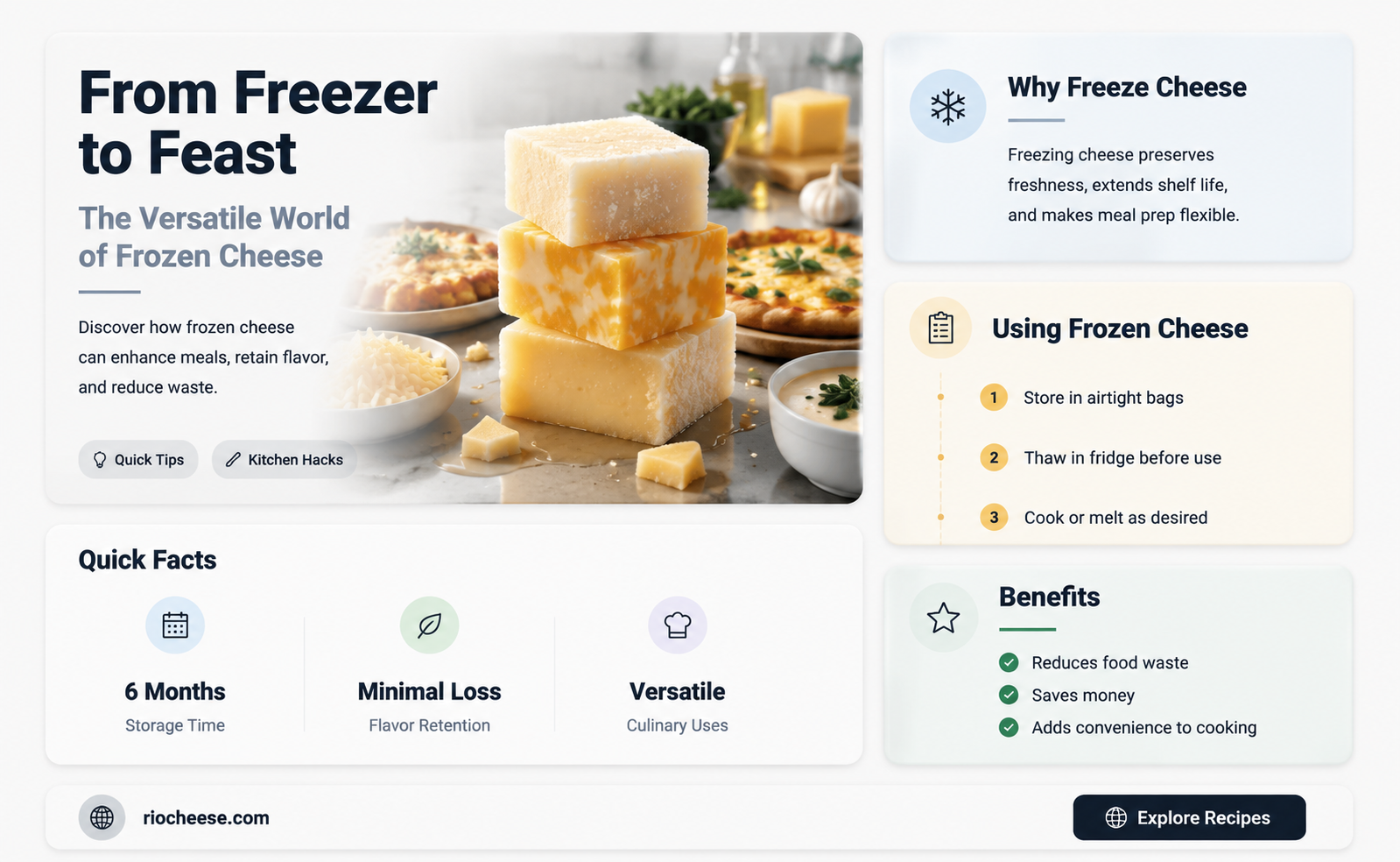
Frozen cheese can be a convenient and cost-effective option for many recipes, but its usability depends on several factors. When considering using frozen cheese, it's important to think about the type of cheese, its intended use, and how it will be thawed and incorporated into your dish. Some cheeses, like mozzarella and cheddar, freeze well and can be easily grated or sliced after thawing, making them suitable for pizzas, casseroles, and sandwiches. However, softer cheeses like brie or goat cheese may not freeze as well and could become too soft or crumbly upon thawing. Proper thawing techniques, such as allowing the cheese to thaw slowly in the refrigerator or at room temperature, can help maintain its texture and flavor. Additionally, frozen cheese can be a great option for extending its shelf life, especially if you don't use cheese frequently or want to stock up on a particular type. Overall, while frozen cheese can be a useful ingredient, it's essential to choose the right type and use it appropriately to ensure the best results in your culinary creations.
| Characteristics | Values |
|---|---|
| Type of Cheese | Most types of cheese can be frozen, including cheddar, mozzarella, and parmesan. |
| Texture | Frozen cheese can become crumbly or grainy upon thawing. |
| Flavor | The flavor may be slightly altered, often becoming sharper or more intense. |
| Moisture Content | Freezing can cause cheese to lose some of its moisture, leading to a drier texture. |
| Best Use | Frozen cheese is best used for cooking or baking, as its altered texture may not be ideal for eating raw. |
| Thawing Method | Cheese should be thawed slowly in the refrigerator to maintain its quality. |
| Storage | Frozen cheese should be stored in an airtight container or freezer bag to prevent freezer burn. |
| Shelf Life | Frozen cheese can last for up to 6 months, though it's best used within 3 months for optimal quality. |
| Freezing Point | Cheese typically freezes at around 32°F (0°C), but this can vary depending on the type and moisture content. |
| Nutritional Value | Freezing cheese does not significantly alter its nutritional content, though some vitamins may be slightly reduced. |
| Common Uses | Frozen cheese is often used in recipes like casseroles, soups, and sauces, where its texture and flavor can be fully utilized. |
| Cost | The cost of frozen cheese can vary, but it is generally comparable to fresh cheese, especially when considering the convenience factor. |
| Availability | Frozen cheese is widely available in most grocery stores, often found in the frozen food section. |
| Preparation | No special preparation is needed when using frozen cheese in cooking; simply thaw and use as desired. |
| Quality | The quality of frozen cheese can vary depending on the brand and type, so it's important to choose a reputable brand for the best results. |
Explore related products


What You'll Learn
- Storage Duration: How long can frozen cheese be stored before it starts to degrade in quality
- Thawing Methods: What are the best methods to thaw frozen cheese to maintain its texture and flavor
- Cooking Applications: In what dishes can frozen cheese be used directly without noticeable differences in taste or texture
- Nutritional Value: Does freezing cheese affect its nutritional content, such as protein, fat, and vitamins
- Quality Comparison: How does the quality of frozen cheese compare to fresh cheese in terms of taste and texture

Storage Duration: How long can frozen cheese be stored before it starts to degrade in quality?
Frozen cheese can be stored for an extended period, but its quality will eventually degrade over time. The storage duration largely depends on the type of cheese and the conditions under which it is frozen. Generally, hard cheeses like cheddar and Swiss can be stored in the freezer for up to 6 months without significant loss of quality. Soft cheeses, such as brie or camembert, are more delicate and should be consumed within 2-3 months of freezing.
It's important to note that while freezing can help preserve cheese, it can also alter its texture and flavor. When cheese is frozen, the moisture within it forms ice crystals, which can lead to a crumbly texture upon thawing. Additionally, the freezing process can cause the cheese to lose some of its flavor complexity. To minimize these effects, it's recommended to freeze cheese in small portions and to thaw it slowly in the refrigerator.
Another factor to consider is the packaging of the cheese. Cheese should be tightly wrapped in plastic wrap or aluminum foil before freezing to prevent freezer burn and to retain moisture. It's also a good idea to label the cheese with the date it was frozen, so you can keep track of how long it has been stored.
In summary, while frozen cheese can be stored for several months, it's important to be aware of the potential changes in texture and flavor. Proper packaging and thawing techniques can help maintain the quality of the cheese for as long as possible.
Feta Fusion: Elevating Cheese Sauce with a Tangy Twist
You may want to see also
Explore related products


Thawing Methods: What are the best methods to thaw frozen cheese to maintain its texture and flavor?
The key to successfully thawing frozen cheese lies in maintaining its texture and flavor. One effective method is to thaw the cheese in the refrigerator overnight. This slow process allows the cheese to gradually warm up, preserving its moisture and preventing it from becoming rubbery or losing its taste.
Another method is to submerge the frozen cheese in cold water, changing the water every 30 minutes until the cheese is thawed. This technique is quicker than refrigeration but still gentle enough to maintain the cheese's quality.
For a faster thawing process, you can use the microwave, but this requires careful monitoring. Place the cheese on a microwave-safe plate and use the defrost setting, checking every 15 seconds to ensure the cheese doesn't start to melt or become too warm.
It's important to note that some cheeses, like hard cheeses, can be grated or shredded directly from the freezer without thawing. This is because the freezing process doesn't significantly alter their texture. However, for softer cheeses, thawing is essential to restore their original consistency and flavor.
When thawing cheese, it's crucial to avoid exposing it to high temperatures or direct sunlight, as this can cause the cheese to melt unevenly or develop an off-flavor. Additionally, never refreeze cheese that has already been thawed, as this can lead to a loss of quality and potential food safety issues.
In summary, the best methods for thawing frozen cheese involve slow, gentle processes like refrigeration or cold water immersion. These methods help maintain the cheese's texture and flavor, ensuring it's ready to use in your favorite recipes.
Effortless Cheese Shredding: Food Processor Hacks Revealed
You may want to see also
Explore related products



Cooking Applications: In what dishes can frozen cheese be used directly without noticeable differences in taste or texture?
Frozen cheese can be a versatile ingredient in various dishes, provided it is used correctly. One of the most common applications is in casseroles and baked dishes. When frozen cheese is grated or shredded, it can be sprinkled over the top of a casserole before baking, adding a rich, melted layer without any noticeable difference in taste or texture from fresh cheese. This method is particularly useful for dishes like lasagna, enchiladas, and shepherd's pie, where the cheese is melted and integrated into the dish during the baking process.
Another dish where frozen cheese can be used directly is in soups and stews. By adding shredded or cubed frozen cheese to a simmering soup, it melts quickly and smoothly, contributing to the creamy texture and flavor of the dish. This technique is ideal for recipes like broccoli cheddar soup, French onion soup, or chili, where the cheese enhances the overall taste without altering the consistency.
Frozen cheese can also be a convenient option for making cheese sauces and dips. By melting shredded or cubed frozen cheese in a saucepan with a bit of milk or cream, you can create a smooth, velvety sauce that is perfect for coating pasta, vegetables, or chips. This method is particularly useful for dishes like macaroni and cheese, cheese fondue, or nacho dip, where the cheese sauce is a key component of the recipe.
However, it is important to note that not all types of frozen cheese are suitable for direct use in cooking. Cheeses with a high moisture content, like mozzarella or feta, may not freeze well and can result in a watery or grainy texture when thawed. It is best to stick with cheeses that have a lower moisture content, such as cheddar, Parmesan, or Swiss, which tend to freeze and thaw more effectively without compromising their taste or texture.
In conclusion, frozen cheese can be a convenient and cost-effective ingredient in a variety of dishes, as long as it is used appropriately. By understanding the best applications for frozen cheese and selecting the right types, you can create delicious meals without sacrificing quality or flavor.
Delicious Broccoli Cheese Soup: Frozen Broccoli Edition
You may want to see also
Explore related products




Nutritional Value: Does freezing cheese affect its nutritional content, such as protein, fat, and vitamins?
Freezing cheese can have a significant impact on its nutritional content, particularly in terms of protein, fat, and vitamins. When cheese is frozen, the water content within the cheese forms ice crystals, which can lead to a change in the cheese's texture and potentially affect its nutritional value.
Protein content in cheese is generally not affected by freezing, as proteins are relatively stable at low temperatures. However, the texture of the cheese may become more crumbly or grainy after freezing, which could make it more difficult to consume or use in certain recipes.
Fat content in cheese can be affected by freezing, as the fat molecules can become more solid and separate from the rest of the cheese. This can lead to a change in the cheese's flavor and texture, and may also affect the way the cheese melts.
Vitamins in cheese, particularly water-soluble vitamins like vitamin B12 and riboflavin, can be lost during the freezing process. This is because the ice crystals that form during freezing can damage the cell walls of the cheese, leading to a loss of these vitamins. However, the loss of vitamins is generally minimal and may not be significant for most people.
Overall, while freezing cheese can affect its nutritional content, the changes are generally not significant enough to deter people from using frozen cheese. However, it is important to note that the texture and flavor of the cheese may be affected, which could impact its usability in certain recipes.
Feta vs. Ricotta: A Cheesy Debate in Lasagna Land
You may want to see also
Explore related products




Quality Comparison: How does the quality of frozen cheese compare to fresh cheese in terms of taste and texture?
Frozen cheese, when compared to its fresh counterpart, undergoes a transformation in both taste and texture due to the freezing process. The crystalline structure of cheese changes when frozen, leading to a slightly different mouthfeel. Fresh cheese typically has a softer, more pliable texture, whereas frozen cheese can become more crumbly or firm, depending on the type and how it's been frozen.
In terms of taste, frozen cheese can sometimes develop a more concentrated flavor profile. This is because the freezing process can cause some of the moisture to evaporate, leaving behind a denser, more intense taste. However, this can also lead to a loss of some of the cheese's original nuances and subtleties. Fresh cheese, on the other hand, retains its original moisture content and flavor complexity, offering a more authentic taste experience.
The quality of frozen cheese also depends on the freezing method used. Quick-freezing methods, such as flash freezing, can help preserve the cheese's texture and flavor better than slow freezing. Additionally, the storage conditions post-freezing play a crucial role in maintaining quality. Frozen cheese should be stored at a consistent temperature to prevent the formation of ice crystals, which can further alter the texture and taste.
When considering the use of frozen cheese in cooking, it's important to note that while it may not offer the same texture and flavor as fresh cheese, it can still be a viable option for certain recipes. For instance, frozen cheese can be an excellent choice for dishes where the cheese is melted or incorporated into a sauce, as the differences in texture and taste are less noticeable. However, for dishes where the cheese is a focal point, such as a cheese platter or a caprese salad, fresh cheese is generally preferred for its superior taste and texture.
In conclusion, while frozen cheese can be a convenient and sometimes cost-effective alternative to fresh cheese, it does come with some compromises in terms of taste and texture. Understanding these differences can help consumers make informed decisions about when and how to use frozen cheese in their culinary endeavors.
Elevate Your Street Corn Game with Fresco Cheese: A Flavorful Twist!
You may want to see also
Frequently asked questions
Yes, frozen cheese can be used in recipes, but it's best to thaw it first to ensure even melting and proper texture.
To thaw frozen cheese, place it in the refrigerator overnight or thaw it in cold water for about 30 minutes. Avoid using warm water or a microwave, as this can cause the cheese to melt unevenly or become rubbery.
Freezing can alter the texture of cheese, making it slightly crumbly or grainy upon thawing. The taste may also be slightly different, but it should still be enjoyable in most recipes.
Hard cheeses like cheddar, Swiss, and Parmesan freeze well. Soft cheeses like Brie or Camembert can also be frozen, but they may not retain their original texture as well as hard cheeses.
Frozen cheese can be stored for up to 6 months. After that, the quality may start to decline, and the cheese may become more prone to freezer burn.