Patrick Oconnell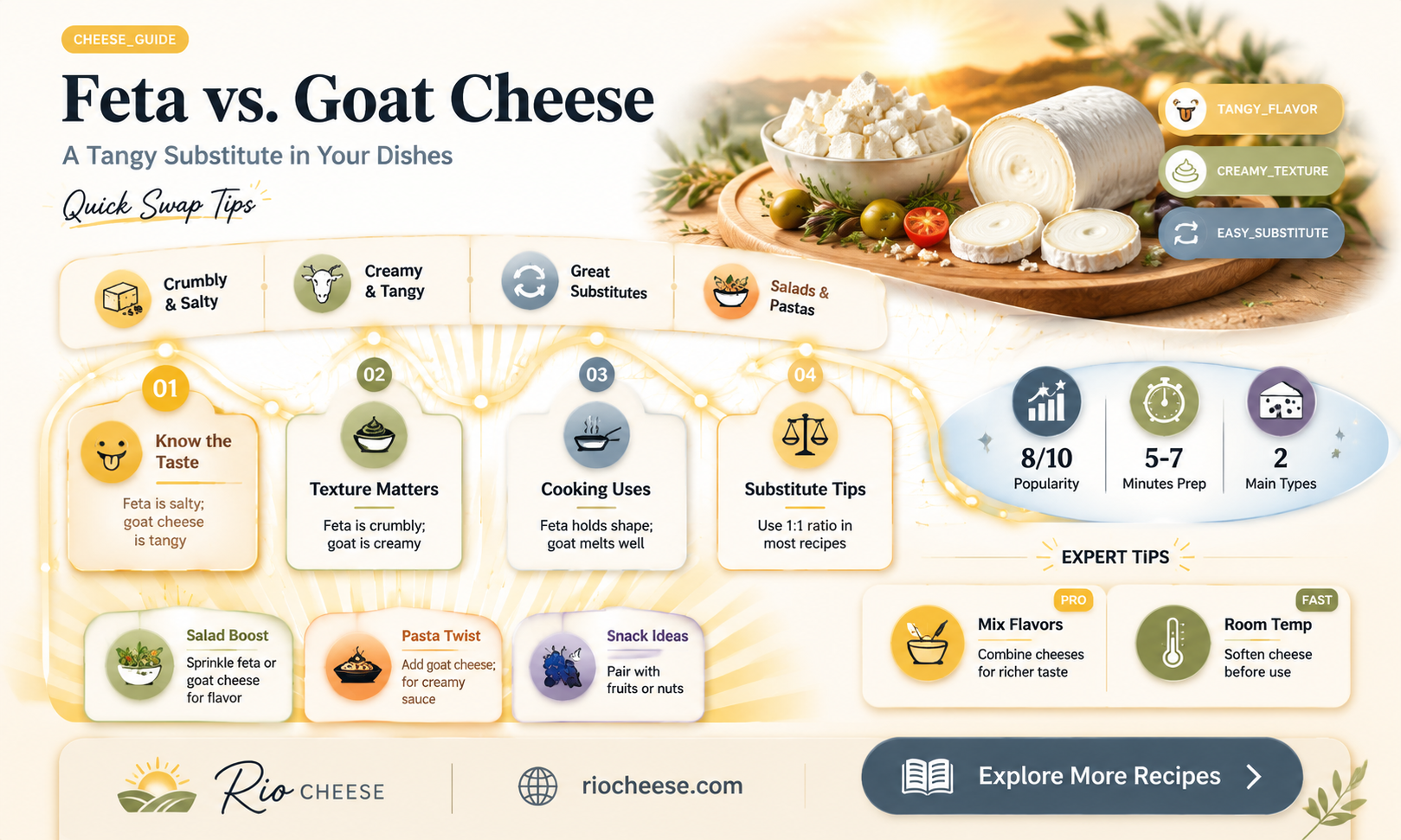
When it comes to substituting cheeses in recipes, feta and goat cheese are often considered interchangeable due to their similar tangy flavors and crumbly textures. However, there are some key differences to consider. Feta, a Greek cheese made from sheep's or goat's milk, has a saltier and more acidic taste compared to goat cheese, which is typically milder and creamier. Additionally, feta is usually firmer and holds its shape better when crumbled, while goat cheese tends to be softer and more spreadable. Despite these differences, in many dishes, feta can be used as a substitute for goat cheese, adding a bold, tangy flavor that complements a variety of ingredients.
Explore related products


![Traditional Feta Chunk has a rich, creamy texture and bold, tangy taste that elevates any dish. Inspired by Greek tradition, it’s made with fresh, simple ingredients for authentic flavor. Crumble it over salads, tuck it into wraps, or serve it on a cheeseboard—this versatile cheese adds a Mediterranean twist to your favorite foods. It’s a delicious way to bring depth and character to everyday meals or special recipes. [ 32 oz , 2 lb ]](https://m.media-amazon.com/images/I/51MZ2OhOE-L._AC_UL320_.jpg)
What You'll Learn
- Flavor Comparison: Feta's tangy, salty taste vs. goat cheese's mild, creamy flavor in dishes
- Texture Differences: Crumbly feta versus smooth, spreadable goat cheese in recipes
- Nutritional Values: Comparing calories, fat, protein, and vitamins in feta and goat cheese
- Culinary Uses: Best dishes for feta (e.g., salads, pizzas) vs. goat cheese (e.g., spreads, desserts)
- Substitution Tips: How to replace goat cheese with feta in recipes without compromising taste

Flavor Comparison: Feta's tangy, salty taste vs. goat cheese's mild, creamy flavor in dishes
Feta cheese, known for its tangy and salty flavor profile, offers a distinct taste that can significantly alter the character of a dish. Its crumbly texture and sharp flavor make it a popular choice for salads, pizzas, and various Mediterranean recipes. On the other hand, goat cheese, with its mild and creamy flavor, provides a smoother and less pungent alternative. This cheese is often used in dishes where a subtle cheese flavor is desired, such as in cheesecakes, spreads, and certain types of pasta.
When comparing the two cheeses in terms of their flavor impact, feta tends to overpower other ingredients due to its strong taste, while goat cheese complements them with its gentle flavor. For instance, in a salad, feta can add a bold, salty kick that enhances the overall taste, whereas goat cheese would contribute a creamy, slightly tangy note without overwhelming the other components.
In terms of culinary applications, feta is more versatile in dishes that require a pronounced cheese flavor, such as in Greek salads or as a topping for bruschetta. Goat cheese, however, shines in recipes where a delicate balance of flavors is crucial, like in a goat cheese cheesecake or as part of a cheese platter.
Ultimately, the choice between feta and goat cheese depends on the desired flavor profile of the dish. If a strong, tangy, and salty taste is preferred, feta is the better option. Conversely, if a mild, creamy, and subtle cheese flavor is sought, goat cheese would be more appropriate. Both cheeses have their unique qualities and can be used interchangeably in some recipes, but they each bring a distinct flavor that can significantly impact the final taste of a dish.
Feta vs. Ricotta: A Cheesy Debate in Lasagna Land
You may want to see also
Explore related products


Texture Differences: Crumbly feta versus smooth, spreadable goat cheese in recipes
The texture of cheese plays a crucial role in determining its suitability for various recipes. Feta cheese, known for its crumbly texture, offers a distinct contrast to the smooth and spreadable consistency of goat cheese. This difference in texture can significantly impact the final outcome of a dish, influencing both its mouthfeel and presentation.
In recipes where a smooth, creamy texture is desired, such as in spreads or dips, goat cheese is often the preferred choice. Its ability to blend seamlessly with other ingredients creates a uniform and visually appealing mixture. On the other hand, feta cheese, with its crumbly nature, is better suited for dishes where a more rustic or textured appearance is beneficial. For instance, crumbled feta can add a delightful crunch to salads, pasta dishes, or as a topping for baked goods.
When considering substituting feta for goat cheese, it's essential to take into account the textural implications for the recipe. While both cheeses share a tangy flavor profile, their differing consistencies can alter the overall dining experience. In some cases, a combination of both cheeses might be used to achieve a balance between creaminess and crumbly texture, enhancing the complexity of the dish.
In conclusion, the choice between crumbly feta and smooth goat cheese should be based on the desired textural outcome of the recipe. By understanding the unique characteristics of each cheese, cooks can make informed decisions to create dishes that not only taste delicious but also offer a pleasing mouthfeel and visual appeal.
Elevate Your Street Corn Game with Crumbly Feta Cheese
You may want to see also
Explore related products


Nutritional Values: Comparing calories, fat, protein, and vitamins in feta and goat cheese
Feta and goat cheese are both popular dairy products known for their distinct flavors and culinary uses. However, when it comes to nutritional values, there are some key differences to consider. Feta cheese is typically higher in calories and fat compared to goat cheese. A 100-gram serving of feta cheese contains approximately 260 calories and 21 grams of fat, while the same serving of goat cheese has around 170 calories and 10 grams of fat. This difference in fat content can be attributed to the fact that feta cheese is made from sheep's milk, which is naturally higher in fat than goat's milk.
In terms of protein content, both cheeses are relatively similar. Feta cheese provides about 14 grams of protein per 100 grams, while goat cheese offers around 13 grams. This makes them both good sources of protein for those looking to incorporate more into their diets.
When it comes to vitamins, feta cheese has a slight edge over goat cheese. It is particularly rich in vitamin B12, providing about 25% of the recommended daily intake per 100 grams. Goat cheese, on the other hand, is a better source of vitamin A, offering around 10% of the recommended daily intake. Both cheeses contain small amounts of other vitamins, such as vitamin C and vitamin K.
It's important to note that the nutritional values of feta and goat cheese can vary depending on the specific brand and production method. Additionally, portion control is key when consuming these cheeses, as they can be high in calories and fat. Overall, while both cheeses offer unique nutritional benefits, feta cheese tends to be higher in calories and fat, while goat cheese is a better source of vitamin A.
Feta vs. Ricotta: A Cheesy Substitute Showdown
You may want to see also
Explore related products


Culinary Uses: Best dishes for feta (e.g., salads, pizzas) vs. goat cheese (e.g., spreads, desserts)
Feta cheese, with its crumbly texture and tangy flavor, is a versatile ingredient that shines in a variety of dishes. One of its most popular uses is in salads, where it adds a salty kick and creamy contrast to fresh greens and vegetables. The classic Greek salad, with its combination of tomatoes, cucumbers, red onions, and olives, is elevated by the addition of feta cheese. It can also be crumbled over roasted vegetables or used as a topping for pizzas, providing a unique flavor profile that sets it apart from other cheeses.
Goat cheese, on the other hand, has a softer texture and milder taste, making it an excellent choice for spreads and desserts. Its creamy consistency makes it perfect for blending into dips and spreads, such as the popular goat cheese and herb spread often served with crackers or bread. In desserts, goat cheese can be used to make cheesecakes, tarts, or even ice cream, adding a subtle tanginess that complements sweet flavors.
When considering which cheese to use in a recipe, it's important to think about the desired texture and flavor profile. Feta cheese is best suited for dishes where a crumbly, salty element is desired, while goat cheese is ideal for creamy, mild applications. While feta can be used as a substitute for goat cheese in some recipes, the reverse is not always true. The distinct characteristics of each cheese make them better suited for different culinary uses.
In conclusion, both feta and goat cheese have their own unique qualities that make them valuable in the kitchen. By understanding their best uses, cooks can make informed decisions about which cheese to use in their recipes, ensuring the perfect balance of flavors and textures.
Feta Fiesta: A Greek Twist on Taco Tuesday
You may want to see also
Explore related products


Substitution Tips: How to replace goat cheese with feta in recipes without compromising taste
Replacing goat cheese with feta in recipes can be a seamless transition if done correctly. The key is to understand the distinct characteristics of each cheese and how they interact with other ingredients. Goat cheese is known for its tangy, slightly sweet flavor and creamy texture, which makes it a versatile ingredient in both sweet and savory dishes. Feta, on the other hand, has a salty, briny taste and a crumbly texture that can add a delightful contrast to various recipes.
To substitute feta for goat cheese without compromising taste, start by considering the flavor profile of the dish. If the recipe calls for a tangy element, feta can provide a similar zing, albeit with a saltier edge. In savory dishes, feta can be used in equal amounts as goat cheese, but be mindful of the salt content and adjust seasoning accordingly. For example, in a salad dressing, you might reduce the amount of salt added if using feta instead of goat cheese.
In baked goods or desserts where goat cheese is used for its creamy texture and mild flavor, feta may not be the best substitute due to its strong taste and crumbly consistency. However, if you're looking to add a salty twist to a dessert, crumbled feta can be a surprising and delicious addition. Just be sure to balance the sweetness of the dish with the saltiness of the feta.
When it comes to texture, goat cheese is often used in recipes for its smooth, spreadable quality. Feta, with its crumbly texture, can be used to add a different mouthfeel to dishes. For instance, in a pasta dish, crumbled feta can provide a nice contrast to the softness of the pasta and sauce. If you need a smoother consistency, you can blend feta with a bit of olive oil or cream to create a more spreadable mixture.
In conclusion, substituting feta for goat cheese is all about understanding the unique qualities of each cheese and how they can enhance or alter a recipe. By considering flavor, texture, and the overall balance of the dish, you can successfully replace goat cheese with feta without compromising taste. Just remember to adjust seasoning and texture as needed to achieve the desired result.
Feta Twist: Reinventing Mac and Cheese with a Greek Spin
You may want to see also
Frequently asked questions
Yes, feta cheese can often be used as a substitute for goat cheese in recipes, especially in dishes where the cheese is crumbled or used as a topping. Both cheeses have a tangy flavor profile that can complement each other well.
Feta cheese has a salty, tangy, and slightly crumbly texture, while goat cheese is creamier and has a milder, slightly sweet flavor. When substituting feta for goat cheese, you may want to adjust the amount of salt in the recipe to balance the flavors.
Feta cheese can be used instead of goat cheese in salads, pasta dishes, and as a topping for pizzas or flatbreads. It can also be crumbled over roasted vegetables or used in stuffed peppers and other appetizers.
Yes, there are some nutritional differences between feta and goat cheese. Feta cheese is typically lower in calories and fat than goat cheese, but it is also higher in sodium. Goat cheese, on the other hand, is a good source of protein and calcium.
While feta cheese is a staple in Greek cuisine, goat cheese can be used as a substitute in some dishes. However, keep in mind that goat cheese has a different flavor and texture than feta, so it may alter the taste of the dish. It's best to use goat cheese in dishes where the cheese is not the main ingredient or where the flavor can be balanced with other ingredients.