Kamil Perry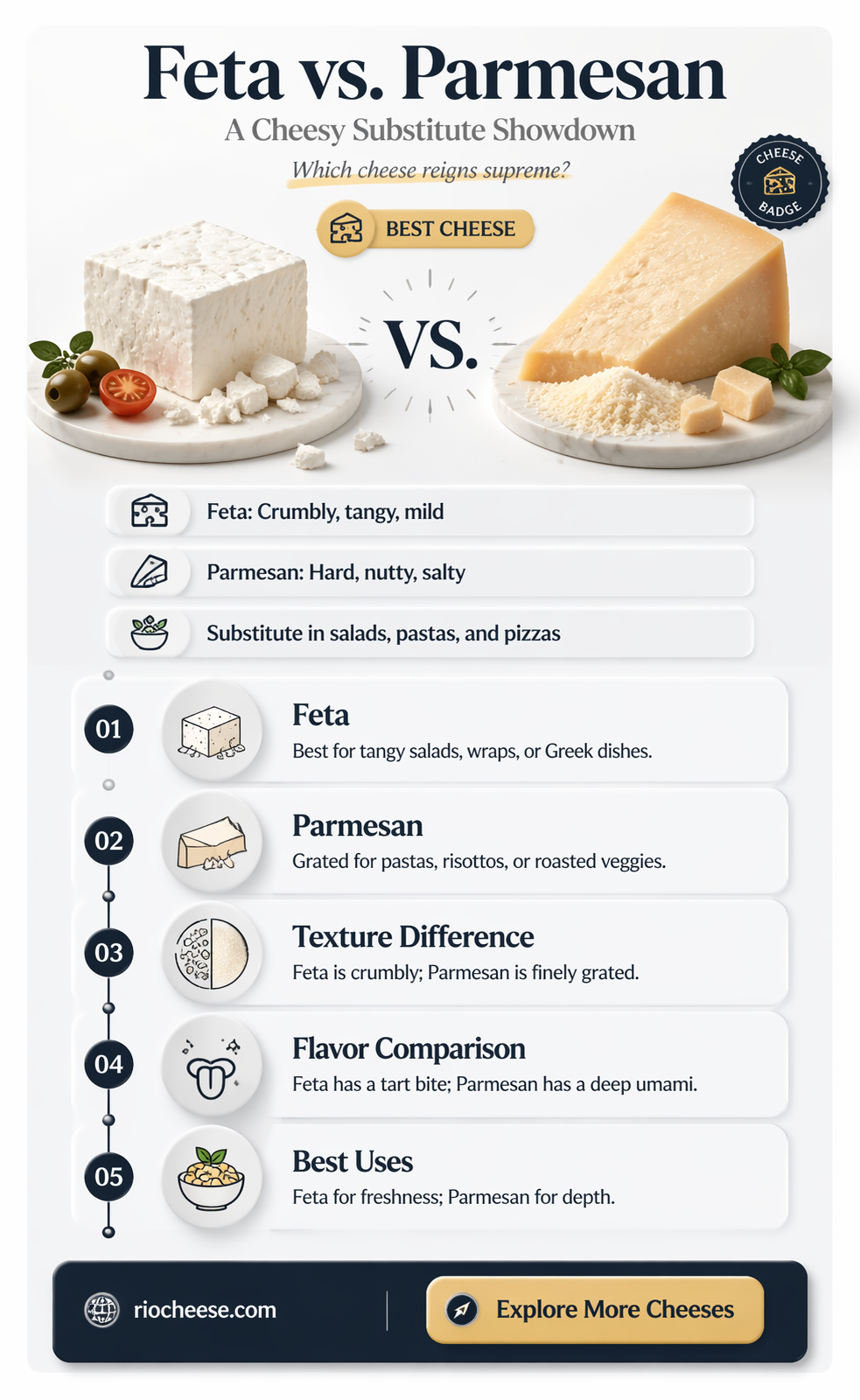
When it comes to substituting cheeses in recipes, feta and Parmesan are two distinct options that can offer unique flavors and textures. Feta cheese, known for its crumbly texture and tangy, salty taste, is a popular choice in Mediterranean cuisine, often used in salads, pastries, and as a table cheese. On the other hand, Parmesan is a hard, aged Italian cheese with a rich, nutty flavor that's commonly grated over pasta dishes, incorporated into sauces, and used in soups. While both cheeses have their own culinary applications, the question arises: can you use feta cheese instead of Parmesan in certain dishes? The answer depends on the specific recipe and the desired flavor profile. In some cases, feta can provide a refreshing contrast to Parmesan's sharpness, while in others, the substitution might alter the dish's traditional taste. Let's explore some scenarios where feta could be a suitable replacement for Parmesan and discuss the potential impact on the final result.
Explore related products


What You'll Learn
- Flavor Comparison: Feta's tangy, salty taste vs. Parmesan's nutty, umami flavor in dishes
- Texture Differences: Crumbly feta versus hard, granular Parmesan in cooking applications
- Nutritional Content: Comparing calories, fat, protein, and sodium levels of both cheeses
- Culinary Uses: Best dishes for feta and Parmesan substitutions, considering their unique qualities
- Storage and Shelf Life: How to store feta and Parmesan to maintain freshness and longevity

Flavor Comparison: Feta's tangy, salty taste vs. Parmesan's nutty, umami flavor in dishes
Feta cheese and Parmesan cheese are two distinct varieties with unique flavor profiles that can significantly impact the taste of a dish. Feta is known for its tangy and salty taste, which is a result of the brining process it undergoes. This cheese is typically made from sheep's or goat's milk and is often used in Mediterranean cuisine. Its crumbly texture and sharp flavor make it a popular choice for salads, sandwiches, and as a garnish for various dishes.
On the other hand, Parmesan cheese is renowned for its nutty and umami flavor, which develops during the aging process. Made from cow's milk, Parmesan is a hard cheese that is commonly grated over pasta dishes, used in soups and risottos, and served as a table cheese. Its rich, savory taste is a result of the long maturation period, which can last up to 24 months or more for aged varieties.
When comparing the two cheeses in dishes, the tangy and salty notes of feta can add a bright, zesty flavor that cuts through the richness of a dish. For example, feta can be used to balance the creaminess of a pasta sauce or the earthiness of roasted vegetables. In contrast, the nutty and umami characteristics of Parmesan can enhance the depth and complexity of a dish, adding a layer of savory richness that complements meats, vegetables, and sauces.
In terms of substitution, while feta and Parmesan have different flavor profiles, they can sometimes be used interchangeably in certain dishes. For instance, if a recipe calls for a salty, tangy element, feta can be a suitable substitute for Parmesan. However, it's important to consider the texture and melting properties of each cheese, as they can affect the final outcome of the dish. Feta does not melt as smoothly as Parmesan, so it may not be the best choice for dishes that require a melted cheese topping.
Ultimately, the choice between feta and Parmesan depends on the desired flavor and texture in the dish. Both cheeses offer unique qualities that can elevate a meal, and understanding their differences can help in making an informed decision when selecting a cheese for a particular recipe.
Feta vs. Ricotta: A Cheesy Substitute Showdown
You may want to see also
Explore related products


Texture Differences: Crumbly feta versus hard, granular Parmesan in cooking applications
Feta cheese, with its crumbly texture, offers a distinct mouthfeel compared to the hard, granular Parmesan. This difference significantly impacts their cooking applications. Feta's crumbly nature makes it ideal for dishes where a lighter, more delicate cheese is desired. It can be easily crumbled over salads, pasta, or vegetables, adding a tangy flavor without overpowering the other ingredients. In contrast, Parmesan's hard texture allows it to be grated finely, making it perfect for sprinkling over dishes where a more intense, savory flavor is needed.
When considering substituting feta for Parmesan, it's essential to understand how their textures will affect the final dish. For instance, if a recipe calls for grated Parmesan to be melted into a sauce, feta would not be an ideal substitute as it lacks the same melting properties. However, if the recipe involves crumbling cheese over a dish for added flavor and texture, feta could be a suitable alternative.
In terms of cooking techniques, feta's crumbly texture means it's best added towards the end of the cooking process to prevent it from becoming too soft or losing its shape. Parmesan, on the other hand, can be added earlier in the cooking process, especially when it's being melted or incorporated into a sauce.
Ultimately, the choice between feta and Parmesan depends on the desired texture and flavor profile of the dish. While they can sometimes be used interchangeably, understanding their unique characteristics will help in making the best substitution for a specific recipe.
Feta vs. Parmesan: A Cheesy Substitute Showdown
You may want to see also
Explore related products


Nutritional Content: Comparing calories, fat, protein, and sodium levels of both cheeses
Feta cheese and Parmesan cheese, while both popular in various cuisines, exhibit distinct nutritional profiles. When comparing the two, it's essential to consider their calorie, fat, protein, and sodium content to make an informed decision about their use in cooking and dietary planning.
In terms of calories, Parmesan cheese is more calorie-dense than feta cheese. A 1-ounce serving of Parmesan contains approximately 110 calories, whereas feta cheese has around 70 calories per ounce. This difference can be significant when considering portion sizes and overall caloric intake.
Regarding fat content, both cheeses contain a substantial amount, but Parmesan has a higher fat content by weight. A 1-ounce serving of Parmesan cheese contains about 9 grams of fat, with a notable portion being saturated fat. Feta cheese, on the other hand, has around 6 grams of fat per ounce, with a slightly lower proportion of saturated fat. This distinction is crucial for individuals monitoring their fat intake, particularly those with cardiovascular health concerns.
Protein content is another key factor in comparing these cheeses. Parmesan cheese is renowned for its high protein content, providing approximately 7 grams of protein per ounce. Feta cheese, while still a good source of protein, offers about 4 grams per ounce. This difference can impact meal planning, especially for those looking to increase their protein intake.
Sodium levels also vary significantly between the two cheeses. Parmesan cheese is notably high in sodium, with around 450 milligrams per ounce. Feta cheese, although still containing a considerable amount of sodium, has about 280 milligrams per ounce. This distinction is vital for individuals on a low-sodium diet or those with hypertension.
In conclusion, while both feta and Parmesan cheeses offer unique flavors and culinary uses, their nutritional content differs substantially. Parmesan cheese is higher in calories, fat, protein, and sodium compared to feta cheese. When deciding whether to use feta cheese instead of Parmesan, it's essential to consider these nutritional factors in the context of one's dietary needs and preferences.
Feta Fusion: Elevating Cheese Sauce with a Tangy Twist
You may want to see also
Explore related products



Culinary Uses: Best dishes for feta and Parmesan substitutions, considering their unique qualities
Feta cheese, with its crumbly texture and tangy flavor, is an excellent substitute for Parmesan in various dishes. One of the best uses for feta as a Parmesan substitute is in salads. The salty, briny flavor of feta complements the fresh, crisp ingredients of a Greek salad perfectly. It can also be sprinkled over a Caprese salad for a unique twist, adding a creamy texture that contrasts with the juicy tomatoes and fresh mozzarella.
In pasta dishes, feta can be used to create a rich, flavorful sauce. For instance, in a pasta primavera, feta can be crumbled and mixed with olive oil, garlic, and herbs to create a creamy sauce that coats the vegetables and pasta beautifully. It can also be used in a pasta salad, where its tangy flavor pairs well with the acidity of the dressing and the sweetness of the vegetables.
Feta cheese is also a great substitute for Parmesan in omelets and frittatas. Its creamy texture and salty flavor add depth to the dish, and it melts beautifully, creating a gooey, delicious filling. For a Mediterranean-inspired omelet, feta can be combined with spinach, olives, and sun-dried tomatoes for a flavorful and satisfying meal.
When using feta as a Parmesan substitute, it's important to consider the salt content. Feta is generally saltier than Parmesan, so it's best to use it sparingly and adjust the seasoning of the dish accordingly. Additionally, feta has a softer texture than Parmesan, so it may not be suitable for dishes where a hard, grating cheese is required.
In conclusion, feta cheese is a versatile and flavorful substitute for Parmesan in many dishes. Its unique qualities make it an excellent choice for salads, pasta dishes, and egg-based meals. By considering the salt content and texture, feta can be used effectively to add a new dimension of flavor to a variety of recipes.
Feta Cheese in Pasta: A Delicious and Versatile Combination
You may want to see also
Explore related products


Storage and Shelf Life: How to store feta and Parmesan to maintain freshness and longevity
Feta and Parmesan cheeses, while different in taste and texture, share some similarities in storage requirements to maintain their freshness and longevity. Proper storage is crucial to prevent spoilage and ensure that these cheeses retain their quality over time.
For feta cheese, it is best stored in the refrigerator in its original brine or a saltwater solution. This helps to keep the cheese moist and prevents it from drying out. If the feta is not in brine, it can be wrapped tightly in plastic wrap or aluminum foil and placed in an airtight container. It is important to note that feta cheese should not be frozen, as this can alter its texture and flavor.
Parmesan cheese, on the other hand, is a hard cheese that can be stored at room temperature for short periods. However, for long-term storage, it is recommended to keep Parmesan in the refrigerator. It should be wrapped tightly in plastic wrap or aluminum foil to prevent it from absorbing odors from other foods. Unlike feta, Parmesan can be frozen, but it is best to grate it before freezing to ensure even freezing and easier use later on.
In terms of shelf life, feta cheese typically lasts for about 2-4 weeks when stored properly in the refrigerator. Parmesan cheese, due to its hard nature, can last much longer, up to 6-8 months when stored in the refrigerator. However, it is important to check both cheeses regularly for any signs of spoilage, such as mold or an off odor, and discard them if necessary.
To summarize, proper storage of feta and Parmesan cheeses involves keeping them in the refrigerator, with feta in brine or a saltwater solution and Parmesan wrapped tightly. While feta should not be frozen, Parmesan can be grated and frozen for long-term storage. Regularly checking for spoilage is essential to ensure the cheeses remain fresh and safe to consume.
Feta Twist: Reinventing Mac and Cheese with a Greek Spin
You may want to see also
Frequently asked questions
While feta cheese can be a delicious substitute for Parmesan in many dishes, it's not always a perfect replacement. Feta has a distinct tangy and salty flavor, which may not complement every recipe that calls for Parmesan. Additionally, feta doesn't melt as smoothly as Parmesan, so it might not be the best choice for dishes that require a creamy, melted cheese texture.
Feta cheese has a tangy, salty, and slightly sour flavor profile, which is quite different from the nutty, sharp, and umami-rich taste of Parmesan. Feta is made from sheep's or goat's milk and is typically brined, giving it its characteristic saltiness. Parmesan, on the other hand, is an aged hard cheese made from cow's milk, which develops its complex flavor over time.
Feta cheese can be a good substitute for Parmesan in dishes where a tangy and salty flavor is desired. It works well in Mediterranean-inspired recipes, such as salads, pasta dishes with olive oil and herbs, and as a topping for bruschetta or crostini. Feta can also be used in place of Parmesan in some baked dishes, like casseroles or gratins, where its unique flavor can add a nice twist.
One potential drawback of using feta cheese instead of Parmesan is that feta doesn't melt as well, which can affect the texture of some dishes. Additionally, feta's strong tangy and salty flavor might overpower other ingredients in a recipe, especially if it's not used in moderation. Finally, feta cheese can be more expensive than Parmesan, depending on the quality and brand.
Absolutely! Combining feta cheese and Parmesan can create a delicious blend of flavors and textures. You can mix them together in a salad dressing, sprinkle them over a pasta dish, or use them as a topping for a baked casserole. The key is to balance the strong flavors of both cheeses so that they complement each other without overpowering the other ingredients in the recipe.