Patrick Oconnell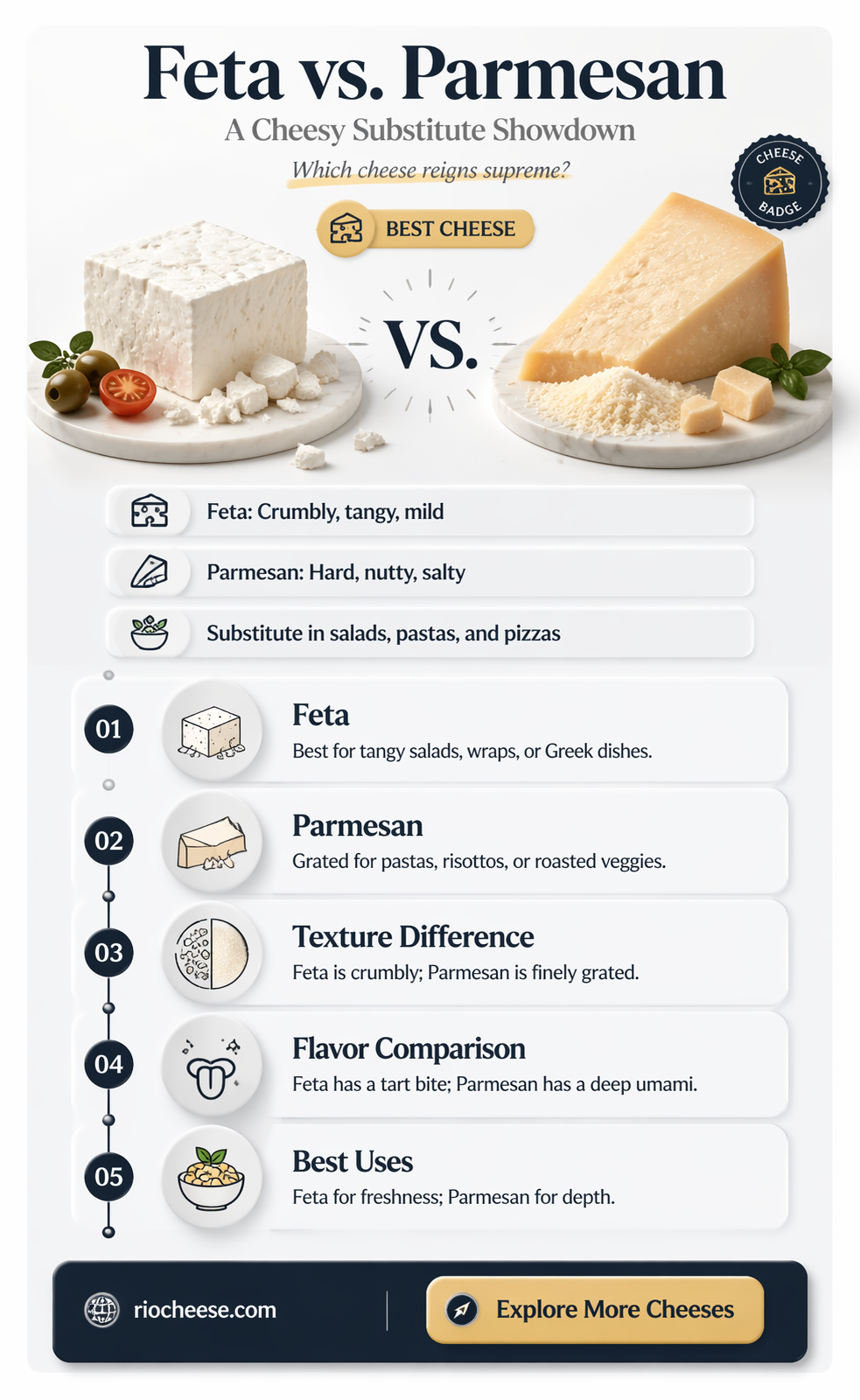
When it comes to substituting cheeses in recipes, feta and grated Parmesan have distinct characteristics that can affect the final dish. Feta cheese, known for its crumbly texture and tangy, salty flavor, is typically used in Mediterranean cuisine, while grated Parmesan is a hard, aged cheese with a sharp, nutty taste commonly used in Italian dishes. Although they have different flavor profiles and textures, feta can sometimes be used as a substitute for grated Parmesan, depending on the recipe and desired outcome. For instance, in salads or as a topping for dishes where a salty, tangy flavor is preferred, feta can be a suitable replacement. However, in recipes that require the cheese to melt smoothly or provide a rich, umami flavor, grated Parmesan would be a better choice. Ultimately, the decision to substitute feta for grated Parmesan depends on personal taste preferences and the specific requirements of the dish being prepared.
Explore related products



What You'll Learn
- Flavor Comparison: Feta's tangy, salty taste vs. Parmesan's nutty, umami flavor in dishes
- Texture Differences: Crumbly feta versus finely grated Parmesan in recipes
- Culinary Uses: Ideal dishes for feta and Parmesan substitutions
- Nutritional Values: Comparing the health benefits and drawbacks of feta and Parmesan
- Cultural Considerations: Using feta in Italian dishes and Parmesan in Greek cuisine

Flavor Comparison: Feta's tangy, salty taste vs. Parmesan's nutty, umami flavor in dishes
Feta cheese and Parmesan cheese are two distinct varieties with unique flavor profiles that can significantly impact the taste of a dish. Feta is known for its tangy and salty taste, which is a result of the brining process it undergoes. This cheese is typically made from sheep's or goat's milk and is often used in Mediterranean cuisine. Its crumbly texture and sharp flavor make it a popular choice for salads, sandwiches, and as a garnish for various dishes.
On the other hand, Parmesan cheese is renowned for its nutty and umami flavor. It is a hard, aged cheese made from cow's milk and is commonly used in Italian cuisine. Parmesan is often grated over pasta dishes, incorporated into sauces, or used as a topping for soups and salads. Its rich, savory taste is a result of the long aging process, which allows the development of complex flavors.
When comparing the two cheeses, it's clear that they each bring a unique character to dishes. Feta's tangy and salty taste can add a bright, zesty flavor to a dish, while Parmesan's nutty and umami flavor can provide a deep, savory richness. The choice between the two cheeses depends on the desired flavor profile and the type of dish being prepared.
In some cases, feta cheese can be used as a substitute for grated Parmesan, especially in dishes where a tangy flavor is desired. For example, feta can be crumbled over a Greek salad or used as a topping for a Mediterranean-style pizza. However, in dishes where a nutty, umami flavor is essential, such as in a classic Italian pasta sauce, Parmesan would be the better choice.
Ultimately, the decision to use feta cheese in place of grated Parmesan comes down to personal preference and the specific requirements of the recipe. Both cheeses offer unique flavors that can enhance a dish, and experimenting with different combinations can lead to delicious culinary discoveries.
Feta Cheese in Pasta: A Delicious and Versatile Combination
You may want to see also
Explore related products


Texture Differences: Crumbly feta versus finely grated Parmesan in recipes
The texture of cheese plays a crucial role in how it interacts with other ingredients in a recipe. Crumbly feta and finely grated Parmesan, despite both being popular cheese choices, offer distinct textural qualities that can significantly impact the final dish. Feta cheese, known for its crumbly and slightly moist texture, tends to add a creamy and tangy element to recipes. It's often used in salads, sandwiches, and as a topping for dishes where its texture can complement the other components without overpowering them.
On the other hand, finely grated Parmesan is characterized by its dry, powdery texture and sharp, nutty flavor. It's commonly used as a garnish or mixed into sauces, soups, and risottos, where it can dissolve slightly and add depth to the flavor profile. The fine texture of Parmesan allows it to integrate more seamlessly into mixtures, providing a subtle yet distinct taste enhancement.
When considering substituting feta for Parmesan, it's essential to think about how the texture will affect the overall dish. For instance, in a salad, feta's crumbly texture can add a pleasant mouthfeel and contrast to the crisp vegetables, whereas grated Parmesan might not provide the same textural interest. Conversely, in a sauce or soup, Parmesan's fine texture is ideal for melting and blending into the liquid, while feta might not dissolve as smoothly and could alter the consistency of the dish.
In some cases, a combination of both cheeses could be used to achieve a balance of textures and flavors. For example, in a pasta dish, grated Parmesan could be mixed into the sauce for a rich, savory base, while crumbled feta could be sprinkled on top as a garnish, adding a tangy and creamy contrast. Understanding the unique textural properties of each cheese allows for more creative and effective substitutions in recipes, ensuring that the final dish meets the desired taste and mouthfeel.
Feta Twist: Reinventing Mac and Cheese with a Greek Spin
You may want to see also
Explore related products


Culinary Uses: Ideal dishes for feta and Parmesan substitutions
Feta cheese, with its tangy and salty flavor, can be a versatile substitute for grated Parmesan in various dishes. One ideal culinary use is in pasta dishes, where feta can be crumbled over spaghetti or penne to add a rich, creamy texture and a burst of flavor. It pairs particularly well with tomato-based sauces, as the acidity of the tomatoes complements the saltiness of the feta.
Another excellent application is in salads. Feta can be used in place of Parmesan in classic Caesar salads, providing a different but equally satisfying taste profile. It can also be added to Greek salads, enhancing the Mediterranean flavors and adding a delightful creaminess to the dish.
In addition to these, feta can be used as a topping for pizzas, offering a unique twist to the traditional Parmesan-topped pizza. It melts beautifully and creates a slightly crispy, golden-brown layer that adds depth to the overall flavor of the pizza.
When substituting feta for Parmesan, it's important to consider the salt content. Feta is generally saltier than Parmesan, so it's advisable to use it sparingly and adjust the seasoning of the dish accordingly. Additionally, feta has a softer texture than grated Parmesan, so it may not be suitable for dishes where a hard, grating cheese is required.
Overall, feta cheese can be a delicious and creative substitute for grated Parmesan in many culinary applications. Its distinct flavor and texture can elevate dishes and provide a unique gastronomic experience.
Feta Fusion: Elevating Cheese Sauce with a Tangy Twist
You may want to see also
Explore related products



Nutritional Values: Comparing the health benefits and drawbacks of feta and Parmesan
Feta cheese and Parmesan are two distinct types of cheese with unique nutritional profiles. Feta, a brined curd white cheese made in Greece, is known for its crumbly texture and tangy flavor. It is typically lower in calories and fat compared to Parmesan, a hard, aged Italian cheese renowned for its sharp, nutty taste and granular texture. However, Parmesan is often higher in protein and calcium.
One of the key health benefits of feta cheese is its lower saturated fat content, which can be beneficial for heart health. Feta also contains probiotics due to its fermentation process, which can aid in digestion and support gut health. On the other hand, Parmesan's high calcium content is essential for bone health, and its protein content can contribute to muscle repair and growth. However, the high sodium content in both cheeses should be considered, especially for those monitoring their salt intake.
When comparing the two, it's important to consider portion sizes, as Parmesan is often used in smaller quantities due to its strong flavor. Feta, being softer and milder, might be used in larger amounts, potentially leading to higher calorie and fat intake. Additionally, the processing methods differ, with feta being brined and Parmesan being aged, which affects their nutritional content and shelf life.
In terms of culinary uses, feta is versatile and can be used in salads, sandwiches, and as a garnish, while Parmesan is commonly grated over pasta dishes, soups, and salads. The substitution of feta for Parmesan in recipes can alter the flavor profile and texture, but it can also provide a different set of nutritional benefits.
Ultimately, the choice between feta and Parmesan depends on individual dietary needs and preferences. Those looking to reduce saturated fat intake might opt for feta, while those seeking higher protein and calcium content might prefer Parmesan. As with any dietary decision, moderation and balance are key.
Explore related products






Cultural Considerations: Using feta in Italian dishes and Parmesan in Greek cuisine
Feta cheese, a staple in Greek cuisine, is often used in salads, pastries, and various dishes due to its tangy and salty flavor. On the other hand, Parmesan cheese, a hard Italian cheese, is commonly grated over pasta dishes, salads, and soups, adding a nutty and savory taste. While both cheeses have distinct characteristics, they can be used interchangeably in certain recipes, depending on the desired flavor profile and cultural context.
In Italian cuisine, using feta cheese as a substitute for Parmesan can add a unique twist to traditional dishes. For instance, sprinkling crumbled feta over a classic spaghetti carbonara can introduce a tangy contrast to the rich, creamy sauce. Similarly, incorporating feta into a Caprese salad can create a fusion of Italian and Greek flavors, combining the freshness of tomatoes and basil with the salty kick of feta.
Conversely, using Parmesan cheese in Greek dishes can enhance their flavor with a nutty and savory undertone. Adding grated Parmesan to a traditional Greek salad can elevate the dish, complementing the brininess of the feta and the freshness of the vegetables. Furthermore, incorporating Parmesan into a spanakopita filling can add depth to the spinach and feta mixture, creating a harmonious blend of Italian and Greek tastes.
When substituting feta for Parmesan or vice versa, it is essential to consider the dish's overall flavor balance and the desired outcome. Feta cheese is generally softer and more moist than Parmesan, so it may not be suitable for dishes where a hard, grateable cheese is required. Additionally, the tangy and salty flavor of feta may overpower certain ingredients, while the nutty and savory taste of Parmesan may not provide the same level of acidity.
In conclusion, using feta cheese in place of grated Parmesan can be a creative and delicious way to experiment with different flavor profiles and cultural combinations. By understanding the unique characteristics of each cheese and considering the dish's overall flavor balance, cooks can successfully incorporate these cheeses into a variety of recipes, creating innovative and mouthwatering dishes that blend the best of Italian and Greek cuisines.
Frequently asked questions
Yes, you can use feta cheese as a substitute for grated Parmesan in many recipes. Feta has a tangy, salty flavor that can complement dishes similarly to Parmesan, although the texture will be different since feta is crumbled and Parmesan is finely grated.
Feta cheese has a distinct tangy and salty taste, while Parmesan cheese is known for its sharp, nutty flavor. Both cheeses are rich in umami, which makes them versatile in enhancing the flavors of various dishes. However, the taste profiles are different, so substituting one for the other will alter the flavor of the recipe.
Feta cheese would be a good substitute for Parmesan cheese in dishes where a tangy, salty flavor is desired. It works well in salads, pasta dishes, and as a topping for pizzas. Feta can also be used in place of Parmesan in recipes for cheese sauces or dressings, adding a unique flavor twist. However, it may not be the best substitute in recipes where the distinct nutty flavor of Parmesan is crucial.