 Patrick Oconnell
Cheesecloth is a versatile kitchen tool commonly used for straining, draining, and wrapping food items. However, there are several alternatives that can be used in its place, depending on the specific task at hand. For straining and draining, a fine-mesh sieve or colander can be used to separate liquids from solids. For wrapping and storing food, parchment paper or wax paper can serve as effective substitutes. Additionally, a clean, thin cotton or linen cloth can be used as a makeshift cheesecloth in a pinch. These alternatives offer different benefits and drawbacks, so it's essential to choose the right one based on the recipe and desired outcome.
Explore related products



What You'll Learn
- Paper Towels: Absorbent and disposable, paper towels are a convenient cheesecloth substitute for straining and blotting
- Coffee Filters: Fine-textured and sturdy, coffee filters work well for straining liquids and separating solids from liquids
- Clean Cotton Cloth: A reusable and eco-friendly option, clean cotton cloths can be used for straining and wiping
- Butter Muslin: A finer alternative, butter muslin is ideal for clarifying butter and straining stocks or custards
- Silicone Strainers: Durable and heat-resistant, silicone strainers are perfect for straining hot liquids and foods

Paper Towels: Absorbent and disposable, paper towels are a convenient cheesecloth substitute for straining and blotting
Paper towels offer a quick and easy solution for straining and blotting when cheesecloth is not available. Their absorbent nature makes them ideal for removing excess liquid from foods or surfaces. For instance, when making homemade yogurt, paper towels can be used to line a colander and strain the whey from the curds, resulting in a thicker consistency. Similarly, they can be employed to blot excess oil from fried foods, reducing greasiness and improving texture.
One of the main advantages of using paper towels is their disposability, which eliminates the need for cleaning and sanitizing cheesecloth after each use. This not only saves time but also ensures a hygienic environment, especially when dealing with raw ingredients. Additionally, paper towels are readily available in most households, making them a convenient substitute in emergency situations.
However, it is important to note that paper towels may not be suitable for all applications. For example, they may not provide the same level of filtration as cheesecloth when straining fine particles, such as when making clarified butter. In such cases, a finer material like a coffee filter or a clean, thin kitchen towel may be more appropriate.
In conclusion, paper towels are a versatile and practical alternative to cheesecloth for many straining and blotting tasks. Their absorbent properties and disposability make them a convenient choice for home cooks and professional chefs alike. By understanding their strengths and limitations, one can effectively utilize paper towels in a variety of culinary applications.
Unveiling the Cheesy Secret: Inside Five Guys' Burger Empire
You may want to see also
Explore related products


Coffee Filters: Fine-textured and sturdy, coffee filters work well for straining liquids and separating solids from liquids
Coffee filters are an excellent alternative to cheesecloth for various culinary and household applications. Their fine texture and sturdy construction make them ideal for straining liquids and separating solids from liquids with precision. Whether you're a home cook, a barista, or someone looking for a quick and effective way to filter substances, coffee filters can be a game-changer.
One of the primary advantages of using coffee filters is their ability to provide a clean and consistent filtration process. Unlike cheesecloth, which can be messy and difficult to clean, coffee filters are disposable and can be easily replaced after use. This makes them particularly useful for applications where hygiene is crucial, such as when filtering water, making cold brew coffee, or even clarifying stocks and broths.
Coffee filters are also incredibly versatile and can be used in a variety of ways. For instance, they can be used to line baking pans to prevent sticking, as a makeshift blotting paper for greasy skin, or even as a filter for homemade cleaning solutions. Their uniform shape and size make them easy to use and adapt to different tasks, and their relatively inexpensive cost makes them an accessible option for most households.
When using coffee filters for straining or filtering, it's important to choose the right type of filter for the job. Basket-style filters are great for larger volumes of liquid, while flat-bottom filters are better suited for smaller amounts. Additionally, consider the material of the filter – paper filters are more common and disposable, while metal or cloth filters are reusable and may be more environmentally friendly.
In conclusion, coffee filters are a practical and efficient substitute for cheesecloth in many situations. Their fine texture, sturdy construction, and versatility make them a valuable tool in the kitchen and beyond. By understanding the benefits and applications of coffee filters, you can unlock a world of possibilities and simplify your filtering and straining tasks.
Unveiling Taco Bell's Secret Cheese Sauce Recipe
You may want to see also
Explore related products


Clean Cotton Cloth: A reusable and eco-friendly option, clean cotton cloths can be used for straining and wiping
Clean cotton cloths are an excellent alternative to cheesecloth for various culinary and household uses. They are reusable, eco-friendly, and can be easily cleaned and sanitized, making them a cost-effective and sustainable option. When using clean cotton cloths for straining, it is important to choose a cloth with a tight weave to ensure that it effectively separates solids from liquids. For wiping, a softer, more absorbent cloth may be preferred.
One of the main benefits of using clean cotton cloths instead of cheesecloth is their durability. Cheesecloth is often made from a loose weave of cotton or linen fibers, which can easily tear or fray with repeated use. In contrast, clean cotton cloths are typically made from a tighter weave of cotton fibers, which makes them more resistant to wear and tear. This durability also means that clean cotton cloths can be used for a wider range of tasks, including straining hot liquids or wiping down rough surfaces.
Another advantage of clean cotton cloths is their ease of cleaning and sanitizing. Cheesecloth can be difficult to clean, especially if it has been used to strain oily or sticky substances. Clean cotton cloths, on the other hand, can be easily washed in hot water with soap and then sanitized by boiling or using a bleach solution. This makes them a more hygienic option for use in the kitchen or around the home.
When using clean cotton cloths for straining, it is important to rinse them thoroughly before use to remove any residual fibers or lint. This can be done by soaking the cloth in cold water and then wringing it out. For best results, it is also recommended to use a double layer of cloth when straining to ensure that all solids are effectively separated from the liquid.
In conclusion, clean cotton cloths are a versatile and sustainable alternative to cheesecloth for a variety of culinary and household uses. Their durability, ease of cleaning, and hygienic properties make them a practical and eco-friendly choice for anyone looking to reduce their use of disposable products.
Exploring the Versatility of Basket Cheese in Culinary Delights
You may want to see also
Explore related products


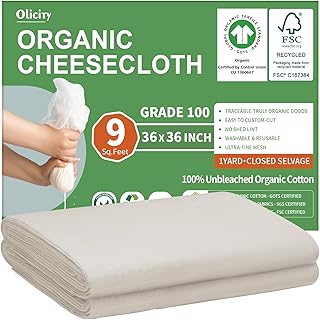
Butter Muslin: A finer alternative, butter muslin is ideal for clarifying butter and straining stocks or custards
Butter muslin, a finely woven fabric, offers a superior alternative to cheesecloth for various culinary applications. Its tight weave makes it particularly effective for clarifying butter, ensuring that the final product is free from any unwanted solids or impurities. To use butter muslin for clarifying butter, simply pour the melted butter through the fabric, allowing the clear liquid to pass through while retaining the milk solids.
In addition to its use in clarifying butter, butter muslin is also ideal for straining stocks and custards. When straining stocks, the fine mesh of the butter muslin helps to remove even the smallest particles, resulting in a clearer and more refined broth. For custards, the butter muslin can be used to strain out any lumps or undissolved ingredients, ensuring a smooth and creamy texture.
One of the key advantages of butter muslin over cheesecloth is its durability. Butter muslin can be washed and reused multiple times, making it a more cost-effective and environmentally friendly option. Additionally, butter muslin is less likely to impart any unwanted flavors or odors to the food being strained, ensuring that the final product tastes as intended.
When using butter muslin, it is important to note that it should be rinsed thoroughly before use to remove any potential residues from the manufacturing process. It is also advisable to use a separate piece of butter muslin for each application to prevent cross-contamination of flavors.
In summary, butter muslin is a versatile and effective alternative to cheesecloth for a variety of culinary tasks. Its fine weave, durability, and ability to prevent flavor transfer make it an essential tool in any kitchen. Whether used for clarifying butter, straining stocks, or perfecting custards, butter muslin can help to elevate the quality of your culinary creations.
Discover the Perfect Cheese for Your Tamales: A Flavorful Guide
You may want to see also
Explore related products


Silicone Strainers: Durable and heat-resistant, silicone strainers are perfect for straining hot liquids and foods
Silicone strainers are a superior alternative to cheesecloth for several reasons. Firstly, their durability is unmatched; unlike cheesecloth, which can tear or fray with repeated use, silicone strainers are designed to withstand the rigors of frequent straining without losing their shape or effectiveness. This makes them a cost-effective choice in the long run, as they eliminate the need for constant replacements.
Secondly, silicone strainers are heat-resistant, making them ideal for straining hot liquids and foods. This is particularly useful when working with boiling broths, hot sauces, or freshly cooked pasta. The heat resistance ensures that the strainer will not melt or warp, providing a safe and reliable straining experience.
Another advantage of silicone strainers is their ease of cleaning. Unlike cheesecloth, which can be difficult to clean and may retain odors, silicone strainers can be easily washed with soap and water or placed in the dishwasher. This not only saves time but also ensures that the strainer remains hygienic and free from any residual flavors.
Silicone strainers also offer a finer mesh than most cheesecloths, resulting in a more thorough straining process. This is especially beneficial when working with delicate liquids or foods that require a high level of clarity, such as stocks or homemade nut milks. The fine mesh ensures that even small particles are effectively removed, resulting in a smoother and more refined end product.
In conclusion, silicone strainers are a versatile and practical kitchen tool that offers numerous benefits over traditional cheesecloth. Their durability, heat resistance, ease of cleaning, and fine mesh make them an indispensable item for any home cook or professional chef looking to streamline their straining process.
Exploring the Rich Flavors: How to Use Panela Cheese in Your Recipes
You may want to see also
Frequently asked questions
You can use a clean, thin cotton towel or a fine-mesh sieve as a substitute for cheesecloth in most recipes.
To strain yogurt without cheesecloth, you can use a clean, thin cotton towel or a fine-mesh sieve. Simply place the yogurt in the towel or sieve and allow it to drain over a bowl until it reaches the desired consistency.
A good alternative to cheesecloth for making cheese is a clean, thin cotton towel or a fine-mesh sieve. These materials can be used to drain the whey from the curds and help shape the cheese.
While paper towels can be used in a pinch, they are not as effective as cheesecloth, cotton towels, or fine-mesh sieves for straining or draining. Paper towels may not hold up well to the moisture and can tear easily.
To clean cheesecloth, simply rinse it under cold water and then wash it with mild soap and warm water. Allow it to air dry completely before reusing it. Cheesecloth can be reused several times, but it's important to clean it thoroughly after each use to prevent any bacterial growth.


