Bushra Griffith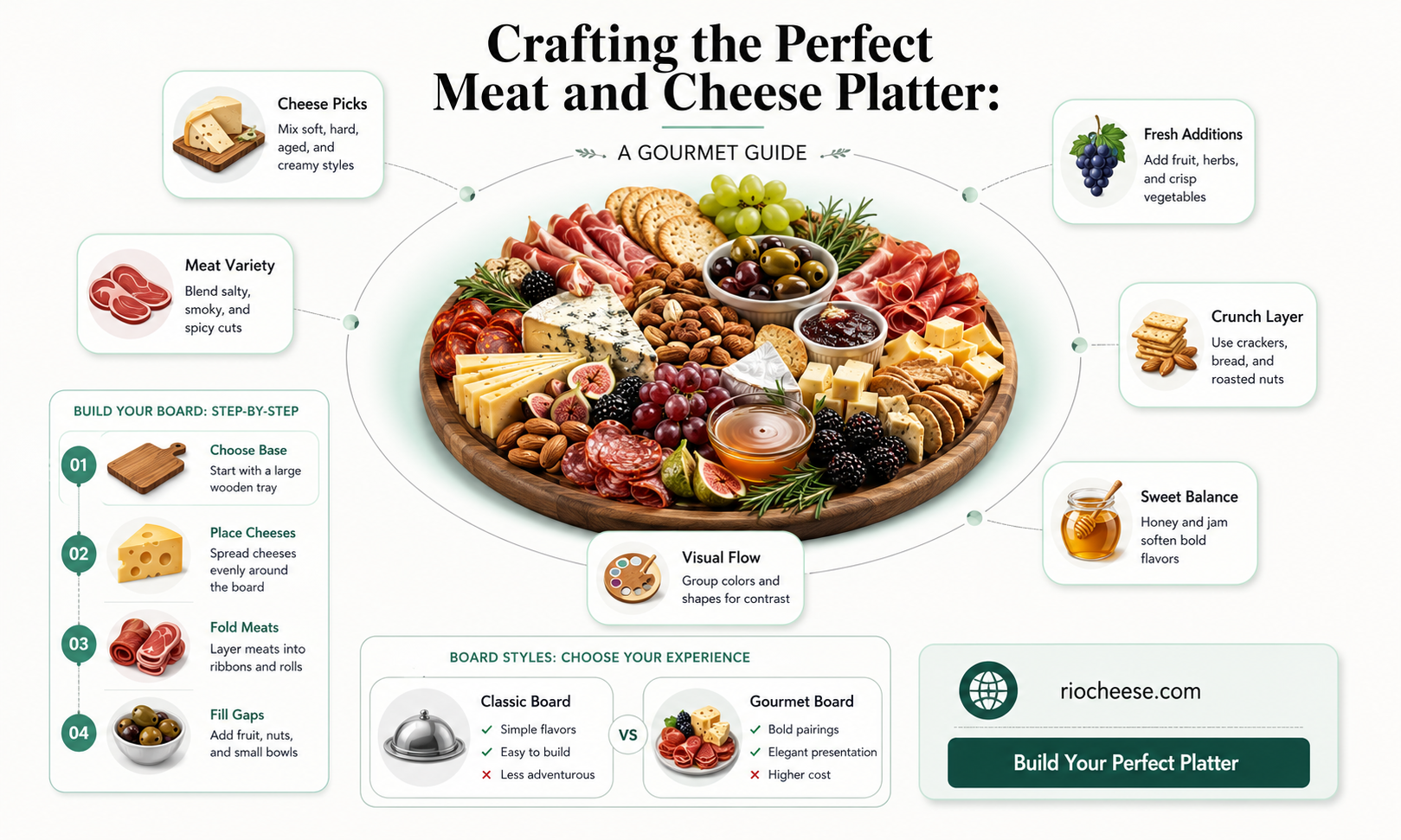
When assembling a meat and cheese platter, it's essential to consider a balance of flavors, textures, and visual appeal. Start by selecting a variety of cheeses with different consistencies and tastes, such as a creamy brie, a sharp cheddar, and a tangy goat cheese. Complement these with an assortment of cured meats like prosciutto, salami, and perhaps some smoked sausage. To enhance the flavor profile, include accompaniments such as olives, pickles, and a selection of crackers or bread. For a touch of sweetness, add some fresh or dried fruits like grapes, figs, or apricots. Finally, garnish with herbs like rosemary or thyme to add a fragrant, finishing touch. This thoughtful combination will create a visually stunning and delicious platter perfect for any gathering.
| Characteristics | Values |
|---|---|
| Meats | Cured meats such as salami, prosciutto, and mortadella; smoked meats like ham and turkey; pâtés and terrines |
| Cheeses | Hard cheeses (e.g., cheddar, gouda, parmesan); soft cheeses (e.g., brie, camembert, goat cheese); blue cheeses (e.g., stilton, gorgonzola) |
| Crackers and Breads | Assorted crackers (plain, flavored, and artisanal); baguette slices; crostini; grissini |
| Fruits | Fresh fruits like grapes, berries, and sliced apples; dried fruits such as apricots, figs, and dates |
| Nuts | Mixed nuts including almonds, walnuts, pistachios, and hazelnuts |
| Olives | Green and black olives, marinated or stuffed with pimentos |
| Pickles and Spreads | Dill pickles, gherkins; mustards (spicy brown, Dijon); jams and jellies (e.g., fig, quince) |
| Herbs and Spices | Fresh herbs like rosemary, thyme, and parsley; spices such as paprika, pepper, and garlic powder |
| Presentation | Attractive platter or board; small bowls or dishes for spreads and olives; toothpicks or skewers for easy serving |
| Portion Size | Approximately 2-3 ounces of meat and cheese per person; adjust based on the number of guests and other food offerings |
| Pairings | Consider pairing with wines (red or white depending on the meats and cheeses); beers; or non-alcoholic beverages like sparkling water or iced tea |
| Dietary Considerations | Offer options for vegetarians, vegans, and those with dietary restrictions (e.g., gluten-free crackers, dairy-free cheese alternatives) |
| Preparation Time | Allow 30 minutes to an hour for preparation, depending on the complexity of the platter and the number of items included |
| Storage and Serving | Keep refrigerated until serving time; serve at room temperature for optimal flavor and texture |
| Leftovers | Store leftovers in airtight containers in the refrigerator; consume within 3-5 days for best quality |
Explore related products


What You'll Learn
- Variety of Meats: Include a mix of cured meats like salami, prosciutto, and ham for diverse flavors
- Cheese Selection: Offer a range of cheeses from soft (brie) to hard (cheddar), ensuring different textures and tastes
- Accompaniments: Add olives, pickles, and crackers to complement the meats and cheeses on the platter
- Garnishes: Use fresh herbs, such as rosemary or thyme, and edible flowers for an attractive presentation
- Dips and Spreads: Include honey, mustard, or fig jam to enhance the flavors of the meats and cheeses

Variety of Meats: Include a mix of cured meats like salami, prosciutto, and ham for diverse flavors
When assembling a meat and cheese platter, the variety of meats you choose can significantly impact the overall flavor profile and guest satisfaction. A well-curated selection of cured meats like salami, prosciutto, and ham can provide a delightful range of tastes and textures that cater to different palates. Salami, with its robust and slightly spicy flavor, pairs excellently with milder cheeses and crackers. Prosciutto, known for its delicate sweetness and melt-in-your-mouth texture, complements creamy cheeses and fresh fruit. Ham, offering a savory and sometimes smoky taste, works well with both soft and hard cheeses, as well as with bread or crostini.
To create a balanced platter, consider the fat content and seasoning levels of each meat. For instance, if you include a particularly fatty salami, you might want to balance it with a leaner ham. Similarly, if one of your meats is heavily seasoned, choose another with more subtle flavors to avoid overwhelming the palate. Arranging the meats in an aesthetically pleasing manner can also enhance the platter's appeal. Roll or fold slices of prosciutto, stack salami in a neat pile, and perhaps garnish the ham with a sprig of rosemary or thyme.
Another consideration is the origin and quality of the meats. If possible, opt for high-quality, artisanal cured meats that are free from preservatives and made using traditional methods. These meats often have more complex flavors and better textures than their mass-produced counterparts. Additionally, consider the dietary restrictions and preferences of your guests. Some may prefer leaner meats, while others might enjoy more flavorful, seasoned options.
In terms of pairing, think about how the flavors of the meats will interact with the cheeses and other accompaniments on the platter. For example, a spicy salami might pair well with a cool, creamy cheese like brie, while a sweet prosciutto could be complemented by a tangy goat cheese. Experimenting with different combinations can help you create a platter that offers a harmonious blend of flavors and textures.
Finally, don't forget to provide appropriate serving utensils and plates for your guests. Small tongs or serving forks can make it easier for guests to select their preferred meats, and having separate plates for each type of meat can help prevent cross-contamination of flavors. By paying attention to these details, you can create a meat and cheese platter that is not only delicious but also visually appealing and considerate of your guests' needs.
The Truth About Shredded Cheese: Sawdust or Not?
You may want to see also
Explore related products


Cheese Selection: Offer a range of cheeses from soft (brie) to hard (cheddar), ensuring different textures and tastes
When assembling a meat and cheese platter, the cheese selection is crucial as it can make or break the overall experience. A well-curated cheese board should offer a range of cheeses from soft to hard, ensuring different textures and tastes. This not only caters to various preferences but also adds visual appeal and depth to the platter.
Start by selecting a soft cheese like brie, which is creamy and mild, making it a crowd-pleaser. Its smooth texture pairs well with crisp crackers and fresh fruit. Next, consider adding a semi-soft cheese such as gouda or fontina, which have a slightly firmer texture and a richer flavor profile. These cheeses melt beautifully and can be used for dipping or grilling.
For a harder cheese option, cheddar is a classic choice. Its sharp, tangy flavor and crumbly texture provide a nice contrast to the softer cheeses. Cheddar also comes in various aging levels, from mild to extra sharp, allowing you to customize the platter to your guests' tastes. Another hard cheese to consider is parmesan, which has a nutty, salty flavor and a granular texture that adds a sophisticated touch to the platter.
When arranging the cheeses, consider their shapes and sizes to create an aesthetically pleasing display. You can also add garnishes like fresh herbs, edible flowers, or a drizzle of honey to enhance the presentation and add an extra layer of flavor.
Remember to serve the cheeses at the appropriate temperature to ensure they are at their best. Soft cheeses should be served at room temperature, while harder cheeses can be served slightly chilled. By offering a diverse selection of cheeses, you can create a memorable and delicious meat and cheese platter that will impress your guests.
Fajita Fusion: The Great Cheese Debate Uncovered
You may want to see also
Explore related products



Accompaniments: Add olives, pickles, and crackers to complement the meats and cheeses on the platter
Olives, pickles, and crackers are classic accompaniments that elevate a meat and cheese platter from good to great. These items not only add a variety of textures and flavors but also serve as palate cleansers between different types of meats and cheeses. When selecting olives, consider a mix of green and black varieties to offer a range of tastes, from briny to fruity. For pickles, dill or bread and butter varieties work well, providing a tangy contrast to the rich flavors of the meats and cheeses. Crackers should be chosen for their ability to complement without overpowering; options like water crackers, wheat thins, or even flavored crackers like rosemary or garlic can enhance the overall tasting experience.
The key to arranging these accompaniments is balance. You want to ensure that each item is easily accessible and that there's enough of each to go around, without overcrowding the platter. A good rule of thumb is to place the olives and pickles in small bowls or ramekins, which not only keeps them contained but also adds a touch of elegance to the presentation. Crackers can be arranged in a separate section or even placed in a small basket for a rustic feel.
When it comes to pairing, consider the flavor profiles of your meats and cheeses. For example, a salty, briny olive might pair well with a mild cheddar, while a tangy pickle could complement a spicy salami. Experiment with different combinations to find what works best for your palate and your guests.
One often overlooked aspect of accompaniments is their role in dietary considerations. If you're hosting guests with specific dietary needs, such as gluten intolerance or veganism, be sure to offer alternatives. Gluten-free crackers or vegan cheese options can ensure that everyone can enjoy the platter.
In conclusion, the right accompaniments can make or break a meat and cheese platter. By carefully selecting and arranging olives, pickles, and crackers, you can create a harmonious blend of flavors and textures that will delight your guests and elevate your entertaining game.
The Great Debate: Cheese's Place in Chicken Salad Sandwiches
You may want to see also
Explore related products


Garnishes: Use fresh herbs, such as rosemary or thyme, and edible flowers for an attractive presentation
Fresh herbs like rosemary and thyme are not only aromatic but also add a burst of flavor to meats and cheeses. When selecting herbs for garnishing, choose ones that complement the flavors of the items on your platter. For instance, rosemary pairs well with robust meats like beef or lamb, while thyme is a perfect match for poultry or milder cheeses. To use herbs effectively, you can either sprinkle them whole over the platter or chop them finely to distribute their flavor more evenly.
Edible flowers are another excellent choice for garnishing a meat and cheese platter. They add a touch of elegance and color, making the presentation more visually appealing. Some popular edible flowers include nasturtiums, pansies, and calendulas. When using edible flowers, ensure they are pesticide-free and only use the petals, as some parts of the flower may not be edible. You can arrange the flowers around the edges of the platter or place them strategically among the meats and cheeses for a pop of color.
In addition to fresh herbs and edible flowers, consider using other garnishes like olives, pickles, or fruit preserves. These items not only add visual interest but also provide contrasting flavors and textures that can enhance the overall tasting experience. When arranging your platter, think about the balance of colors, textures, and flavors, and use garnishes to tie everything together.
Remember, the key to an attractive presentation is attention to detail. Take the time to carefully arrange your meats, cheeses, and garnishes, and consider using different heights and levels to create visual interest. You can use small bowls or dishes to hold dips or spreads, and arrange crackers or breadsticks in a decorative pattern. By putting thought into the presentation, you can create a meat and cheese platter that is not only delicious but also visually stunning.
The Great Debate: Cheese in Green Bean Casserole - Yes or No?
You may want to see also
Explore related products


Dips and Spreads: Include honey, mustard, or fig jam to enhance the flavors of the meats and cheeses
Honey, mustard, and fig jam are not just condiments; they are transformative elements that can elevate a simple meat and cheese platter into a gourmet experience. Each brings a unique flavor profile that complements the rich, savory notes of the meats and the creamy, tangy characteristics of the cheeses.
Honey, for instance, is a natural sweetener that pairs beautifully with the salty, cured meats like prosciutto or salami. Its floral notes can enhance the flavor of soft cheeses such as brie or camembert, creating a delightful contrast between sweet and savory. When selecting honey for your platter, consider varieties like clover or wildflower for a milder taste, or opt for something more robust like buckwheat or manuka honey to make a bolder statement.
Mustard, on the other hand, is a versatile condiment that comes in many forms, from smooth and mild to grainy and spicy. It's an excellent accompaniment to hearty, aged cheeses like cheddar or gouda, as well as to milder, fresher cheeses such as mozzarella or feta. For meats, mustard pairs well with ham, roast beef, or even smoked salmon. When choosing mustard, consider the intensity of flavor you desire and the other elements on your platter to ensure a harmonious balance.
Fig jam is a more exotic option that brings a rich, fruity sweetness to the table. It's particularly well-suited to pairing with strong, blue cheeses like gorgonzola or stilton, as its sweetness can cut through the pungency of the cheese. Fig jam also complements cured meats like prosciutto or mortadella, adding a layer of complexity to their flavors. When using fig jam, a little goes a long way, so be sure to spread it sparingly to avoid overpowering the other components of your platter.
Incorporating these dips and spreads into your meat and cheese platter is a simple yet effective way to enhance the overall dining experience. By carefully selecting and pairing these condiments with your chosen meats and cheeses, you can create a symphony of flavors that will delight your guests and elevate your entertaining game.
Egg-cellent Addition: Elevating Baked Mac and Cheese with Eggs
You may want to see also
Frequently asked questions
A variety of cured meats such as salami, prosciutto, ham, and sometimes smoked meats like pastrami or chorizo are commonly included on a meat and cheese platter.
Popular cheese choices include cheddar, brie, gouda, blue cheese, mozzarella, and goat cheese. It's often a good idea to include a mix of soft and hard cheeses for variety.
Accompaniments like crackers, breadsticks, olives, pickles, grapes, nuts, and dried fruits can enhance the flavors and textures of the meats and cheeses on the platter.
For the best presentation, arrange the meats and cheeses in an aesthetically pleasing manner, grouping similar items together. Place accompaniments in small bowls or piles around the platter, and use garnishes like fresh herbs or edible flowers to add color and visual interest.