Andy Montoya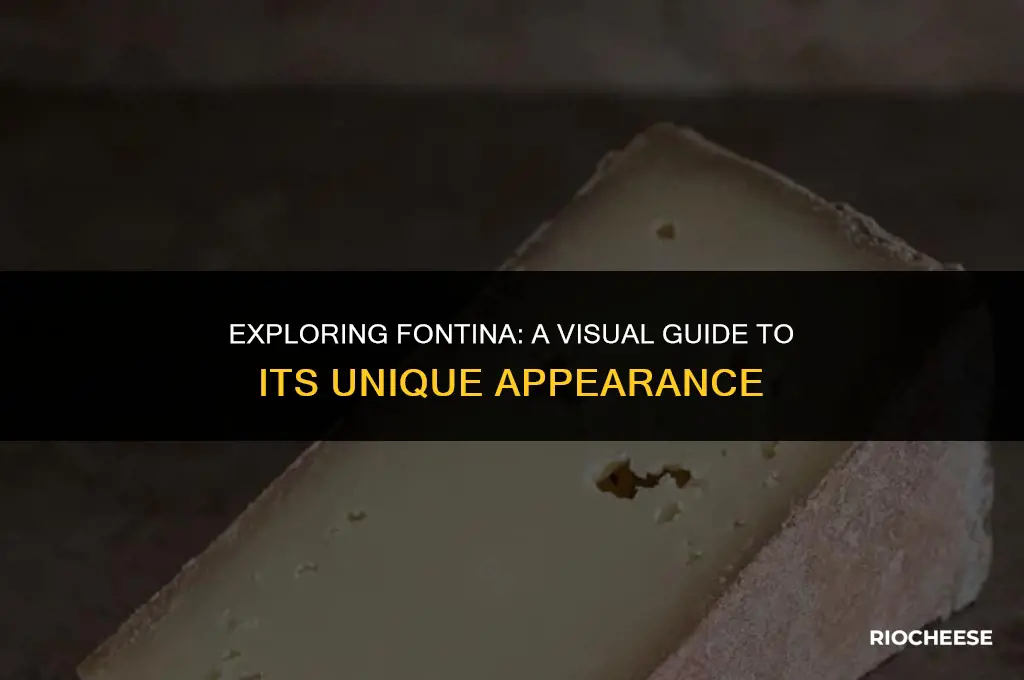
Fontina cheese is a type of Italian cheese known for its distinctive appearance and rich flavor. It typically has a smooth, pale yellow rind that can sometimes be slightly reddish or brownish, depending on the aging process. The interior of the cheese is a creamy, off-white color with small, evenly distributed holes throughout. Fontina cheese is semi-soft in texture, making it ideal for melting and using in a variety of dishes, from grilled sandwiches to pasta sauces. Its mild, nutty flavor with hints of earthiness makes it a popular choice for both cooking and snacking.
| Characteristics | Values |
|---|---|
| Color | Pale yellow to light brown |
| Texture | Semi-soft, smooth, and slightly elastic |
| Rind | Thin, edible, and slightly reddish |
| Shape | Typically round or wedge-shaped |
| Size | Varies, often sold in 8-ounce wheels |
| Aroma | Mild, nutty, and slightly fruity |
| Flavor | Rich, buttery, and nutty with a hint of saltiness |
| Fat Content | Approximately 45% |
| Moisture Content | Around 50% |
| Aging Process | Aged for at least 3 months |
| Origin | Italy, specifically the Aosta Valley region |
| Milk Source | Cow's milk |
| Production Method | Pasteurized milk, rennet, and salt |
| Uses | Melting, grilling, and as a table cheese |
| Pairings | Pairs well with fruits, nuts, and red wines |
| Shelf Life | Typically 2-3 months when stored properly |
| Storage | Store in a cool, dry place, wrapped in wax paper or plastic wrap |
Explore related products


What You'll Learn
- Color: Fontina cheese typically has a pale yellow to light brown hue, deepening with age
- Texture: It features a smooth, slightly oily surface with a firm yet creamy interior
- Shape: Often found in wheels or thick slices, it can also be grated or shredded
- Rind: The rind is usually thin and edible, sometimes displaying a slightly darker color
- Melting: Known for its excellent melting qualities, it becomes gooey and stretchy when heated

Color: Fontina cheese typically has a pale yellow to light brown hue, deepening with age
Fontina cheese, renowned for its rich flavor and versatility in cooking, undergoes a fascinating transformation in color as it ages. Initially, this Italian cheese boasts a pale yellow hue that is both inviting and indicative of its youth. As time progresses, the color deepens, evolving into a light brown shade that hints at the development of more complex flavors and textures within.
The aging process is a critical factor in the color change of Fontina cheese. During this period, the cheese is carefully stored in controlled environments where temperature and humidity are meticulously regulated. This allows the natural enzymes present in the cheese to break down the fats and proteins, leading to the formation of new compounds that contribute to the deepening of its color.
The color transition from pale yellow to light brown is not merely aesthetic; it is a visual cue that reflects the cheese's maturation. Younger Fontina, with its lighter color, tends to have a milder flavor and a softer texture. As it ages and darkens, the cheese develops a more pronounced, nutty flavor and a firmer texture that is prized in various culinary applications, from melting over pasta to being featured in cheese boards.
Cheesemakers and affineurs (cheese agers) closely monitor the color change as an indicator of the cheese's readiness for consumption. The ideal time to enjoy Fontina cheese depends on personal preference; some may prefer the delicate flavors of a younger cheese, while others may seek the robust taste of a well-aged Fontina.
In summary, the color of Fontina cheese is a dynamic characteristic that evolves with age, reflecting changes in its flavor profile and texture. From its initial pale yellow to the rich light brown of maturity, each stage of Fontina's color transformation offers a unique gastronomic experience that is deeply intertwined with the art and science of cheesemaking.
The Visual Guide to Perfectly Curdled Cheese Sauce
You may want to see also
Explore related products


Texture: It features a smooth, slightly oily surface with a firm yet creamy interior
Fontina cheese, renowned for its distinctive texture, presents a smooth, slightly oily surface that hints at its rich, creamy interior. This semi-soft cheese, originating from the Aosta Valley in Italy, boasts a texture that is both firm and yielding, making it a versatile ingredient in various culinary applications.
The smooth exterior of Fontina cheese is a result of its careful aging process, during which the cheese is regularly turned and brushed with oil to prevent mold growth and to enhance its flavor profile. This meticulous care contributes to the cheese's slightly glossy appearance and its inviting, pale yellow hue.
Beneath its sleek surface, Fontina cheese reveals a creamy, elastic interior that is both dense and moist. When cut, the cheese exhibits a slight resistance, yet it yields easily to pressure, showcasing its characteristic meltability. This texture makes Fontina an excellent choice for grilling, as it can be sliced thinly and will melt beautifully, creating a gooey, indulgent treat.
The combination of its smooth exterior and creamy interior also makes Fontina cheese a popular choice for fondue. Its ability to melt smoothly and evenly, without becoming too greasy or separating, ensures a perfect fondue experience. Additionally, the cheese's mild, nutty flavor complements a variety of dippers, from crusty bread to fresh vegetables.
In summary, the texture of Fontina cheese is a defining characteristic that sets it apart from other cheeses. Its smooth, slightly oily surface and firm yet creamy interior make it a prized ingredient in both traditional and modern culinary creations. Whether grilled, melted in fondue, or simply enjoyed on its own, Fontina cheese offers a delightful sensory experience that is both visually appealing and gastronomically satisfying.
Exploring the Rich Flavor Profile of Farmer Cheese: A Culinary Journey
You may want to see also
Explore related products



Shape: Often found in wheels or thick slices, it can also be grated or shredded
Fontina cheese, known for its versatility in culinary applications, is often found in various shapes that cater to different uses. One of the most common forms is the wheel, which is a traditional shape for many types of cheese. These wheels can range in size from small, personal portions to large, commercial-sized wheels used in restaurants and delis. The wheel shape allows for easy slicing and serving, making it a popular choice for cheese boards and platters.
In addition to wheels, fontina cheese is frequently available in thick slices. These slices are typically cut from the wheel and are ideal for sandwiches, paninis, and other dishes where a substantial piece of cheese is desired. The thickness of the slices ensures that the cheese melts evenly and provides a rich, creamy texture when heated.
Grated or shredded fontina cheese is another common form, particularly useful for cooking and baking. When grated, the cheese is transformed into fine, thin strands that melt quickly and evenly, making it perfect for topping pizzas, pasta dishes, and casseroles. Shredded fontina, on the other hand, consists of slightly thicker strands that can be used in similar applications but provide a bit more texture and visual appeal.
The shape of fontina cheese not only affects its appearance but also influences how it is used in various recipes. For instance, wheels and thick slices are often used for dishes that require the cheese to maintain its shape and provide a distinct, gooey texture when melted. Grated and shredded forms, however, are better suited for dishes where the cheese needs to blend seamlessly with other ingredients or provide a uniform melt.
When selecting fontina cheese for a recipe, it's essential to consider the desired texture and melt characteristics. Wheels and thick slices are ideal for dishes that showcase the cheese's natural form and melting properties, while grated and shredded forms offer more versatility in terms of texture and distribution. By understanding the different shapes and their applications, cooks can make informed choices that enhance the overall quality and presentation of their dishes.
Exploring the Rich Flavor Profile of Cup Cheese: A Taste Test
You may want to see also
Explore related products


Rind: The rind is usually thin and edible, sometimes displaying a slightly darker color
The rind of Fontina cheese is a distinctive feature that sets it apart from other varieties. Typically, it is thin and edible, making it a desirable characteristic for those who enjoy the full flavor profile of the cheese. The rind's color can vary slightly, often displaying a darker hue compared to the creamy interior. This variation in color is a natural result of the aging process, during which the rind develops a more robust flavor and firmer texture.
When examining the rind of Fontina cheese, one might notice a slight sheen, indicative of the natural oils present on the surface. This sheen not only adds to the visual appeal but also contributes to the overall mouthfeel when consumed. The thinness of the rind allows it to be easily cut through, providing a seamless transition from the exterior to the soft, melted interior when heated.
In terms of flavor, the rind of Fontina cheese tends to be more intense and savory than the milder taste of the cheese itself. This contrast creates a delightful experience for the palate, offering a harmonious balance between the rich, nutty notes of the rind and the creamy, slightly sweet undertones of the cheese.
For those looking to incorporate Fontina cheese into their culinary creations, understanding the characteristics of the rind is crucial. It can be used to add depth and complexity to dishes, whether melted over pasta, incorporated into sandwiches, or served as part of a cheese platter. The rind's edibility and unique flavor make it a versatile ingredient that can elevate a variety of recipes.
In summary, the rind of Fontina cheese is a thin, edible layer that exhibits a slightly darker color and more intense flavor compared to the cheese's interior. Its characteristics contribute to the overall appeal and versatility of Fontina cheese in various culinary applications.
Exploring the Rich Flavor Profile of Cuajada Cheese
You may want to see also
Explore related products


Melting: Known for its excellent melting qualities, it becomes gooey and stretchy when heated
Fontina cheese, renowned for its exceptional melting properties, undergoes a remarkable transformation when heated. As the temperature rises, its texture shifts from firm and crumbly to gooey and stretchy, making it a favorite choice for dishes that require a smooth, melted cheese consistency. This unique characteristic is due to its high moisture content and the specific proteins it contains, which allow it to melt evenly and achieve that desirable stringy quality.
When preparing dishes with Fontina, it's essential to understand how its melting properties can impact the final result. For instance, in a classic fondue, Fontina's ability to melt smoothly ensures a creamy, velvety texture that coats vegetables and bread perfectly. Similarly, when used in grilled cheese sandwiches, it creates a luscious, stretchy interior that oozes out with each bite. To achieve the best results, it's recommended to heat Fontina slowly and evenly, allowing it to melt gradually and preventing it from becoming too greasy or separating.
One of the most fascinating aspects of Fontina's melting qualities is its versatility in various culinary applications. From topping pizzas to enriching pasta sauces, its ability to melt seamlessly into different dishes makes it a staple in many kitchens. Additionally, its mild, nutty flavor complements a wide range of ingredients, further enhancing its appeal. When experimenting with Fontina in your cooking, don't be afraid to try different heating methods, such as broiling, baking, or pan-frying, to discover new ways to utilize its melting properties.
In conclusion, Fontina cheese's excellent melting qualities make it a standout ingredient in the culinary world. Its ability to transform from a solid to a gooey, stretchy state when heated opens up a world of possibilities for creative and delicious dishes. By understanding and harnessing these properties, you can elevate your cooking and experience the full potential of this remarkable cheese.
Exploring the Rich Flavor Profile of Duhallow Cheese: A Taste Journey
You may want to see also
Frequently asked questions
Fresh Fontina cheese has a smooth, pale yellow rind and a creamy, white interior. The texture is soft and slightly elastic, making it ideal for slicing and melting.
As Fontina cheese ages, its rind develops a more intense yellow color and may start to show some brown spots. The interior becomes firmer and slightly crumbly, while still retaining its creamy white color.
When melted, Fontina cheese becomes gooey and stretchy, with a rich, golden color. It's known for its excellent melting properties, making it a popular choice for dishes like fondue and grilled cheese sandwiches.