 Patrick Oconnell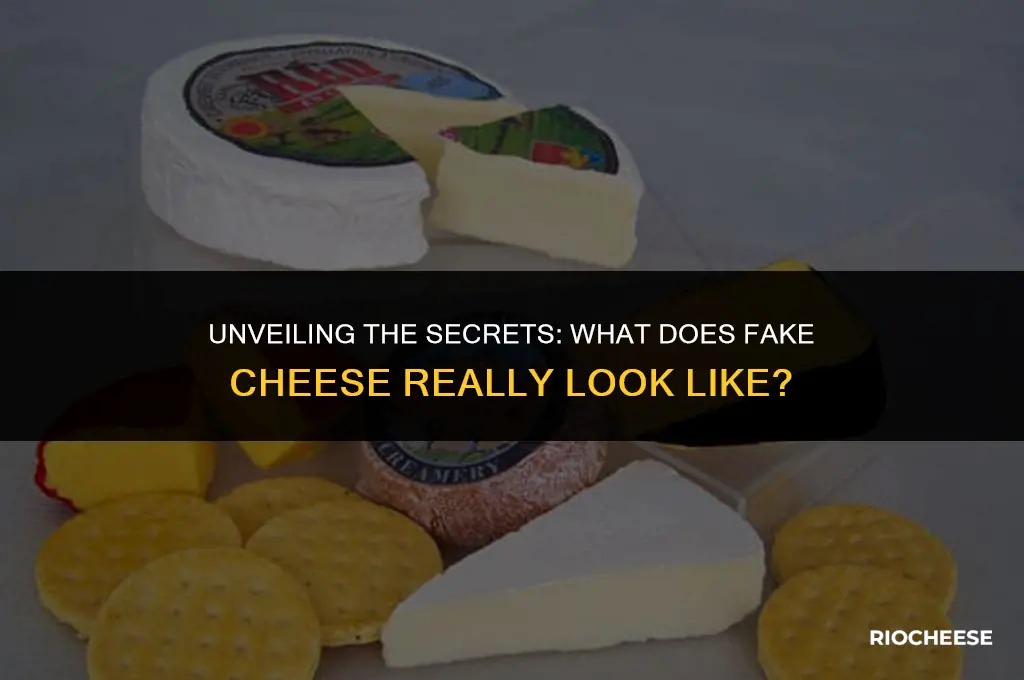
Fake cheese, also known as imitation cheese, is a product designed to mimic the appearance, texture, and sometimes the flavor of real cheese. It is often made from a blend of vegetable oils, proteins, and various additives. The appearance of fake cheese can vary depending on the type and quality of the product. Some imitation cheeses may closely resemble real cheese in color and texture, while others may have a more artificial look. Common characteristics of fake cheese include a uniform color, a smooth and sometimes shiny texture, and a lack of the natural imperfections found in real cheese, such as holes or variations in color. Fake cheese is often used as a more affordable and shelf-stable alternative to real cheese in various culinary applications.
| Characteristics | Values |
|---|---|
| Color | Typically bright yellow or orange, sometimes with artificial coloring to mimic real cheese |
| Texture | Often smooth and uniform, lacking the natural irregularities found in real cheese |
| Flavor | Bland or overly salty, with a lack of depth and complexity compared to real cheese |
| Aroma | Little to no distinct smell, or an artificial, chemical-like odor |
| Melting Point | Generally lower than real cheese, melting quickly and becoming rubbery |
| Consistency | More consistent and predictable than real cheese, which can vary based on type and aging |
| Ingredients | Often made from vegetable oils, milk proteins, and various additives and preservatives |
| Shelf Life | Longer than real cheese due to preservatives and lower moisture content |
| Appearance | May have a waxy or plasticky sheen, especially when sliced or shredded |
| Taste | Lacks the rich, savory notes of real cheese, often tasting more like salt or artificial flavorings |
| Nutritional Value | Generally lower in nutrients compared to real cheese, with higher levels of sodium and artificial ingredients |
| Brand Packaging | Often sold in brightly colored or flashy packaging to attract consumers |
| Price | Usually cheaper than real cheese due to lower production costs |
| Availability | Widely available in grocery stores, often in the same section as real cheese |
| Uses | Commonly used as a substitute in recipes where real cheese is too expensive or not available |
| Consumer Perception | Some consumers prefer fake cheese for its consistency and lower fat content, while others avoid it due to its artificial nature |
| Environmental Impact | Production of fake cheese can have a lower environmental impact than real cheese, but this varies based on the specific ingredients and manufacturing processes used |
Explore related products



What You'll Learn
- Color and Texture: Fake cheese often has a uniform, bright yellow color and a smooth, slightly shiny texture
- Melting Behavior: It tends to melt more uniformly and may not brown or bubble like real cheese
- Packaging and Labels: Fake cheese is usually sold in clearly labeled packages, often with images of cheese
- Consistency: The consistency is generally more consistent and less crumbly than real cheese
- Taste and Smell: Fake cheese may have a mild, artificial flavor and a less pungent smell compared to real cheese

Color and Texture: Fake cheese often has a uniform, bright yellow color and a smooth, slightly shiny texture
Fake cheese, also known as cheese analog or cheese substitute, often exhibits a uniform, bright yellow color that is more vibrant than natural cheese. This coloration is typically achieved through the use of artificial food dyes, such as annatto or turmeric, which are added to the mixture during the manufacturing process. The consistency of the color throughout the product is a key indicator of its artificial nature, as natural cheese tends to have variations in hue due to factors like aging, diet of the animal, and production methods.
In terms of texture, fake cheese generally has a smooth and slightly shiny surface. This is because it is made from a blend of vegetable oils, proteins, and other additives that are designed to mimic the taste and texture of real cheese. The smoothness is a result of the emulsification process, which combines the oil and water-based ingredients into a stable mixture. The slight shininess is due to the presence of oils on the surface, which reflect light and give the product a glossy appearance.
One of the main differences between fake cheese and natural cheese is the lack of aging and fermentation processes. Natural cheese undergoes a complex series of biochemical reactions during aging, which contribute to its unique flavors, aromas, and textures. In contrast, fake cheese is typically ready to eat immediately after production and does not develop the same depth of flavor or complexity over time.
When examining fake cheese, it is also important to note the absence of any visible mold or bacteria growth. Unlike natural cheese, which can develop mold or bacteria if not stored properly, fake cheese is less susceptible to spoilage due to its lower moisture content and the presence of preservatives. This can make it a more convenient option for consumers who are looking for a longer-lasting alternative to traditional cheese.
In summary, the uniform bright yellow color and smooth, slightly shiny texture are key visual indicators that can help consumers identify fake cheese. These characteristics are a result of the artificial ingredients and manufacturing processes used to create the product, which differ significantly from those of natural cheese. By understanding these differences, consumers can make informed choices about the types of cheese they purchase and consume.
Exploring Dubliner Cheese: A Visual Guide to Its Appearance
You may want to see also
Explore related products


Melting Behavior: It tends to melt more uniformly and may not brown or bubble like real cheese
Fake cheese, often used as a cost-effective alternative in various culinary applications, exhibits distinct melting characteristics that set it apart from its natural counterpart. Unlike real cheese, which tends to melt unevenly and can develop browned, bubbly spots when heated, fake cheese melts more uniformly and lacks these textural changes. This uniform melting is due to the different composition of fake cheese, which often includes plant-based oils and proteins that do not react to heat in the same way as dairy proteins.
One of the key differences in melting behavior is the absence of browning or bubbling in fake cheese. Real cheese, when heated, undergoes a Maillard reaction, a chemical process between amino acids and reducing sugars that gives browned food its distinctive flavor. Fake cheese, lacking the necessary components for this reaction, remains pale and smooth even when exposed to high temperatures. This can be both an advantage and a disadvantage, depending on the desired outcome. For instance, in dishes where a smooth, even melt is preferred, fake cheese can be an excellent choice. However, in applications where the browning and bubbling of real cheese are desirable for flavor and texture, fake cheese may not meet expectations.
The melting point of fake cheese is also generally lower than that of real cheese, which can affect its performance in various recipes. Fake cheese tends to melt quickly and can become runny if overheated, whereas real cheese often requires more time and heat to achieve a similar consistency. This lower melting point can be beneficial in recipes that require a quick, even melt, such as in microwaveable dishes or as a topping for baked goods. However, it can also pose challenges in recipes that involve high-heat cooking methods, as fake cheese may melt too quickly and lose its shape.
In terms of practical applications, understanding the melting behavior of fake cheese can help in selecting the appropriate type for different recipes. For instance, if a recipe calls for a cheese that melts well and evenly without browning, a fake cheese with a low melting point and smooth texture would be ideal. On the other hand, if a recipe requires a cheese that can withstand high heat without melting too quickly, a fake cheese with a higher melting point and more robust texture might be a better choice.
Overall, the melting behavior of fake cheese is a critical factor to consider when choosing a cheese alternative for culinary purposes. By understanding how fake cheese melts differently from real cheese, cooks and chefs can make informed decisions about which type of cheese to use in various dishes, ensuring the best possible results in terms of flavor, texture, and appearance.
The Visual Guide to Perfectly Curdled Cheese Sauce
You may want to see also
Explore related products


Packaging and Labels: Fake cheese is usually sold in clearly labeled packages, often with images of cheese
Fake cheese products are typically packaged in a manner that clearly distinguishes them from real cheese. This is often achieved through the use of transparent windows on the packaging, allowing consumers to see the product inside. The labels on these packages are designed to be eye-catching and informative, frequently featuring images of cheese to visually communicate the product's intended use.
One common characteristic of fake cheese packaging is the prominent display of the product name and type. This helps consumers quickly identify the product as a cheese alternative. Additionally, the packaging may include information about the product's ingredients, nutritional content, and any relevant certifications, such as vegan or gluten-free labels.
The design of fake cheese packaging can vary depending on the brand and the specific product. Some packages may use bright colors or bold fonts to stand out on store shelves, while others may opt for a more minimalist approach. Regardless of the design, the primary goal of fake cheese packaging is to provide clear and accurate information to consumers while also appealing to their visual preferences.
When shopping for fake cheese, it's important for consumers to carefully read the labels and check the ingredient list. This can help them make informed decisions about which products best meet their dietary needs and preferences. Additionally, consumers should be aware that some fake cheese products may contain allergens or other ingredients that could be harmful to certain individuals.
In conclusion, the packaging and labels of fake cheese products play a crucial role in helping consumers identify and select the right product for their needs. By providing clear and accurate information, as well as visually appealing designs, fake cheese packaging can make it easier for consumers to navigate the often confusing world of cheese alternatives.
Exploring the Rich and Bold Flavors of Epoisses Cheese
You may want to see also
Consistency: The consistency is generally more consistent and less crumbly than real cheese
Fake cheese often has a more uniform and smooth consistency compared to its real counterpart. This is because it is typically made from a blend of vegetable oils, proteins, and other additives that are designed to mimic the taste and texture of cheese. As a result, fake cheese tends to be less crumbly and more consistent in its texture, which can make it a more convenient option for certain recipes or applications.
One of the key differences between fake cheese and real cheese is the way in which they melt. Fake cheese often melts more smoothly and evenly, without the risk of oil separation or burning. This is because it is made from a combination of ingredients that are designed to melt at a consistent temperature, whereas real cheese is made from milk proteins that can vary in their melting properties.
In terms of appearance, fake cheese often has a more consistent color and texture than real cheese. This is because it is made from a blend of ingredients that are designed to create a uniform product, whereas real cheese can vary in color and texture depending on the type of milk used, the aging process, and other factors.
When it comes to taste, fake cheese often has a milder flavor than real cheese. This is because it is made from a combination of ingredients that are designed to mimic the taste of cheese without the strong flavors that can come from real milk proteins. As a result, fake cheese can be a good option for those who are looking for a milder cheese flavor or who are lactose intolerant.
Overall, the consistency of fake cheese is one of its key advantages over real cheese. Its smooth and uniform texture makes it a convenient option for a variety of recipes and applications, and its consistent melting properties make it a reliable choice for cooking and baking.
The Surprising Flavor Profile of Expired Cheese: A Taste Test
You may want to see also
Taste and Smell: Fake cheese may have a mild, artificial flavor and a less pungent smell compared to real cheese
Fake cheese often has a mild, artificial flavor that lacks the complexity and richness of real cheese. This is because it is typically made from plant-based oils, proteins, and flavorings that mimic the taste of dairy cheese but do not fully replicate its nuanced characteristics. As a result, fake cheese may taste flat or overly processed, with a less satisfying mouthfeel and aftertaste.
In addition to its flavor, fake cheese also has a less pungent smell compared to real cheese. Real cheese often has a strong, distinctive aroma that can range from mild and buttery to sharp and tangy, depending on the type and aging process. In contrast, fake cheese tends to have a more neutral or slightly chemical-like odor, which can be a giveaway of its artificial nature.
When evaluating the taste and smell of cheese, it is important to consider the context in which it is being used. For example, in some applications, such as on a pizza or in a grilled cheese sandwich, the mild flavor and less pungent smell of fake cheese may be acceptable or even preferable. However, in other contexts, such as on a cheese platter or in a recipe that relies heavily on the flavor of cheese, the differences between real and fake cheese may be more noticeable and significant.
Ultimately, the taste and smell of fake cheese are subjective and can vary depending on the individual's preferences and the specific product being used. Some people may find that fake cheese meets their needs and expectations, while others may prefer the taste and aroma of real cheese. By understanding the differences between real and fake cheese, consumers can make informed choices about which type to use in their cooking and eating.
Exploring the Unique Aroma of Edam Cheese: A Sensory Journey
You may want to see also
Frequently asked questions
Fake cheese often has a uniform color and texture, lacking the natural variations found in real cheese. It may appear overly smooth or waxy and can have a less intense or artificial flavor. Additionally, fake cheese tends to melt more uniformly and may not brown or bubble as naturally as real cheese when heated.
Fake cheese is typically packaged in clear plastic wraps or containers that allow you to see the product directly. It may also be labeled as "cheese alternative," "vegan cheese," or "dairy-free cheese." Real cheese, on the other hand, is often sold in more opaque packaging or wrapped in wax paper, and it will be labeled simply as "cheese" with the specific type (e.g., cheddar, mozzarella).
Fake cheese can be a good option for those who are lactose intolerant, vegan, or looking to reduce their saturated fat and cholesterol intake. Many fake cheeses are made from plant-based ingredients and are fortified with vitamins and minerals. However, it's important to check the ingredient list and nutritional information, as some fake cheeses can be high in sodium or contain artificial additives. Real cheese, while higher in fat and calories, is a good source of protein, calcium, and other essential nutrients.
