Patrick Oconnell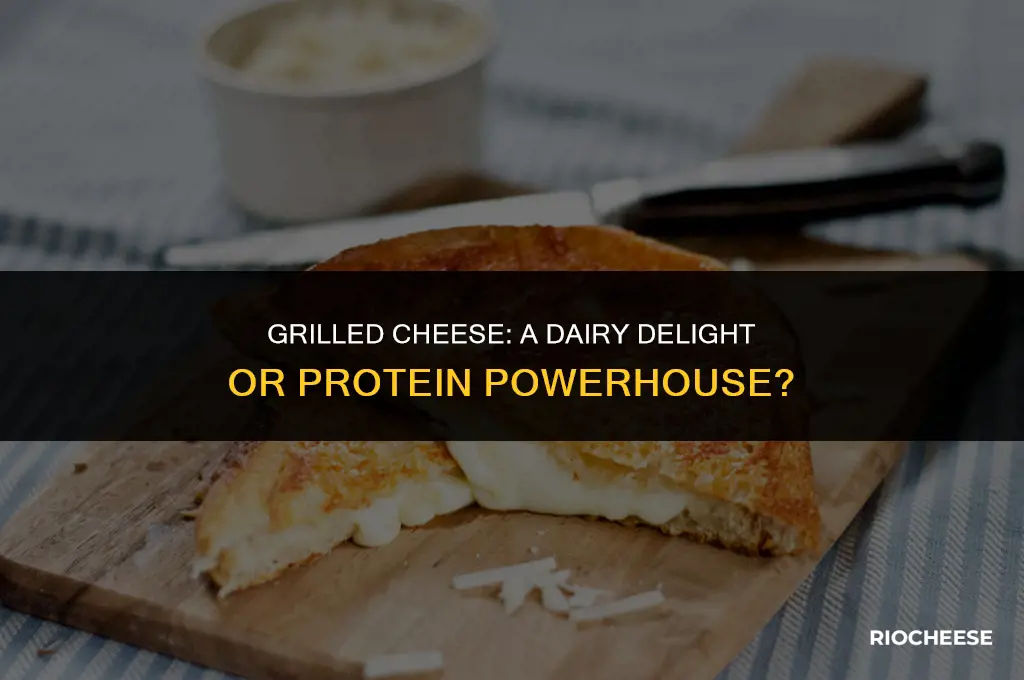
Grilled cheese sandwiches are a beloved comfort food, but when it comes to categorizing them as either dairy or protein, the answer isn't straightforward. While the primary ingredient, cheese, is indeed a dairy product, the sandwich also typically includes bread, which is not considered dairy. Additionally, some variations of grilled cheese may incorporate proteins like ham or turkey. So, is grilled cheese primarily dairy or protein? The answer depends on the specific ingredients and proportions used in the sandwich.
Explore related products


What You'll Learn
- Nutritional Content: Grilled cheese's macronutrient profile, emphasizing its protein and dairy components
- Ingredient Breakdown: Analysis of typical grilled cheese ingredients, highlighting dairy and protein sources
- Dietary Classification: Discussion on whether grilled cheese fits into dairy-free or protein-rich diets
- Culinary Perspective: Expert opinions on grilled cheese's role in meals, focusing on its dairy and protein attributes
- Health Impact: Examination of grilled cheese's effects on health, considering its dairy and protein content

Nutritional Content: Grilled cheese's macronutrient profile, emphasizing its protein and dairy components
Grilled cheese sandwiches are a beloved comfort food, but their nutritional content often goes overlooked. At its core, a grilled cheese is a combination of bread and melted cheese, which inherently makes it a source of both carbohydrates and dairy. However, the protein content in a grilled cheese can vary significantly depending on the type of cheese used and any additional ingredients incorporated.
Cheese, the primary dairy component in a grilled cheese, provides a substantial amount of protein. For instance, cheddar cheese, a common choice for grilled cheeses, contains about 7 grams of protein per ounce. This protein content contributes to the sandwich's overall macronutrient profile, making it not just a source of dairy but also a notable protein provider.
To further emphasize the protein component, some variations of grilled cheese sandwiches include additional protein sources such as ham, turkey, or even plant-based protein alternatives like tofu or tempeh. These additions can significantly boost the protein content, transforming a simple grilled cheese into a more balanced meal in terms of macronutrients.
It's also important to consider the type of bread used, as whole grain breads can provide more protein and fiber compared to white breads. For those looking to increase the nutritional value of their grilled cheese, opting for whole grain bread and a protein-rich cheese or additional protein sources can make the sandwich a more well-rounded option.
In conclusion, while grilled cheese sandwiches are often thought of primarily as a dairy-rich food, they can also be a good source of protein, especially when made with protein-rich cheeses or additional protein sources. By choosing the right ingredients, a grilled cheese can be both a delicious and nutritionally balanced meal.
Elevate Your Grilled Cheese: Creative Ways to Add a Kick
You may want to see also
Explore related products


Ingredient Breakdown: Analysis of typical grilled cheese ingredients, highlighting dairy and protein sources
Grilled cheese sandwiches are a staple comfort food, but their nutritional makeup is often misunderstood. The primary ingredients in a typical grilled cheese sandwich include bread, cheese, and butter. Of these, cheese is the main source of both dairy and protein.
Cheese is a dairy product derived from milk and is rich in protein, calcium, and fat. The type of cheese used in grilled cheese sandwiches can vary, but common choices include cheddar, American, and mozzarella. Each type of cheese has a different protein content, with cheddar cheese containing about 7 grams of protein per ounce and mozzarella containing slightly less.
In addition to cheese, some grilled cheese recipes may include other protein sources such as ham, turkey, or bacon. These additions can significantly increase the protein content of the sandwich. For example, adding two slices of ham can add an additional 5 grams of protein.
It's also important to consider the bread used in the sandwich. While bread is not a significant source of protein, it does contain some dairy in the form of milk or butter. However, the primary role of bread in a grilled cheese sandwich is to provide carbohydrates and fiber.
In conclusion, while grilled cheese sandwiches are often thought of as a simple comfort food, they can be a good source of both dairy and protein, depending on the ingredients used. By choosing the right type of cheese and adding protein-rich fillings, a grilled cheese sandwich can be a nutritious and satisfying meal.
Soothing Your Upset Stomach: The Grilled Cheese Conundrum
You may want to see also
Explore related products


Dietary Classification: Discussion on whether grilled cheese fits into dairy-free or protein-rich diets
Grilled cheese sandwiches are a staple comfort food for many, but they can pose a challenge for those following specific diets, particularly dairy-free or protein-rich diets. The primary ingredient in a traditional grilled cheese sandwich is cheese, which is a dairy product. Therefore, for individuals adhering to a dairy-free diet, grilled cheese would typically be off-limits unless alternative, non-dairy cheese substitutes are used. These substitutes can be made from plant-based sources such as soy, almond, or coconut milk, and they aim to replicate the taste and texture of dairy cheese while being suitable for those with lactose intolerance or dairy allergies.
On the other hand, grilled cheese sandwiches can be a good source of protein, depending on the type of cheese used. Some cheeses, like cheddar or Swiss, contain a significant amount of protein per serving. However, for those looking to increase their protein intake substantially, relying solely on grilled cheese may not be sufficient. Protein-rich diets often emphasize the inclusion of lean meats, legumes, nuts, and seeds, which provide a more concentrated source of protein. To make grilled cheese more protein-rich, one could consider adding these ingredients to the sandwich or pairing it with a side of protein-dense foods.
It's also important to consider the bread used in the grilled cheese sandwich. Whole grain breads can provide additional nutrients and fiber, which can be beneficial for overall health. However, for those on a gluten-free diet, traditional bread would need to be replaced with a gluten-free alternative.
In conclusion, while grilled cheese sandwiches can be adapted to fit into various dietary classifications, careful consideration must be given to the ingredients used. For those on dairy-free diets, non-dairy cheese substitutes are essential, while individuals on protein-rich diets may need to incorporate additional protein sources to meet their nutritional goals. By making informed choices about the ingredients, grilled cheese can be enjoyed by a wide range of dietary preferences.
Perfectly Portable Grilled Cheese: Lunchtime Wrapping Tips
You may want to see also
Explore related products


Culinary Perspective: Expert opinions on grilled cheese's role in meals, focusing on its dairy and protein attributes
Grilled cheese sandwiches have long been a staple in many diets, but their nutritional role is often debated. From a culinary perspective, expert opinions vary on whether grilled cheese should be classified primarily as a dairy or protein source. This discussion is crucial for meal planning, especially for those with specific dietary needs or restrictions.
One school of thought emphasizes the dairy content in grilled cheese. Cheese, the primary ingredient, is a significant source of calcium, which is essential for bone health. Additionally, cheese contains other important nutrients like vitamin B12 and riboflavin. However, the dairy content also means that grilled cheese is not suitable for those who are lactose intolerant or follow a vegan diet.
On the other hand, some experts argue that grilled cheese can also be a good source of protein. While cheese does contain some protein, the bread used in the sandwich can also contribute to the overall protein content, especially if whole grain bread is used. Furthermore, adding ingredients like turkey or chicken to the sandwich can significantly boost its protein content, making it a more balanced meal option.
The debate over whether grilled cheese is primarily dairy or protein highlights the importance of considering the overall nutritional profile of a meal. While grilled cheese can be a tasty and satisfying option, it's essential to balance it with other nutrient-dense foods to ensure a well-rounded diet. For those looking to increase their protein intake, adding lean meats or plant-based protein sources to the sandwich can be a practical solution. Conversely, for those who need to limit their dairy intake, choosing dairy-free cheese alternatives or reducing the amount of cheese used can make grilled cheese a more suitable option.
In conclusion, the role of grilled cheese in meals from a culinary perspective is multifaceted. Its dairy and protein attributes make it a versatile food that can be adapted to meet various dietary needs. By understanding these attributes and balancing them with other nutritional considerations, grilled cheese can be a delicious and nutritious part of a balanced diet.
Nutrition in Comfort: Grilled Cheese and Tomato Soup Health Benefits
You may want to see also
Explore related products



Health Impact: Examination of grilled cheese's effects on health, considering its dairy and protein content
Grilled cheese sandwiches are a beloved comfort food, but their health impact is often overlooked. The primary components of a grilled cheese—bread and cheese—contribute to its nutritional profile, which is high in calories, saturated fat, and sodium. While cheese does provide some protein, it is also a significant source of dairy, which can be problematic for those with lactose intolerance or dairy allergies.
The health effects of grilled cheese can vary depending on the type of cheese used. For example, cheddar cheese, a common choice for grilled cheese, is high in saturated fat and calories but also provides some vitamins and minerals, such as calcium and vitamin B12. On the other hand, processed cheese slices, which are often used in convenience-oriented grilled cheese preparations, can be even higher in sodium and preservatives.
When considering the protein content of grilled cheese, it's important to note that while cheese does contain protein, it is not a complete protein source. This means that it lacks some of the essential amino acids that the body cannot produce on its own. To make grilled cheese a more balanced meal, it can be paired with other protein sources, such as lean meats, legumes, or nuts.
In terms of preparation, the method used to cook the grilled cheese can also impact its health profile. Traditional pan-frying with butter adds additional saturated fat and calories. Alternatively, grilling or baking the sandwich can reduce the fat content while still achieving a crispy exterior.
Overall, while grilled cheese can be a tasty and satisfying meal, it's important to consider its health impact and make mindful choices about ingredients and preparation methods to ensure a balanced diet.
Elevate Your Grilled Cheese: Creative Ways to Add Flavor and Fun
You may want to see also
Frequently asked questions
Grilled cheese is primarily a source of dairy, as it is made with cheese, which is a dairy product. While it does contain some protein from the cheese, the main component is dairy.
A typical grilled cheese sandwich contains about 6-8 grams of protein, depending on the type and amount of cheese used.
Grilled cheese is not a balanced meal in terms of macronutrients, as it is high in carbohydrates and fats from the bread and cheese, and relatively low in protein. To make it more balanced, you could add a side of vegetables or a protein source like chicken or turkey.
Grilled cheese is not suitable for someone who is lactose intolerant, as it contains cheese, which is a dairy product and contains lactose.
Yes, grilled cheese can be made with non-dairy alternatives such as vegan cheese or almond cheese. These alternatives will change the taste and texture of the sandwich, but they can be a good option for those who are lactose intolerant or following a vegan diet.


![Jarlsberg Cheese Protein Lite Chunk, 6 oz – Reduced Fat, Semi-Soft, Sweet & Nutty [Pack of 4]](https://m.media-amazon.com/images/I/81T4gtCRRcL._AC_UL320_.jpg)


![Goodles Cheddy Mac Creamy Cheddar and Macaroni Pasta - Nutrient Packed with Real Cheese, Fiber, Protein, Prebiotics, Plants, & Vegetables | Non-GMO, Organic Ingredients [Cheddy Mac, 6 oz. 1 Pack]](https://m.media-amazon.com/images/I/71WpxmocD7L._AC_UL320_.jpg)
![Goodles Shella Good Aged White Cheddar and Shells Pasta - Nutrient Packed with Real Cheese, Fiber, Protein, Prebiotics, Plants, & Vegetables | Non-GMO, Organic Ingredients [Shella Good, 6 oz. 1 Pack]](https://m.media-amazon.com/images/I/71VMu-NnBHL._AC_UL320_.jpg)