Bushra Griffith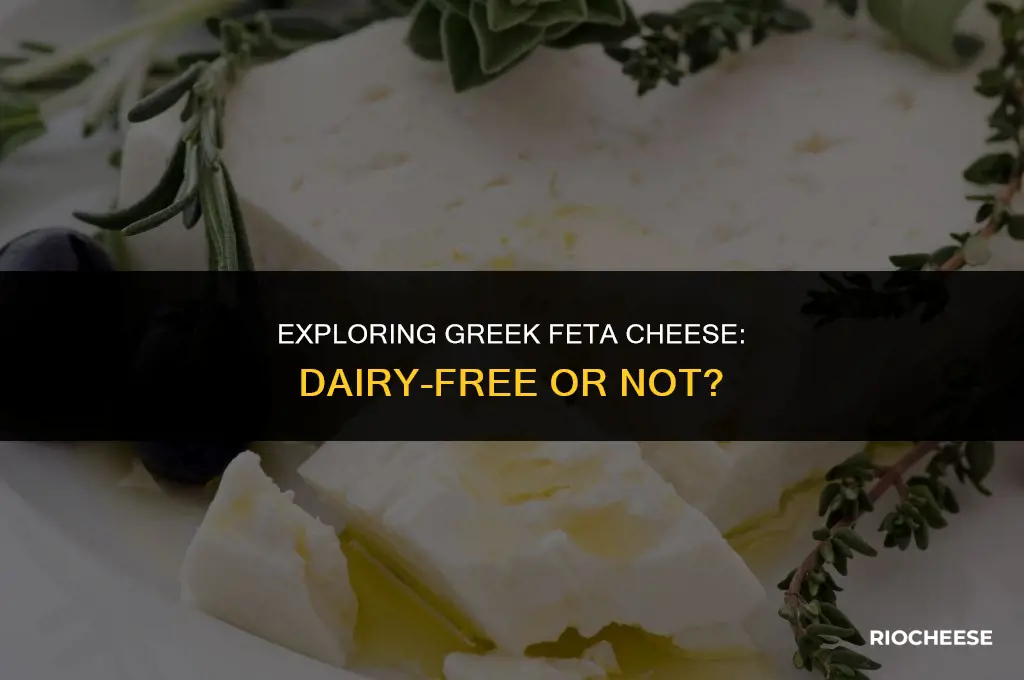
Greek feta cheese is a popular dairy product known for its tangy flavor and crumbly texture. It is made from sheep's or goat's milk, or a combination of both, and is often used in salads, sandwiches, and various Mediterranean dishes. However, for individuals who are lactose intolerant, vegan, or simply looking to reduce their dairy intake, the question arises: is Greek feta cheese dairy-free? The answer is no, traditional Greek feta cheese is not dairy-free as it is made from animal milk. However, there are dairy-free alternatives available in the market, made from plant-based ingredients such as coconut oil, tofu, or nuts, which mimic the taste and texture of traditional feta cheese.
Explore related products




What You'll Learn
- Ingredients of Greek Feta Cheese: Understanding the basic components used in feta cheese production
- Dairy Content in Feta: Exploring whether feta cheese contains lactose and other dairy elements
- Lactose Intolerance and Feta: Discussing the suitability of feta cheese for individuals with lactose intolerance
- Vegan Alternatives to Feta: Presenting plant-based cheese options that mimic the taste and texture of feta
- Health Benefits of Feta Cheese: Evaluating the nutritional value of feta cheese, including its fat and protein content

Ingredients of Greek Feta Cheese: Understanding the basic components used in feta cheese production
Feta cheese, a staple in Greek cuisine, is traditionally made from sheep's milk or a combination of sheep and goat's milk. The primary ingredients include milk, salt, and rennet. Rennet, an enzyme complex traditionally derived from the stomach lining of young ruminants, is used to coagulate the milk. Vegetarian or microbial rennet alternatives are sometimes used in modern production.
The milk is first pasteurized to ensure safety and then cooled to an optimal temperature for coagulation. Rennet is added, and the mixture is left to set, forming curds. These curds are then cut into smaller pieces and stirred gently to release whey. The curds are subsequently molded into blocks and placed in a brine solution, which typically consists of salt, water, and sometimes vinegar or lemon juice. This brining process not only preserves the cheese but also contributes to its distinctive tangy flavor.
After brining, the feta cheese is aged for several weeks to months, depending on the desired level of maturity. During this time, the cheese develops its characteristic crumbly texture and sharp taste. Proper aging also ensures that the cheese achieves the right balance of moisture and flavor.
It's important to note that traditional feta cheese is not dairy-free, as it is made from animal milk. However, there are dairy-free alternatives available that mimic the taste and texture of feta cheese using plant-based ingredients such as coconut oil, tofu, or nuts. These alternatives are suitable for vegans or individuals with lactose intolerance or dairy allergies.
In summary, the basic components used in feta cheese production include milk, salt, and rennet. The process involves coagulating the milk, separating the curds from the whey, brining the curds, and aging the cheese to develop its distinctive flavor and texture. While traditional feta cheese is not dairy-free, there are plant-based alternatives available for those who cannot or choose not to consume dairy products.
Unveiling the Truth: Is Great Value Colby Monterey Jack Cheese Gluten-Free?
You may want to see also
Explore related products


Dairy Content in Feta: Exploring whether feta cheese contains lactose and other dairy elements
Feta cheese, a staple in Greek cuisine, is made primarily from sheep's milk or a mixture of sheep and goat's milk. Unlike cow's milk cheeses, feta has a lower lactose content due to the fermentation process, which converts lactose into lactic acid. This process not only gives feta its tangy flavor but also makes it more digestible for individuals with lactose intolerance. However, it's important to note that feta is not completely lactose-free; it still contains small amounts of lactose.
The dairy content in feta extends beyond lactose. Feta cheese is rich in calcium, protein, and vitamins B12 and K2, all of which are essential nutrients found in dairy products. The cheese also contains conjugated linoleic acid (CLA), a type of fatty acid that has been linked to various health benefits, including improved immune function and reduced body fat.
For those following a dairy-free diet, traditional feta cheese may not be suitable due to its dairy origins. However, there are alternatives available. Vegan feta cheese, made from plant-based ingredients such as coconut oil, cashews, or tofu, offers a dairy-free option while still providing a similar taste and texture to traditional feta. These vegan alternatives are typically fortified with calcium and other nutrients to match the nutritional profile of dairy-based feta.
In conclusion, while feta cheese has lower lactose content compared to other dairy products, it is not entirely dairy-free. Individuals with severe lactose intolerance or those following a strict dairy-free diet may need to opt for vegan alternatives. However, for those who can tolerate small amounts of lactose, feta cheese can be a nutritious and flavorful addition to their diet.
Delving into the Gluten-Free Status of Frito-Lay Cheese Dip
You may want to see also
Explore related products


![Traditional Feta Chunk has a rich, creamy texture and bold, tangy taste that elevates any dish. Inspired by Greek tradition, it’s made with fresh, simple ingredients for authentic flavor. Crumble it over salads, tuck it into wraps, or serve it on a cheeseboard—this versatile cheese adds a Mediterranean twist to your favorite foods. It’s a delicious way to bring depth and character to everyday meals or special recipes. [ 32 oz , 2 lb ]](https://m.media-amazon.com/images/I/51MZ2OhOE-L._AC_UL320_.jpg)


Lactose Intolerance and Feta: Discussing the suitability of feta cheese for individuals with lactose intolerance
Feta cheese, a staple in Greek cuisine, is made from sheep's or goat's milk, which naturally contains lactose. However, the fermentation process involved in cheese-making significantly reduces the lactose content. This reduction occurs as lactic acid bacteria convert lactose into lactic acid, a process that not only imparts feta's characteristic tangy flavor but also makes it more digestible for some individuals with lactose intolerance.
The suitability of feta cheese for those with lactose intolerance varies depending on the severity of their condition and the specific type of feta cheese consumed. Some individuals may tolerate feta well due to its lower lactose content compared to other cheeses, while others may still experience symptoms such as bloating, gas, or diarrhea. It is essential for individuals with lactose intolerance to monitor their reactions to feta cheese and adjust their consumption accordingly.
In addition to its lower lactose content, feta cheese offers several nutritional benefits. It is a good source of protein, calcium, and vitamins B12 and K2. These nutrients are particularly important for individuals who may be limiting their dairy intake due to lactose intolerance, as they help maintain bone health and support overall well-being.
When considering the suitability of feta cheese for a lactose-intolerant diet, it is also important to factor in the potential presence of other dairy products in the diet. Individuals who consume multiple dairy products throughout the day may accumulate lactose intake, which could exacerbate symptoms of lactose intolerance. Therefore, it is advisable to balance feta cheese consumption with other lactose-containing foods and to consider alternative dairy-free cheese options if necessary.
In conclusion, while feta cheese is not entirely dairy-free, its lower lactose content makes it a potentially suitable option for some individuals with lactose intolerance. However, it is crucial to monitor personal reactions and to consume feta cheese in moderation as part of a balanced diet. For those who cannot tolerate feta cheese, there are various dairy-free cheese alternatives available that can provide similar nutritional benefits without the lactose content.
Exploring the Gluten-Free Status of Grana Padano Cheese
You may want to see also
Explore related products



Vegan Alternatives to Feta: Presenting plant-based cheese options that mimic the taste and texture of feta
For those seeking vegan alternatives to feta cheese, several plant-based options are available that closely mimic the taste and texture of traditional feta. One popular choice is tofu feta, which is made by marinating firm tofu in a mixture of lemon juice, olive oil, and herbs such as oregano and thyme. This process not only imparts a tangy flavor reminiscent of feta but also helps to firm up the tofu, giving it a crumbly texture similar to that of dairy feta.
Another option is cashew feta, which is created by blending soaked cashews with lemon juice, water, and salt, then allowing the mixture to ferment for a few days. This fermentation process develops a tangy flavor and a slightly crumbly texture, making cashew feta a convincing substitute for traditional feta cheese. Additionally, cashew feta can be easily flavored with herbs and spices to suit individual preferences.
Coconut feta is a newer addition to the plant-based cheese market, made from shredded coconut that has been fermented with a vegan cheese culture. This results in a product that has a similar crumbly texture and tangy flavor to dairy feta, while also being rich in healthy fats and fiber. Coconut feta can be used in a variety of dishes, from salads to sandwiches, and is a versatile option for vegans looking to replicate the taste of feta cheese.
For those who prefer a more artisanal approach, homemade vegan feta can be made using a combination of plant-based milks, such as almond or soy milk, and a vegan cheese starter culture. This method allows for customization of flavors and textures, and can result in a product that is both delicious and satisfying. Homemade vegan feta can be aged for different lengths of time to develop varying levels of tanginess and crumbly texture, making it a versatile option for those looking to experiment with plant-based cheese-making.
In conclusion, there are several vegan alternatives to feta cheese that offer similar taste and texture profiles, making it possible for those following a plant-based diet to enjoy the flavors of traditional feta without compromising their dietary choices. From tofu and cashew feta to coconut and homemade options, there is a variety of choices available to suit different preferences and culinary needs.
Crunching on Flavor: Are Fritos Chili Cheese Chips Gluten-Free?
You may want to see also
Explore related products


Health Benefits of Feta Cheese: Evaluating the nutritional value of feta cheese, including its fat and protein content
Feta cheese, a staple in Greek cuisine, is renowned for its distinct flavor and crumbly texture. From a nutritional standpoint, feta cheese offers several health benefits. It is an excellent source of protein, which is essential for muscle repair and growth. A 100-gram serving of feta cheese contains approximately 4 grams of protein, making it a valuable addition to a balanced diet.
In addition to its protein content, feta cheese is also rich in calcium, which is crucial for maintaining strong bones and teeth. It provides about 400 mg of calcium per 100 grams, contributing significantly to the daily recommended intake. Furthermore, feta cheese contains vitamins B12 and K2, which play vital roles in energy metabolism and blood clotting, respectively.
However, it is important to consider the fat content of feta cheese. While it does contain some saturated fat, which should be consumed in moderation, it also provides beneficial monounsaturated and polyunsaturated fats. These healthy fats can help reduce inflammation and improve heart health when consumed as part of a balanced diet.
When evaluating the nutritional value of feta cheese, it is also essential to consider its sodium content. Feta cheese is relatively high in sodium, with about 400 mg per 100 grams. Therefore, individuals who are watching their sodium intake should consume feta cheese in moderation.
In conclusion, feta cheese offers a range of health benefits due to its protein, calcium, and vitamin content. However, it is important to be mindful of its fat and sodium content when incorporating it into a balanced diet.
Unveiling the Truth: Is Great Value Cheese Gluten-Free?
You may want to see also
Frequently asked questions
No, Greek feta cheese is not dairy-free. It is made from sheep's or goat's milk, which are both dairy products.
Some dairy-free alternatives to Greek feta cheese include vegan feta made from plant-based ingredients like tofu or coconut oil, as well as other non-dairy cheeses made from nuts or seeds.
It depends on the individual's level of lactose intolerance. Some people with lactose intolerance may be able to consume small amounts of Greek feta cheese without experiencing symptoms, while others may need to avoid it completely. It's best to consult with a healthcare professional for personalized advice.